Start with the person, not the price tag
The best gift print is one that feels right for the person receiving it. Think about where it will live, what colours they are drawn to, and whether they prefer bold imagery or quieter work with fine detail. A lithograph is made from a drawn image on stone or a prepared stone surface, then printed in an edition with careful attention to ink, pressure and paper. That process gives each print a distinctive character that many people value as a gift.
If you are unsure, start with what you already know. A person who keeps a calm home in Sea Point may prefer a restrained palette, while someone in Johannesburg who enjoys statement pieces may welcome stronger contrast or a larger format. If the print is for a formal space, look for work that can be framed neatly and sits comfortably with the room’s colour scheme.
- Choose colours the recipient already wears or lives with
- Consider the wall size and available light
- Decide whether the gift should feel subtle or more expressive
- Check if they prefer a single artwork or a small group of prints
Understand what makes a stone lithograph special
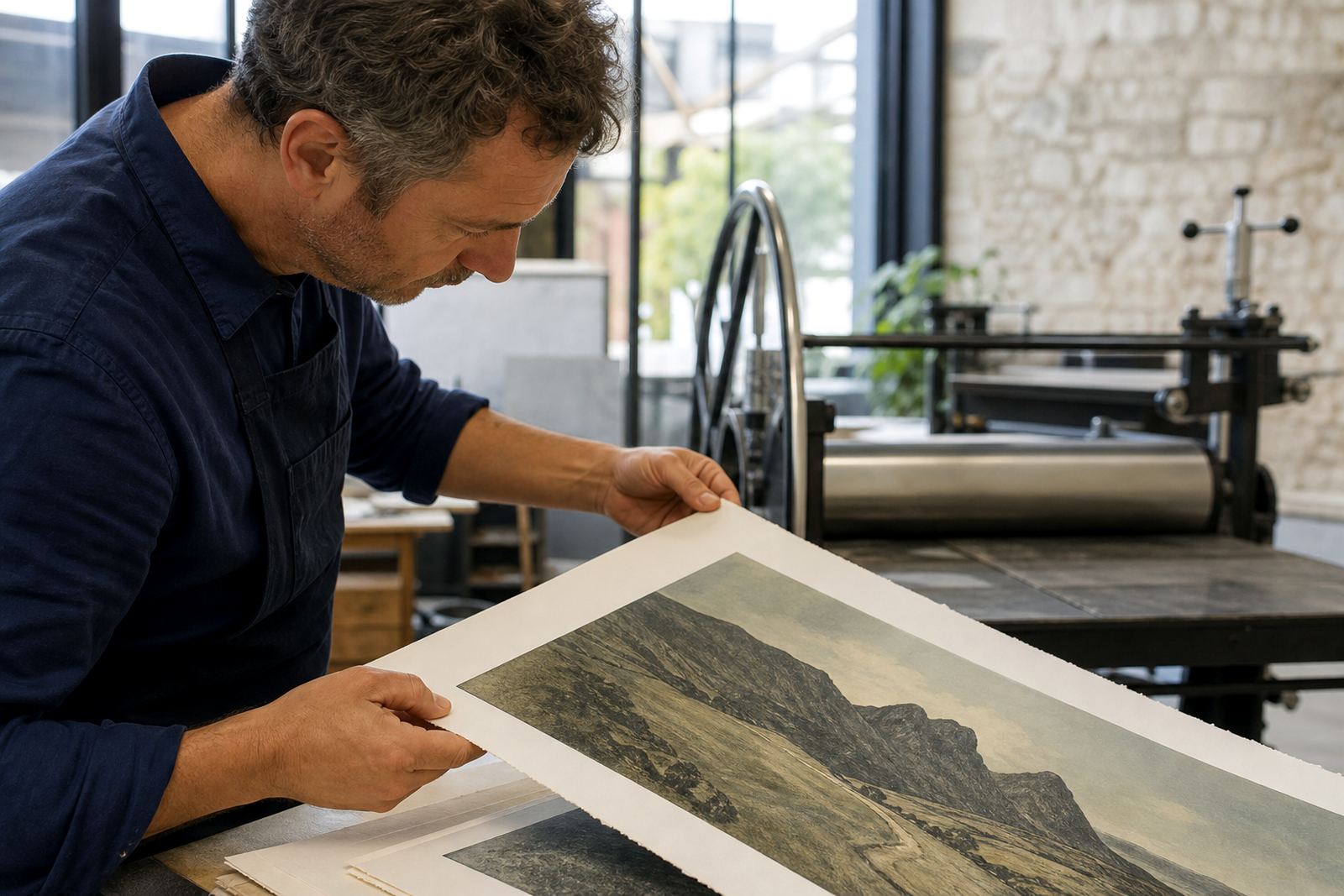
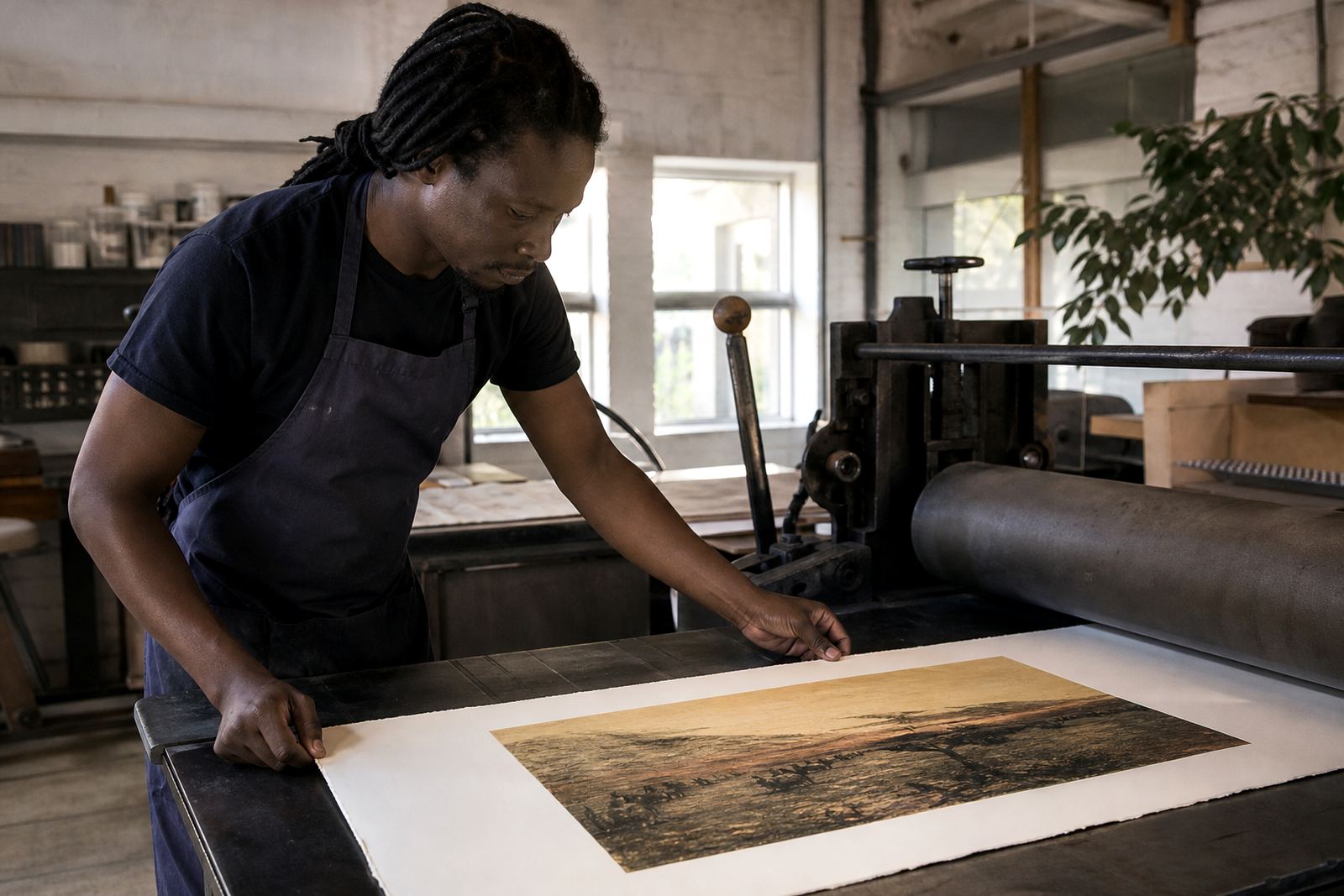
This print method works on the natural repulsion between oil and water across a prepared lithographic stone. The artist works directly on a prepared stone, building the image with drawing materials and then processing the stone so it can receive ink in the right places. Each colour usually requires its own stone or printing pass, which is why the method is valued for depth, texture and precise colour work.
For a gift, that matters because the print is not a quick reproduction. It comes from a studio process that includes proofing, colour separation, paper choice and editioning. In a limited edition, the number of prints is set in advance, and each one is signed and numbered. That gives the gift a clear place within the edition, which collectors often appreciate.
When you are comparing prints, ask about the edition size, whether the work is hand finished, and how the image was printed. If the recipient is new to lithography, a shorter explanation can help them understand why the print feels so considered and why it should be handled with care.
Choose the right edition for the occasion
Some gifts are best when they feel intimate and personal. Others need to make a stronger mark, such as a birthday, wedding, retirement or housewarming. The edition itself can guide that decision. An open edition is not the same as a limited edition, and a monochrome lithograph will create a different mood from a richly layered colour print. Neither is better in itself, but they suit different people and different rooms.
If you are buying for a collector, ask about the editioning notes and whether the print is artist proof, printer proof or part of the main edition. If the recipient is less experienced, a signed and numbered edition is often the clearest choice because it is easy to understand and easy to keep track of later.
- For a milestone gift, choose a signed and numbered edition
- For a first-time collector, select a print with clear edition details
- For a more personal gift, match the subject matter to a shared memory or place
- For a formal gift, keep the image strong and the format simple
Match size, framing and placement before you buy
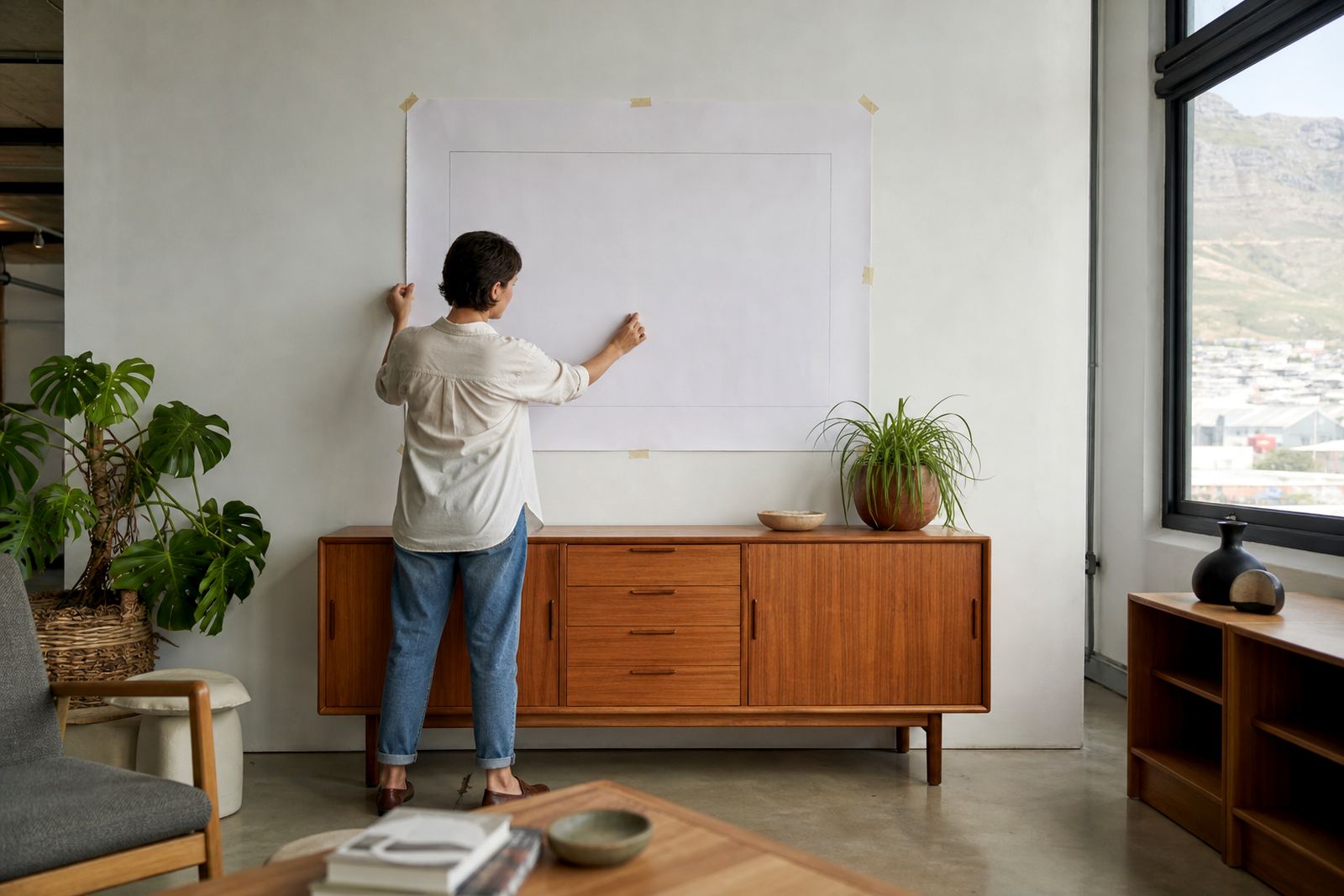
It is easy to fall in love with a print and forget the practical details. Before you choose, think about the wall space where it may be displayed. A large print can overwhelm a narrow passage, while a small image may disappear on a wide wall. Framing also matters. A good frame should protect the print, support the paper and suit the room without competing with the artwork.
For homes in Cape Town and along the coast, it is wise to consider humidity and strong sunlight. Prints should not sit in direct sun for long periods and should be framed with materials that help protect them from dust and moisture. In inland areas such as Pretoria or Johannesburg, dry air and temperature changes can also affect paper over time, especially near heaters or aircon units.
- Measure the wall before you choose the print
- Leave enough breathing room around the frame
- Use archival mounting and glazing where suitable
- Avoid hanging near bathrooms, kitchens or bright afternoon sun
Give the print with clear care instructions
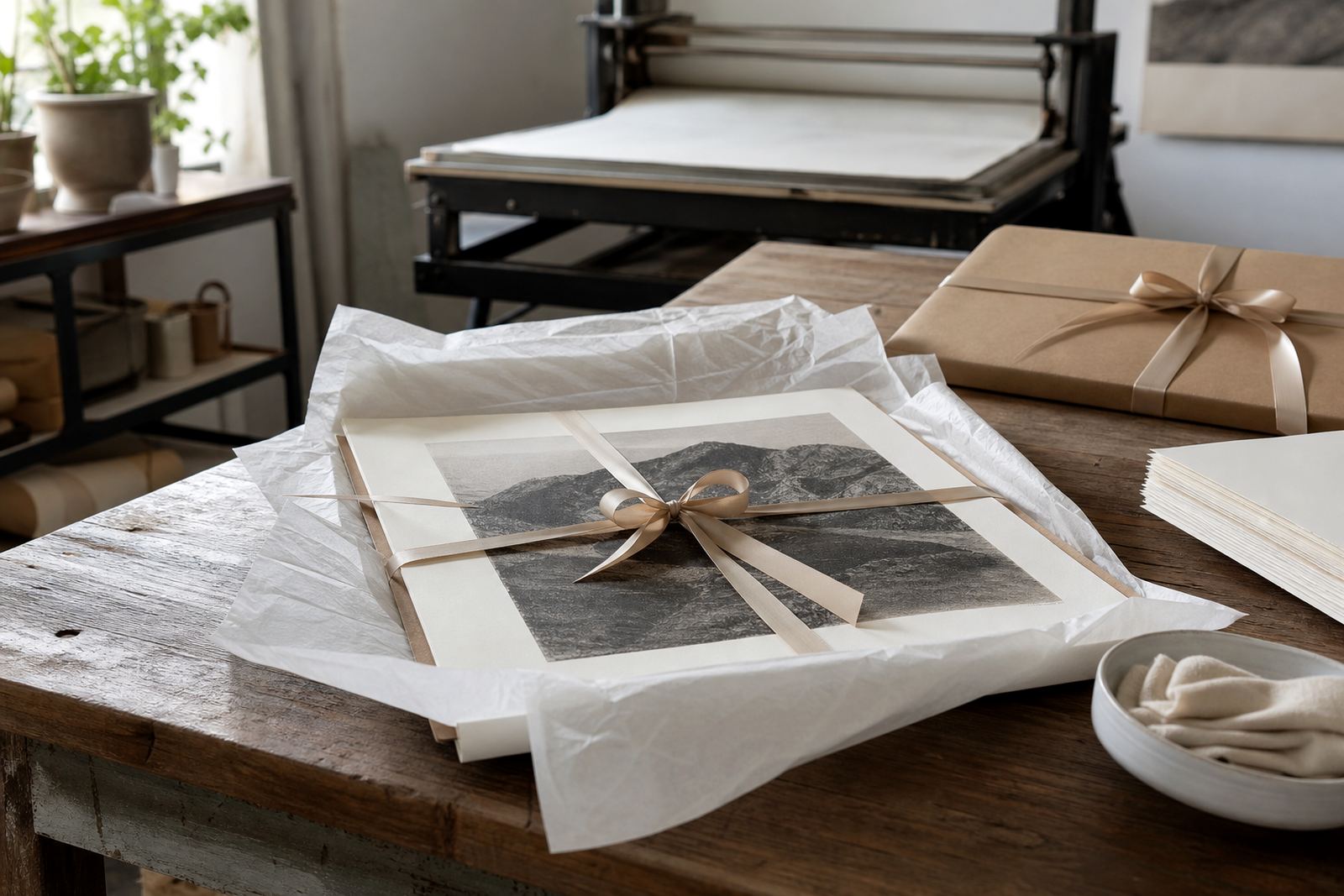
A thoughtful gift includes practical guidance. Tell the recipient how to handle the print, where to store it if it is not framed straight away, and how to keep it looking good over time. Lithographs on quality paper should be handled with clean, dry hands or with cotton gloves if possible. If the print is unframed, it should lie flat in archival packing and stay away from damp, heat and rough surfaces.
Once framed, the main care rules are simple. Keep the print out of direct sun, dust the frame gently, and check the wall fixings from time to time. If the artwork is being transported between cities, especially for clients moving between Cape Town, Durban or other coastal areas, make sure it is wrapped properly and packed so the paper does not shift.
- Store flat, clean and dry until framing
- Never roll a finished print unless advised by the studio
- Keep away from moisture, smoke and kitchen steam
- Use archival materials for packing and framing
Use a simple checklist before you send it
Before you finalise the gift, run through a short checklist. It helps avoid common mistakes and makes the present feel complete. If you are ordering for delivery to Stellenbosch, Newlands, Woodstock or further afield, ask for archival packing and confirm the delivery address carefully. If the print is for a special date, allow enough time for signing, numbering, framing coordination and packing.
The most successful gift prints are the ones chosen with a little thought. A well selected lithograph can mark a birthday, honour a new home or become part of a collection that grows over many years. It is a gift with craft behind it and a lasting place on the wall, not something that is used and forgotten.
- Confirm the recipient’s taste in colour, subject and scale
- Check the edition details and signature status
- Decide if the print needs framing before gifting
- Ask about care, packing and transport
- Leave enough time for editioning and delivery