What makes Warm Palette Editions distinct
Warm Palette Editions are built around the natural strength of stone lithography, where image, tone and colour are worked directly on limestone and printed in layers. The result is a print with a soft grain, crisp drawing and colour that can sit quietly in a room or hold its own as a focal work. These editions are especially suited to artists who want warmth without harsh contrast, and to collectors who enjoy prints that reward close viewing.
The palette is led by reds, ochres and umbers, but the real interest comes from the spaces between them. Overprints, transparent washes and small shifts in register can create depth without making the image feel heavy. In a warm interior, that can read beautifully against timber, raw plaster, linen, sandstone, brick or painted walls in off-white and muted grey. It also suits homes and offices in Cape Town, Stellenbosch, Johannesburg, Pretoria and Durban where natural light changes through the day and the print must hold together in different conditions.
Stone lithography, editioning and proofing
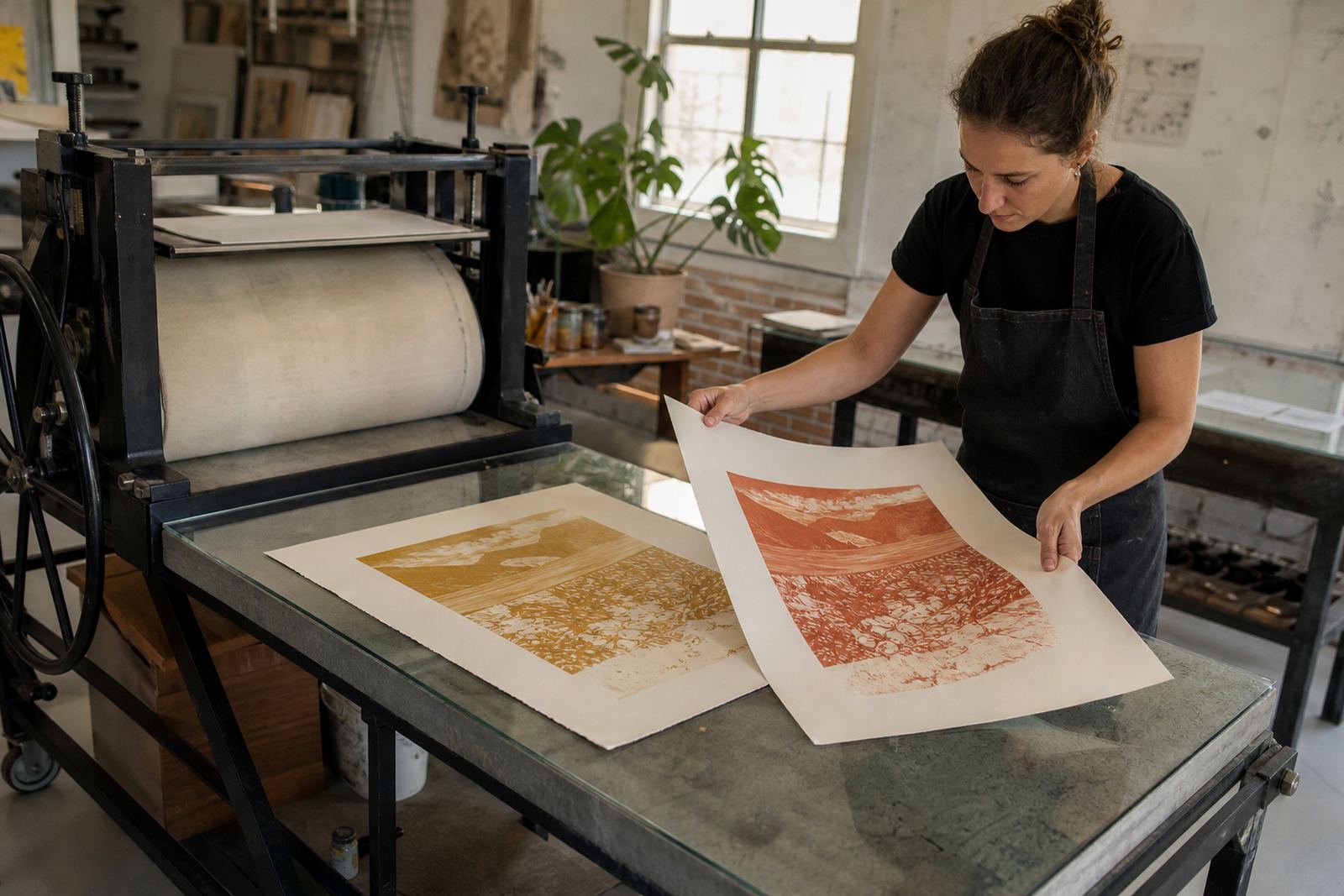
For warm palette editions, we use a traditional planographic process in which the image is carried on stone. The image is drawn or transferred onto a prepared stone surface, then treated so the greasy image areas accept ink and the damp non-image areas repel it. Each colour is printed separately, so careful planning matters. Warm Palette Editions often depend on colour separation, stone preparation and proofing sessions to get the balance right before the final edition starts.
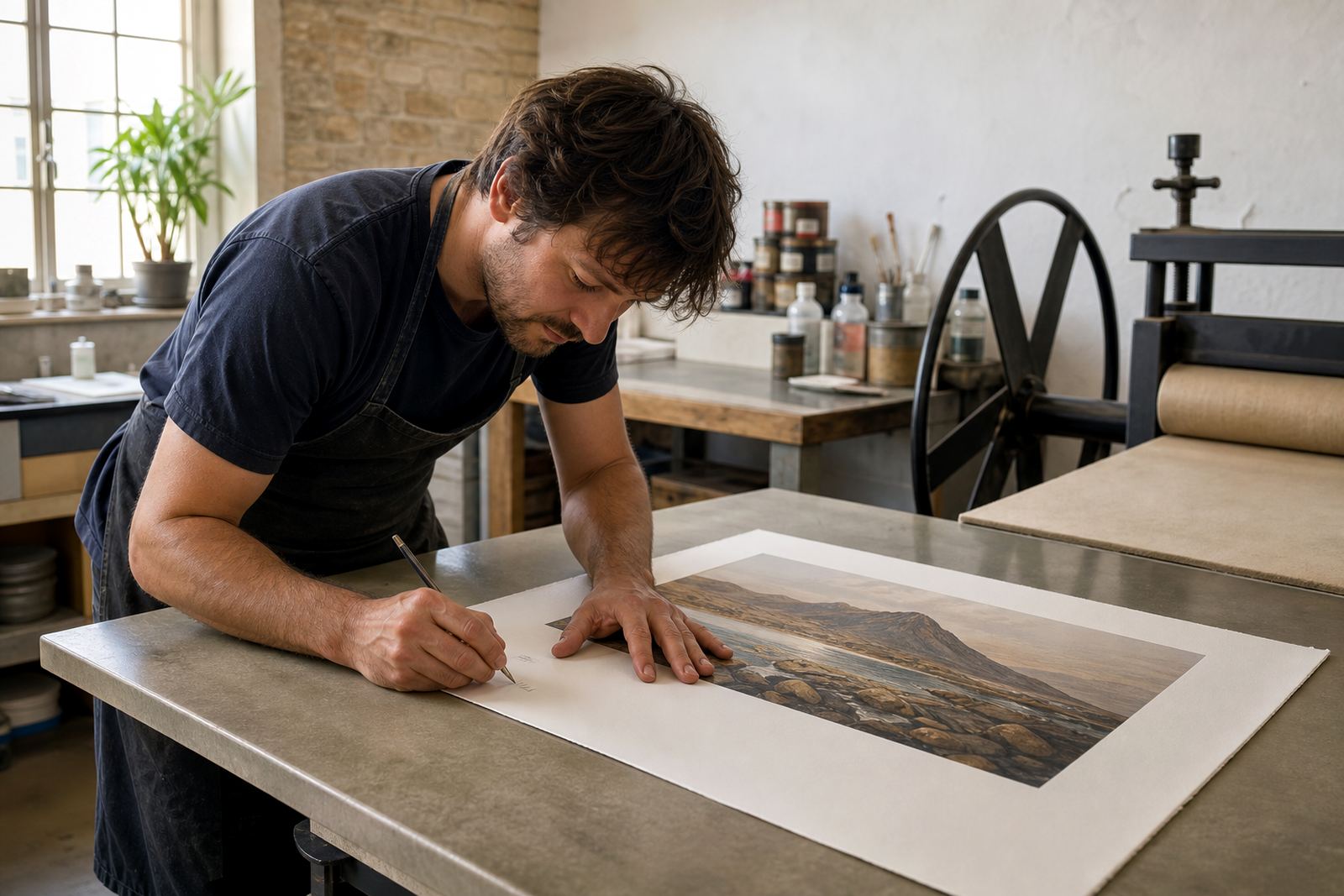
Editioning is the process of printing a fixed number of final impressions from the approved setup. Each print in the edition should match the agreed paper, colour sequence and size, with a small allowance for the natural differences that come from hand printing. We work with artists on signing and numbering, and the edition is usually completed only after the proof has been signed off. That keeps the work consistent and helps collectors know exactly what they are buying.
- Proofs are checked for colour balance, registration and ink density.
- Edition sizes are agreed before the first final impression is pulled.
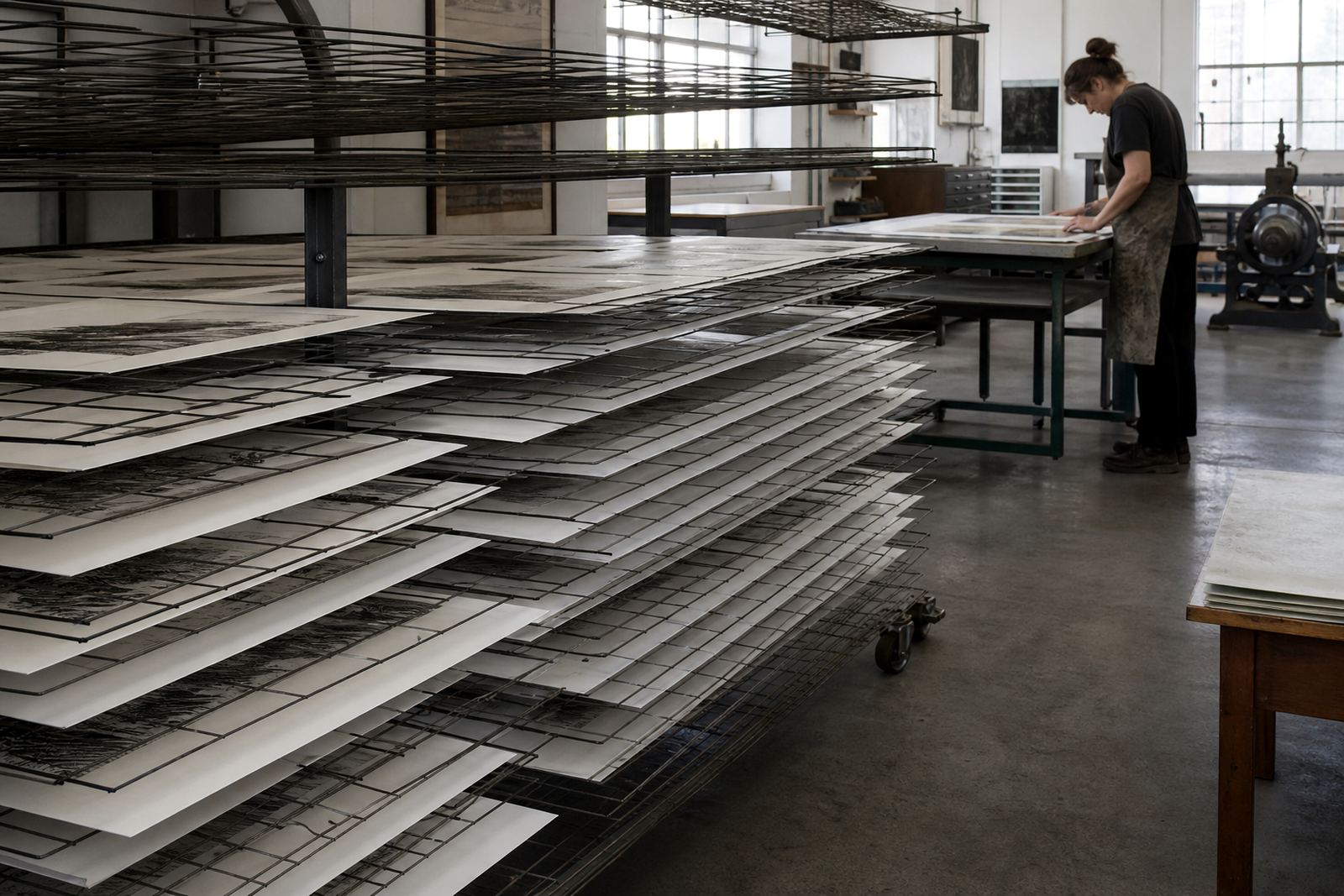
- Each sheet is handled for drying, signing and numbering before packing.
Sizes, paper choices and presentation options
Warm Palette Editions are usually offered in a range of sizes so the work can suit a small wall grouping or a larger statement wall. Common options include smaller collector formats, medium interior pieces and larger editions intended for open walls or framing as a pair. Where the image demands it, we can also work to artist specified sheet sizes so there is enough border for handling, framing and edition marks.
Paper choice makes a clear difference to the final look. A slightly warm cotton paper can deepen the reds and ochres, while a cleaner white paper can sharpen contrast and make the image feel lighter. For editions with strong tonal movement, paper weight matters too. Heavier papers generally sit flatter in framing and cope better with repeated handling during proofing and packing.
- Sheet sizes can be planned to suit single works or diptychs.
- Border allowance can be set for mounting, signing or float framing.
- Paper can be chosen for texture, colour tone and archival stability.
Where these prints suit best
Warm Palette Editions work well in dining rooms, entrance halls, passage walls, study areas, hospitality spaces and collector rooms where the artwork needs warmth and clarity. They also suit interiors that use timber furniture, leather, brass, terracotta, raw concrete or neutral painted finishes. In coastal areas like Sea Point and Durban, the palette can echo sunset light and warmer interior finishes, while in Johannesburg or Pretoria the work can bring welcome colour to cooler contemporary spaces.
For commercial interiors, these prints are a practical choice where the client wants something refined without the glare of glossy production printing. They hold their own in rooms with mixed daylight and artificial light, which matters in Cape Town homes where morning sun and afternoon shade can change the way reds and ochres read on the wall.
Framing choices that protect paper
We usually recommend archival framing with a mount, UV protective glazing where needed and hanging hardware suited to the wall type. For heavier framed works, particularly in older Cape Town buildings or renovated homes in Woodstock and Newlands, proper wall fixings are important.
We plan edition work carefully around that and advise clients to allow a little flexibility when a proofing session is booked.
- Use archival mounts and framing materials to support long term stability.
- Keep framed works away from direct sun, heaters and damp corners.
Care for collectors
Stone lithographs are made to be lived with, but they still need simple care. Keep the print out of direct sunlight where possible, especially in strong afternoon light. Avoid hanging it above a fireplace, next to a kitchen hob or in a bathroom with repeated steam exposure. In coastal homes, moisture and salt air can affect both the frame and the paper over time, so a good seal and proper backing board are worth the attention.
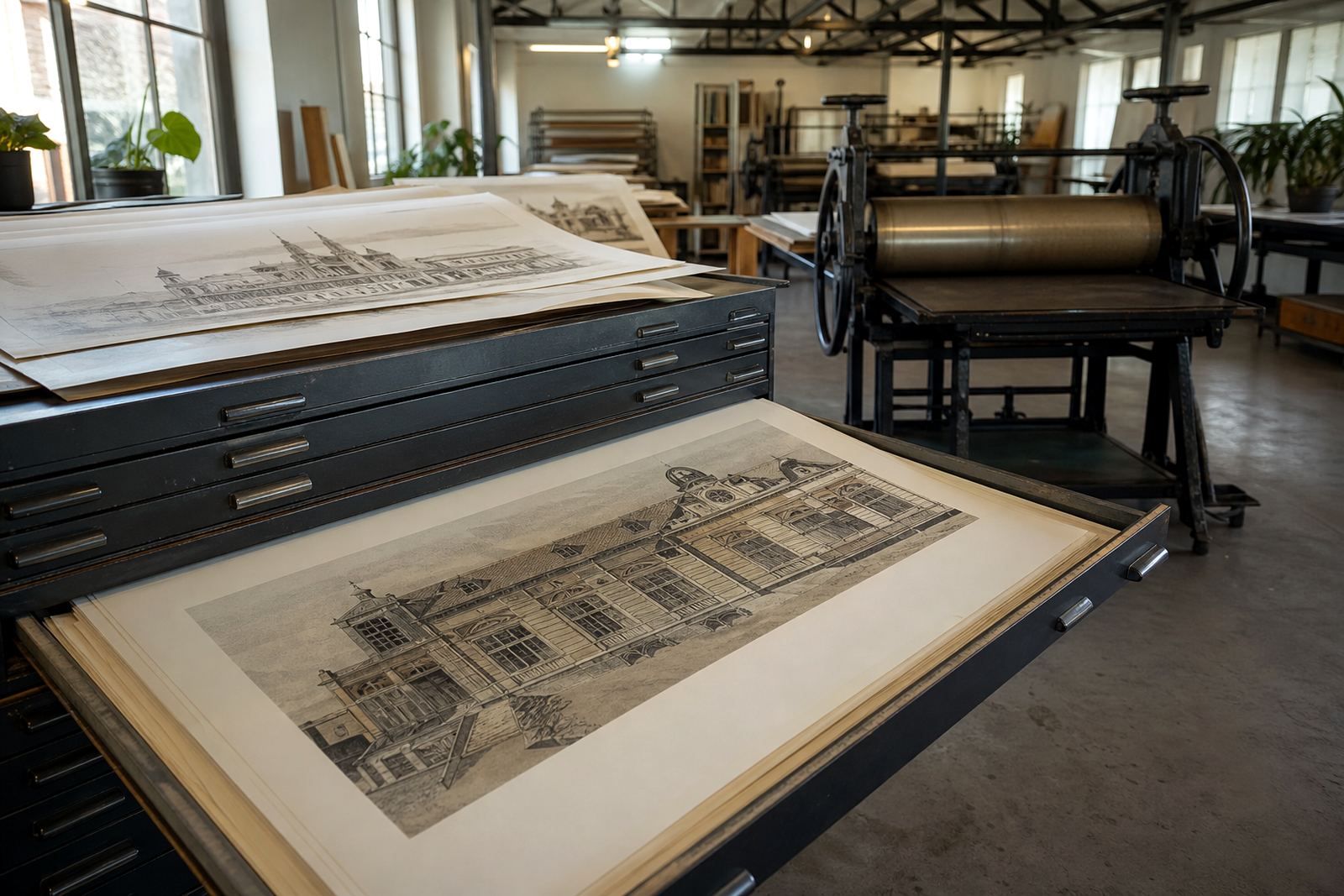
If the print needs moving, carry it flat and do not lift it by the frame edge alone. For long term storage, keep unframed works in archival sleeves or flat folders, away from pressure and sharp bends. If a collector later wants reframing, a conservator or experienced framer should check the work before any changes are made. A little care goes a long way, and it helps keep the surface crisp and the paper clean.
Before you buy or commission
Before ordering a Warm Palette Edition, check the final image size, sheet size, edition size and paper choice. Confirm whether the work is to be signed, numbered and titled on the sheet or on a separate label, and whether the framing is included or handled separately. If the work is being shipped to another city, ask how the print will be packed and whether the route needs extra moisture protection for coastal delivery or hot inland travel.
It also helps to confirm colour expectations at proof stage, especially where reds and ochres are concerned. Warm palettes can shift with paper tone and light, so a final approved proof is the best guide. If you are ordering for a series hang, make sure the scale and border widths work together before the edition is completed. That avoids awkward spacing later on, and keeps the set looking balanced on the wall.
- Confirm the approved proof before the final edition begins.
- Check edition size, artist signature details and sheet dimensions.
- Ask about packing, framing coordination and delivery timing for your city.
Edition details
| Process | Hand-pulled stone lithography with separate colour passes |
|---|---|
| Palette | Reds, ochres, umbers and warm tonal layers |
| Edition type | Limited edition, signed and numbered |
| Paper | Archival cotton papers selected for tone and handling |
| Typical formats | Small, medium and large sheet options by edition |
| Studio base | Woodstock, Cape Town, with collectors served nationwide |