What large edition stone lithography means
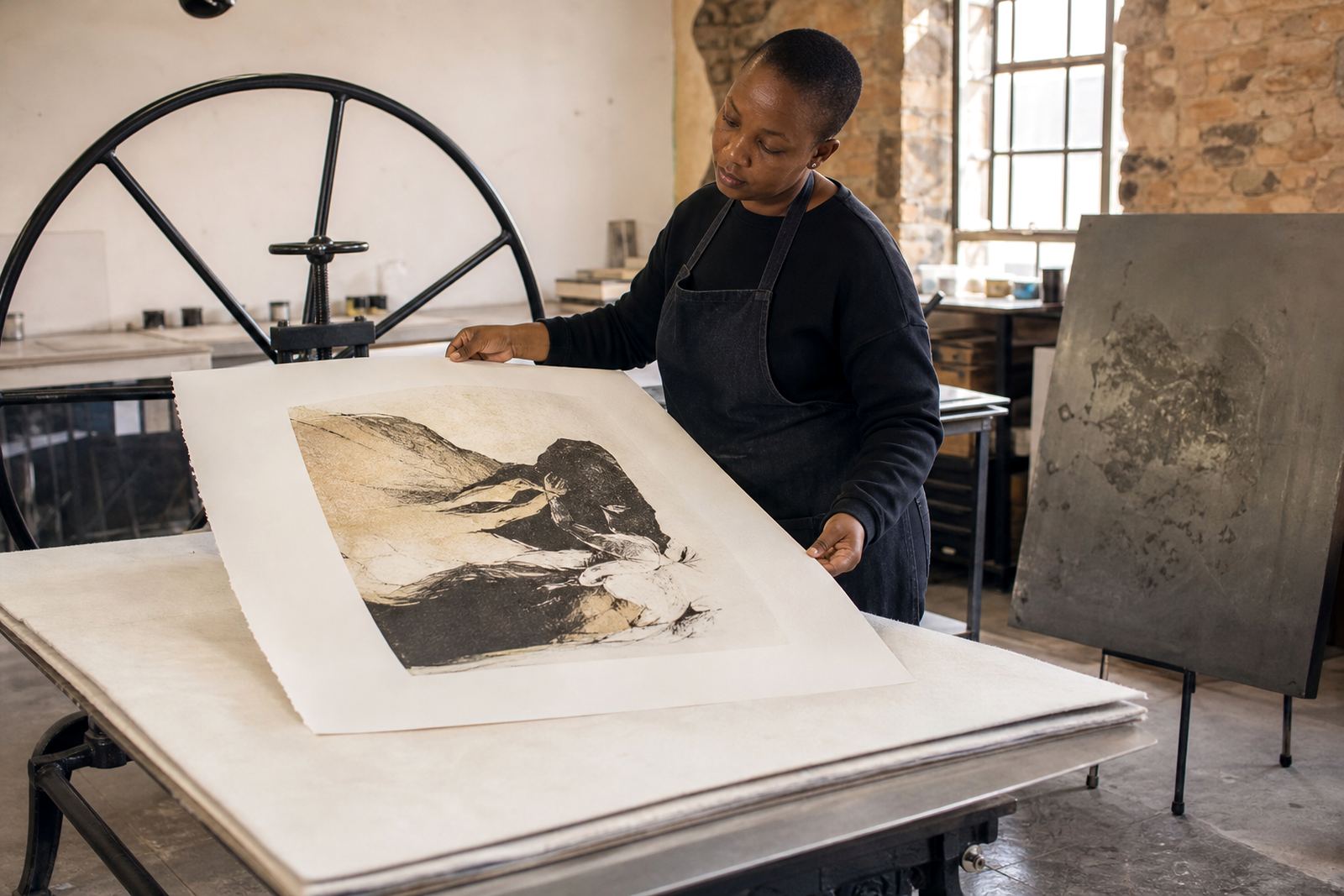
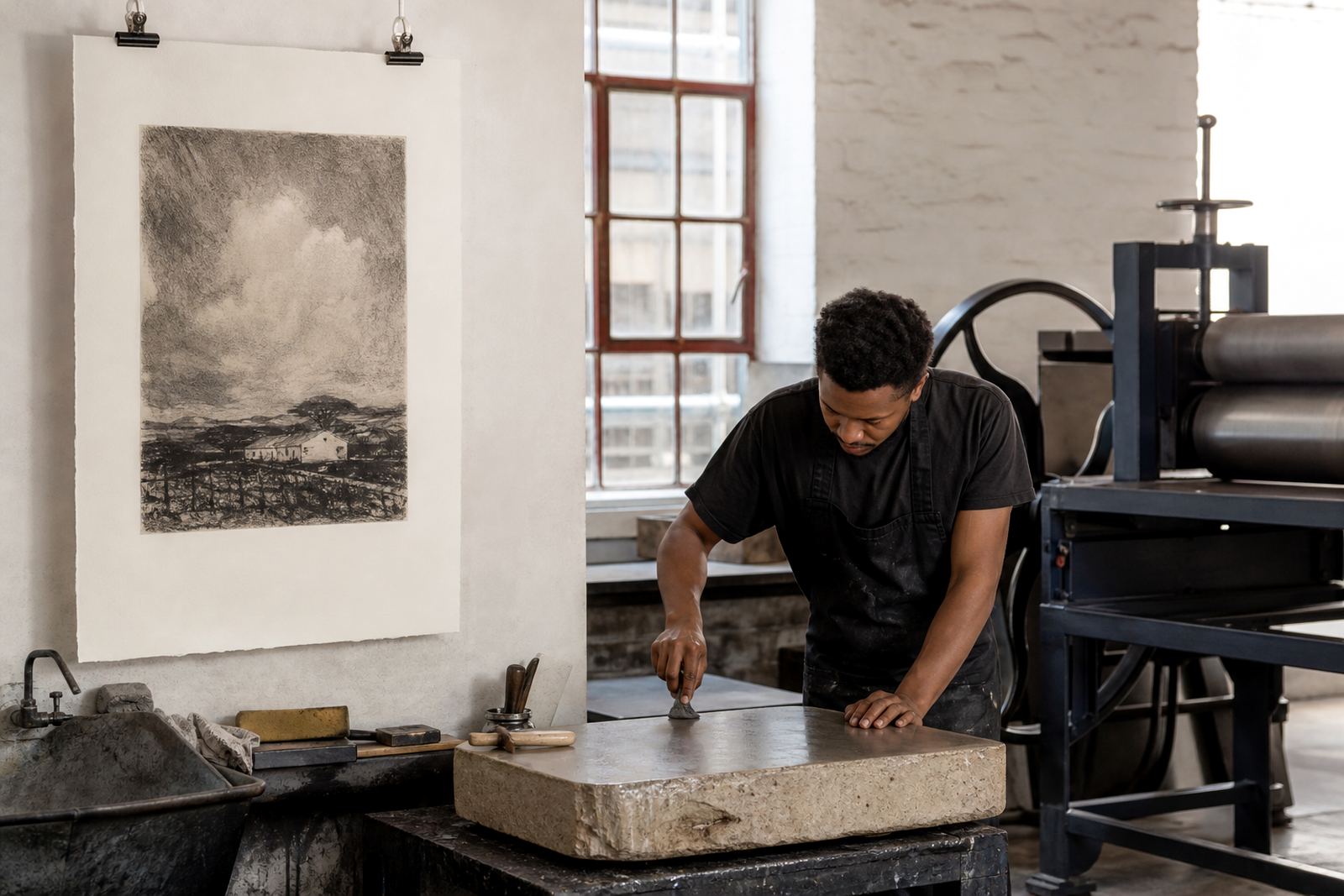
Stone lithography works as a planographic printmaking method, with the image held on a prepared stone surface, usually limestone, through the balance between grease and water. It is a slow, hands-on process that rewards careful drawing, accurate chemistry and steady press work. In a large edition, the challenge is keeping that same visual standard across a longer run, so every print in the edition looks consistent in tone, line and colour.
For this kind of edition, the studio plans the whole job from the start. That includes image development, colour separation, stone preparation, paper choice and the number of proofs needed before the final edition is signed. A larger run can suit artists who want wider access to their work, or collectors who want a dependable edition with the same image quality from sheet to sheet. It also suits collaborative projects where the artist wants a known total run, not a one-off proof.
Edition sizes and format options
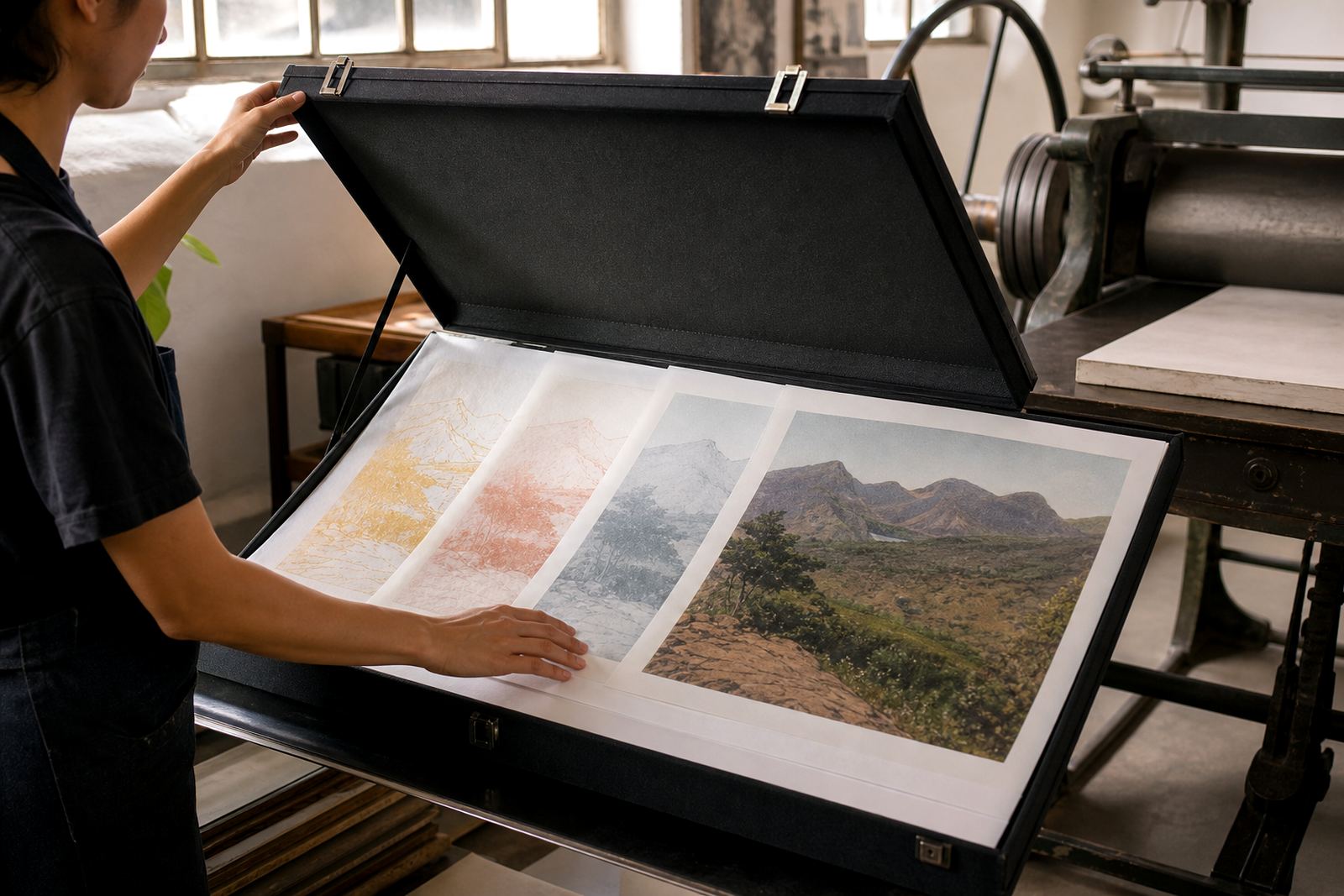
Large edition prints can be made in several sizes depending on the stone, the image and the number of colours. At Lithography Art, the final print size is set around the image and paper handling needs, with enough margin for signing, numbering and clean presentation. We also consider whether the edition will be editioned as a single image or built from multiple stones for a colour work.
Common options include smaller collector formats, standard wall sizes and larger statement sheets. The size choice affects drying time, storage and framing, so it is worth planning this early. For South African buyers, it also helps to think about how the print will travel if it is being sent to Johannesburg, Pretoria, Durban or out to the Cape Winelands.
- Single-colour lithographs for strong line, texture and tonal depth
- Multi-colour editions built from separate stones or sequential passes
- Large paper margins for professional framing and presentation
- Hand-numbered and signed sheets in a controlled edition run
Where large editions work best
Large edition prints are a practical choice for artists, galleries, interior projects and collectors who want several matching sheets for different spaces. They can work well in homes, hospitality settings, offices and curated retail spaces where consistency matters. In Cape Town, for example, larger lithographs often suit airy rooms with good natural light, while in Johannesburg and Pretoria they may be used in more formal interiors where a measured, graphic image can anchor a wall.
The format is also useful when a project needs multiple works to be placed together. A larger edition keeps the look coherent, whether the prints are going to Sea Point, Newlands or across the country. Because lithography carries a human touch, the prints still feel individual, but the edition structure gives buyers confidence that the set will match.
- Home collections and feature walls
- Gallery sales and curated retail displays
- Corporate interiors and hospitality rooms
- Artist-led releases with a defined edition total
Hanging the print at home
Large lithographic prints need a clean, dry path from studio to wall. If they are being installed soon after delivery, allow the paper to settle flat first, especially in coastal areas like Woodstock or Sea Point where humidity can affect sheet behaviour. Framing should use archival board, UV-protective glazing where suitable, and spacers if the print surface must not touch the glass. For oversized sheets, two people should handle the work, and gloves are best when the paper is unframed.
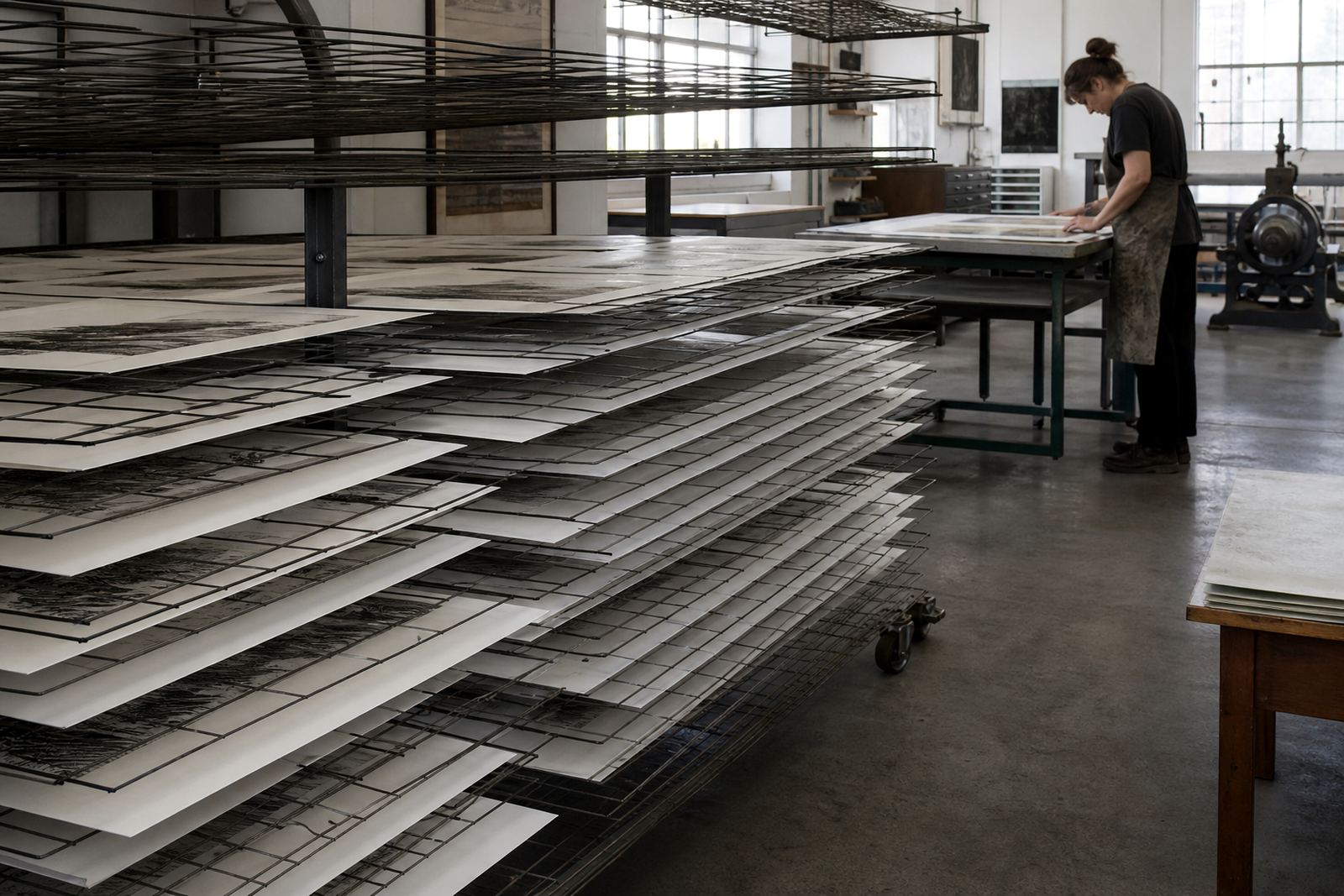
Our studio setup in Woodstock is geared for wet work, drying racks and careful edition handling. Stable lighting and a clean, dry environment help when working through proofs and drying periods.
- Stable room temperature and low dust levels
- Flat storage space for drying between handling stages
- Framing plan confirmed before final numbering if possible
Care, cleaning and long-term upkeep for print collectors
Stone lithographs should be kept out of direct sun for long periods, especially in rooms with strong west-facing light. Like most fine-art prints, they prefer a steady indoor climate rather than a wall above a heater, kitchen steam or damp exterior wall. In coastal homes, regular air movement helps, but avoid placing unframed work in areas where moisture can settle on the paper.
Once framed, the print should be dusted only around the frame and never wiped across the paper surface. If a sheet needs archival packing or re-framing later, keep the original mount materials if possible and note the edition details on the reverse. For collectors, it is also wise to keep the purchase record, edition number and any printer notes together for future insurance or resale use. If the work has been stored rolled, check it before hanging so that edges and corners are still sound.
For editions printed in larger runs, good care preserves both the appearance and the market value of the set over time.
Before you buy or commission
Before ordering a large edition, make sure the edition total, paper size, image size and colour count are clearly agreed. Ask whether the edition will include artist proofs, how many test proofs are planned, and whether the final number will be signed and numbered in one sequence or in separate batches. It is also wise to confirm the paper stock, drying time and packing method if the work is travelling beyond Cape Town.
Collectors should check how the print will be supplied for framing, whether it will be trimmed or left with full margins, and whether any edition notes will accompany the sheet. If the work is being created as part of a larger release, ask how the studio manages consistency from the first print to the last. That level of planning matters in lithography, where slight changes in inking, pressure or stone condition can alter the final look.
- Edition total and proof count
- Paper type, sheet size and image size
- Signing, numbering and drying schedule
- Packing and framing preferences
Working with Lithography Art in Woodstock
Lithography Art is based in Woodstock, Cape Town, and works with artists and collectors across Stellenbosch, Johannesburg, Pretoria, Durban, Sea Point and Newlands. Based in Woodstock, the studio is led by Shailen Naicker, with a team handling printing, editioning, client coordination and archive care. Large edition work is managed with steady attention at each stage so the whole run holds together from proof to final sheet.
Clients usually begin through the enquiry form on our contact page, then we discuss the project, edition plan and practical requirements before the first stone is prepared. If you need a controlled larger run with consistent results, the studio can guide the process from paper selection to signing and packing. It is careful work, and that is what keeps the prints true to the edition.
Edition details
| Process | Stone lithography on prepared limestone |
|---|---|
| Edition type | Limited edition, numbered and signed |
| Typical use | Collector sales, gallery release and interior display |
| Size range | Small collector sheets through larger wall-scale formats |
| Materials | Fine-art paper, archival packing, optional framing coordination |
| Studio location | Woodstock, Cape Town |