What a signed edition means in stone lithography
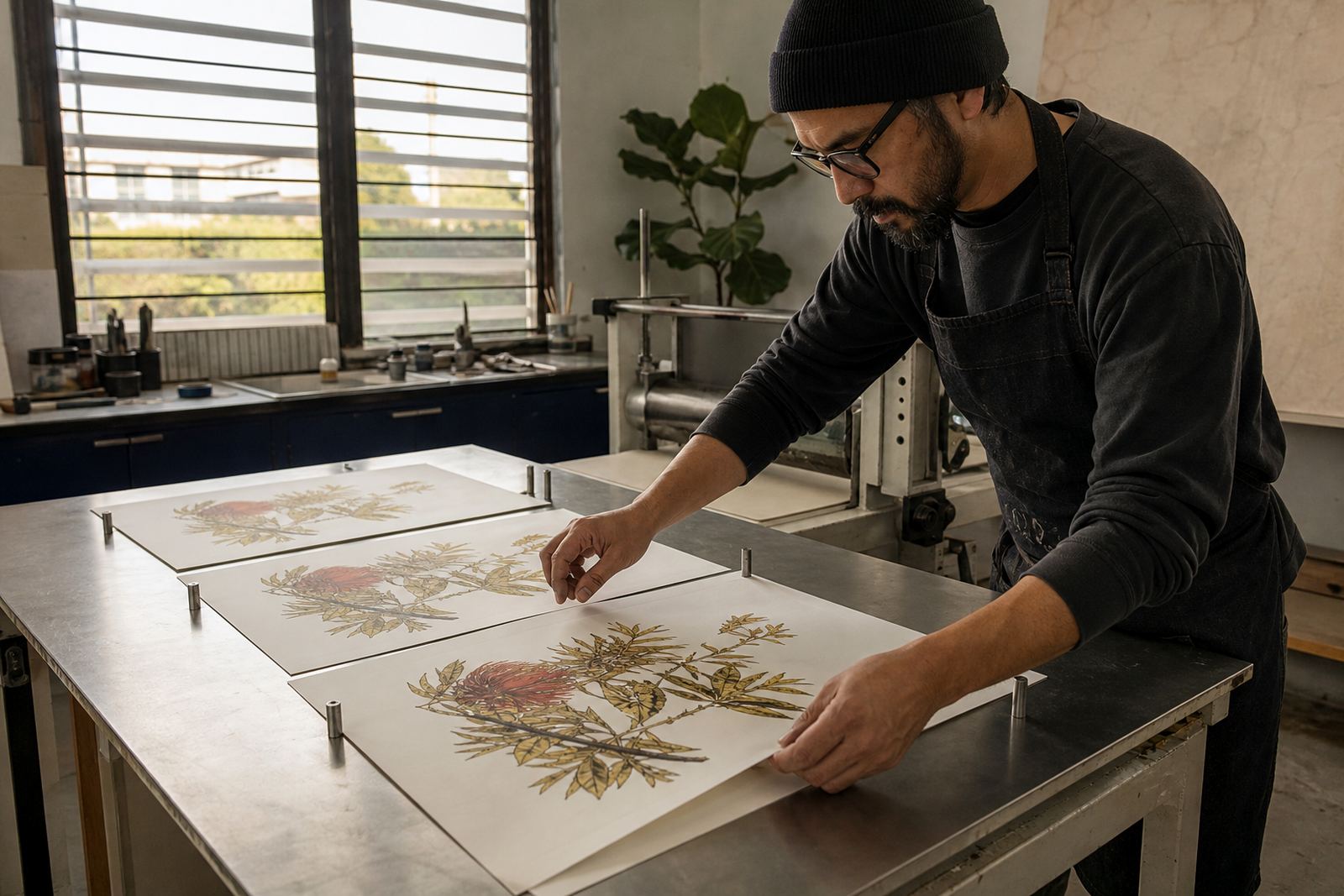
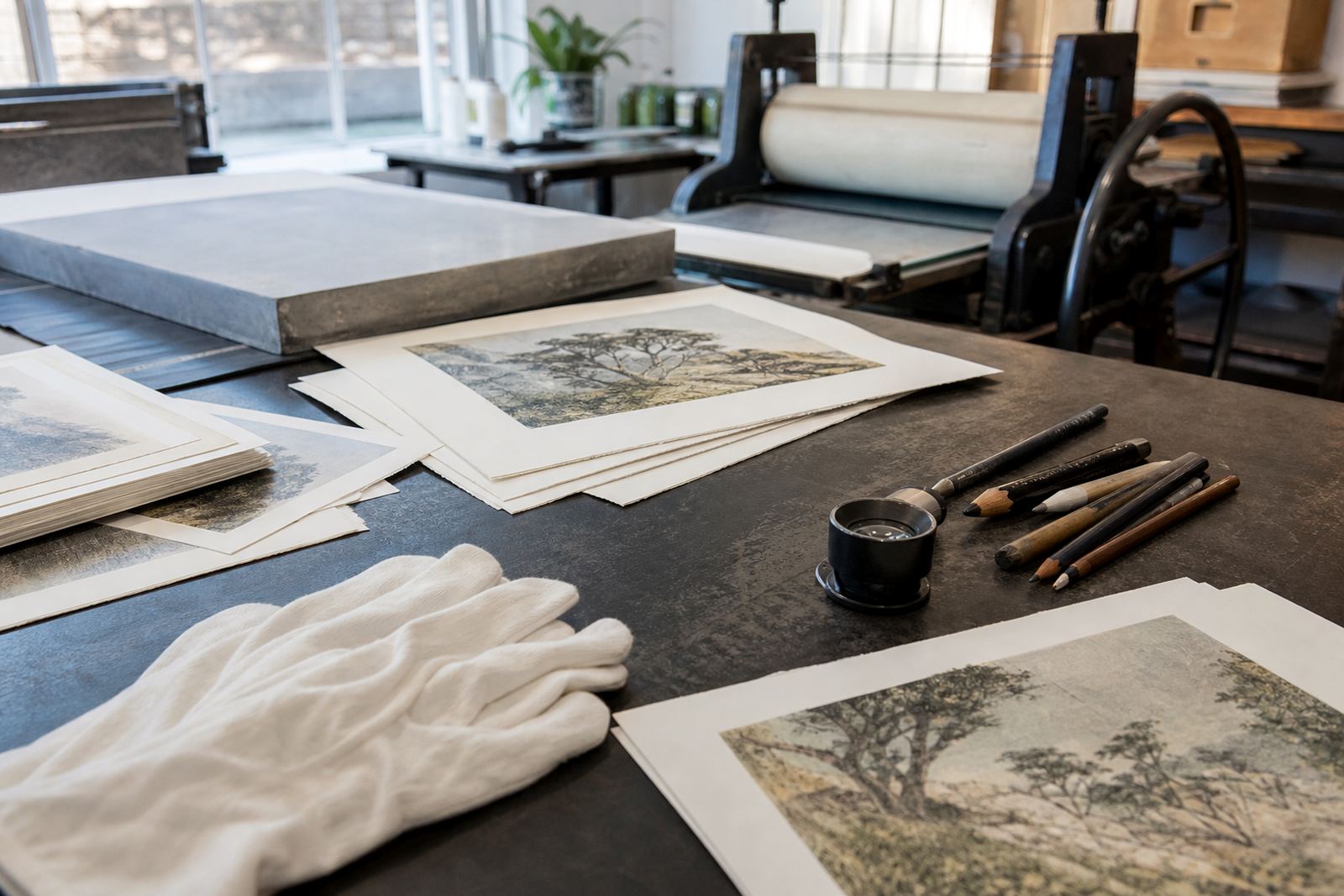
A signed edition is the final set of prints pulled from the stone after the image has been approved. In stone lithography, the image is drawn on limestone with grease-based materials, then chemically treated so the stone accepts ink in the drawn areas and repels it elsewhere. Each colour is printed in separate passes, so registration and pressure must be checked carefully from first proof to final sheet.
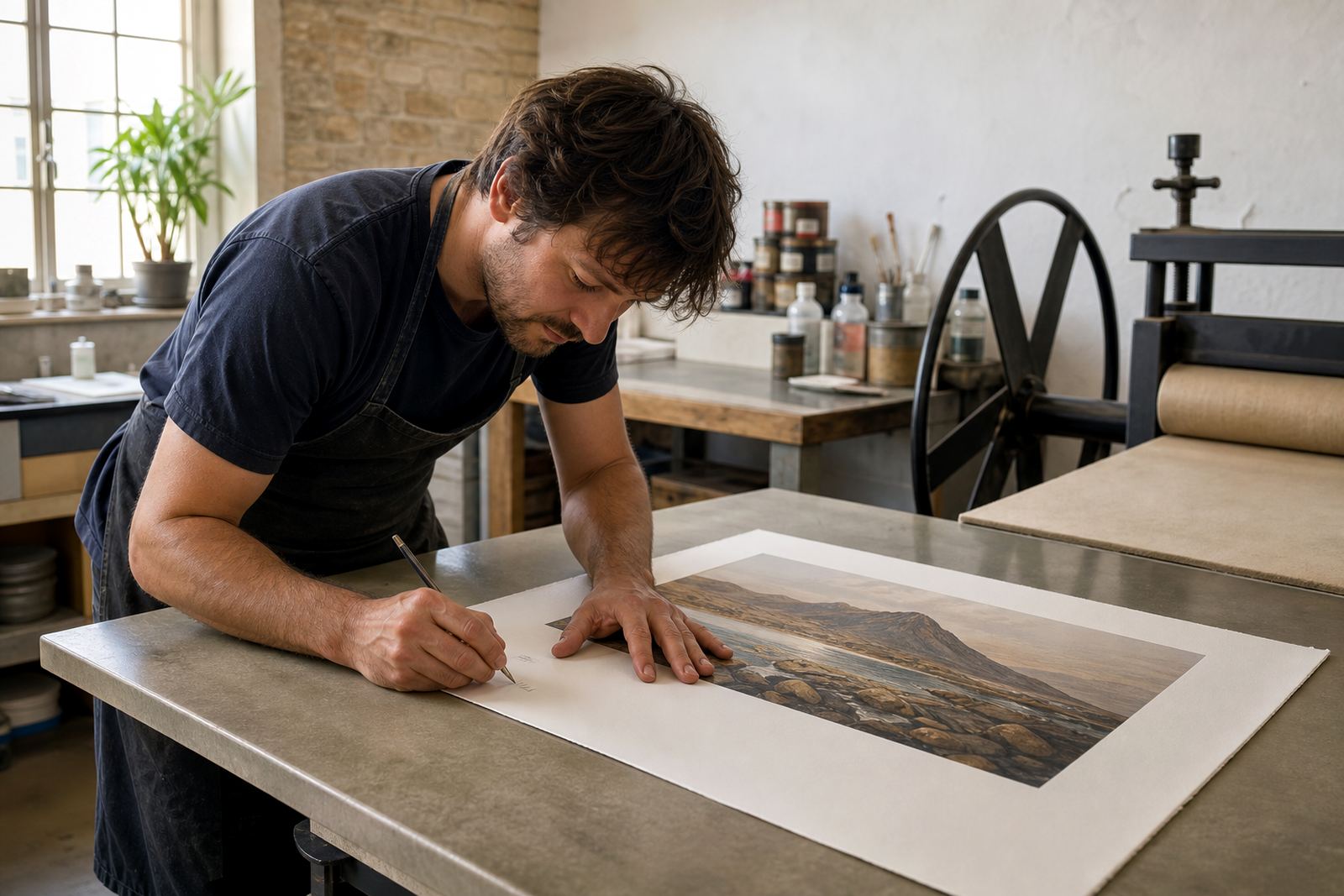
Once the edition is approved, the artist signs each print by hand. This gives the work clear provenance and a defined run length, which matters to collectors who want an authentic, numbered print rather than a reproduction. We work with artists on limited editions, open editions where appropriate, and special states where the image develops over more than one proofing stage.
Sizes, paper choices and edition formats
Signed editions can be produced in a range of sheet sizes depending on the stone, the image area and the artist’s intent. Smaller sheets suit intimate works and portfolios, while larger formats are often chosen for bolder colour or more detailed drawing. Some prints are trimmed close to the image, while others keep generous margins for signing, numbering and framing.
- Sheet size depends on the stone and the image block
- Image area can be kept compact or extended with wide margins
- Paper choice includes smooth, mould-made and heavier archival stocks
- Edition size is agreed before printing begins
- Signed prints may be numbered, titled, or both
Paper choice affects the final look and feel. A heavier sheet can carry strong colour and deep embossing from the press, while a smoother surface can hold fine tonal drawing and delicate marks better. For collectors in coastal areas like Sea Point or Durban, we often suggest papers and framing methods that cope better with humidity and day to day handling, because paper can move a bit if it is stored badly.
Where signed editions suit a room or collection
These prints suit homes, studios, galleries, offices and reception spaces where original art needs to be seen clearly and cared for properly. A signed edition works well as a single focal work above a sideboard, in a passage, or in a reading room, but it can also sit within a larger wall of works if the framing is consistent.
Collectors often choose signed editions when they want a strong link between the artist’s hand and the final work. The edition format also helps when building a collection over time, because similar works can be hung together and kept in order by title, size or paper stock. For buyers in Stellenbosch, Johannesburg, Pretoria and Cape Town, the appeal is often that the print arrives ready for framing, with clear marks of authorship and a tidy record of the run.
- Ideal for private collections and corporate art walls
- Suitable for framed display in controlled indoor conditions
- Works well as a gift when provenance matters
- Can be paired with a certificate or edition details sheet
Printing, signing and the final approval process
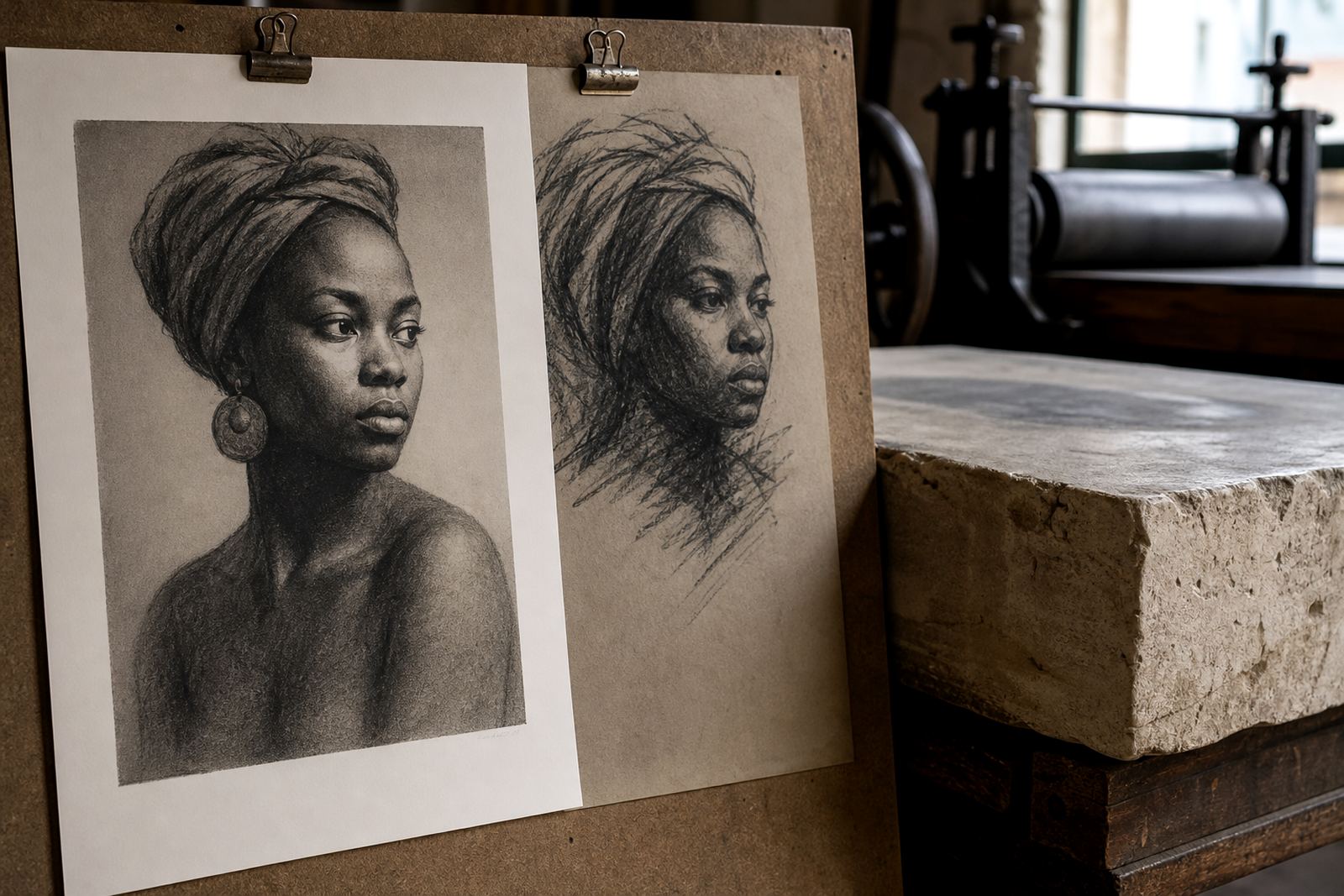
We begin with proofing sessions, where the artist reviews colour, contrast and placement before the full run is printed. Stone lithography allows subtle tonal shifts, but each colour has to be handled with care so the final set stays consistent across the edition. When the artist approves the last proof, the edition is printed and signed, usually at the studio after drying and inspection.
The signing stage matters because it confirms the work as part of the final approved run. Some artists prefer to sign in the studio, others sign after delivery, but the principle stays the same: the edition must match the approved standard. We also keep a clean record of edition numbers, paper details and any artist’s proofs where relevant, so the run is easy to track later on.
Framing and hanging
Signed lithographs only need careful framing, safe hanging and a stable indoor wall. For most homes and business premises, the main concern is avoiding direct sun, damp walls and areas near extractor fans, air conditioners or open windows where dust and moisture can build up.
Framing should be planned before dispatch if the print will be hung soon after delivery. Archival mounts, UV-filtering glass or acrylic, and acid-free backing all help preserve the paper. In Cape Town and coastal towns, sealed framing is worth considering because humidity can cause waviness or foxing over time if the work is exposed to poor conditions.
- Hang away from direct sunlight and heat sources
- Keep the print out of bathrooms, kitchens and laundry areas
- Use acid-free mount board and backing
- Choose a framer who understands works on paper
- Allow the frame to be opened for future inspection if needed
Care and what to check before ordering
Care starts with handling. Always lift the print by the edges or in its protective sleeve, and do not press on the printed surface. If the print is framed, dust the frame gently with a soft cloth and avoid sprays near the glass. For unframed works, store them flat in clean archival packaging, away from sunlight and damp. If a print has been rolled for transport, let it relax in a controlled room before framing, and dont force it flat.
Before ordering, check the edition size, paper dimensions, image size, signing method and whether you need framing coordination or archival packing. It is also worth confirming the delivery address and access points, especially for collectors in apartment blocks, office buildings or estates with loading rules. If the work is travelling to Durban or Johannesburg, ask how it will be packed for transit so the corners and surface stay protected.
- Confirm sheet size and image size separately
- Ask whether the edition is numbered and signed
- Check if the work is sold framed or unframed
- Request notes on paper type and care
- Make sure delivery and handover details are clear
Edition details
| Product type | Limited edition stone lithograph signed by the artist |
|---|---|
| Edition format | Numbered and signed after final approval of the run |
| Sizes | Custom sheet sizes depending on stone and image area |
| Paper | Archival paper selected for the work and desired finish |
| Finish | Unframed or framed through coordination |
| Care | Indoor display, away from direct sun, damp and heat |