What vertical format stone lithography means
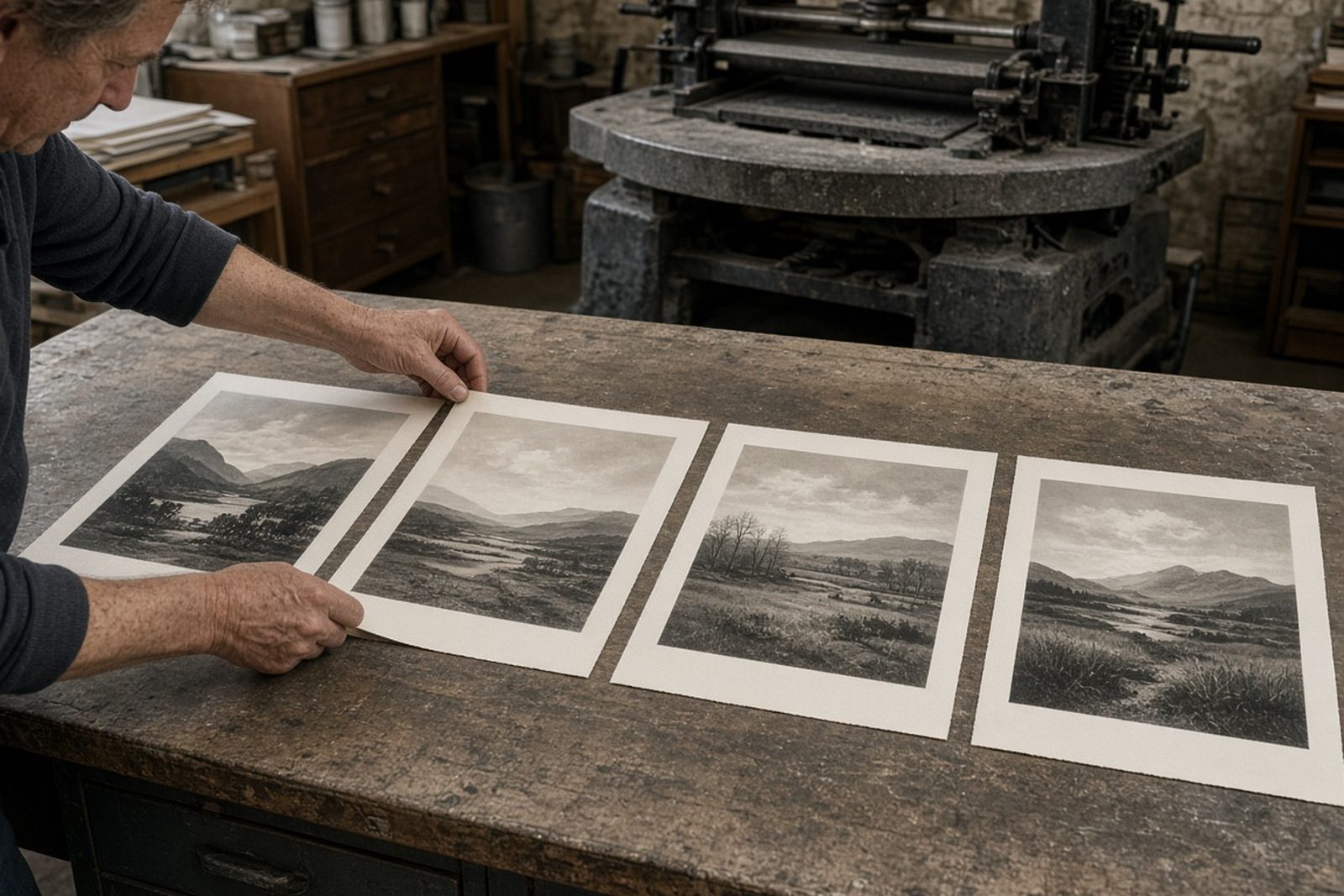
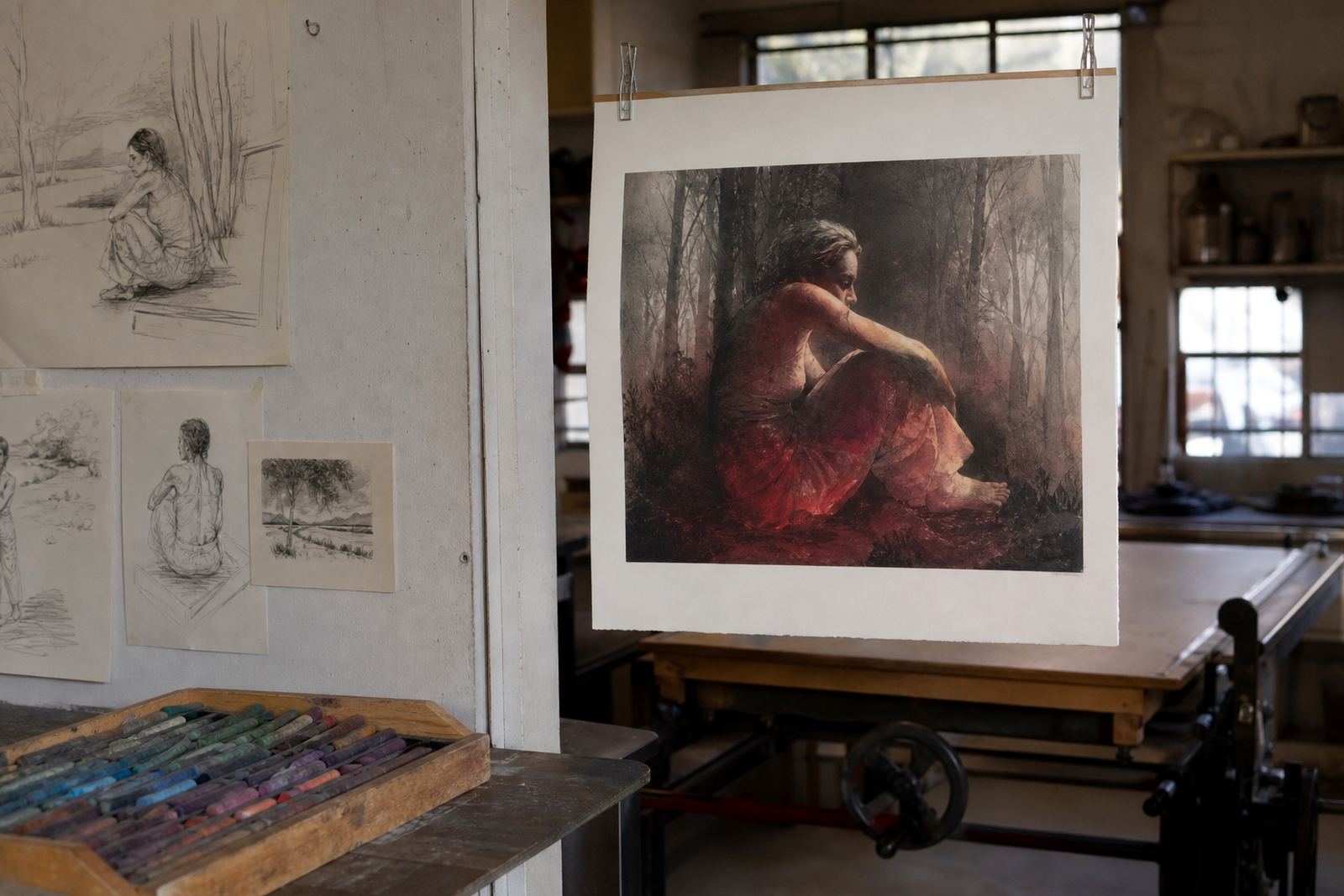
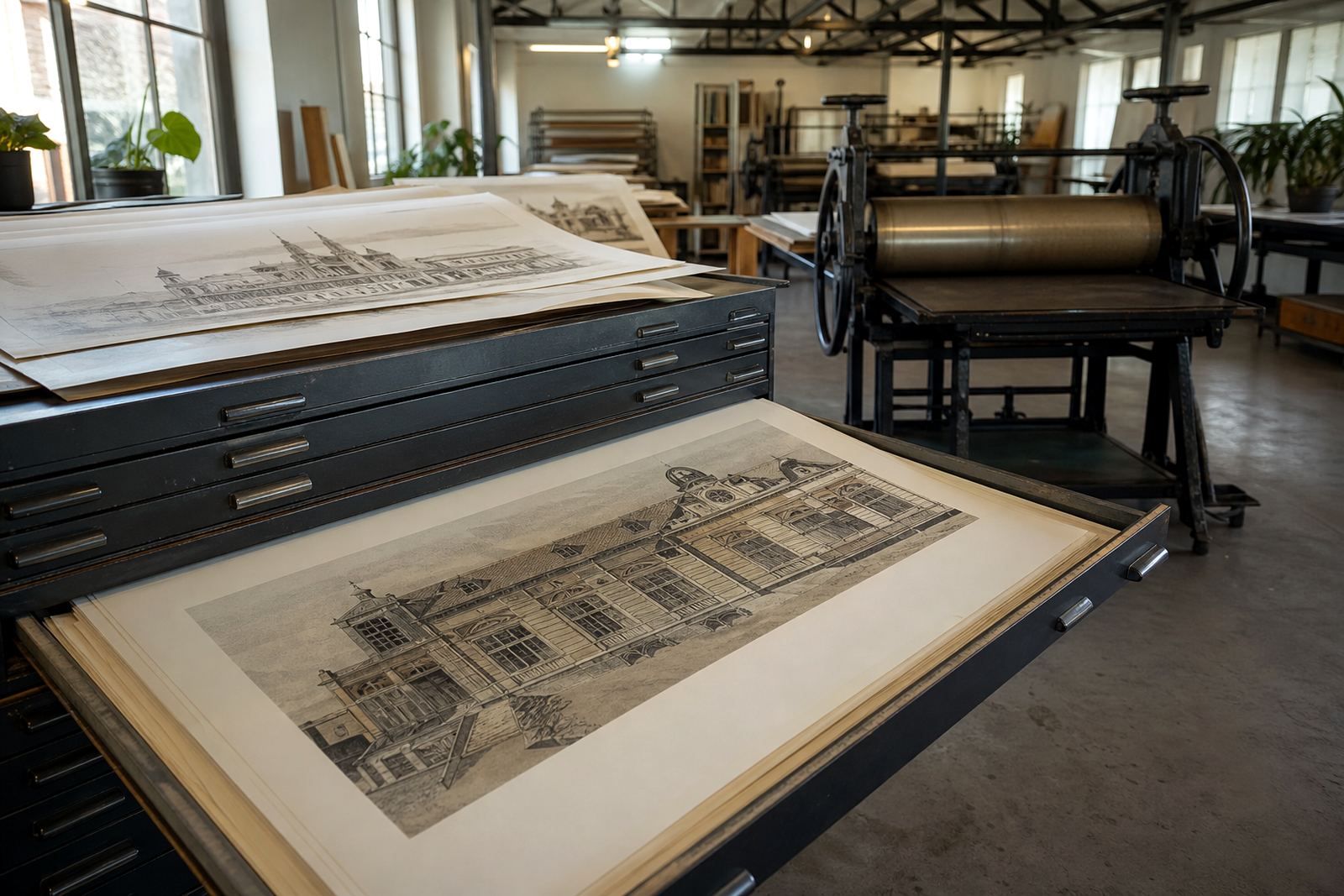
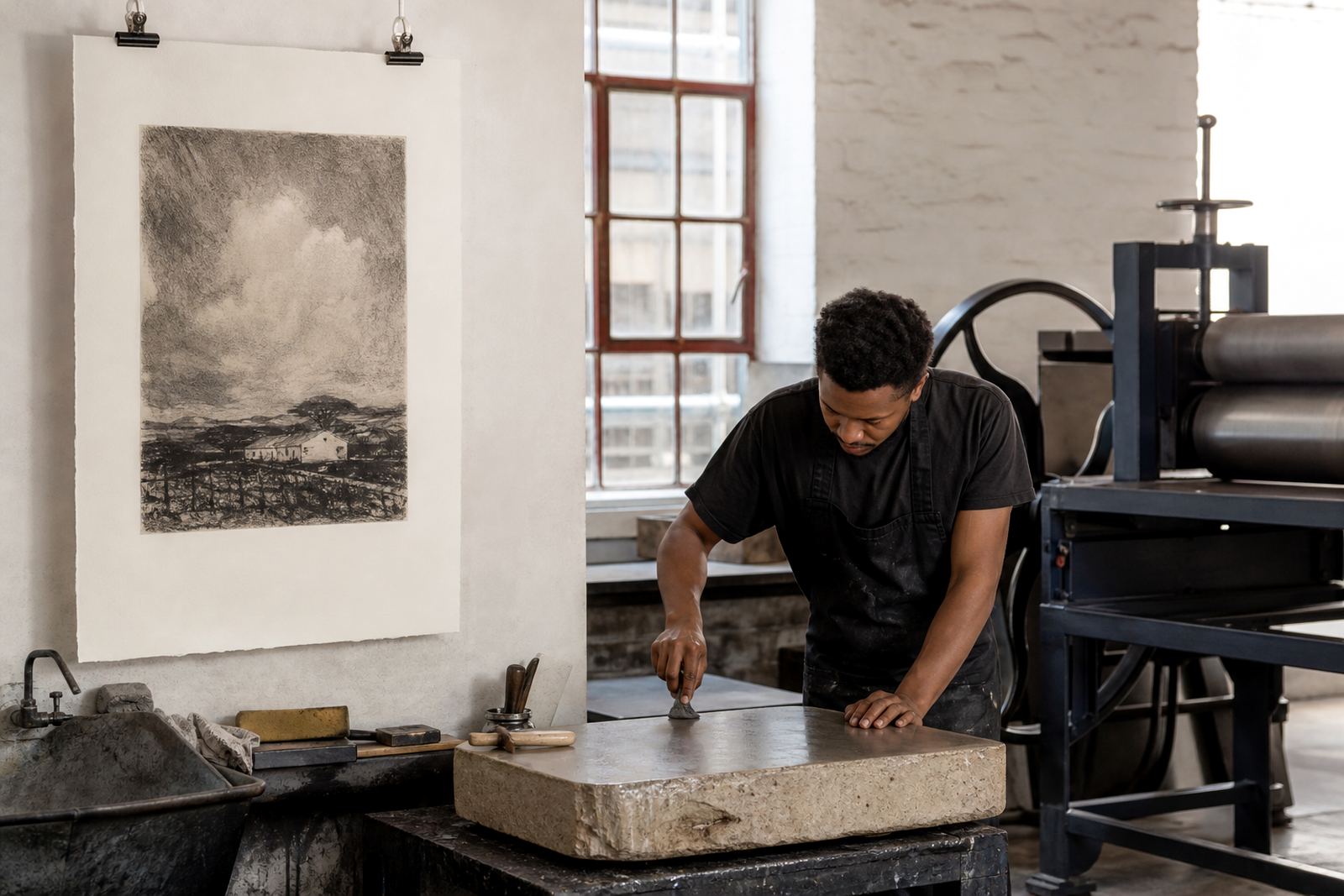
Vertical format prints are tall editions made on stone lithography presses, with the image planned to work from top to bottom rather than across a wide field. The format suits figures, botanical studies, architectural subjects, layered text, or any image that needs height to hold the composition together. Because the image is drawn or worked directly on the stone surface, the final print carries the marks of hand pressure, tonal variation, and the slight texture that collectors often look for in fine art lithography.
In this process, the image is printed from stone rather than built through relief or intaglio methods. The artist works on a prepared limestone stone with greasy drawing materials, tusche or similar lithographic marks. The stone is then chemically treated so the image areas attract ink and the non-image areas hold water. Each sheet is then printed one at a time through the press. For vertical editions, the paper size, image proportions and margins are planned early so the finished work sits properly on a wall and does not feel cramped, ja of course the registration must stay exact.
Sizes, proportions and edition options
Vertical format editions can be made in a range of sheet sizes depending on the image and the paper available. The key decision is not only height, but the balance between image area, margin space and the wall space where the print will live. Narrow walls, stairwells and entry passages often suit a slimmer sheet. Taller rooms can take a more generous vertical work with wider breathing room around the image.
- Common options include narrow portrait sheets for small walls and larger upright sheets for statement pieces.
- Edition size is planned with the artist before printing starts, with proofing used to settle colour, density and placement.
- Some editions are printed as a single image in one colour, while others use several stones or colour passes for layered tones.
- We can also arrange matching margins for framing, signing and numbering so the edition reads cleanly when mounted.
When you enquire, it helps to share your wall measurements in metres, the framing allowance you have in mind, and whether the print will hang singly or as part of a pair or series. That lets us guide the sheet format and paper choice more accurately.
Where vertical prints work best in a room
These prints work well in homes, offices, hospitality spaces and collector interiors where the wall is tall but not especially wide. In Cape Town apartments, stair walls and passage ends often suit this format. In Durban, where coastal humidity can affect paper if framing is delayed, we advise secure packing and prompt framing once the print arrives. In Johannesburg and Pretoria, vertical works are often used in reception areas, studies and hallways where a single print needs to carry the room without overcrowding it.
Vertical format also suits homes in Sea Point and Newlands where older walls, bay windows or tight passage proportions make a broader print feel awkward. In Stellenbosch, collectors often choose upright editions for rooms with high ceilings or between timber furniture and built-in joinery. The format gives the eye a clear path upward, which is useful in smaller spaces where a wide composition would feel too heavy.
Stone preparation, proofing and colour control
At our Woodstock studio, every edition begins with stone preparation. The stone must be level, clean and correctly grained before the image is worked. For vertical prints, registration marks and image placement need careful attention because any drift shows quickly in a tall composition. Proofing sessions are used to test the first pulls, check tonal balance and confirm whether the image needs more bite, softer edges or another colour pass.
- Colour separation is planned where the image needs multiple stones or passes.
- Paper consultation helps match the surface and weight of the sheet to the image.
- Editioning keeps every sheet in sequence and records the final signed impression.
- Archival packing protects the print from moisture, bending and surface marking.
Our team works through the practical details with the artist and client so the edition remains consistent from first proof to final sheet.
Choosing a wall and frame
The studio process does rely on press equipment, lighting and controlled handling during production. For clients collecting in person, we recommend a flat, clean vehicle space and avoiding direct sun in transit. Once the print is framed, it should be hung with proper wall fixings suited to the frame weight and wall material.
Framing should allow for a slight buffer around the sheet so the paper does not touch the glazing. For humid coastal homes, use conservation framing materials where possible and keep the print away from bathrooms, kitchens and direct sea mist. If you are planning a series of vertical works, we can advise on spacing so the group hangs evenly and the eye moves naturally from one piece to the next.
Care and long-term storage
Stone lithography prints are made to last when handled properly. Keep the sheet in its archival sleeve or framed behind protective glazing, away from direct sun and damp. Do not roll a print unless it is absolutely necessary, and if it must be transported rolled, use a wide tube and acid-free interleaving. Dust the frame only, not the paper surface. If a print needs reframing, unframing or packing for a move between Cape Town and another city, it should be handled with clean hands and supported fully so the paper does not crease.
For collectors who keep unframed editions in storage, a cool dry cupboard is best. Avoid garages, damp storerooms and rooms with strong temperature swings. Vertical works are often stored flat between archival boards, particularly when they are part of a limited edition that may be framed later. If you notice cockling, staining or pressure marks, bring the print back to us for advice before any cleaning attempt is made.
Before you buy or commission
Before placing an order for a vertical format print, confirm the wall size, the final frame size and whether the piece will be hung in portrait orientation only or as part of a series. It also helps to know if you want a wide margin for a more open look or a tighter image area. Ask about the edition size, paper type, signing and numbering, and whether archival packing is included for courier delivery across South Africa.
- Confirm the wall width and height in metres.
- Check whether the print will hang in a home, office or hospitality setting.
- Ask about proofing, editioning and any colour variations.
- Tell us if framing is needed before dispatch or after delivery.
- Let us know if the destination is coastal, since humidity affects handling and storage.
Clients in Cape Town, Stellenbosch, Johannesburg, Pretoria and Durban are welcome to use the enquiry form on our contact page. We can guide the process from first question to final packed edition, and make sure the print suits the space it is meant for.
Edition details
| Process | Stone lithography, hand printed on a lithographic press |
|---|---|
| Format | Tall portrait orientation for narrow walls and upright compositions |
| Editioning | Limited editions, signed and numbered |
| Paper | Archival printmaking paper selected for the image and ink load |
| Finish | Unframed, framed or archive packed for collection and courier |
| Studio base | Woodstock, Cape Town |