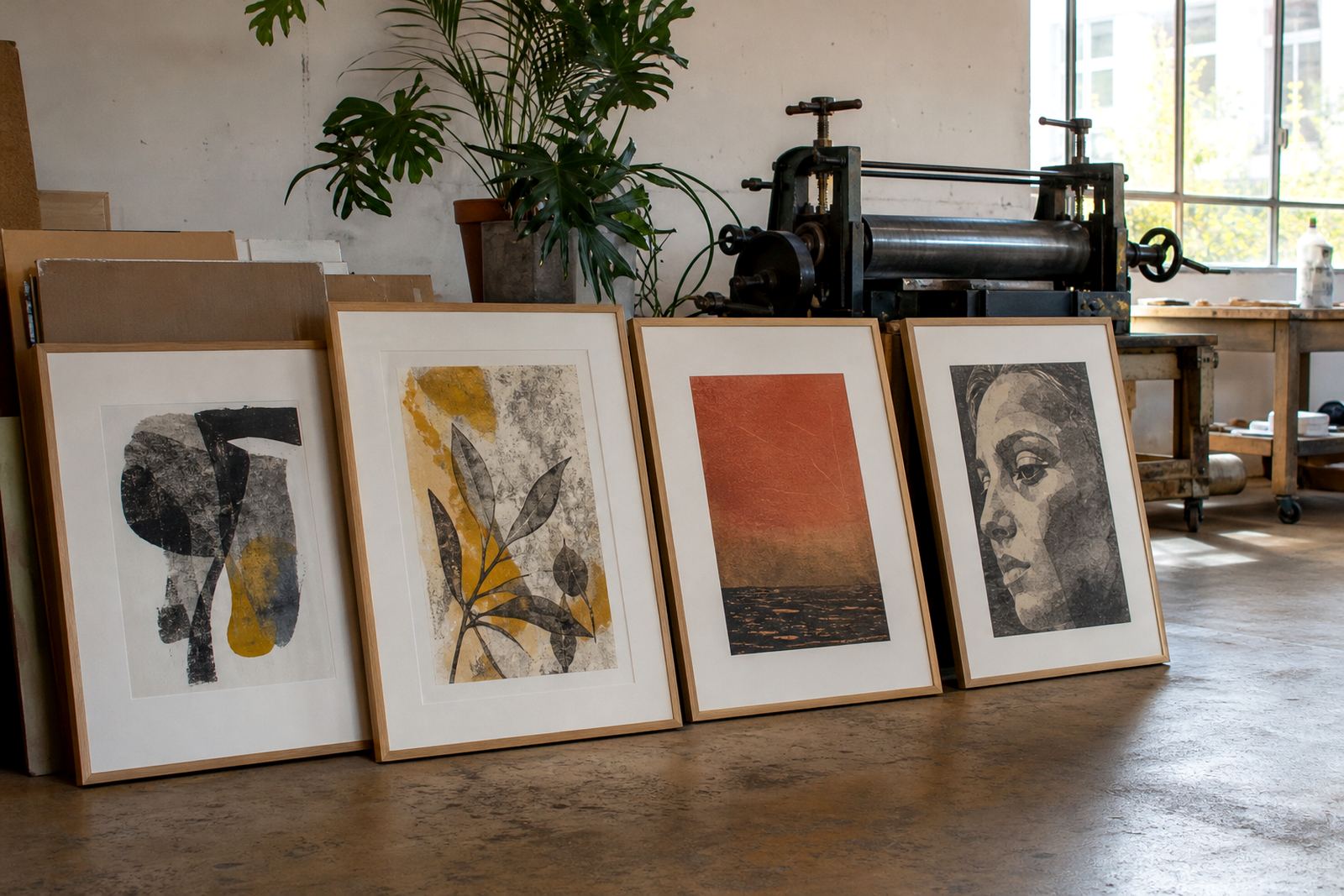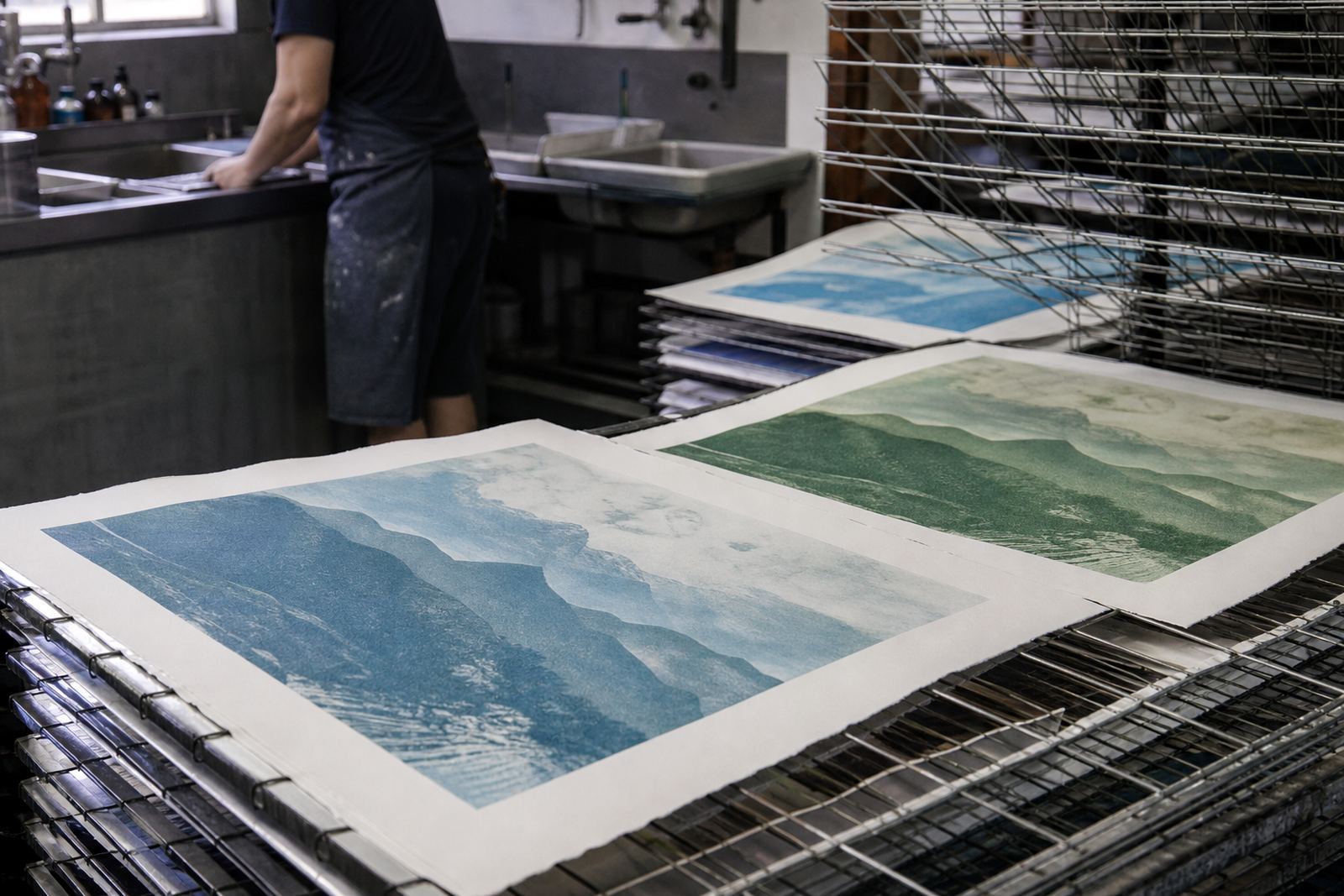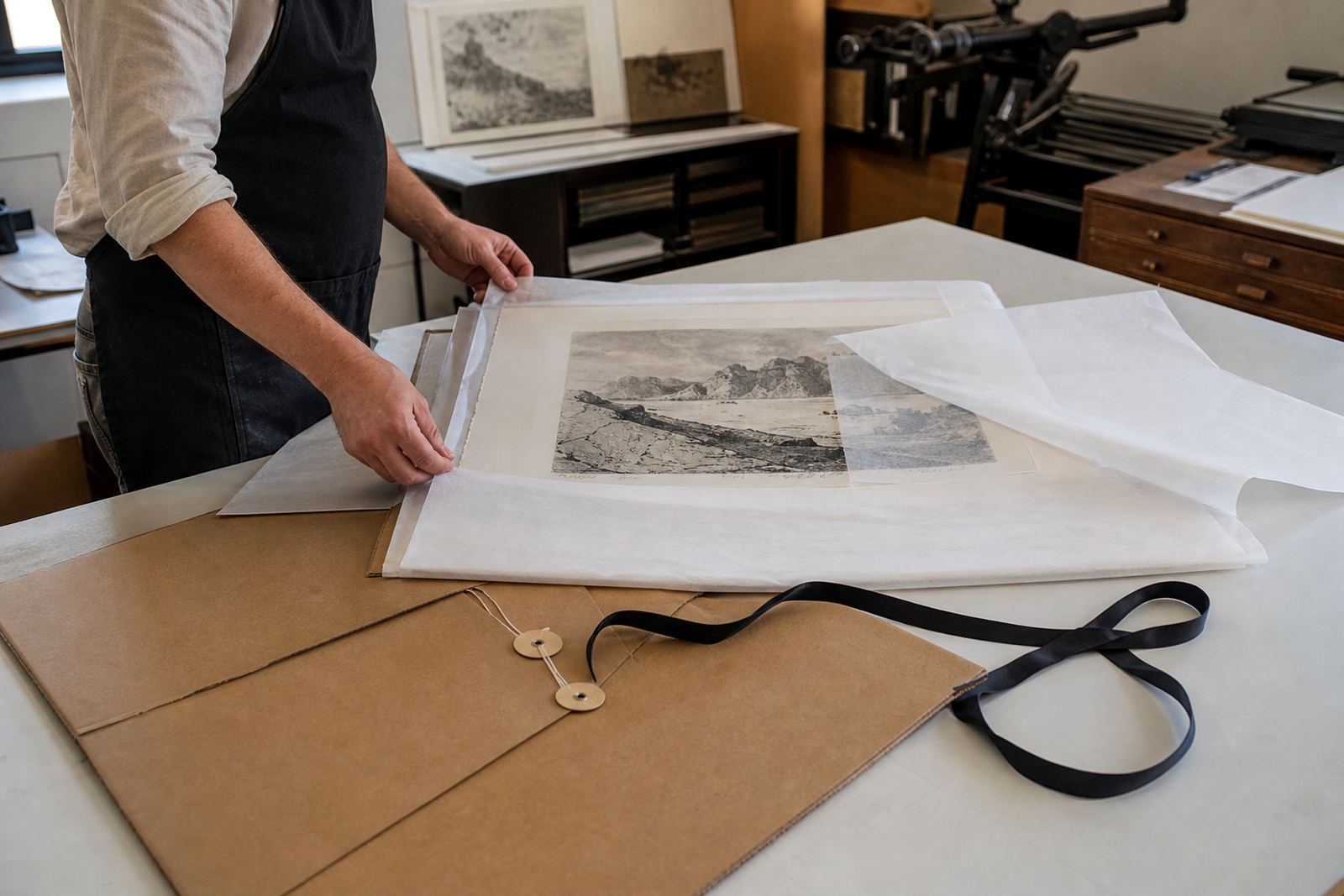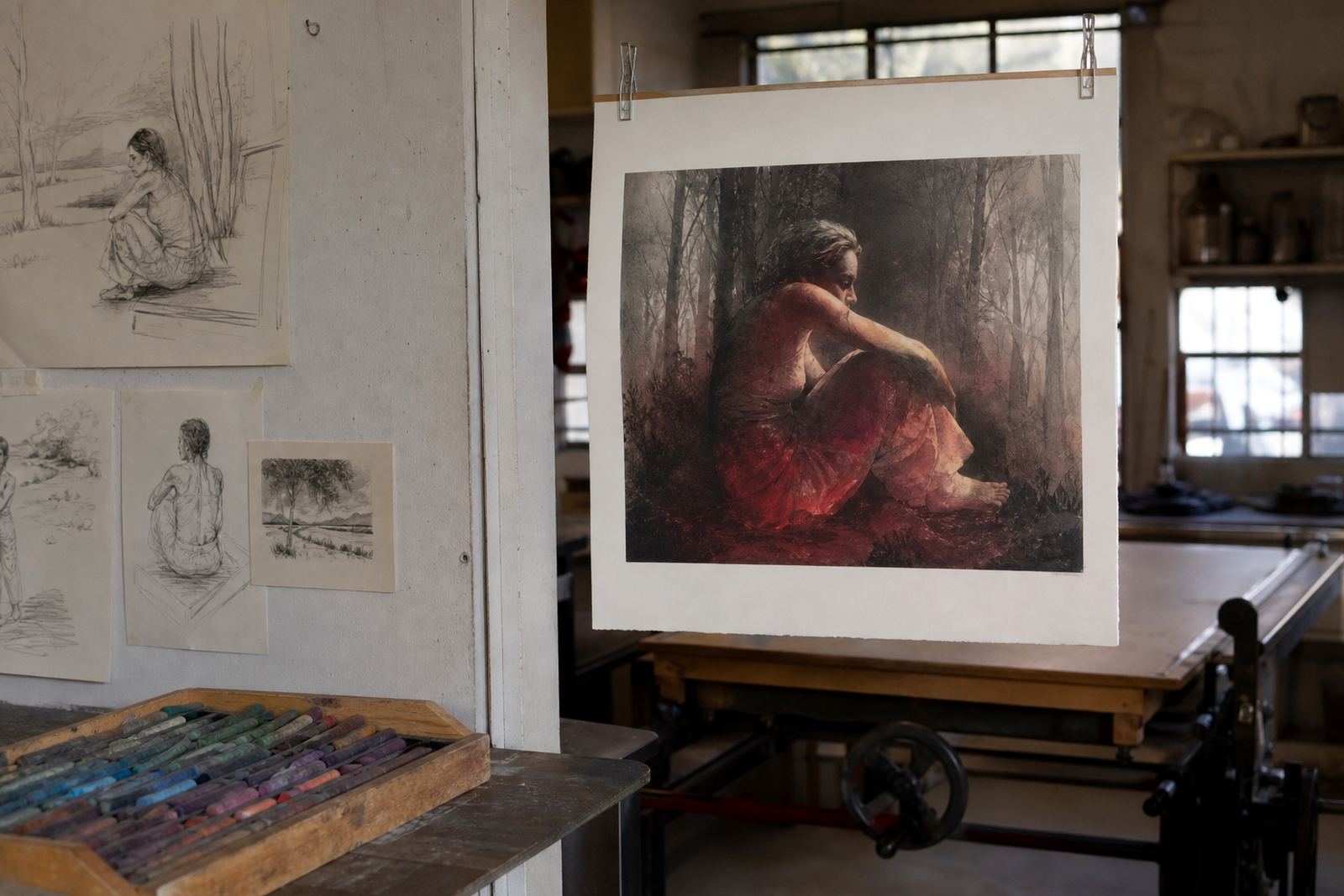
What Figurative Stone Lithography Means
Figurative lithography begins with a drawing made directly on stone using greasy crayons, tusche or similar lithographic materials. The artist and printer work the image in reverse on a prepared limestone surface, then etch and print it so the final sheet carries the hand of the original mark making. It is well suited to bodies in motion, portraits, seated figures and narrative scenes because the process can hold soft tonal shifts, firm contour and layered colour without losing the drawing’s character.
In a figurative edition, every colour is usually printed from a separate stone or plate, and each sheet passes through the press several times. That is why the editions have depth and slight variation that collectors value. Each impression is made by hand, so registration, pressure and paper choice matter. The result is not a mechanical reproduction but a print with the feel of an original artwork.
Edition Options And Sheet Sizes
Figurative lithographs are usually offered as limited editions, with the edition size agreed before printing begins. Smaller editions are often chosen for highly worked images or complex colour separations, while larger editions may suit simpler compositions. We also handle artist proofs and working proofs where needed for edition planning and colour decisions. If a collector is looking for a matched pair or a triptych, the edition can be planned to keep the images balanced across a wall.
Common sheet sizes range from intimate formats suitable for a study, to larger statement prints for living rooms, stairwells and gallery spaces. The image area can be smaller than the sheet to allow for margins, signature space and framing clearance. Paper selection is part of the decision too, especially where the edition will travel to Johannesburg, Pretoria or Durban and needs to hold up well in different climates.
- Small works for compact walls, passages and guest rooms
- Medium works for living areas, offices and collector cabinets
- Large sheets for feature walls, galleries and double volume spaces
- Custom paper margins for archival framing and easier handling
Where Figurative Prints Work Best
These prints suit homes, studio offices, reception areas and private collections where the subject matter can be viewed up close. Figurative work rewards quiet attention, so it works well in spaces with controlled lighting and enough wall room to let the viewer stand back and then move in close. In Cape Town and Sea Point, collectors often choose works that handle bright coastal light without glare, while inland homes in Stellenbosch, Newlands, Johannesburg and Pretoria may prefer a framed finish that reduces dust and direct sun.
In a commercial setting, figurative lithographs can give a room a human scale without feeling overly formal. They are often placed above sideboards, in hallways, boardrooms, or in a reading corner where the composition can be considered slowly. Avoid hanging directly above heat sources, damp walls, or in areas exposed to cooking steam and bathroom moisture. That matters even more in older Woodstock buildings where wall surfaces can be uneven or affected by seasonal damp.
- Best in spaces with indirect light and stable humidity
- Suited to residential interiors, galleries and curated workspaces
- Allow enough wall width for viewing from 1.5 to 3 metres where possible
- Use proper framing spacers if the paper has deckle edges or soft margins
Choosing a wall and frame
The main requirements are secure hanging, suitable framing and a wall that can take the weight of the finished piece. For larger framed works, check the fixing points in advance and use proper anchors for masonry, plasterboard or heritage walls. In coastal areas such as Cape Town and Durban, it is wise to avoid placing prints where sea air and moisture can enter through open windows or aircons dripping nearby.
Framing should protect the print while keeping the artwork visually open. Conservation mounting, acid free board and UV filtering glazing are all sensible choices for editioned prints. Prints themselves need no upkeep, but the frame and hanging system should be checked now and again, especially in busy homes or public spaces.
- Confirm wall type before hanging: brick, concrete, plasterboard or heritage plaster
- Use archival materials and acid free mounting where possible
- Keep away from direct sun, heaters and damp corners
- For large works, plan hanging with two people and proper fixings
Print Care and storage
Figurative lithographs should be handled with clean, dry hands or cotton gloves when moving unframed sheets. Keep the print flat, away from spills and away from strong sunlight. If the work is framed, dust the glass gently with a soft cloth and avoid spraying cleaner near the frame edge. Moisture is the main enemy of paper, so storage in a dry cupboard or portfolio case is better than a garage, laundry room or cellar.
If a collector receives an unframed print, it should stay in its protective wrap until it can be framed. Do not roll or fold the sheet. For long term care, avoid hanging where the sun hits the same spot each day, as fading can happen over time. If a frame is damaged, the print can be removed and remounted by a qualified framer. The print itself does not need upkeep, but the condition of the frame, mount and hanging wire should be reviewed every few years.
- Store flat in a dry place with stable temperature
- Do not use tape, glue or household cleaners on the print
- Check glazing and hanging wire after transport or relocation
- Keep a record of title, edition number and date for your files
Before you buy or commissioning
Before placing an order, confirm whether you want a framed or unframed work, the preferred sheet size, and whether the edition should be signed and numbered. It is also worth checking the edition size, paper type, image orientation and whether the colours have been approved from proofing. If you are matching an existing room, note the wall colour, light direction and approximate viewing distance. That helps with deciding between a quieter monochrome print or a stronger colour edition.
Collectors should ask about handling after delivery, especially for shipments to Johannesburg, Pretoria and Durban where transport time and climate can affect the way a frame arrives. If the print is for a gift or a special commission, ask whether archival packing and framing coordination are needed. Our Woodstock studio handles edition planning, proofing, signing and numbering, with collector advice available through the enquiry form on our contact page.
- Edition size and whether artist proofs are included
- Paper format, margins and final framed dimensions
- Signing, numbering and any inscription details
- Delivery method, packing and framing coordination
Edition details
| Product | Limited edition figurative stone lithographs |
|---|---|
| Process | Hand printed on prepared lithographic stone |
| Typical format | Small, medium and large sheet options |
| Editioning | Signed and numbered editions, with proofs where agreed |
| Materials | Archival paper, lithographic inks, stone and conservation mounting options |
| Location | Woodstock, Cape Town with collectors across South Africa |