What a series print set is and why it works
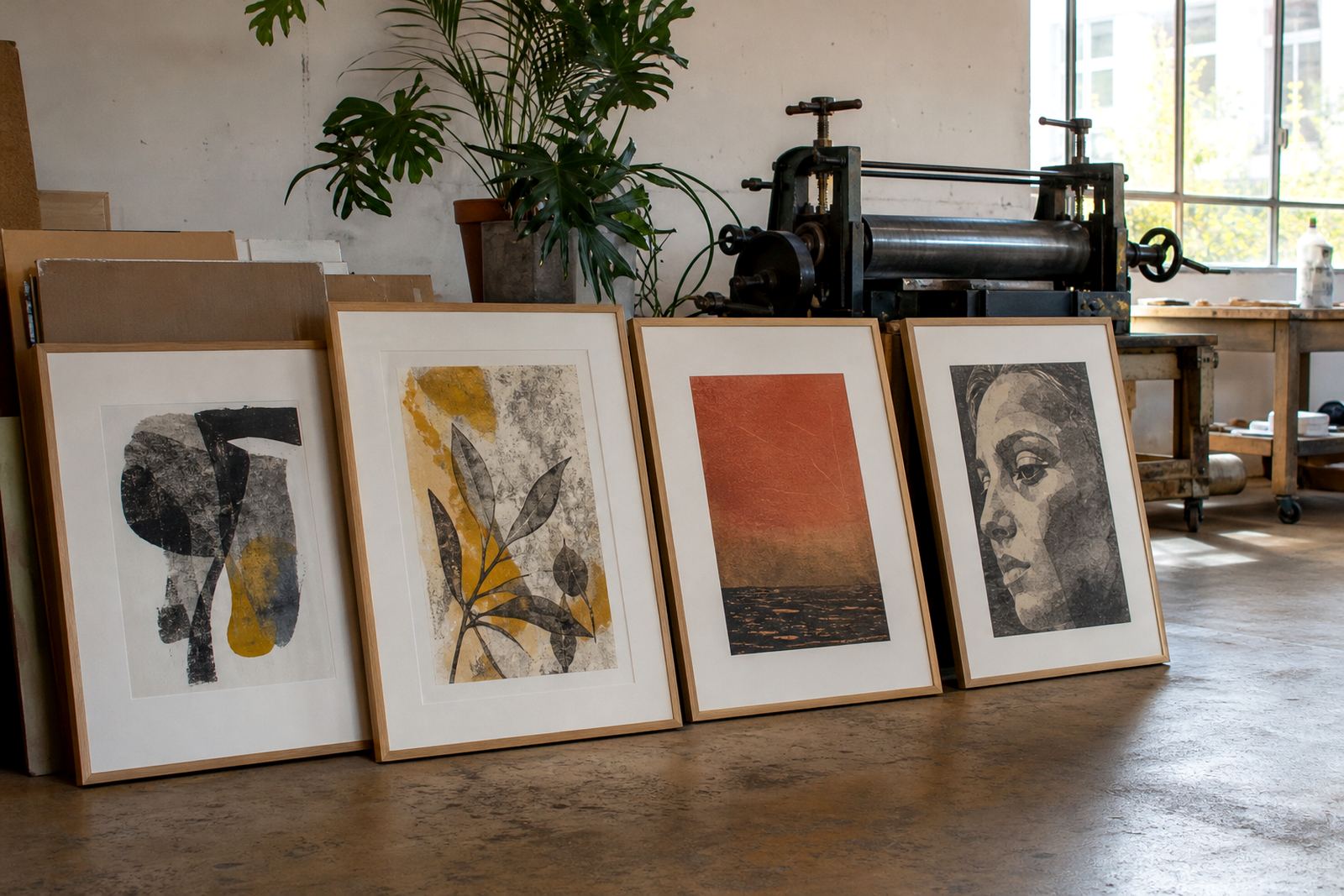
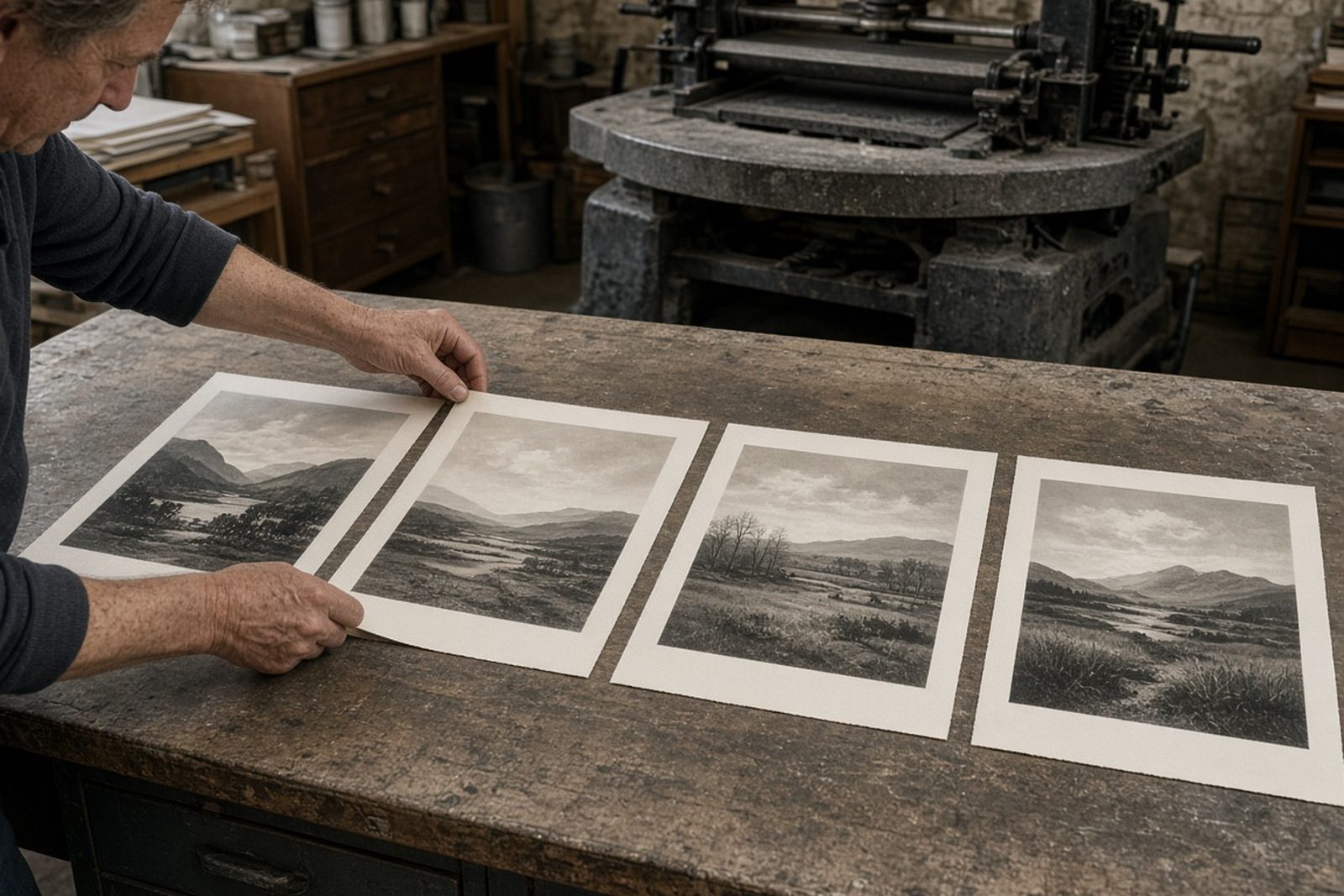
A series print set is a group of prints made to sit together, either as a complete edition or as linked images within the same project. The connection might be a shared theme, a recurring subject, a colour family or a visual sequence that tells a story across several sheets. For collectors, series sets are useful because they give structure to a wall and allow the work to be read as one body instead of as separate pieces.
In stone lithography, series work is well suited to layered colour and tonal variation. Each stone can carry a different colour passage or drawing layer, so the printer and artist can build rhythm across the set while keeping each print true to the edition. In practice, that means careful registration, consistent paper handling and close attention to ink density from the first proof through to the final signed sheets.
Stone lithography in a set: how the process is handled
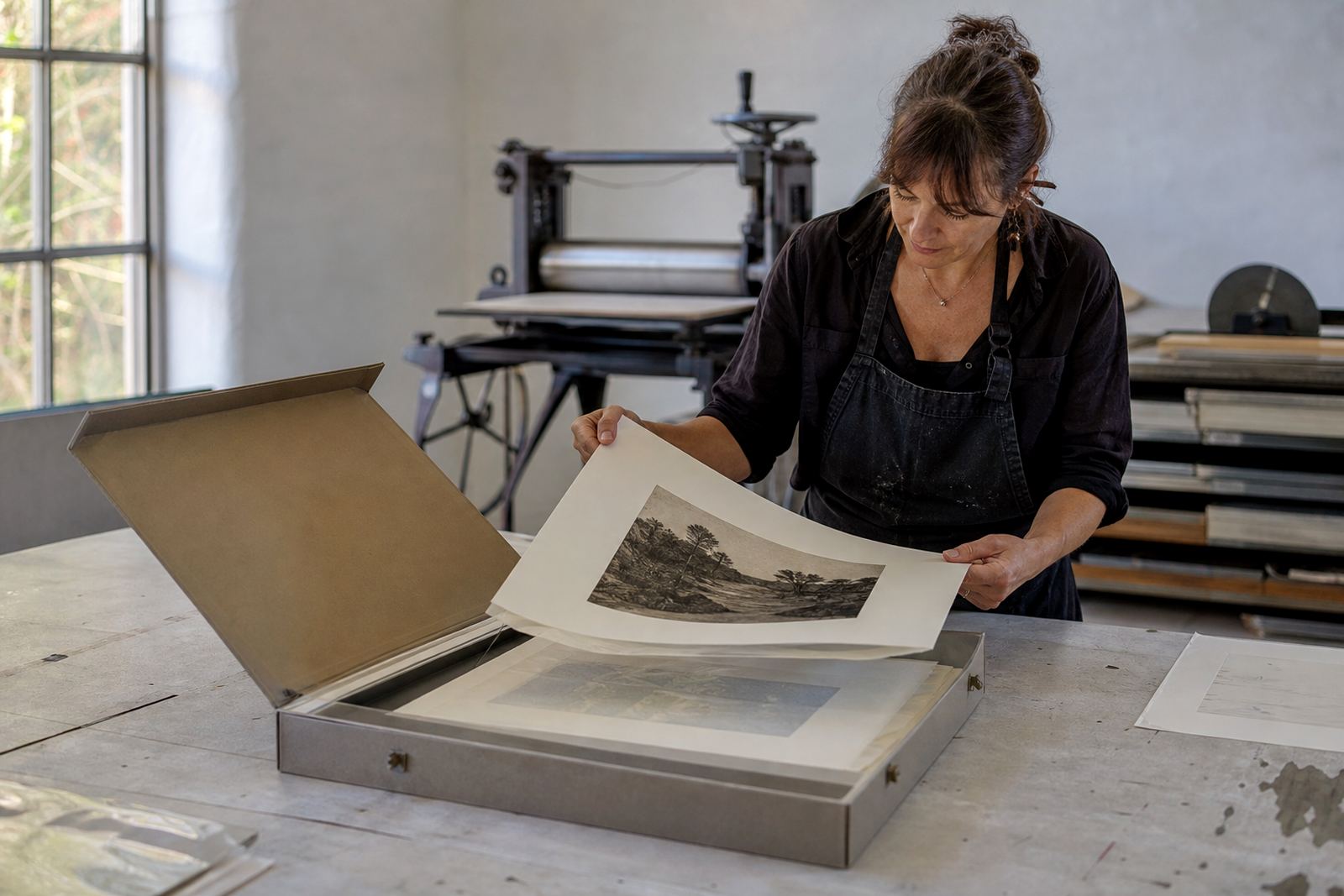
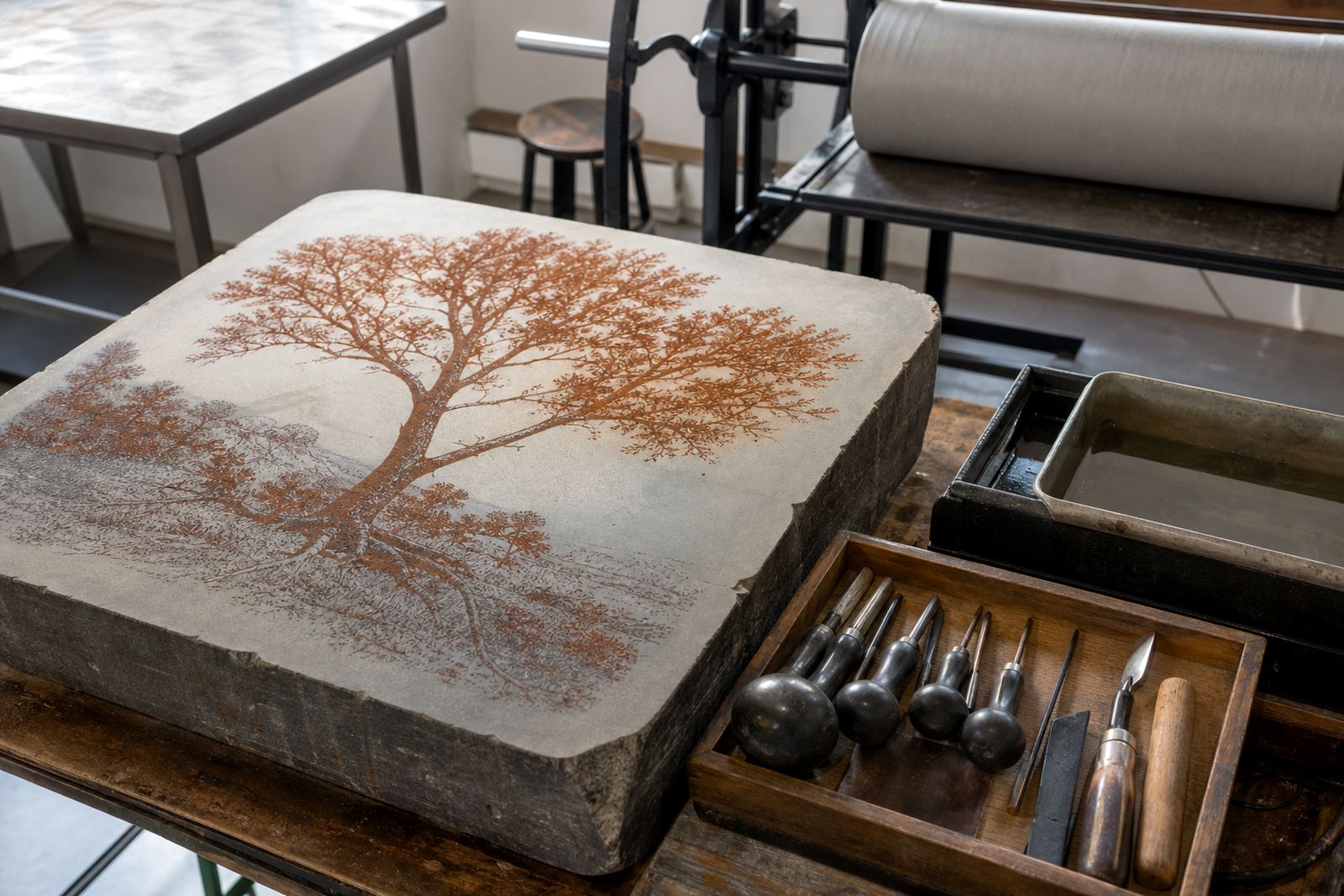
Stone lithography begins with a limestone block that is prepared, drawn on and chemically processed so that ink and water respond in opposite ways. For series work, the same core methods are used throughout the edition, but each image can be adjusted to suit its own colour balance and paper choice. If the set includes multiple stones, the studio plans the sequence so the printing order stays stable and the edition remains consistent.
At our Woodstock studio, edition planning starts before the first proof. We look at paper size, margins, image areas, colour separations and whether the set will be printed as one complete edition or as several linked images. That stage matters because a series print set should feel unified, not repetitive, and the printer needs to know where the fine changes in tone and register can be held without loss of detail.
- Suitable for single stone drawings, multi-stone colour work and mixed editions
- Can be printed as matching sets or as related individual sheets
- Best when proofing is done with the full sequence in mind
Sizes, formats and edition options
Series print sets are often made in standard art paper sizes so collectors can frame them together with ease. Common working formats include A3, A2, 56 x 76 cm and custom sheet sizes, depending on the artist’s drawing scale and the number of images in the set. We can also plan oversize sheets where the margin is part of the presentation, especially when the work is intended for a gallery wall or a long corridor.
Editioning can be handled in different ways. Some sets are issued as a single numbered edition where every sheet carries the same edition mark. Others are split into related sub-editions, for example a colour variant or a grouped sequence. We advise on whether the set should be open in structure or strictly limited, and how the signing and numbering should be placed so the sheets remain easy to catalogue later.
- Sheet sizes can be matched for diptychs, triptychs or larger sequences
- Border width, deckle edge and trimming can be planned at proof stage
- Numbering can be on each sheet or on a title page for the full set
Where series sets suit best in homes and collections
Series print sets suit spaces where the eye moves from one work to the next. They work well above a sideboard, along a passage, in a study, or in a living room where a wall can carry two, three or more related sheets. In Cape Town homes, where light can change quickly through the day, a set often benefits from a wall with controlled sun exposure rather than direct western light.
For collectors in Stellenbosch, Johannesburg, Pretoria and Durban, series sets are also practical because they can be installed in stages if needed, then brought together as framing is completed. Coastal homes in Sea Point and Durban should pay extra attention to humidity and salt air. A set framed in archival materials and hung clear of damp walls will hold up better over time. Stable indoor conditions help protect the paper and frame finish.
- Ideal for gallery walls, stair landings and long passage walls
- Works well where a repeated visual rhythm is wanted
- Suitable for private collectors, interior projects and studio-led commissions
Hanging the print at home
Series sets should be framed or mounted with the same care as any fine-art print, because small differences become obvious when the works are hung together. We recommend acid-free mounts, UV-filtering glazing where appropriate, and framing materials that do not transfer colour or moisture. If the set is unframed at collection, it should stay flat, clean and protected in archival wrapping until the frames are ready.
When hanging, keep even spacing between sheets and measure from the centre line so the full sequence reads clearly. In older buildings in Woodstock, Newlands or central Cape Town, wall condition and plaster quality can affect how safely a heavier framed set is installed. A straightforward fixing with suitable wall plugs is usually enough, but the final method should match the wall type.
- Use archival mounts and backing board
- Avoid direct sun, kitchen steam and damp external walls
- Wipe frames lightly with a dry cloth only, never the print surface
Care and what to confirm before ordering
Stone lithography prints are durable when handled properly, but paper is still sensitive to light, moisture and dirt. Store spare sheets flat, in a clean room with steady temperature, and avoid stacking them where they can pick up surface marks. If the print is framed, inspect the hanging wire and fixings once a year, especially in coastal areas where fittings can corrode more quickly.
Before ordering a series print set, check the edition size, image sequence, sheet dimensions, paper stock, colour count, signing position and whether each print is sold together or separately. Confirm if the set includes proofs, margins for framing and any hand-finished elements. For collectors and artists alike, those details matter because they affect how the set is displayed, catalogued and valued over time.
- Confirm the full list of images in the set before editioning starts
- Ask whether the same paper is used throughout the sequence
- Check packing method for local collection or courier delivery
Edition details
| Product type | Limited edition stone lithography print set |
|---|---|
| Typical formats | A3, A2, 56 x 76 cm, custom sheet sizes |
| Edition options | Single edition, sub-editions, or linked sequence sets |
| Paper options | Archival art paper matched to the edition plan |
| Finishing | Signed, numbered, packed flat or in protective tubes |
| Studio base | Woodstock, Cape Town with collector service across South Africa |