How a Three-Colour Lithograph Is Built
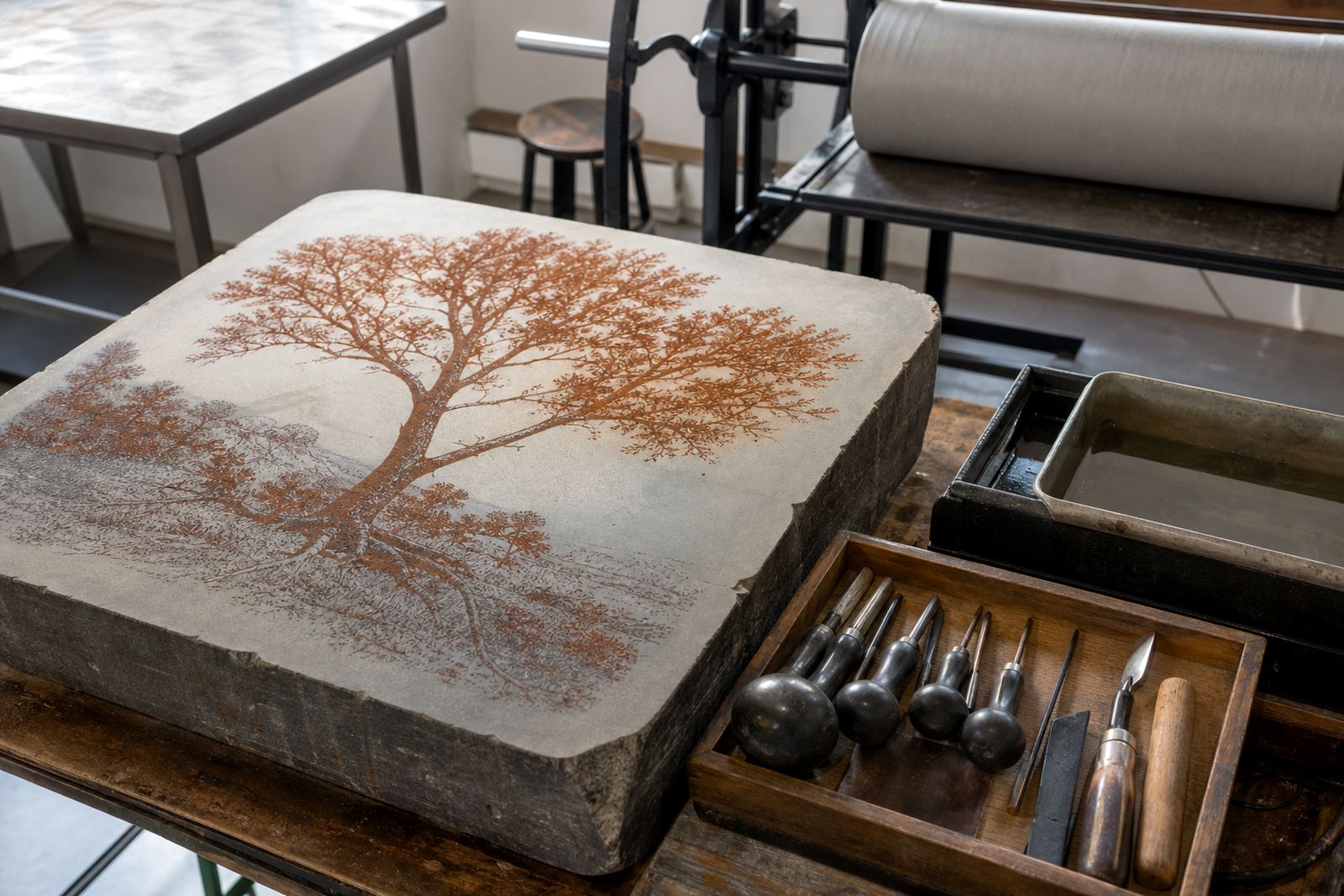
For stone lithography, a prepared limestone stone carries the image so ink holds to the drawn areas while water protects the blank ones. For a three-colour edition, the image is separated into three printing stages, each on its own stone. Those layers are printed one over the other in precise registration, so the final print carries colour, structure and a sense of movement that a single pass cannot give.
In practical terms, this means planning starts before the first proof is pulled. We look at line, tone, overprint behaviour and where the colours need to meet cleanly or intentionally overlap. A well-made three-colour edition can be subtle or bold, but it always depends on careful drawing, stone preparation and consistent pressure through each run. It takes time, and it shows in the final sheet.
Edition Planning, Proofs and Registration
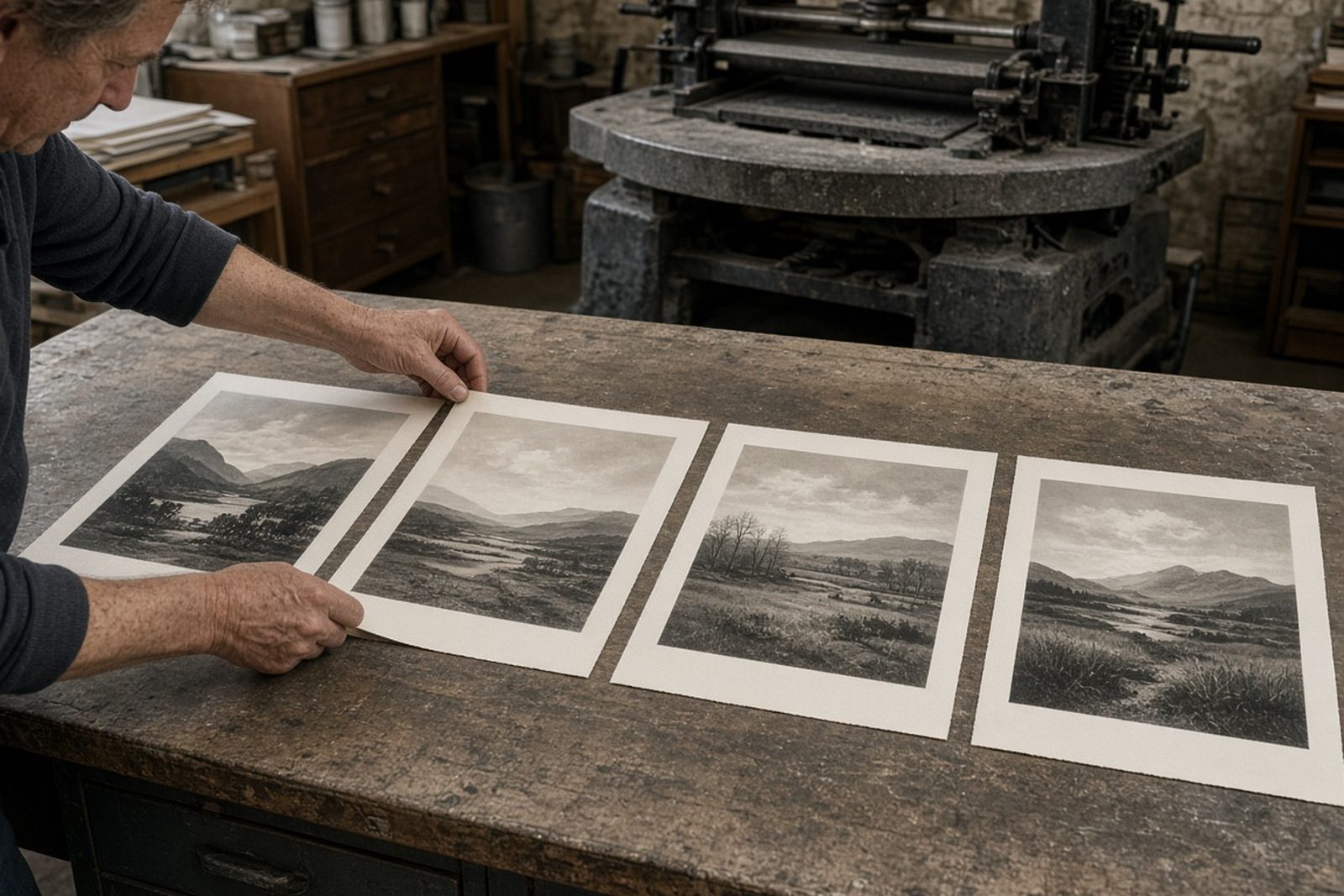
Every edition begins with a clear plan for the number of prints, the paper size and the final image area. We normally recommend allowing for artist proofs and working proofs, because the first pulls often reveal small adjustments in colour density or registration that improve the edition. Editioning also means deciding how the final works will be signed and numbered, and what will be kept back for the artist. This should be agreed early, not after printing has started.
- Initial artwork review and colour separation discussion
- Stone drawing or transfer planning for each layer
- Test proofs to check tone, overlap and line sharpness
- Final approval before the full run begins
- Signing and numbering once the sheets have dried fully
Registration is the point where all three layers land in exactly the right place. If the paper moves even slightly, edges can blur or a colour may sit out. That is why handling, drying time and consistent press setup matter so much. A small error can be seen at the end, so the process has to stay calm and controlled.
Sizes, Paper Choices and Edition Formats
Three-colour editions are usually planned around the stone size and the paper size, with enough margin for handling, signing and framing. The printed image can be small and intimate or fairly large, depending on the composition and the stones available in the studio. We can advise on sheet orientation, borders and whether the final work should suit a standard frame or a custom mount. In some cases, the image sits best with wide borders, in others the edge needs to be tighter.
- Small edition sheets for collectors who prefer intimate works
- Medium and large formats for stronger wall presence
- Full sheet options with generous borders for framing
- Paper selection based on surface, weight and absorbency
- White, warm white or lightly toned papers where appropriate
The best paper depends on the drawing method, the amount of ink in the layers and the desired finish. A smoother sheet can carry fine detail very well, while a more textured sheet can soften transitions and add warmth. We also check how the paper behaves in Cape Town conditions, since humidity can affect handling and drying, especially in summer near the coast.
Where Three-Colour Editions Work Best
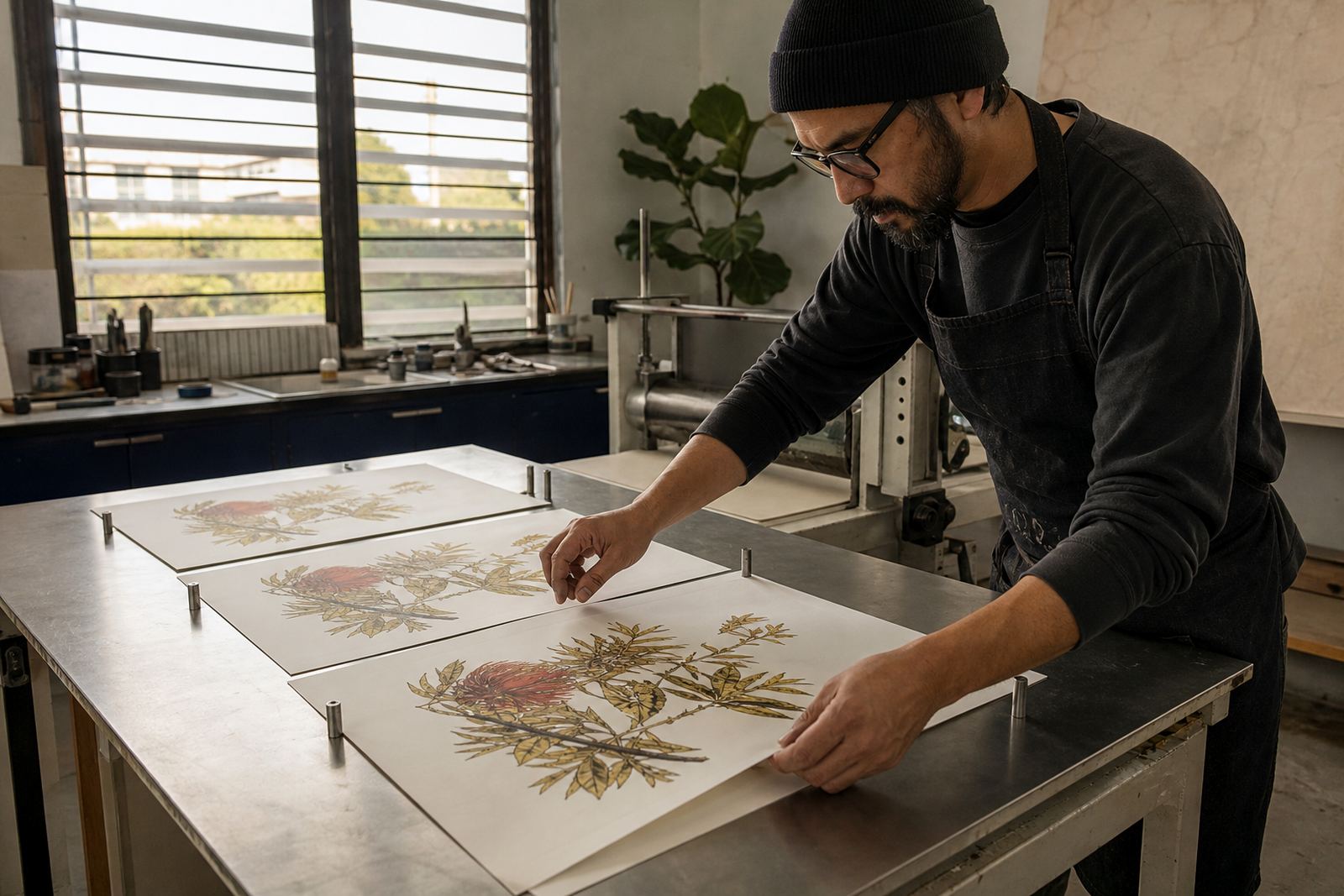
These editions suit work that needs more than one visual voice. They are strong for layered imagery, figurative work, landscapes, botanical subjects and abstract compositions where one colour alone would be too flat. The three layers can be used to create depth, secondary tones and a quiet shift between warm and cool passages. Collectors often choose them because each print feels made with intention rather than produced in a hurry.
They also suit limited editions where the artist wants a clear boundary between fine detail and broader colour blocks. Because each print is pressed by hand, there is always a slight character to the final sheet, but the edition remains consistent when the stones, paper and ink are managed properly. That balance is what gives lithography its appeal, and its value over time.
Framing choices that protect paper
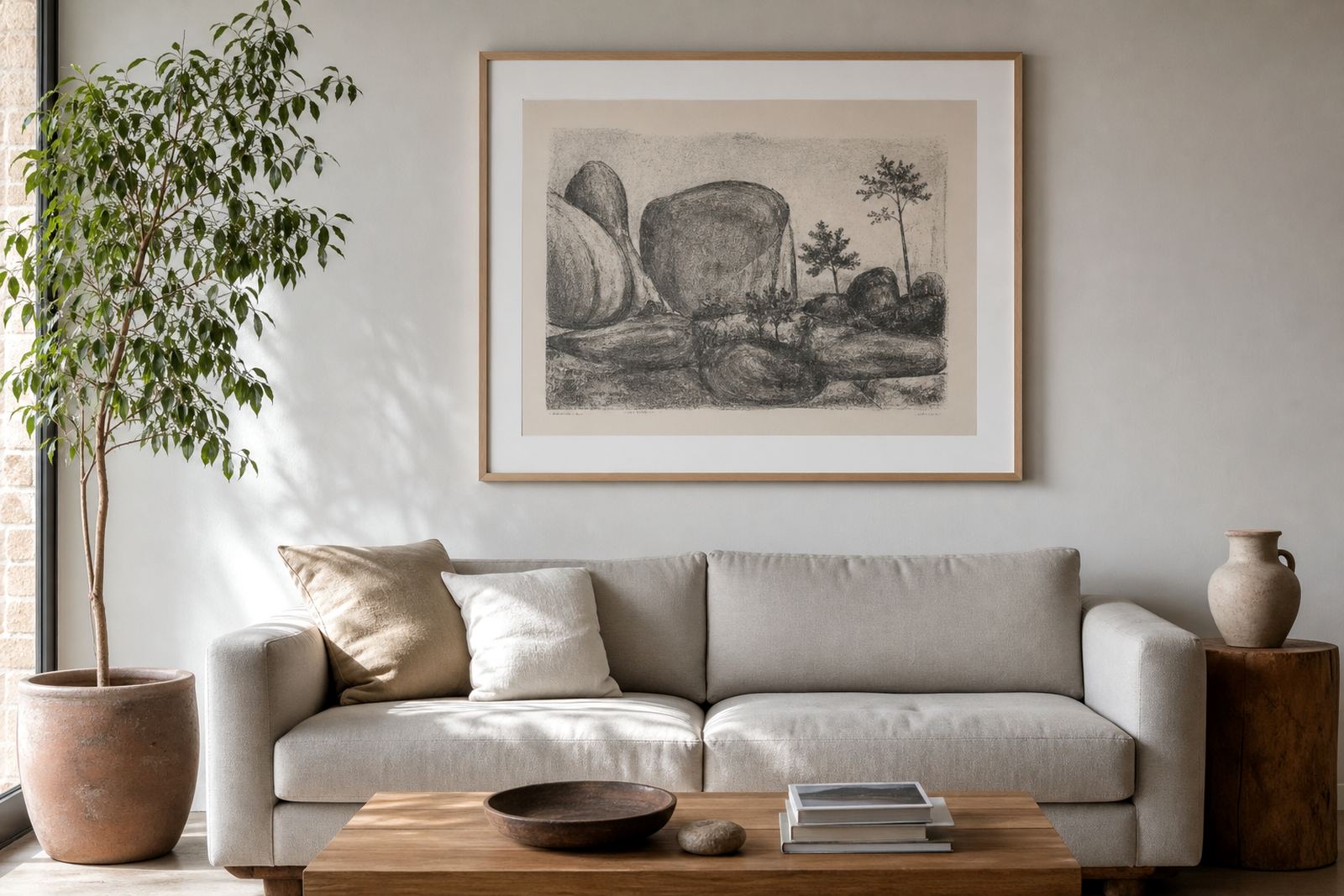
If you are bringing work in or collecting finished sheets, please plan for flat transport, dry storage and enough space so the prints are not bent in the car boot or stacked under weight. Coastal moisture and heat can affect paper very quickly if sheets are left in the wrong place.
- Keep unframed prints flat in clean, dry portfolios or archival sleeves
- Allow prints to acclimatise before framing after transport
- Avoid direct sun, especially on east and west facing walls
- Use acid-free mounts, backing and glazing where possible
- Do not hang above heaters, in damp passages or in bathrooms
For framing, we coordinate with the client or their framer so the border, mount opening and glazing suit the work. If a print travels to Johannesburg, Pretoria or Durban, it should be packed with enough stiffness to prevent corner damage and surface rubbing. That bit is easy to overlook, but it matters a lot.
Care and What to Check Before You Order
Before placing an order, check the final image size, paper size, edition size, number of proofs, signing format and whether you want the sheets delivered loose or framed. It is also worth confirming the colour direction early, because three-colour printing can shift the mood of a work quite a bit. Ask how the edition will be documented, and whether any special handling notes apply to the paper or ink. For a three-colour lithograph, clear notes on size, proofs and colour direction help us keep the edition consistent from first pull to last sheet.
Once you own a lithograph, care is simple but important. Handle the sheet with clean hands or cotton gloves if preferred, avoid folding, and keep it away from moisture and smoke. If the print gets dusty, do not wipe across the surface. Bring it to a framer or conservator if it needs cleaning or re-mounting, because amateur repairs can do more harm than good. A well made lithograph should last for many years if stored and displayed properly, but it still needs sensible care.
For artists commissioning an edition, our team can assist with edition planning, proofing sessions, paper consultation, signing and numbering, archival packing and collector advice. From Woodstock we work with clients across Cape Town, Stellenbosch, Sea Point, Newlands, Johannesburg, Pretoria and Durban, and we handle each edition with the same attention from first proof to final packout.
Edition details
| Process | Hand-pulled stone lithography using three separate colour layers |
|---|---|
| Edition format | Limited edition, signed and numbered by agreement |
| Paper | Archival printmaking paper selected for weight, texture and absorbency |
| Typical use | Fine-art editions with layered colour, tone and line |
| Studio location | Woodstock, Cape Town |
| Collection and packing | Flat archival packing for local collection or courier dispatch |