What textural surface prints are in stone lithography
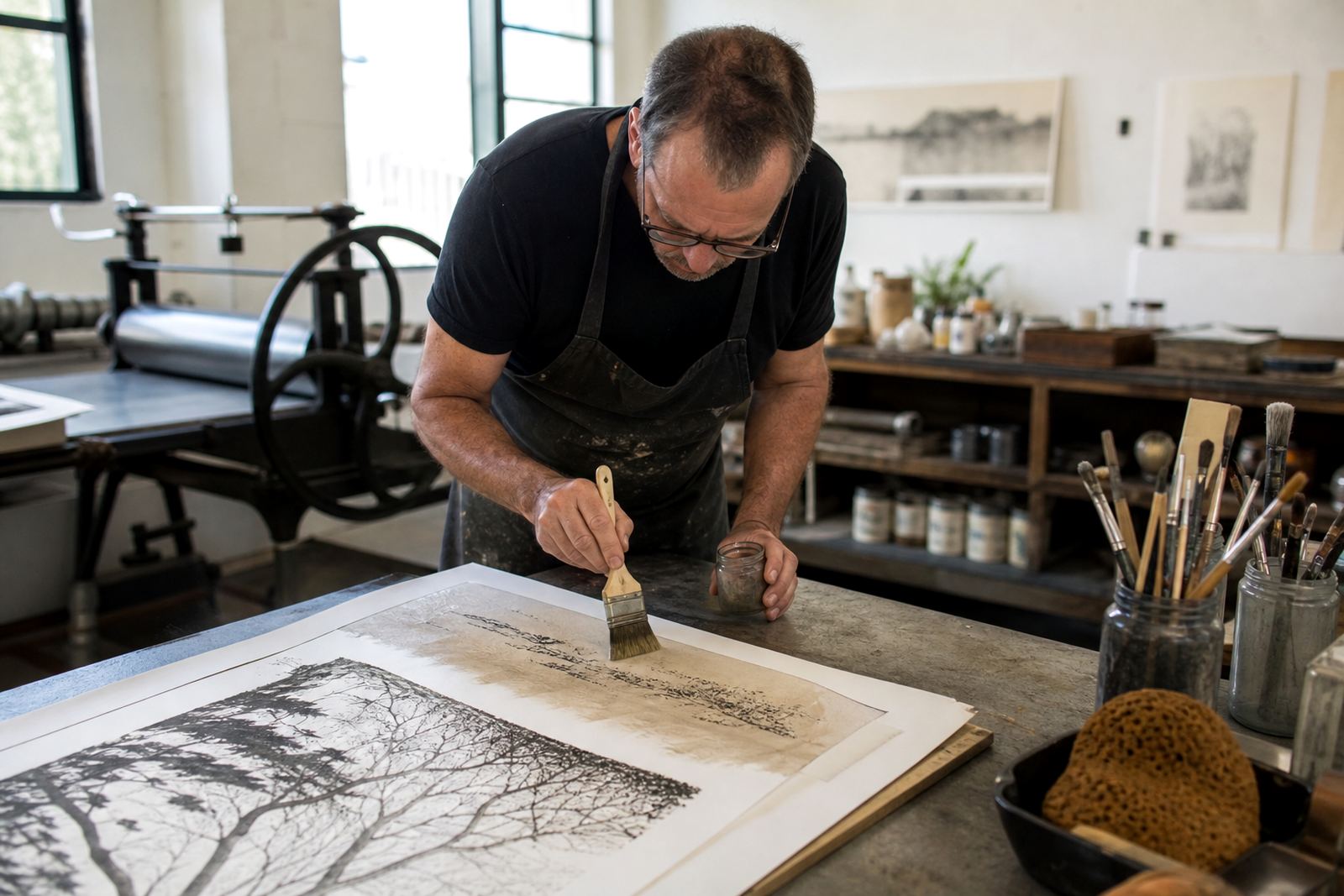
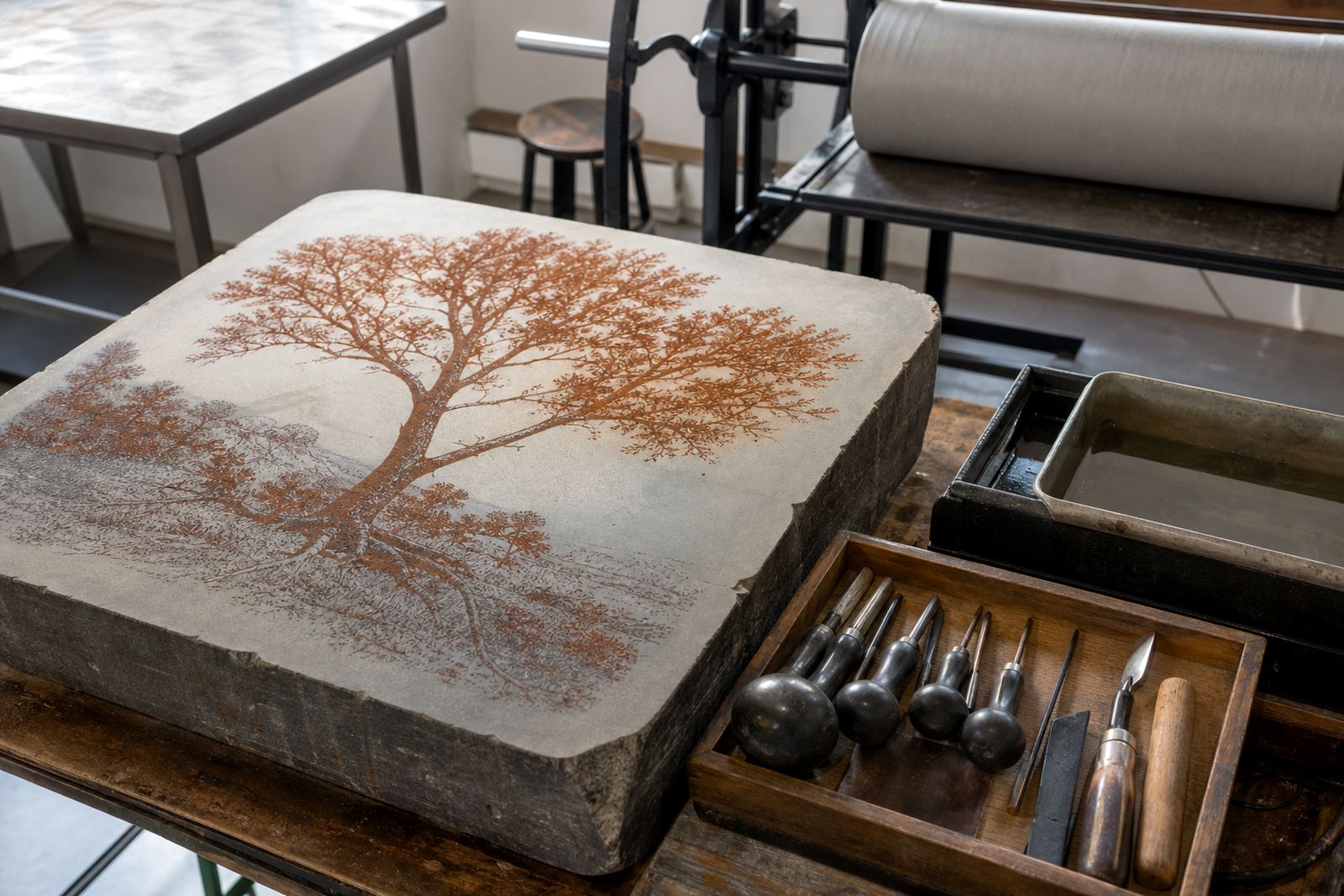
At its core, stone lithography is a planographic print process that uses a smooth limestone or lithographic stone to carry the image. The artist draws or works directly on the stone with lithographic materials, then the surface is treated so that grease accepts ink and the non-image areas hold water. That balance lets us print fine grain, soft tonal shifts and visible hand-drawn texture in a way that suits expressive work very well.
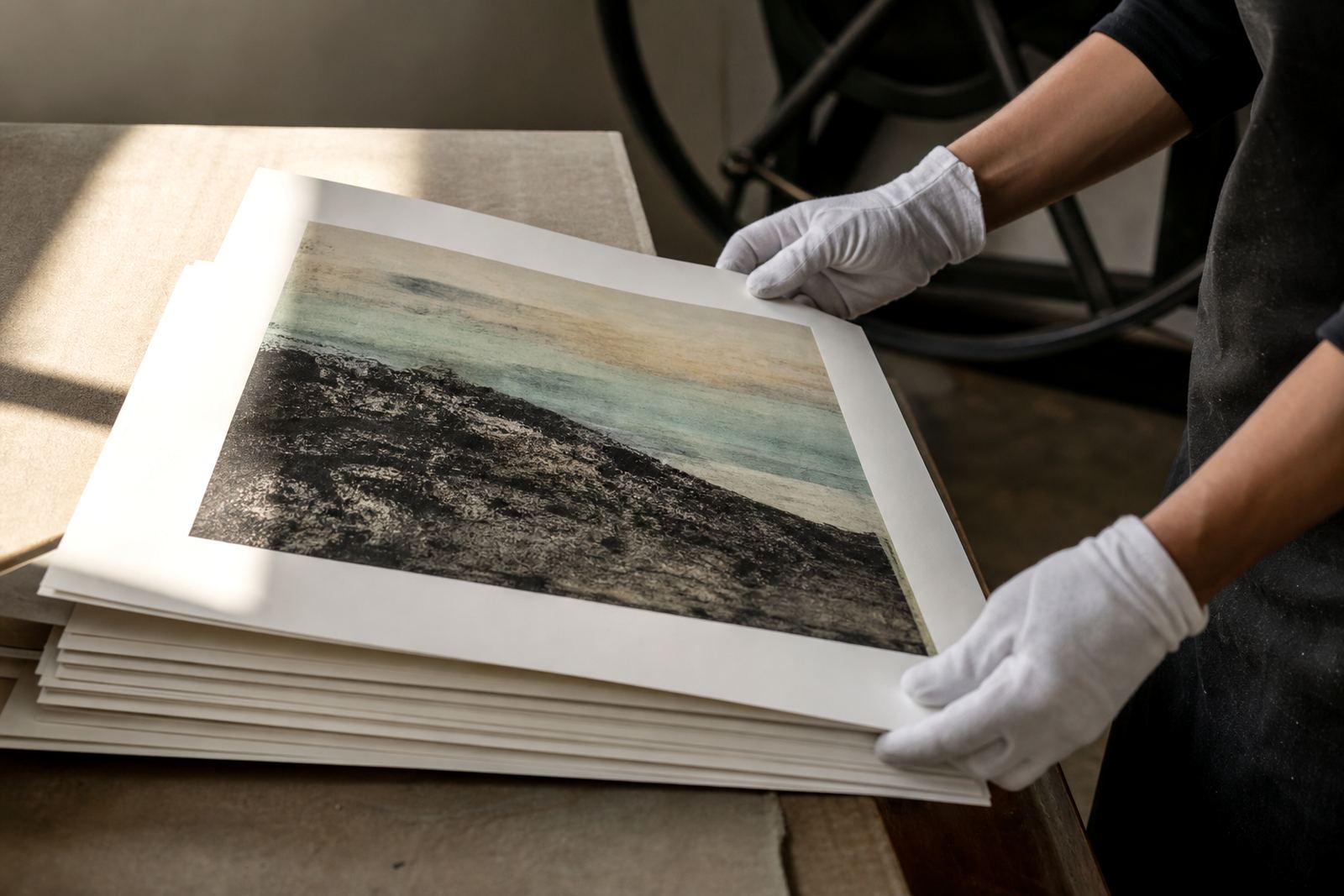
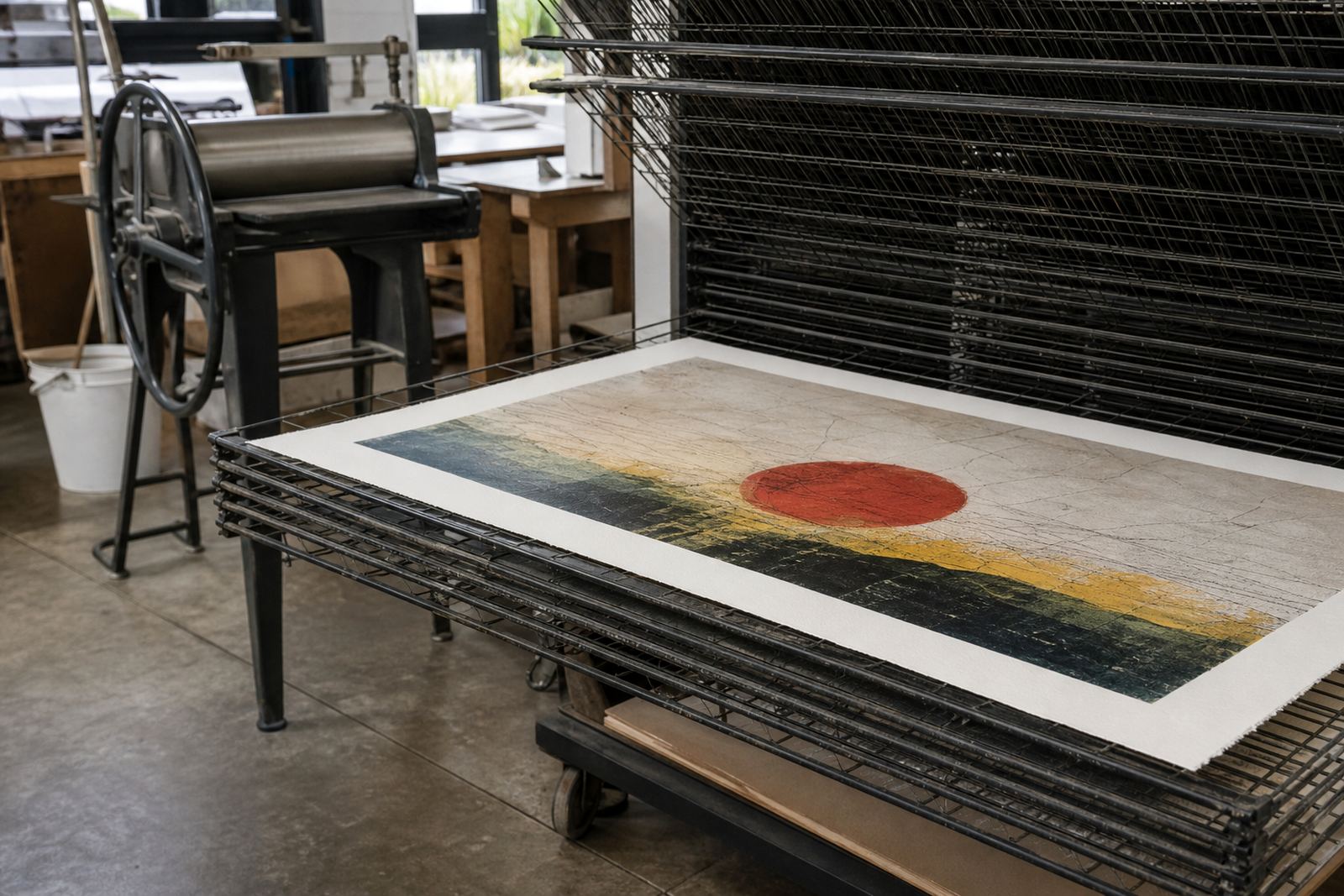
Textural Surface Prints are the editions where those physical marks are part of the language of the work. You can see the pressure of the crayon, layered washes, scraping, tusche effects and subtle grain from the stone itself. The result is not flat reproductions but original prints with a tactile look and a clear printmaking presence.
Edition planning and print options
We work with artists on limited editions, artist proofs and edition structure before the first proof is pulled. That includes deciding on paper, colour count, edition size and whether the image needs one stone or several stones for separate layers. For collectors, this matters because the edition remains consistent, and each print is numbered and signed as agreed with the artist.
- Edition sizes can be kept small for tighter control, or planned for larger collector demand.
- Single-colour, two-colour and multi-stone editions are available.
- Paper choices can include mould-made, cotton rag and other archival printmaking papers.
- Proofing sessions allow colour, density and registration to be checked before editioning starts.
If the artwork depends on surface grain or soft tonal depth, we usually recommend a paper with enough absorbency and strength to hold the impression properly. In humid coastal conditions, paper handling and drying times need extra care, especially in summer.
Sizes and presentation choices
Stone lithographs are commonly made in standard sheet sizes from small collector works to larger statement prints, depending on the stone and the image. The final size also depends on whether the print is trimmed, left with deckle edges, or finished with a margin suitable for mounting and framing. We guide clients on practical sheet sizes that suit wall space, transport and framing costs.
For home interiors, galleries and corporate spaces, we often suggest considering the full framed size rather than only the image area. A print that reads beautifully on paper may need a wider frame margin for balance on a large wall. For townhouse living in Sea Point or apartment settings in central Cape Town, smaller to medium formats often work best, while larger dining or stairwell walls can take broader sheets with more breathing room.
- Small editions suit intimate spaces, reading rooms and collector portfolios.
- Medium sheets work well for living rooms, passage walls and office entrances.
- Larger prints suit feature walls, gallery hangs and double-volume areas.
- Custom cropping may be possible if the stone size and image allow it.
Where these prints suit best
Textural surface prints suit spaces where close viewing is possible. The layered mark-making rewards a viewer who stands nearby and sees the surface change with light. They work especially well in rooms with good natural light, but not direct sun, and in interiors where materials like timber, linen, concrete and painted plaster can support the character of the print.
They are a strong fit for collectors who enjoy works on paper, architects specifying art for new projects, and designers looking for pieces that bring warmth without needing bright colour. In Johannesburg and Pretoria, we often advise on framed works for dry interior conditions. In Durban and other coastal areas, proper glazing and framing materials matter more because of humidity and salt air.
- Ideal for living rooms, studies, galleries, reception areas and quiet passage walls.
- Good for spaces that need texture without heavy gloss or glare.
- Works well in contemporary, traditional and minimalist interiors alike.
Looking after the sheet
Once framed, these prints are installed like any artwork on paper, with fixings matched to the wall type and frame weight. For heavier framed editions, especially larger sheets, use proper wall plugs and hangers suited to brick, plasterboard or masonry. In older Cape Town homes and some apartment blocks, wall conditions can vary, so it is worth checking before framing is ordered.
We coordinate framing with the artist or collector where needed, and can advise on glazing, mountboard and spacing so the print stays flat and protected. If a work is travelling to Stellenbosch, Pretoria or Durban, archival packing is important. A print should never be rolled unless that has been planned carefully for the paper and image size.
- Keep framed prints out of direct sun to reduce fading and paper movement.
- Use archival materials for mounts and backing boards.
- Leave enough wall clearance for larger frames and uneven surfaces.
- For unframed works, store flat in a dry room with stable temperature.
Care and what to check before ordering
Stone lithographs are durable when they are handled well, but the paper and inks still need sensible care. Dust the frame with a dry cloth only, and avoid household sprays near the print. If the work is unframed, keep it in its protective sleeve or archival folder and handle it by the edges. Moisture, condensation and repeated sunlight are the main things that cause trouble over time, especially in coastal areas.
Before ordering, check the edition size, paper size, image size, whether the print is signed and numbered, and whether framing is included or arranged separately. Also confirm the colour count and whether any proof state differs from the final edition. If the piece is meant for a specific wall, send us the dimensions and we can help you judge the most suitable format, yes it really does save hassle later.
- Confirm image size and full sheet size.
- Ask about paper type and whether the edition is limited or open.
- Check if the print is framed, unframed or supplied for framing coordination.
- Request packing details if the work is being shipped between cities.
Edition details
| Process | Stone lithography on prepared limestone or lithographic stone |
|---|---|
| Format | Limited edition print, signed and numbered |
| Paper | Archival printmaking papers, selected for tone and surface |
| Sizes | Small, medium and large sheets, subject to stone and image |
| Finish | Unframed, framed, or supplied for framing coordination |
| Studio base | Woodstock, Cape Town, serving collectors across South Africa |