What wide format stone lithography means
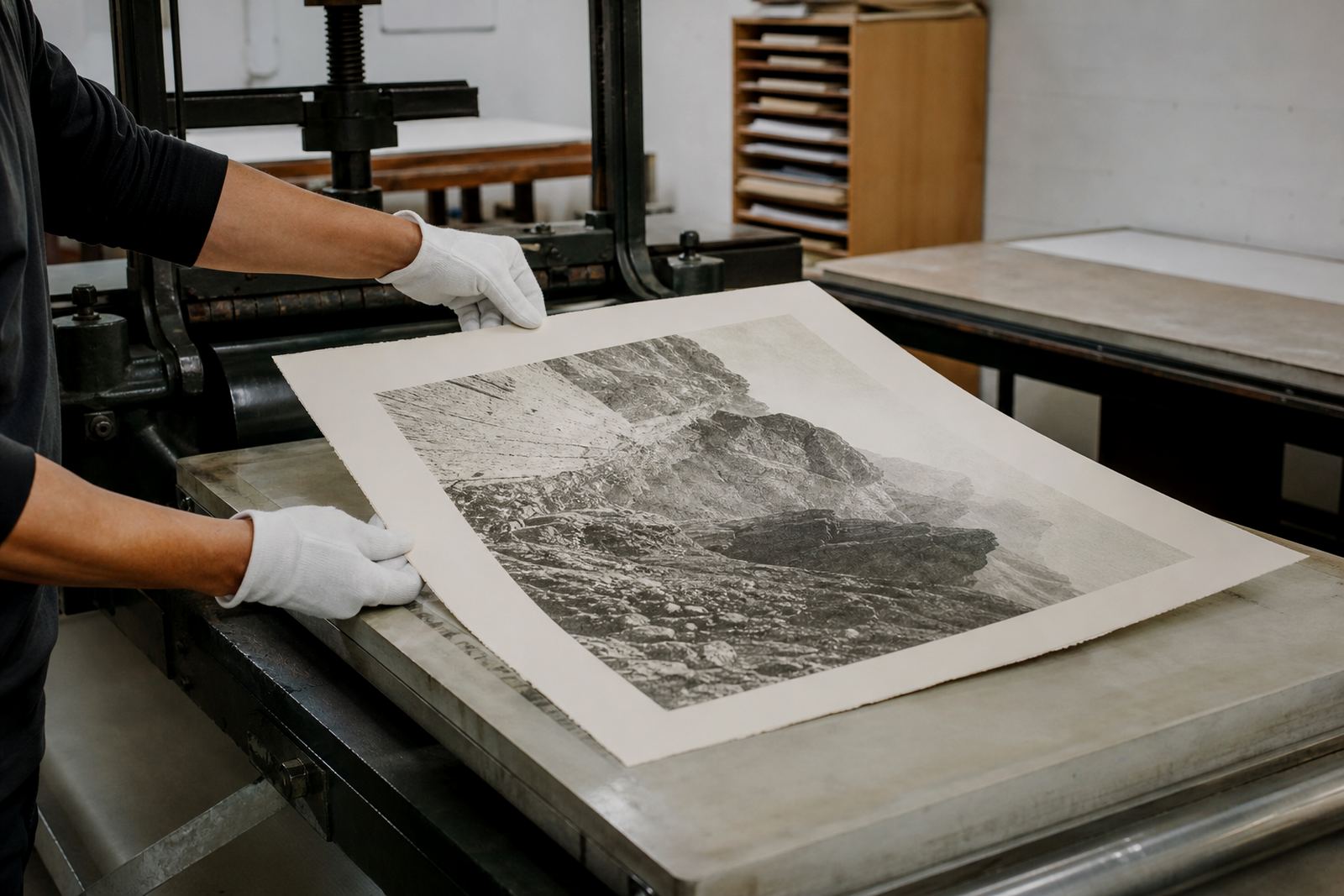
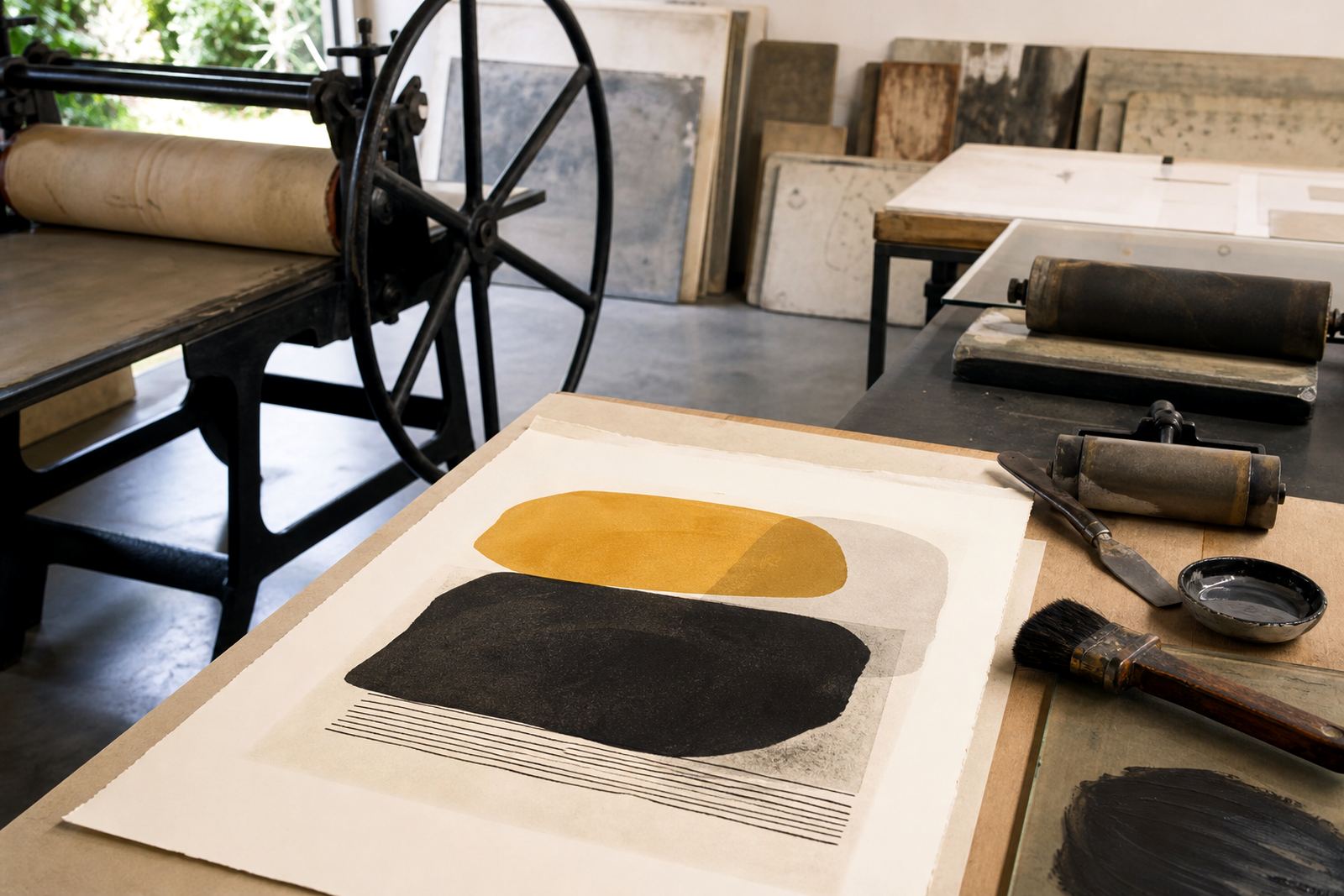
Wide format prints are lithographs composed with a strong horizontal emphasis, often made for long walls, passageways, living rooms and commercial interiors that need one clear visual line. In stone lithography, the image is drawn on prepared limestone with grease based materials, then processed so the printing surface accepts ink where the drawing sits and repels it where it does not. That process gives a very fine tonal range, crisp line work and a softness that suits landscape, architectural and abstract subjects alike.
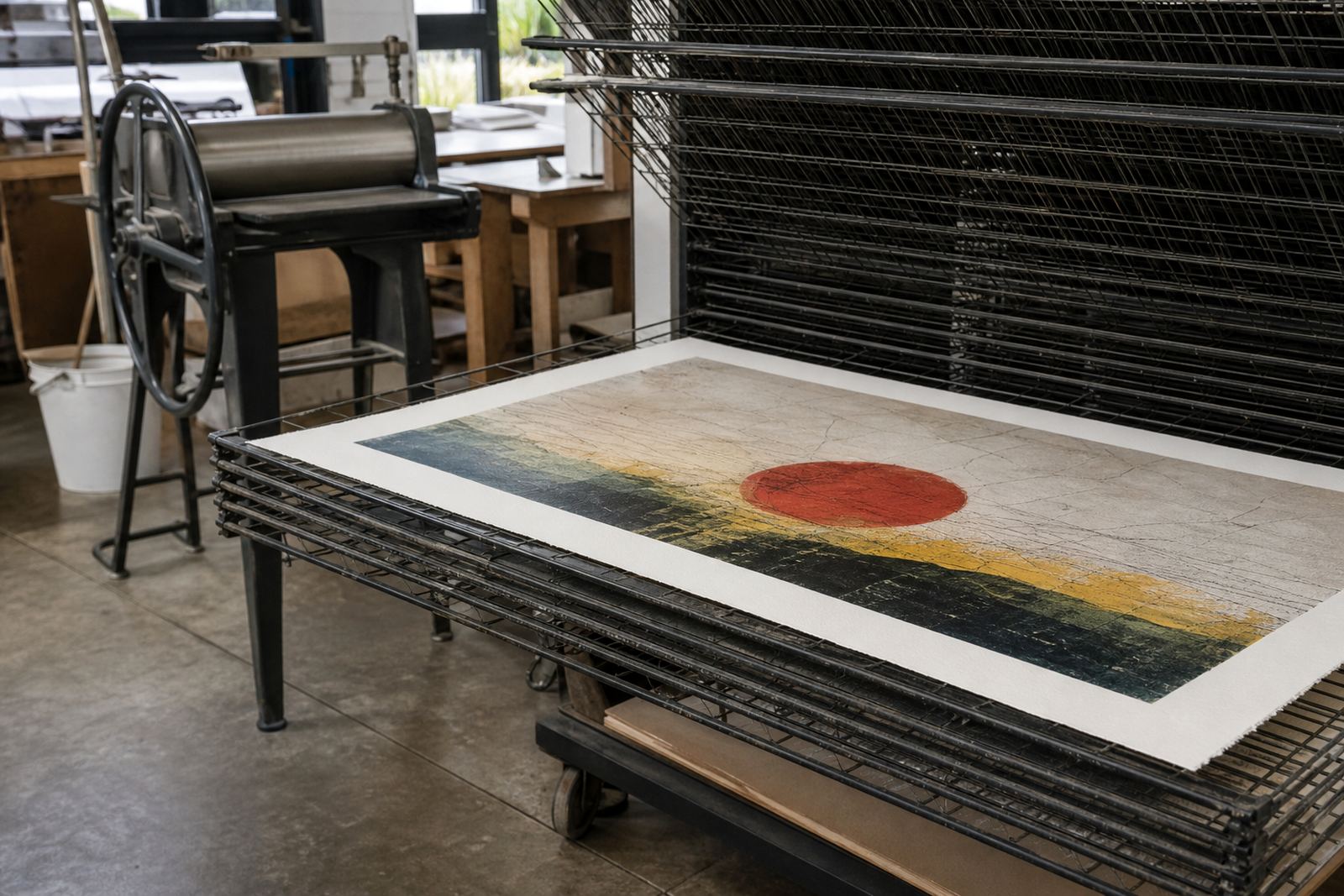
Because the image is built on stone, the printer can work with subtle colour shifts, overlaps and transparent layers. This is useful for panoramic subjects where distance, atmosphere and edge to edge composition matter. Each edition is printed by hand, so slight variation between pulls is part of the character of the work, not a fault.
- Suitable for horizontal compositions, long walls and larger viewing distances
- Printed as limited editions, not open run reproductions
- Made on paper chosen for ink holdout, surface feel and archival stability
Sizes, paper choices and edition options
Wide format work can be planned in a range of paper sizes, depending on the artist’s image area, the stone available and the final use. Some editions are made as one long sheet, while others are printed with generous borders for framing and handling. The image may be centred, left aligned or run almost full bleed, depending on the composition and the paper format agreed at proof stage.
Common choices include smooth hot pressed sheets for fine detail, or lightly textured papers that hold dense colour well. For collectors in coastal areas such as Sea Point, Durban and Woodstock, paper choice matters because humidity can affect storage and framing if the sheet is not handled properly. We also advise on edition size, artist’s proofs and whether the final print should be signed and numbered with enough margin for safe framing.
- Custom paper dimensions can be planned around the image and frame size
- Editioning may include standard edition, artist’s proofs and printer’s proofs where agreed
- Border width can be set for float mounting, window mounting or full frame coverage
Where wide format prints work best
These prints suit rooms and spaces where the wall is wider than it is tall. That includes entrance halls, stair landings, long corridors, boardrooms, dining rooms, hotel suites, gallery runs and collector homes with open plan walls. A horizontal lithograph can settle a room without overpowering it, especially when the subject needs room to breathe.
For South African collectors, wide format work often sits well in homes with strong natural light but not direct sun. In Cape Town and Stellenbosch, west facing rooms can throw hard afternoon light across glass, so placement needs a little thought. In Johannesburg and Pretoria, interior walls often suit large prints where climate control is steadier. Durban homes may need extra care around humidity and salt air, especially if the print is framed near an opening to the outside.
- Best for panoramic imagery, long walls and large scale interiors
- Useful where a single strong image is preferred over several small works
- Works well in private homes, offices, hospitality spaces and collector installations
Choosing a wall and frame
Before a wide format edition goes to press, the studio plans the image area, paper handling and registration with care. Stone preparation is important because larger compositions need stable drawing areas, accurate colour separation and consistent inking across the full sheet. Proofing sessions allow artist and printer to check tone, balance and edge conditions before the final edition is printed.
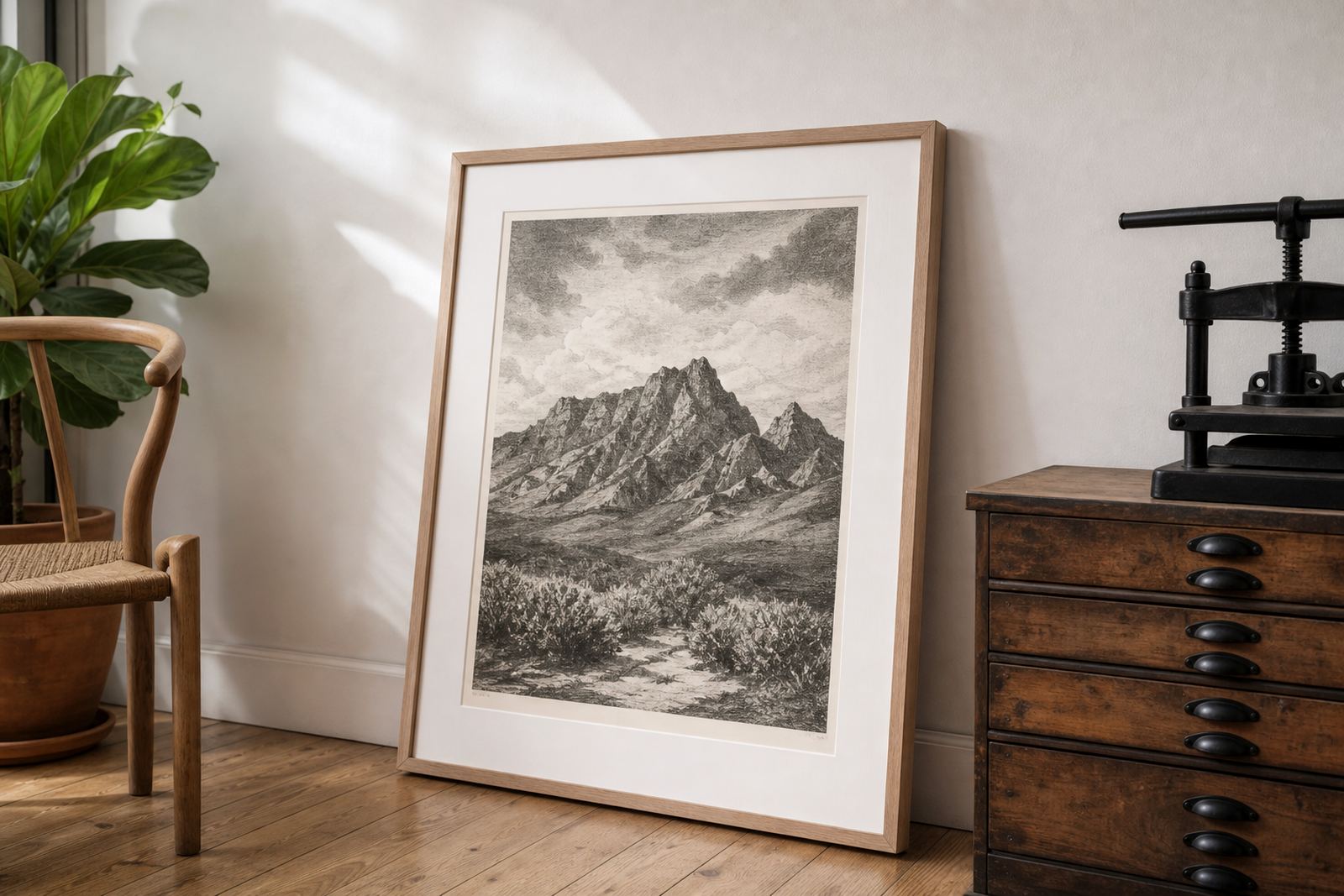
A long print can bow if it is mounted badly, and poor hanging points can cause strain over time. For framed works, use fixings that suit the wall type, whether brick, plasterboard or masonry.
- Check final dimensions against the wall, frame and passage clearance before ordering
- Confirm whether the print will be supplied flat, rolled or framed
- Allow for safe handling space during delivery and hanging
Care, storage and long-term upkeep
Stone lithographs are made for lasting display, but they still need proper care. Keep the print out of direct sun, away from damp walls and clear of kitchens, bathrooms and aircons that blow directly across the frame. Paper can cockle or shift if exposed to changing humidity, so stable indoor conditions are best. If the work is framed, use archival mounting methods and glazing that protects the surface without trapping moisture.
For unframed prints, store them flat in a clean, dry space with acid free interleaving. Do not roll a wide print too tightly, and never place heavy objects on top of it. If the print needs aftercare later, such as reframing, cleaning of the glazing or replacement of aging backing materials, it should be handled by a framer who understands fine art paper. A little care goes a long way, and it helps preserve both the image and the edition value.
- Keep away from direct sunlight, damp corners and steamy rooms
- Use acid free materials for storage and framing
- Handle with clean, dry hands or cotton gloves where needed
What to check when ordering a wide format edition
When ordering, check the edition structure, paper size, image size and whether the borders are part of the measured sheet or only the printed area. Ask how the print will be signed and numbered, and whether any artist’s proofs are included in the edition plan. It is also sensible to confirm the colour sequence, especially on multi stone work where one layer may sit over another in a controlled way.
For collectors, the best orders start with clear information: intended wall width, framing preference, lighting conditions and delivery city. That helps the studio advise on sheet size and packing. If the work is going to Stellenbosch, Johannesburg, Pretoria, Durban or elsewhere in South Africa, protective packing matters just as much as printing. Archival wrapping, corner protection and secure outer boxing reduce the risk of creases, scuffing and moisture marks in transit.
- Confirm title, edition size, sheet size and image size before printing begins
- Check signing, numbering and proof status
- Let us know if the work is for direct wall hanging or a custom frame
Edition details
| Process | Hand pulled stone lithography |
|---|---|
| Format | Horizontal or panoramic composition |
| Edition | Limited edition, signed and numbered |
| Paper | Archival art paper selected for the image and handling needs |
| Finish | Unframed, boxed or framed by arrangement |
| Use | Collector interiors, galleries, offices and hospitality spaces |