Stone lithography first, hand tinting second
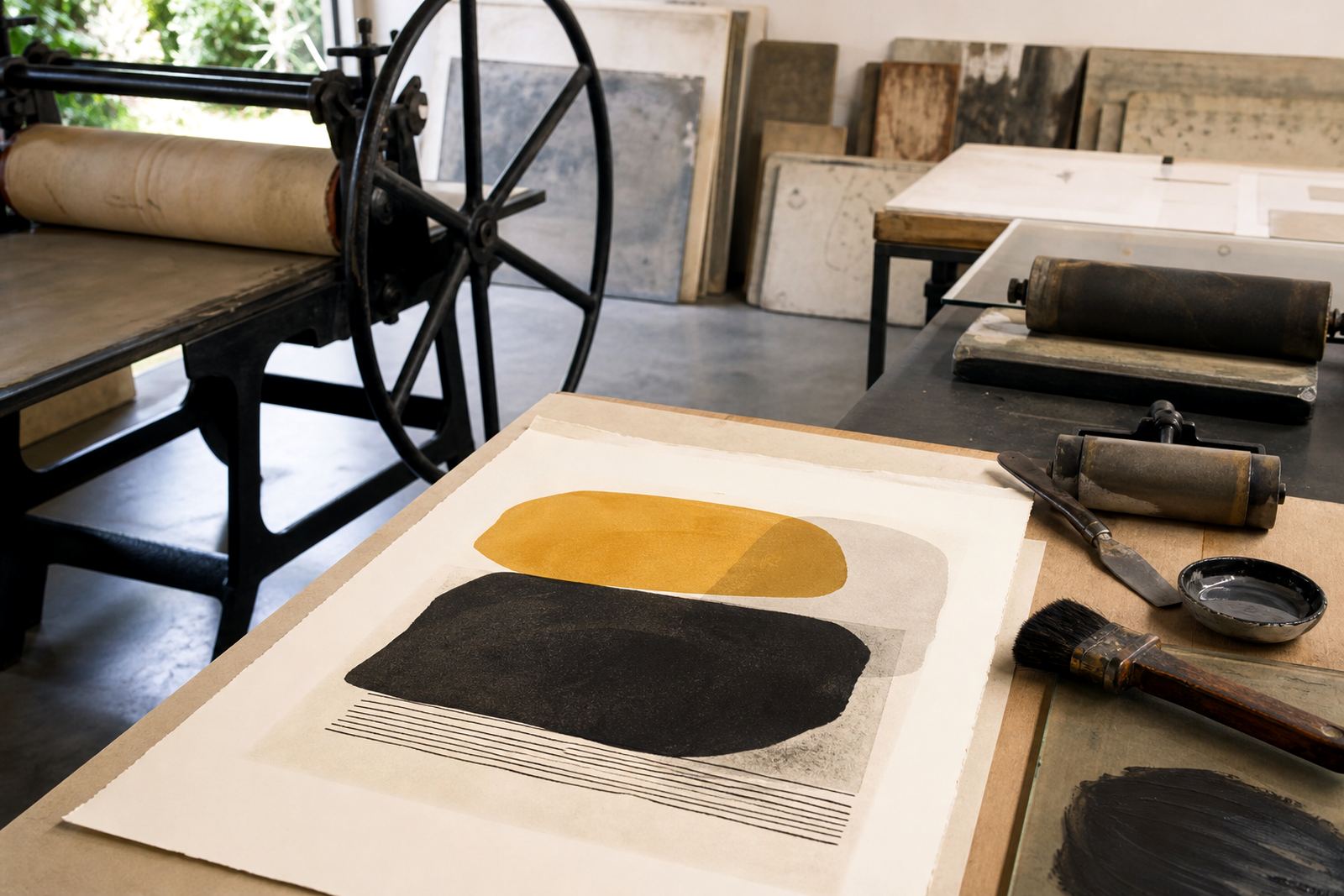
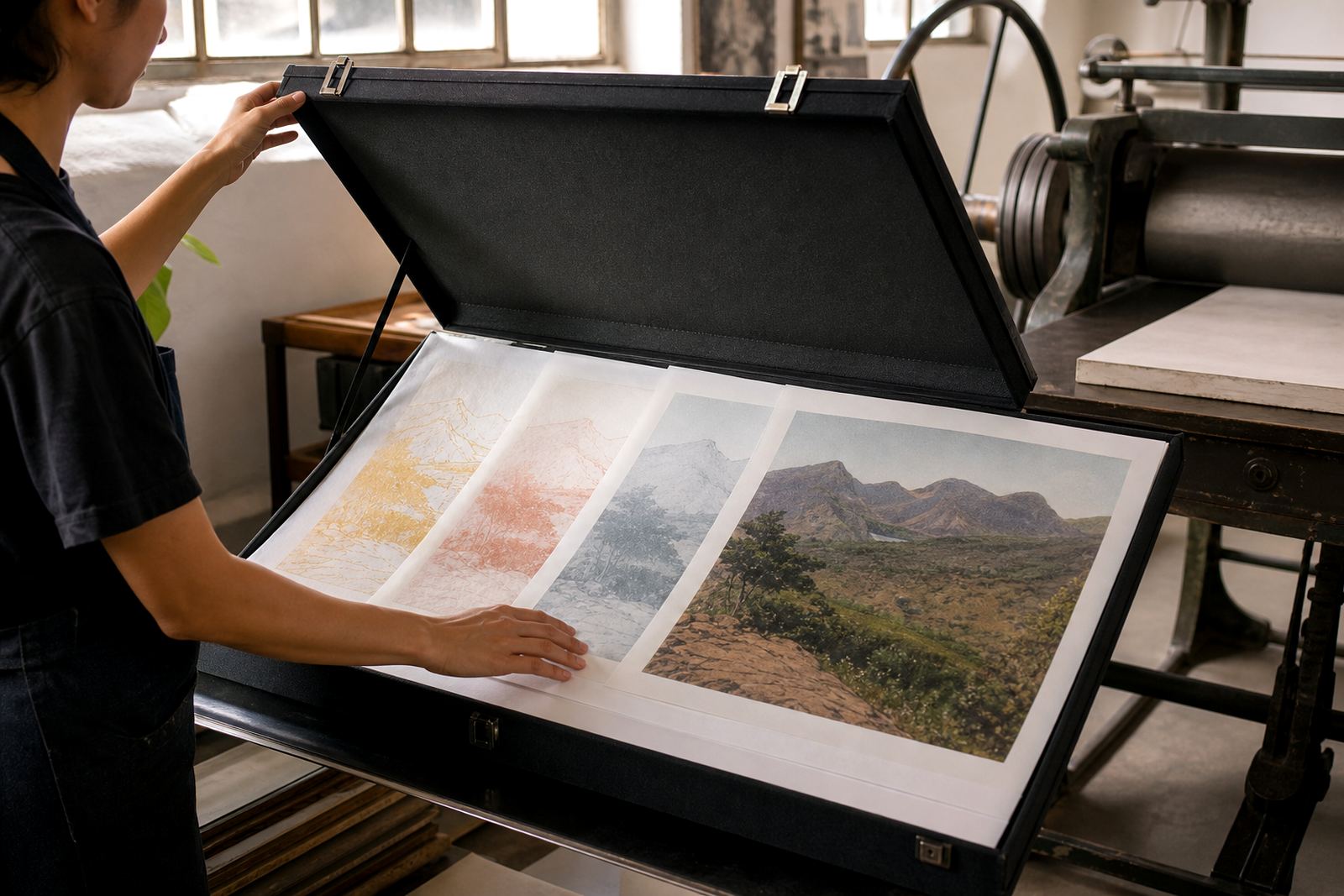
Our hand tinted prints start as genuine stone lithographs. The image is drawn on prepared limestone with greasy materials, then processed so the stone accepts ink in the drawn areas and repels it elsewhere. That printing stage gives the work its crisp line, soft tonal range and the slightly alive surface collectors value in stone lithography. After the edition is printed and dried, selected areas are tinted by hand with light colour washes or controlled touches of pigment.
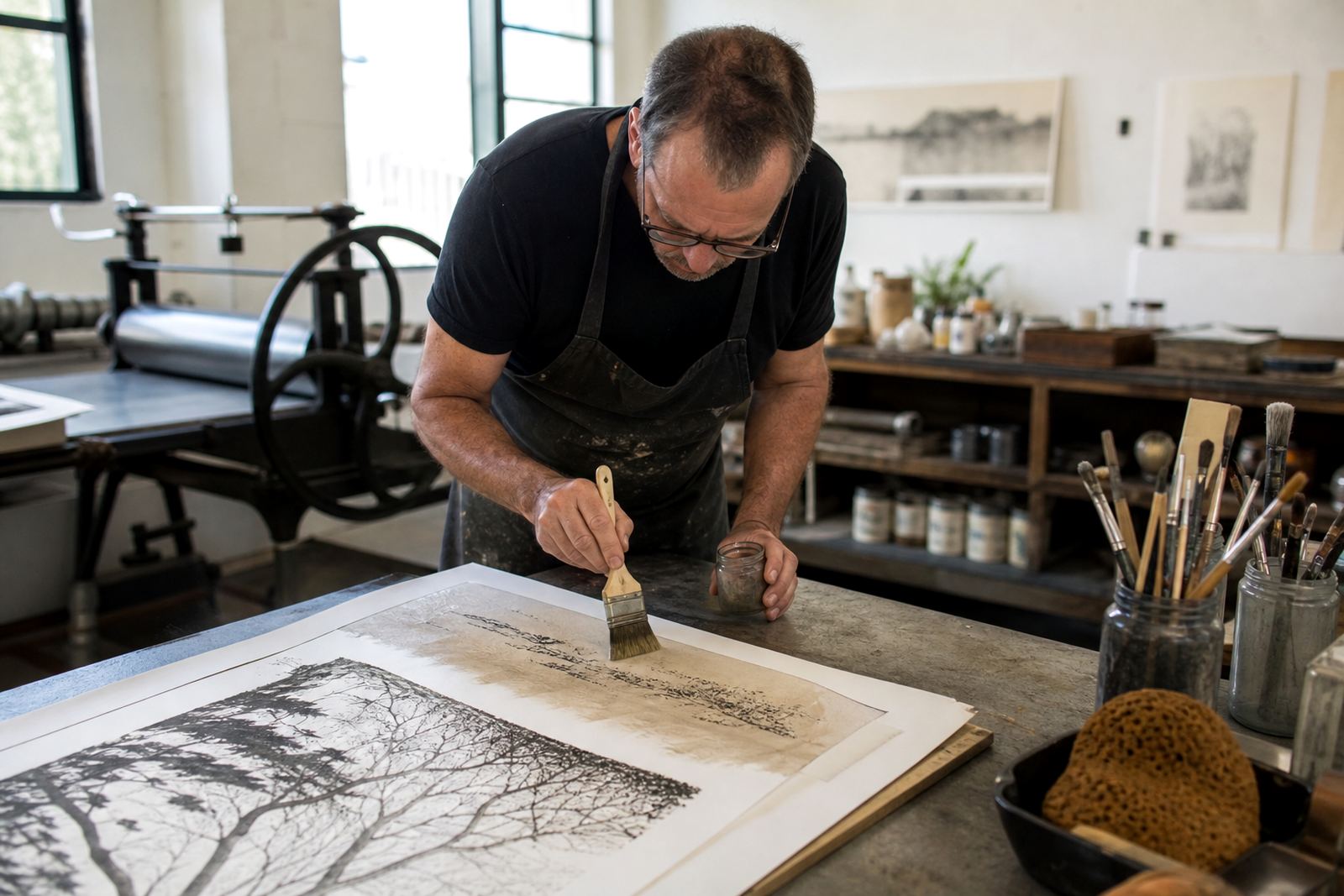
The tinting is done to support the image, not cover it. Some works need a hint of warmth in skin tones, a wash over sky or foliage, or a quiet accent that draws the eye to one part of the composition. Because the colour is added by hand, small variations are part of the appeal and no two sheets are exactly alike. That is normal, and it is part of the edition's character.
Edition sizes, sheet options and format choices
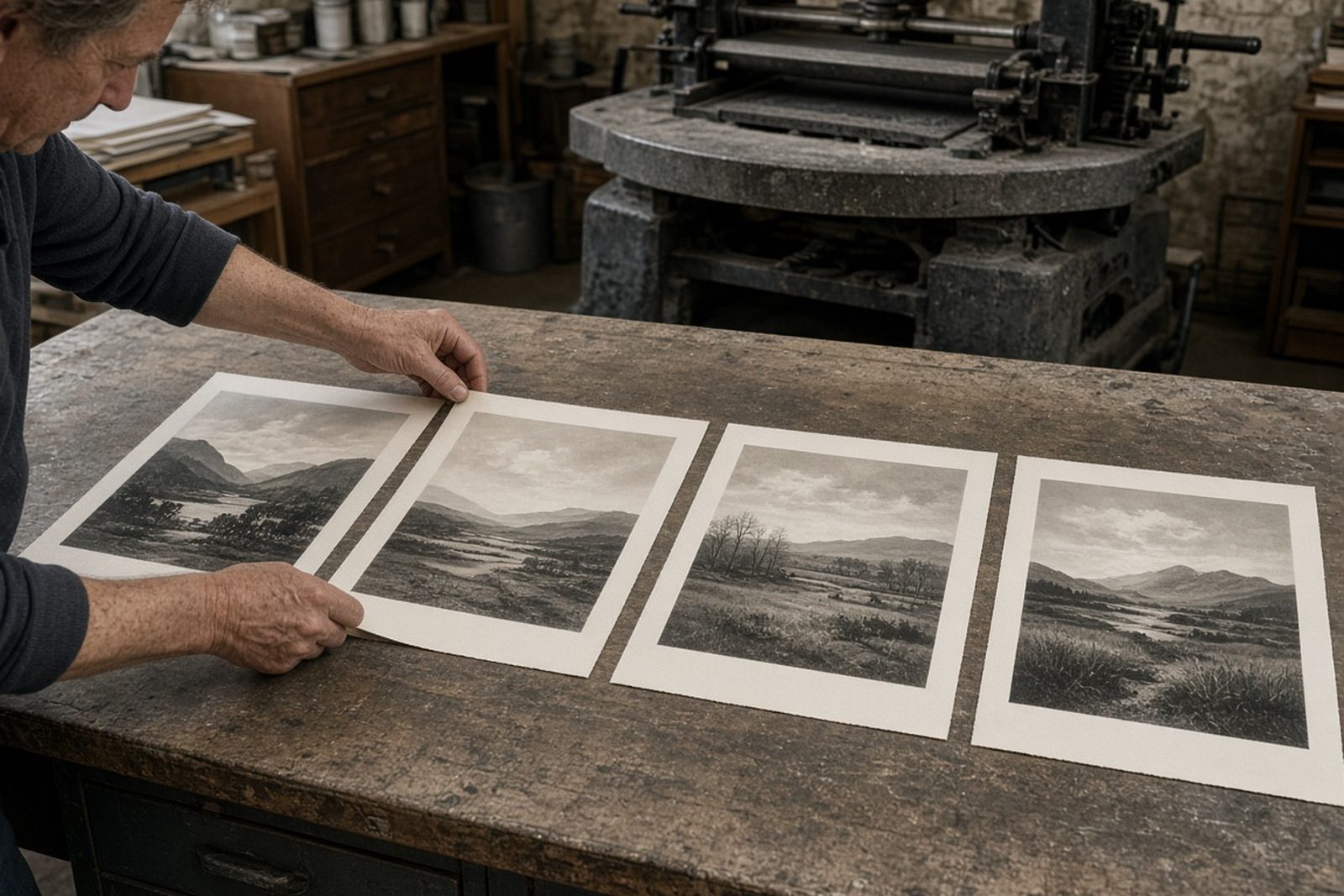
Hand tinted lithographs are usually made as limited editions, with each sheet signed and numbered once the edition is complete. The edition plan depends on the image, the size of the stones and the amount of hand work needed on each print. Smaller editions suit collectors who want a tighter run, while larger editions can work for collaborative projects or wider distribution. We plan each edition carefully so the final colour balance stays consistent from first proof to last print.
- Common formats include small, medium and large sheets, depending on the stone size and image area.
- Works may be sold unframed, framed or archived flat for later framing.
- Paper choice can be smooth or lightly textured, with natural white or warmer tones.
- Print margins can be left generous for mounting and signing, or trimmed to a tighter border.
For collectors in Cape Town, Stellenbosch, Johannesburg, Pretoria and Durban, we can advise on the size that suits the wall space and the visual weight of the image. If the work is intended for a narrow passage, above a sofa or in a hospitality setting, the proportions matter as much as the artwork itself.
Where hand tinted prints work best
These prints suit homes, studios, offices and calm public spaces where close viewing is possible. The hand applied colour rewards a slower look, so they work well in rooms where people spend time rather than just pass through. A softly tinted lithograph can bring warmth to a living room, reading room, entrance hall or private office without becoming overbearing.
They are also a good fit for collectors who want a print that carries the discipline of an edition but still feels personal. Because the colour is added after printing, the final image can sit somewhere between drawing and painting. That balance suits interiors with natural materials, timber, stone, linen and muted painted walls. In coastal areas like Sea Point, humidity is worth thinking about, especially for framing and backing materials, so we recommend archival methods rather than standard budget framing.
Display, light and framing
Most hand tinted prints are supplied for framing, and proper mounting is important. Archival mounting board, UV-filtering glazing and acid-free backing help protect the sheet from discolouration and surface change over time. If the work is to be framed under glass, the framer should allow for paper movement and avoid direct pressure on the printed surface. The tinting can be delicate, so it should not touch aggressive adhesives or low-grade tapes.
- Keep framed work out of direct sun, especially in bright western light.
- Avoid hanging near kitchens, bathrooms or open windows where moisture builds up.
- Do not use damp cloths on the print surface or frame internals.
- If you are fitting several works together, leave enough spacing so each image can breathe visually.
For studio visits in Woodstock, we can talk through framing options before a sheet leaves the studio. That makes it easier to match the print size with the frame opening and to plan for safe transport, which is especially useful if the artwork is travelling to Durban or upcountry by courier.
Care, storage and long-term condition
Stone lithographs with hand tinting should be handled with clean, dry hands or cotton gloves. If the print is unframed, keep it flat in an archival sleeve or portfolio, away from dust and pressure. Store it in a dry room with steady temperature if possible, not in a garage, roof space or a car boot. Cape weather can shift quickly and paper does not appreciate heat swings or damp corners. A little care goes a long way.
For framed work, check the reverse of the frame every so often for moisture or insect activity, especially in older homes. If the print is moved from one climate to another, let it settle before deciding on any changes to framing or hanging position. If a sheet has been packed for shipment, do not rush to unroll it. Let it rest flat and acclimatise first. That small wait can prevent cockling and edge lift.
What to check when ordering a hand tinted print
Before ordering, look at the edition details and confirm the sheet size, image size and whether the work is part of a small or open run. Ask what kind of tinting was used, since a light wash, opaque pigment and transparent colour pencil all behave differently over time. It also helps to know whether the work was printed on a smooth or textured paper, because that affects both the look and the framing method.
- Check the edition number, signature and date.
- Confirm whether the print is supplied framed or unframed.
- Ask for paper and glazing recommendations if the work will be displayed in a bright room.
- Make sure the colour placement is described clearly, since hand tinting can vary slightly between sheets.
If you are buying for a collection or as a gift, ask about packing and transit. Archival packing is especially useful for long-distance delivery to Johannesburg or Pretoria, where the work may be in transit for more than one day. Good packaging protects the sheet from bending and keeps the margins clean.
Printing practice and studio support in Woodstock
At Lithography Art in Woodstock, Cape Town, hand tinted prints are made through a careful editioning process that keeps the stone lithograph at the centre of the work. Shailen Naicker oversees the studio with Nomvula Phalatse, Stefan Hattingh, Rukshana Kamaar, Bonga Mngadi and Tegan Jacobs supporting proofing, preparation, editioning and client service. That team approach matters because the printed image and the hand colour both need close handling, from stone preparation to final packing.
Collectors can use the enquiry form on our contact page to ask about available editions, viewing arrangements or framing coordination. If you are in Cape Town, Stellenbosch, Sea Point or Newlands, a studio visit can be arranged. For buyers further afield, we can talk through packing, shipping and display requirements so the print arrives ready for framing or hanging, no fuss.
Edition details
| Product type | Limited edition stone lithographs with hand applied colour |
|---|---|
| Printing method | Traditional stone lithography on prepared limestone |
| Finish | Hand tinted after printing with controlled colour additions |
| Sheet options | Unframed, framed or archival flat supply |
| Typical use | Collecting, interior display and gifting |
| Care level | Archival handling, dry storage and low light display recommended |