What a single sheet edition means in stone lithography
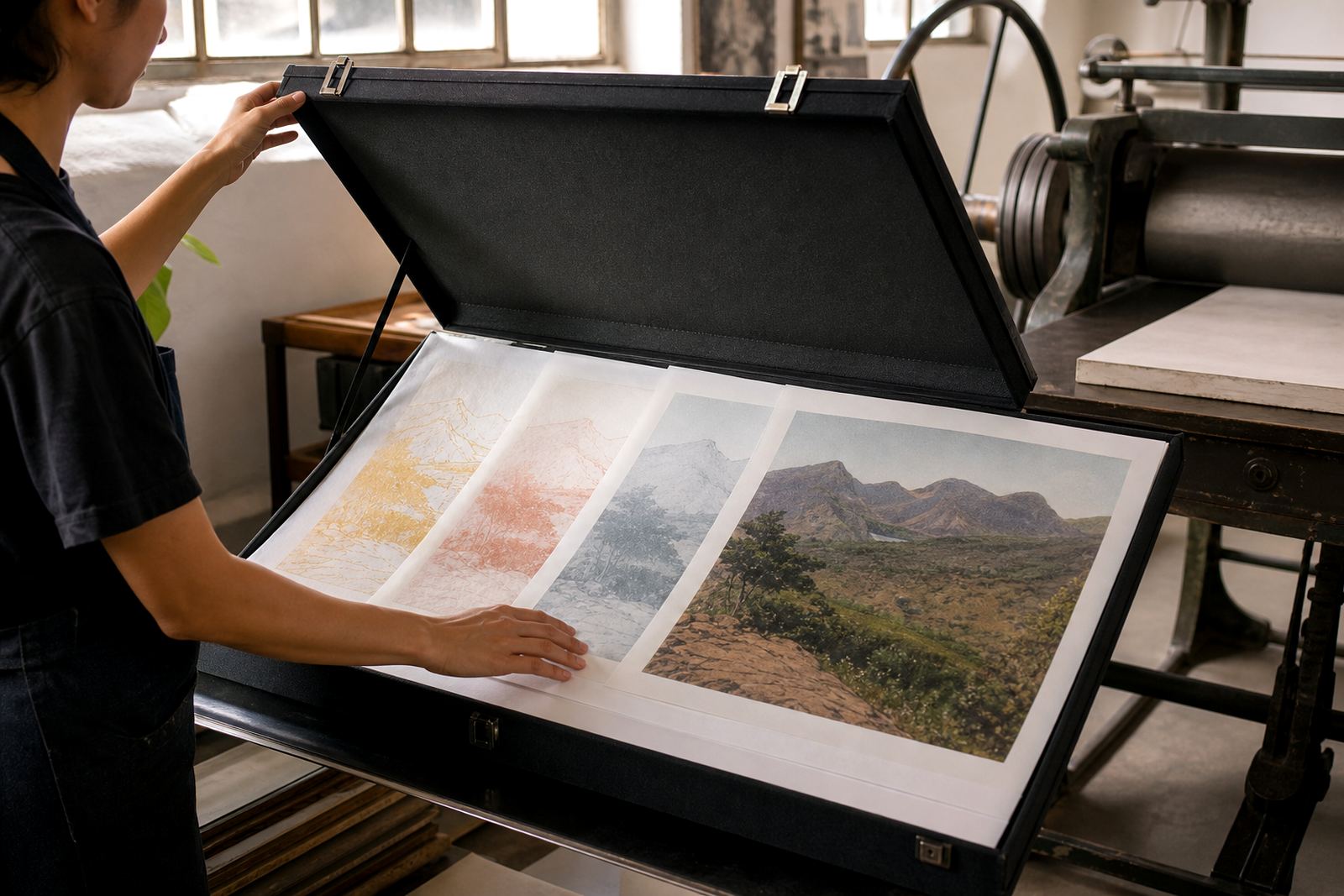
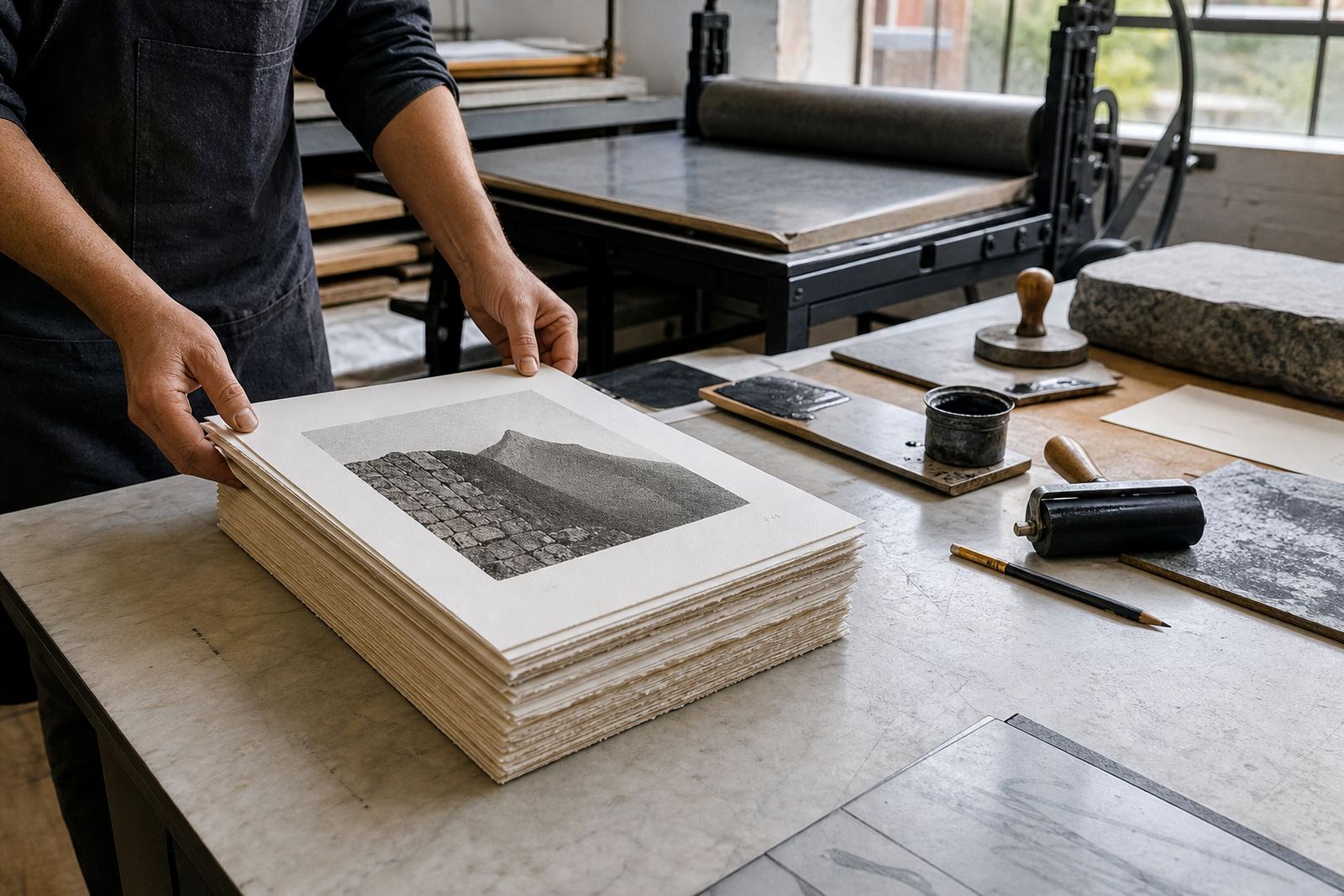
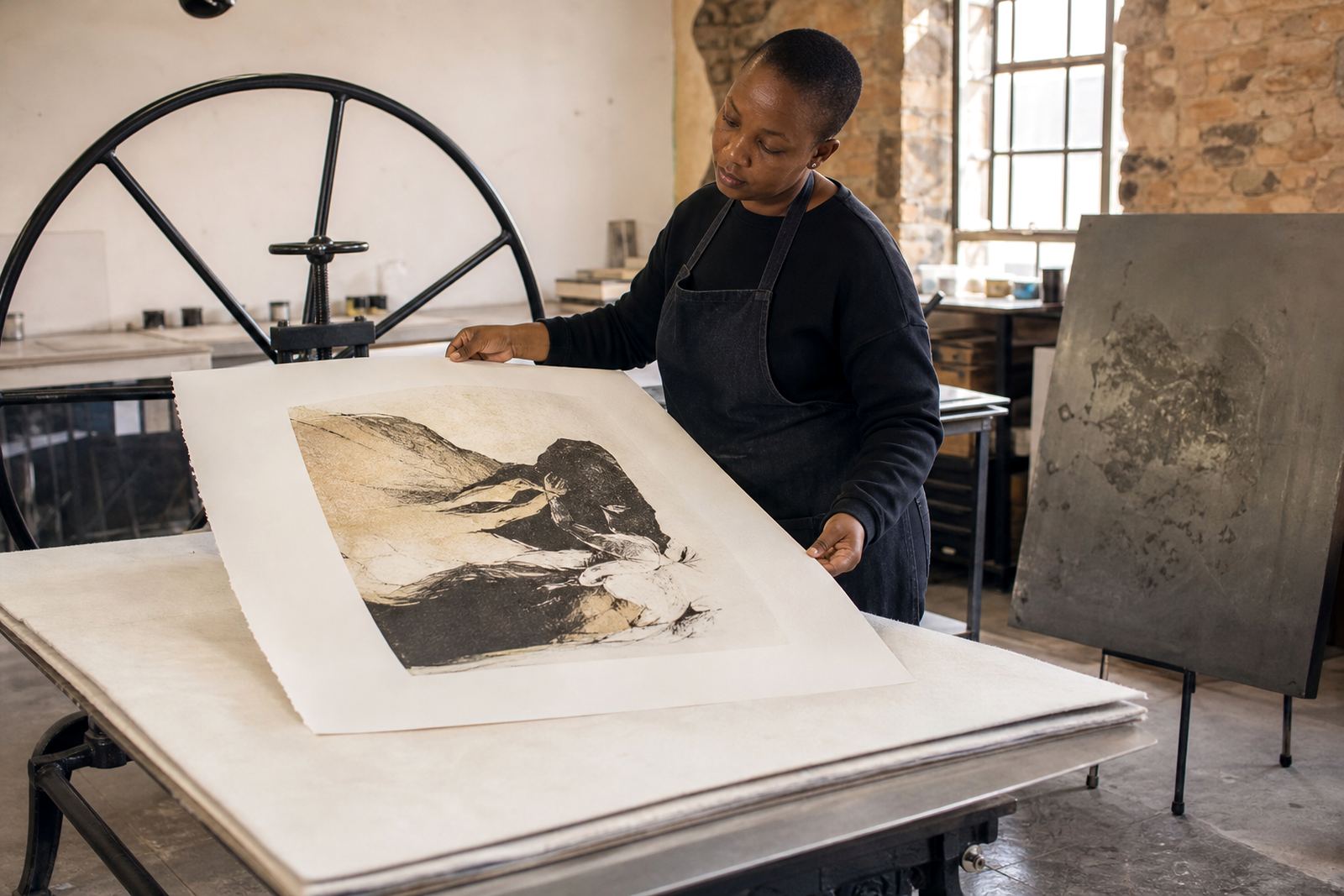
A single sheet edition is a limited release of one print from a planned group of impressions, all pulled from the same stone or matched stone set. Each sheet is made by hand through stone lithography, where the image is drawn onto a prepared limestone surface with greasy materials, then processed so ink accepts only the drawn areas and water repels the rest. The result is a print with fine tonal shifts, soft edges and a direct mark that suits collectors who want one clear statement piece.
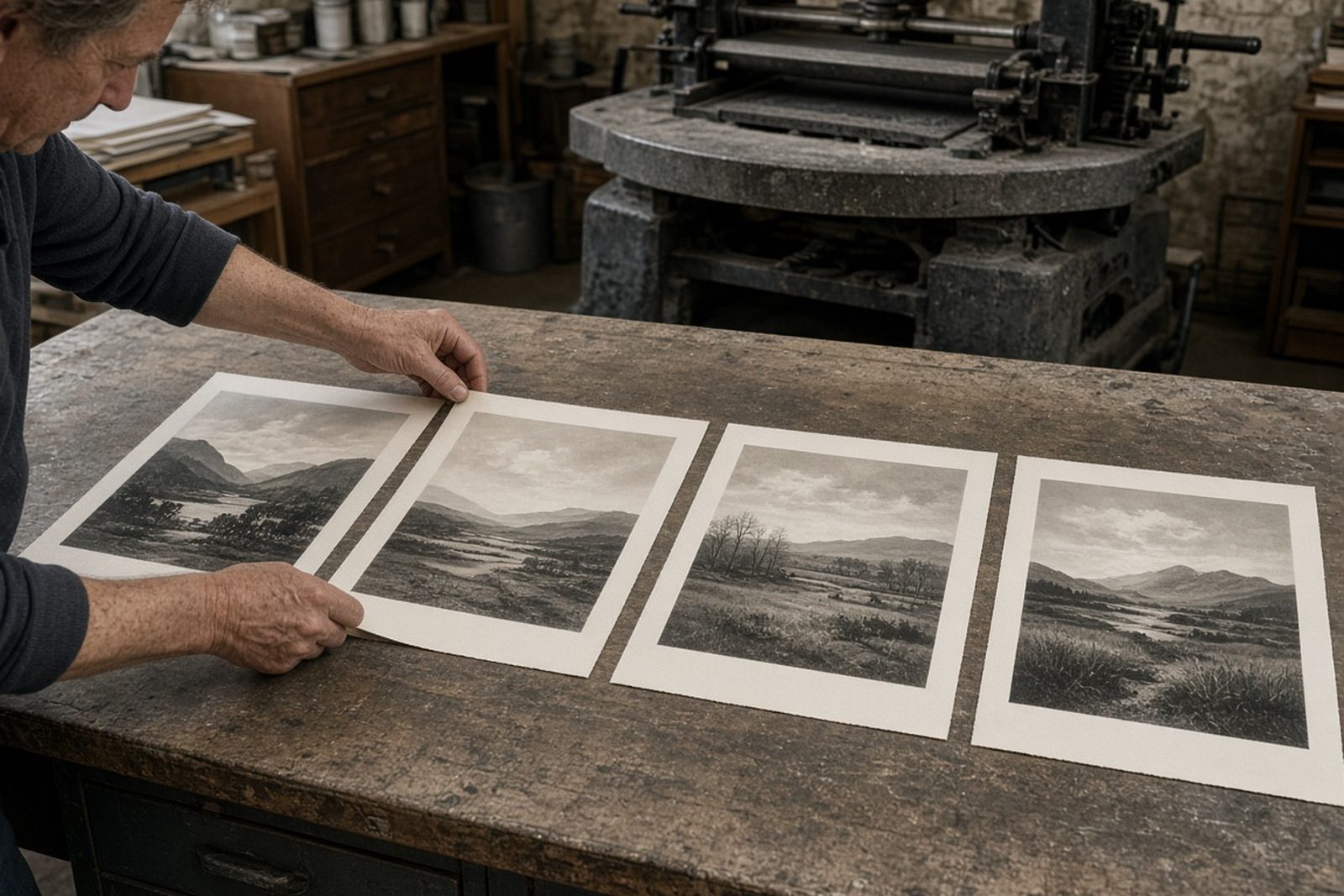
Because each impression is printed by hand, slight variation can occur from sheet to sheet, but within a properly editioned run the image remains consistent in colour, registration and paper choice. That is part of what gives stone lithographs their appeal. They feel made, not mass produced, and the paper surface carries the ink with a quiet depth that reproductions cannot match.
Sizes and format options for one standout work
Single sheet editions can be planned in a range of formats, from smaller collector works that fit into a reading room or passage, to larger sheets that anchor a lounge wall or entrance area. Sheet size, image size and paper margins are discussed before printing so the final work suits the image and the intended space.
- Small format: suitable for intimate interiors, gift purchases and grouped hanging.
- Medium format: often preferred for dining rooms, studies and apartment walls.
- Large format: ideal when the print should carry a room on its own.
- Deckled edge or trimmed edge: depending on the paper and presentation plan.
- Black and white or colour: single colour studies, or layered colour editions with careful separation.
Paper selection matters just as much as size. Cotton rag papers with good weight and a stable surface are commonly used for lithography, because they take ink evenly and handle framing well. In humid coastal areas like Cape Town and Durban, the paper should also be packed and framed correctly so it stays flat and clean.
How these editions suit collectors and interior spaces
Single sheet editions suit collectors who want one resolved image rather than a full suite. They are also a practical choice when wall space is limited, or when the work needs to sit alongside other art without overpowering it. A single lithograph can work well in homes, offices, gallery walls and hospitality spaces where a quiet but considered piece is needed.
A print placed near a bright window in Sea Point or Newlands needs UV aware framing, while a work in Johannesburg or Pretoria may need protection from dust and fluctuating indoor conditions. If the sheet is going into a shared building, it is worth checking body corporate rules on fixings and hanging weight before framing is finalised.
- Best for one focal wall or a smaller, deliberate display.
- Good for first time collectors who want an original print with clear provenance.
- Useful for clients building a room around a single artwork, not a large group.
Proofing, signing and what edition control involves
Before the final run is printed, proofing sessions help settle colour, density and registration. A proof is not the finished edition, it is a working impression used to check the image and make adjustments with the artist. Once the edition is approved, each sheet is printed to the same standard as far as hand printing allows, then signed and numbered in sequence.
Edition control is important for collectors because it records how many prints exist in the run and how each sheet is identified. A typical notation will show the edition number, any artist’s proof or printer’s proof if applicable, and sometimes a title and date. This gives the collector confidence that the print forms part of a fixed edition rather than an open run. In a well managed studio, the edition size is set before the first final impression is pulled, which helps protect the value and integrity of the work. It also saves a lot of confusion later on, especially when a print is sold interstate or packed for a long trip.
Choosing a wall and frame
Single sheet lithographs benefit from careful handling during delivery, framing and hanging. The important practical point is to keep the print dry, flat and away from heat sources. If the work is framed with conservation materials, the framer should use an acid free mount board, glazing with UV protection where possible, and spacers if the paper surface must not touch the glass.
For larger sheets, check that the wall can take the frame weight and that the hanging hardware suits the wall finish, whether plaster, brick or drywall. If the print will hang in a foyer, above a sideboard, or in a coastal room with strong afternoon sun, ask for a framing plan that reduces fading and moisture exposure. Studio processes do use careful ventilation and safe handling around acids, solvents and wash-up areas during production.
Care and what to check before you order
Print care starts as soon as the sheet leaves the studio. Keep the print in its protective wrap until framing, and handle it with clean dry hands or cotton gloves if preferred. Once framed, avoid direct sun, damp walls, bathrooms and kitchens with heavy steam. If you live near the coast, make sure the frame is sealed well and that the hanging position is not in a salty draught from an open window.
When ordering, check the following so there are no surprises later on:
- Edition size and whether the print is numbered and signed.
- Final image size and full sheet size, including margins.
- Paper type and whether the paper is white, cream or tinted.
- Colourway if more than one version exists in the edition.
- Framing dimensions if you need the work to fit a specific wall space.
- Delivery address and whether the print must travel to Cape Town, Stellenbosch, Johannesburg, Pretoria or Durban.
If a print is damaged in transit or needs re-framing later, a specialist framer can inspect the sheet, but do not attempt to flatten buckled paper with household heat or moisture. That usually makes matters worse, and the paper can cockle or stain.
Edition details
| Edition type | Single sheet limited edition lithograph |
|---|---|
| Process | Stone lithography, hand printed from limestone |
| Typical format | One finished image on a single sheet |
| Paper | Cotton rag art paper, selected for the image |
| Finish options | Signed, numbered and archive packed |
| Studio base | Woodstock, Cape Town |