What a small edition lithograph means
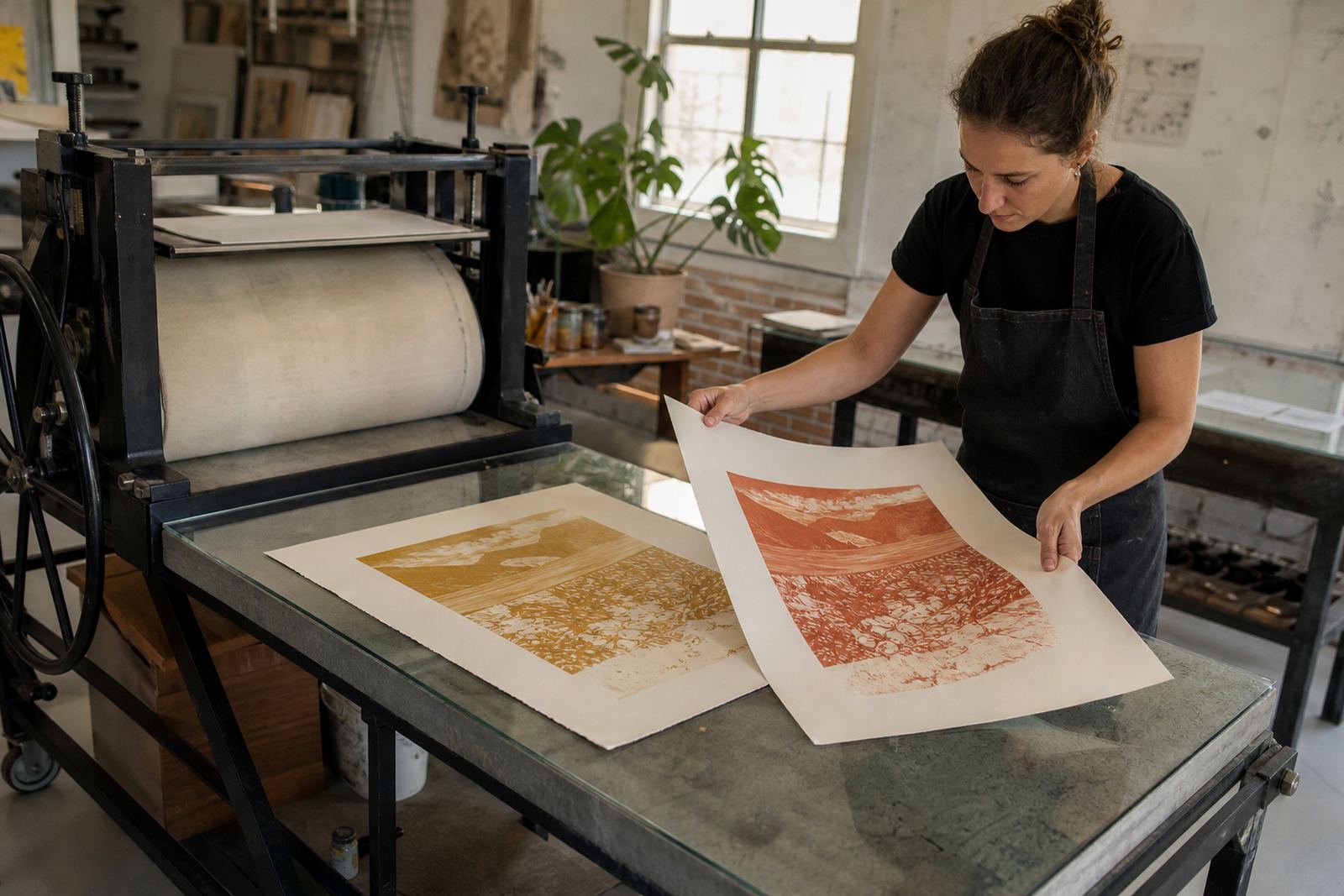
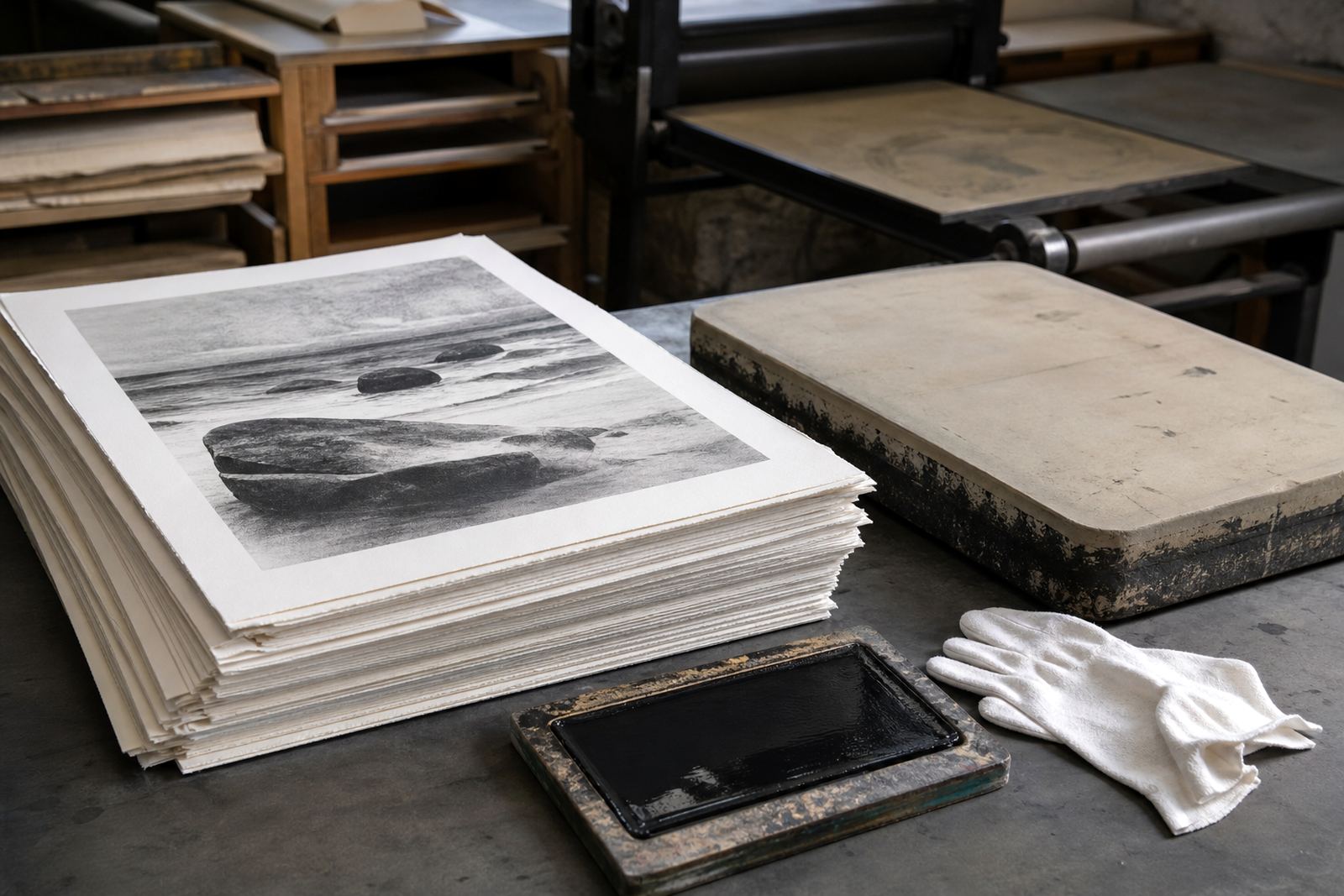
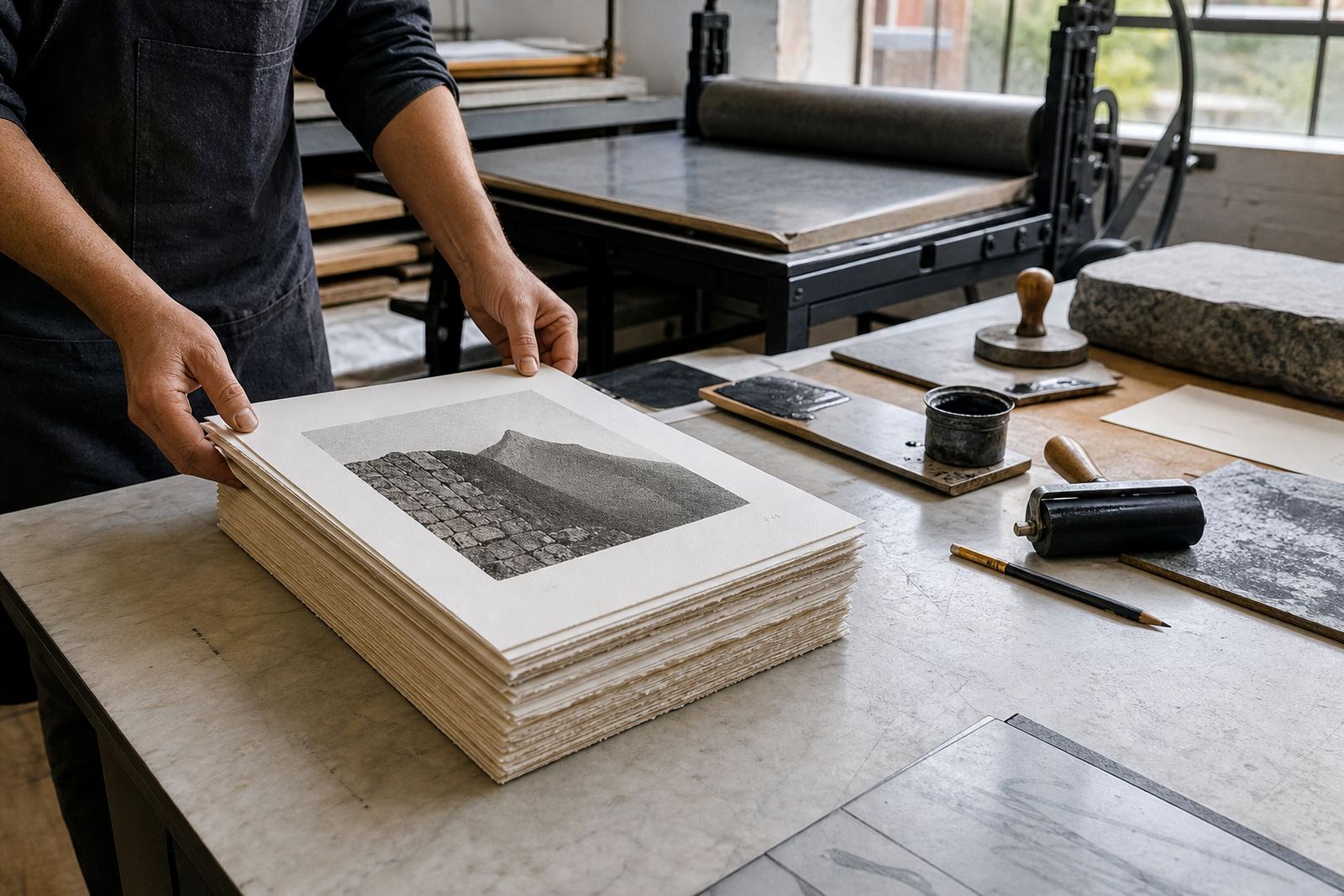
A small edition lithograph is a short run of prints made from a prepared stone, with each impression pulled under close supervision. Because the edition is limited, there is more room for pressure control, colour adjustment and hand finishing during the printing process. That makes it a good choice when the work depends on subtle tone, fine linework or layered colour that must stay consistent from sheet to sheet.
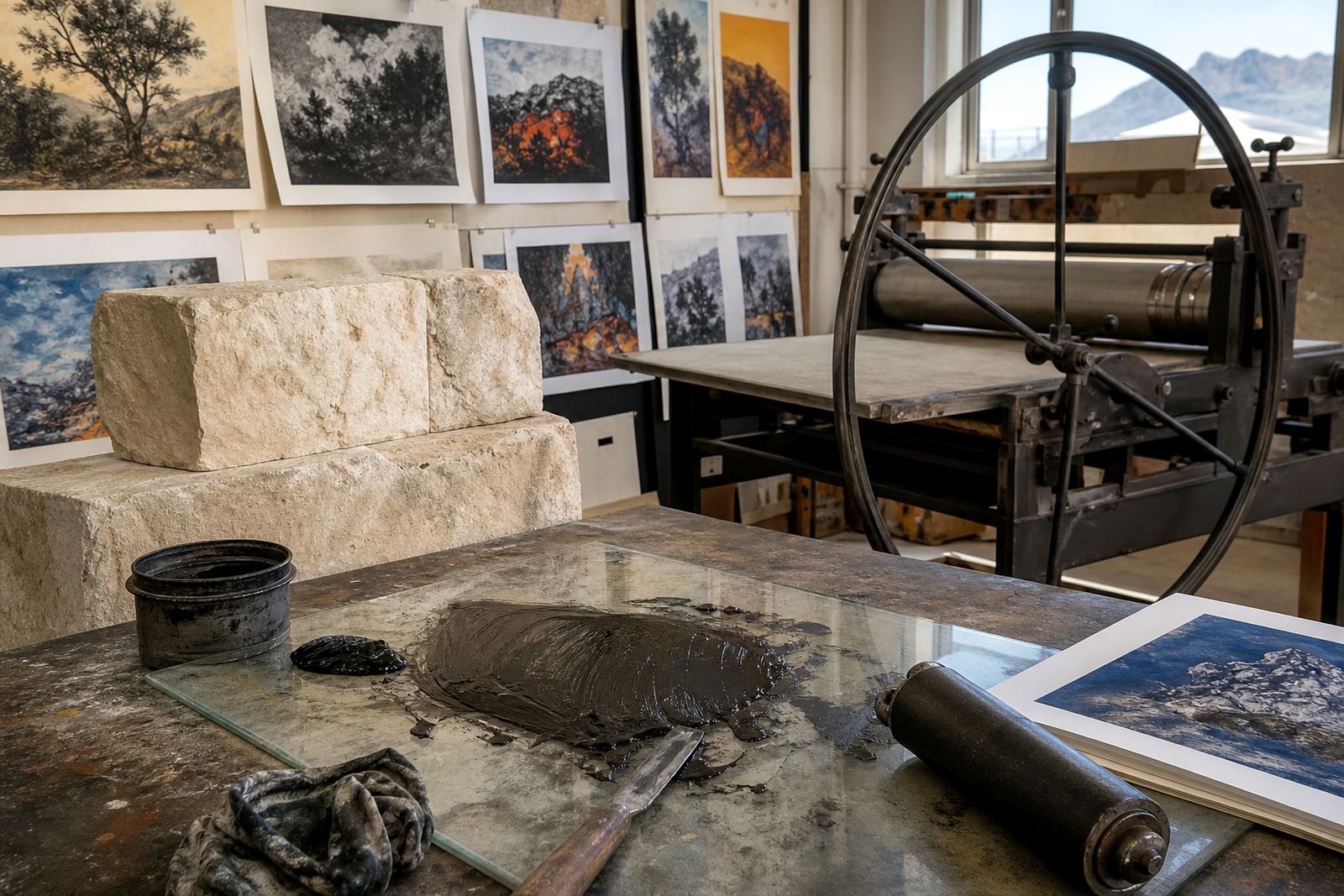
Stone lithography itself is a planographic process, which means the image sits on a flat surface rather than on a raised block or etched plate. The stone is drawn on with greasy materials, then treated so the image areas accept ink and the non-image areas repel it. It is a direct, hands-on method and small editions suit that approach well, especially when artists want close involvement at each stage.
Sizes, sheet options and edition planning
Small editions can be set up in a range of practical formats, from intimate works for collectors to slightly larger sheets for presentation pieces. The right size depends on the image area, the paper grain and how much hand work is needed between colours. We also help plan the edition so the image, borders and signing area all sit comfortably on the sheet.
- Typical formats: small single-image sheets, narrow vertical works and square compositions
- Paper options: cotton rag papers, mould-made papers and select smooth sheets for finer detail
- Edition set-up: artist proofs, numbered edition, printers proofs where agreed, plus signing and numbering space
- Colour builds: single-colour work, two-colour prints or multi-stone separations when the image needs layering
For artists working from Johannesburg, Pretoria, Durban or the Cape metro, edition planning can also help reduce wasted paper and unnecessary travel. A clear plan for proofing, colour order and final run length keeps the studio process efficient from the first proof to the last sheet.
Where small editions suit the work best
Small editions suit collectors and artists who value exclusivity, as well as buyers looking for a work that feels connected to the making process. They are often chosen for intimate interiors, private collections, client gifts or a focused release where the edition should remain limited and carefully controlled.
In coastal homes, especially around Sea Point and Newlands, a lithograph should be framed with care because humidity can affect paper over time. Small editions also work well in offices, studies and gallery walls where the scale needs to be restrained but the print still needs presence. If the work is headed for a public space, we can advise on paper, framing and glazing so the piece stays stable in SA conditions.
- Best for: limited releases, collector editions and artist-led projects
- Good interiors: studies, lounges, boardrooms and passage walls
- Helpful where: the artist wants close oversight and consistent hand finishing
How the edition is printed and finished
Each print begins with stone preparation, then drawing, etching and proofing before the final edition run starts. During printing, the ink balance and paper pressure are checked throughout, because a small edition does not benefit from rushing. When colour is involved, each layer must register cleanly and the paper needs time to rest between stages if the image requires it.
At our Woodstock studio, the team handles editioning, signing and numbering with the same attention given to the printing itself. For artists who want collector-facing work, this stage matters just as much as the image. It is where the print is confirmed as part of a controlled edition, rather than a loose studio proof or a casual run-off sheet.
Framing choices that protect paper
Keep the print flat during transport and avoid direct sunlight, strong kitchen heat or damp walls. In Cape Town and Durban, where moisture can be an issue, archival framing is strongly advised.
The studio process itself does require practical working conditions. Stone lithography uses heavy stones, inks, solvents and press equipment, so the studio must be well ventilated and able to support safe handling.
- Transport: carry flat, never roll unless the work has been prepared for tube shipment
- Framing: use acid-free mounts, backing board and UV-filtering glazing where suitable
- Environment: stable temperature, low humidity and no direct sun on the wall
- Studio needs: level floor, clean prep space and safe access for stone handling
Care and what to check before you order
Stone lithographs are durable when framed and stored properly, but they still need careful care. Dust the frame gently, keep the print away from water and do not press on the surface or glazing. If a print is unframed, store it in archival tissue and a rigid folder, not loose in a cupboard or against a wall with condensation.
Before placing an order, check the edition size, paper choice, sheet dimensions and whether you want the work trimmed or left with a deckle edge. Confirm how signing will be done, who handles framing coordination and whether collector packing is needed for delivery to Stellenbosch, Johannesburg, Pretoria or further afield. It is also worth asking how many proofs are included, because small editions leave less room for late changes once the run has begun.
- Confirm the final edition size and any proof allowances
- Check image area, sheet size and border width
- Decide on paper type and framing preference early
- Ask about packing for local collection or courier delivery
Studio support from Woodstock to collectors nationwide
Lithography Art works from Woodstock, Cape Town with artists, collectors and institutions across South Africa. Our small edition prints are handled through a direct studio process, from proofing sessions and colour separation through to archival packing and framing coordination. Whether the edition is staying in Cape Town or going to Pretoria, Durban or Johannesburg, the same care applies to each sheet.
If you are planning a limited run, the best starting point is a clear enquiry through our contact page. That lets us discuss the image, paper, size and edition plan before any stone is prepared, which saves time and keeps the process orderly from the start.
Edition details
| Process | Stone lithography on prepared limestone with hand-printed impressions |
|---|---|
| Edition type | Short-run limited edition, numbered and signed where agreed |
| Size range | Small-format sheets and custom sizes planned to the image area |
| Paper options | Cotton rag, mould-made and select smooth archival papers |
| Finish options | Single colour, multi-colour, proofing, signing, numbering and packing |
| Studio base | Woodstock, Cape Town, with collector support across South Africa |