What a portrait lithograph is, and why the process suits faces
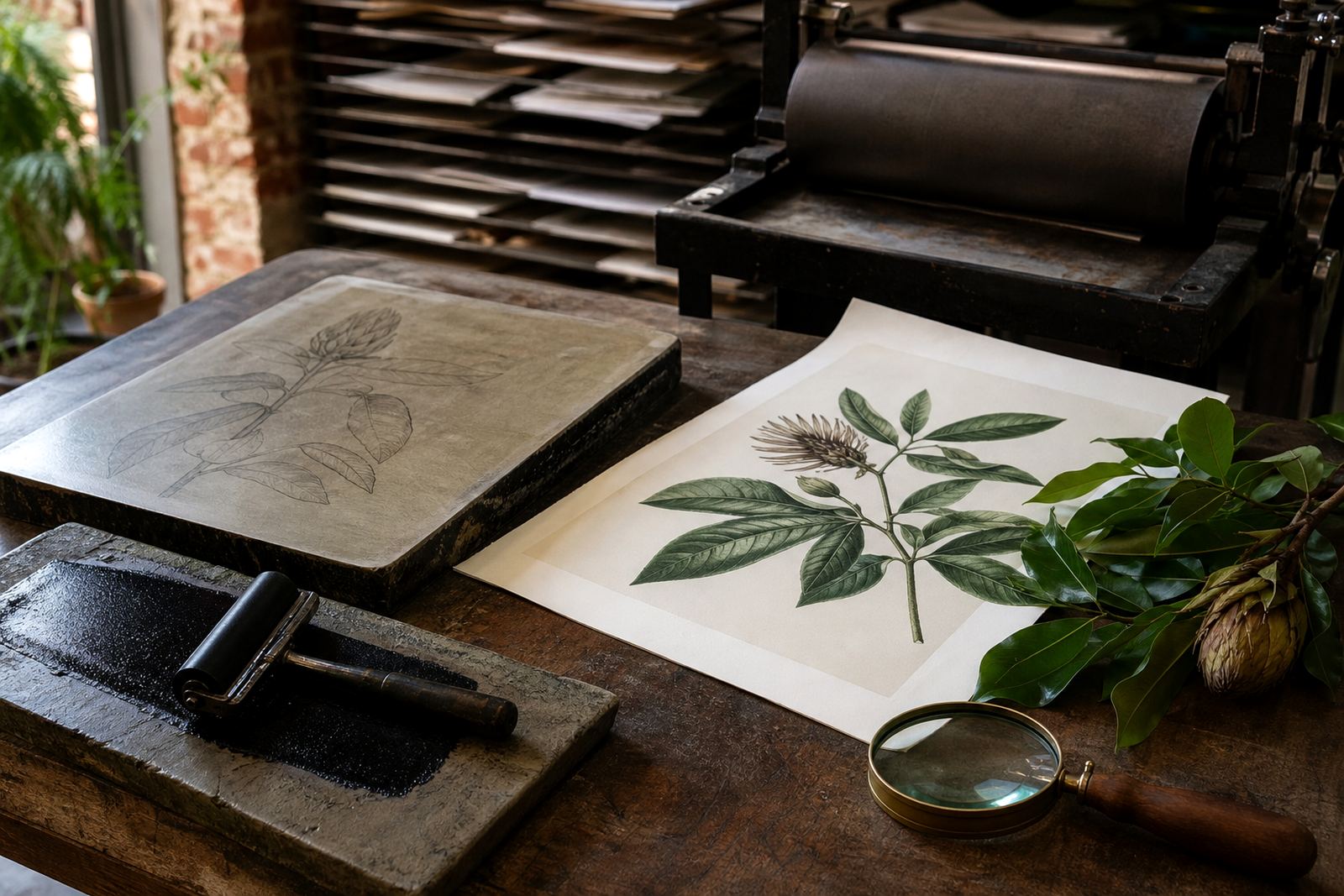
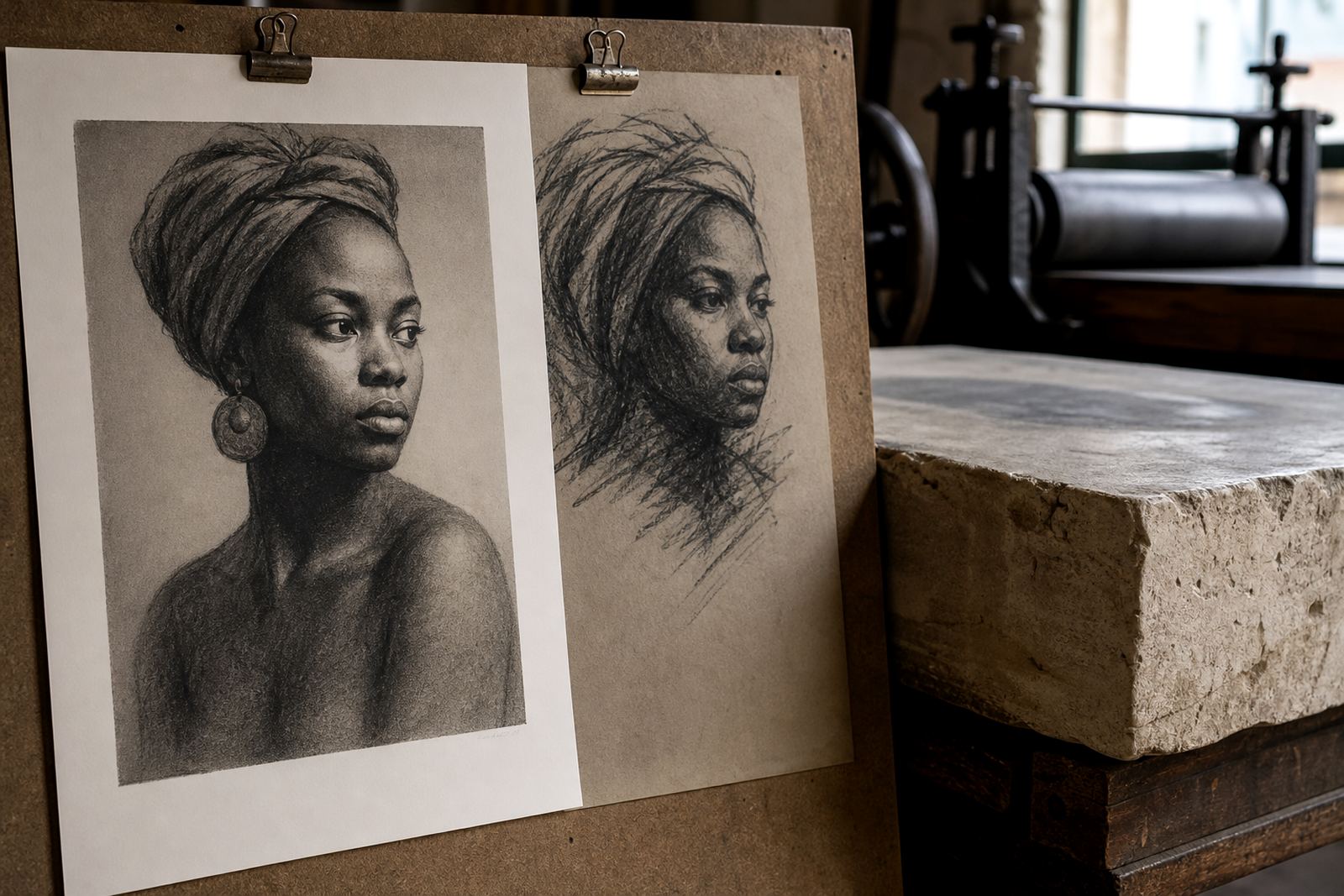
A stone lithograph starts on a prepared limestone surface, where the image is drawn or worked into the stone with grease-based materials. The surface is then treated so the drawn areas attract ink and the non-image areas repel it. When printed on damp paper under pressure, the result is a print with fine tonal shifts, crisp line work and a soft, natural grain that suits skin, hair and expression very well.
Portraits benefit from this process because the medium can hold both delicacy and presence. A small change in pressure or mark can suggest a glance, a wrinkle, a shadow under the chin or the texture of a collar. In edition work, that control matters. We prepare the stones, test colour where needed, and print each sheet with close attention so the portrait stays consistent across the run while still carrying the human hand in the mark making.
For artists working in Cape Town or sending work from further afield, stone lithography offers a direct way to build a limited edition without losing the mood of the original drawing. It is well suited to monochrome portraits as well as colour portraits with layered skin tones, backgrounds or clothing details. The finished print has a quiet depth that many collectors appreciate, especially when they want a work that sits comfortably in a home, study, passage or private collection.
Edition options, sheet sizes and format choices
Portrait lithographs are usually ordered as limited editions, with each print hand pulled from the stone and then signed, numbered and titled by agreement with the artist. Edition size depends on the image, the paper and the amount of colour involved. Smaller editions are often chosen for highly worked portraits, while larger editions suit editions intended for wider collector release across South Africa.
Common sheet sizes range from intimate works that frame well in compact interiors to larger presentation prints for statement walls. We can also work with image areas that leave generous margins for cataloguing, hinging and framing. If a portrait includes multiple stones for separate colour layers, the format may shift slightly to allow for accurate registration and clean trimming. That planning is best done before the first proof, not after the edition starts.
- Square, portrait or landscape sheet formats available
- Single-colour or multi-colour portrait editions
- Open proof, artist proof and numbered edition arrangements by agreement
- Paper choices suited to smooth tonal passages and fine line
For collectors, the main thing to check is whether the edition is intended as a standard print run, a small signed edition, or a proof-based release. These details affect the number of works available and how the edition should be described on the label and certificate. Clear edition planning protects the value of the set and avoids confusion later on.
Where portrait lithographs work best in homes and public spaces
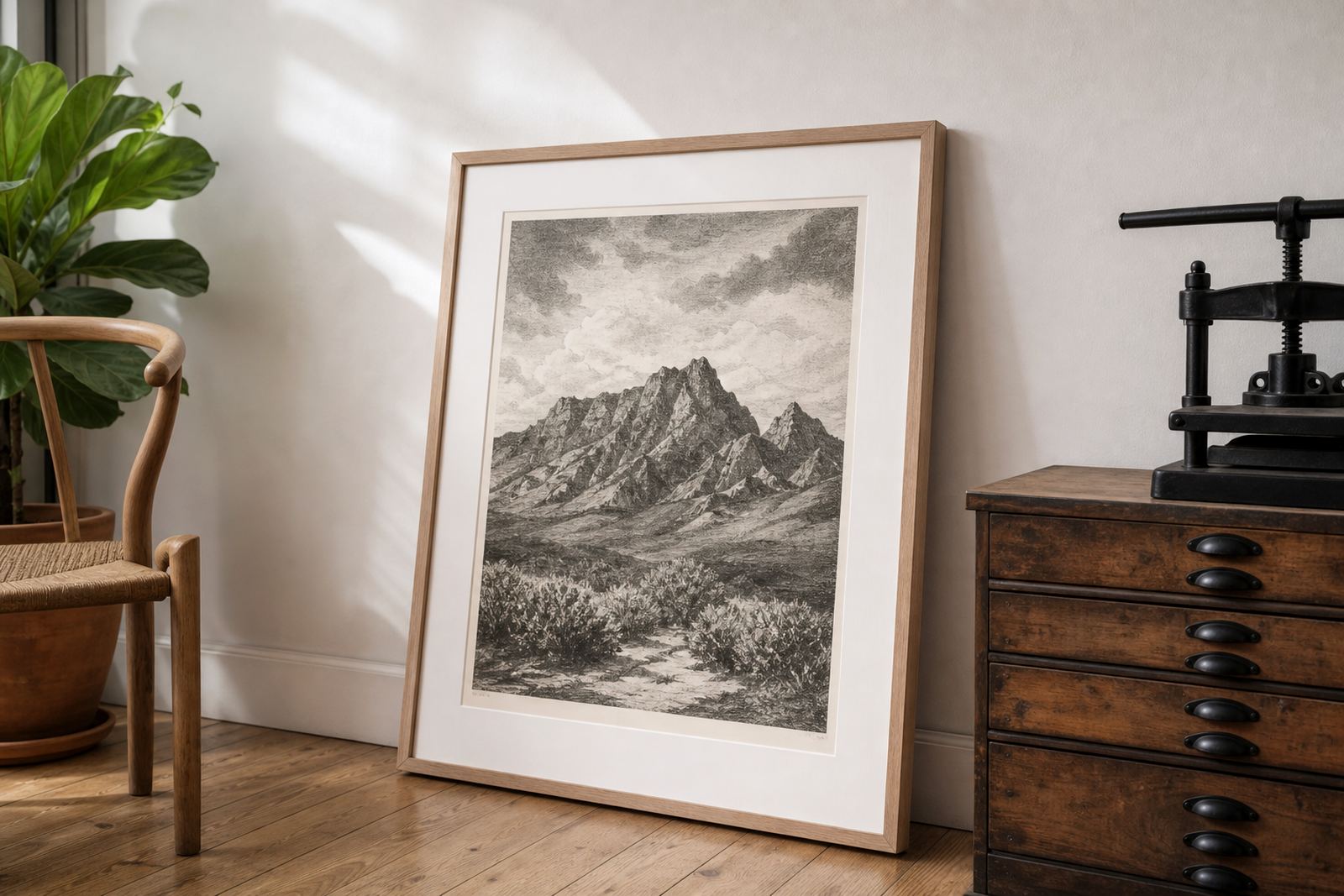
Portrait lithographs suit rooms where people spend time looking closely. They work well in living rooms, studies, entrance halls, galleries, boardrooms and private offices. In homes from Sea Point and Newlands to Stellenbosch, framed portraits can sit above a console, along a stair wall or in a quiet reading corner. In larger interiors, a pair of related portraits can make a strong visual rhythm without overpowering the room.
Because the process handles tone so well, portrait lithographs are also a strong choice for hospitality interiors, small curatorial spaces and collector walls where the work will be viewed at eye level. A portrait does not need a large wall to feel important. What matters is spacing, framing and light. If the room gets a lot of direct sun, it is better to place the work away from the window or use UV-protective glazing in the frame.
- Best placed out of direct sunlight and away from damp corners
- Suitable for framed display in homes, offices and galleries
- Works well as a single image or as a paired portrait set
- Allows close viewing of line, texture and expression
For coastal homes in Durban or the Atlantic Seaboard, stable framing and sensible placement matter because humidity can affect paper and framing materials over time. With the right framing package, a portrait lithograph can remain in good condition for many years, even in spaces where air-conditioning is used only part of the day.
Studio setup and handling on site
In the studio, production depends on press work, wash-up, drying and careful packing, but for the collector the finished print is straightforward to hang and maintain.
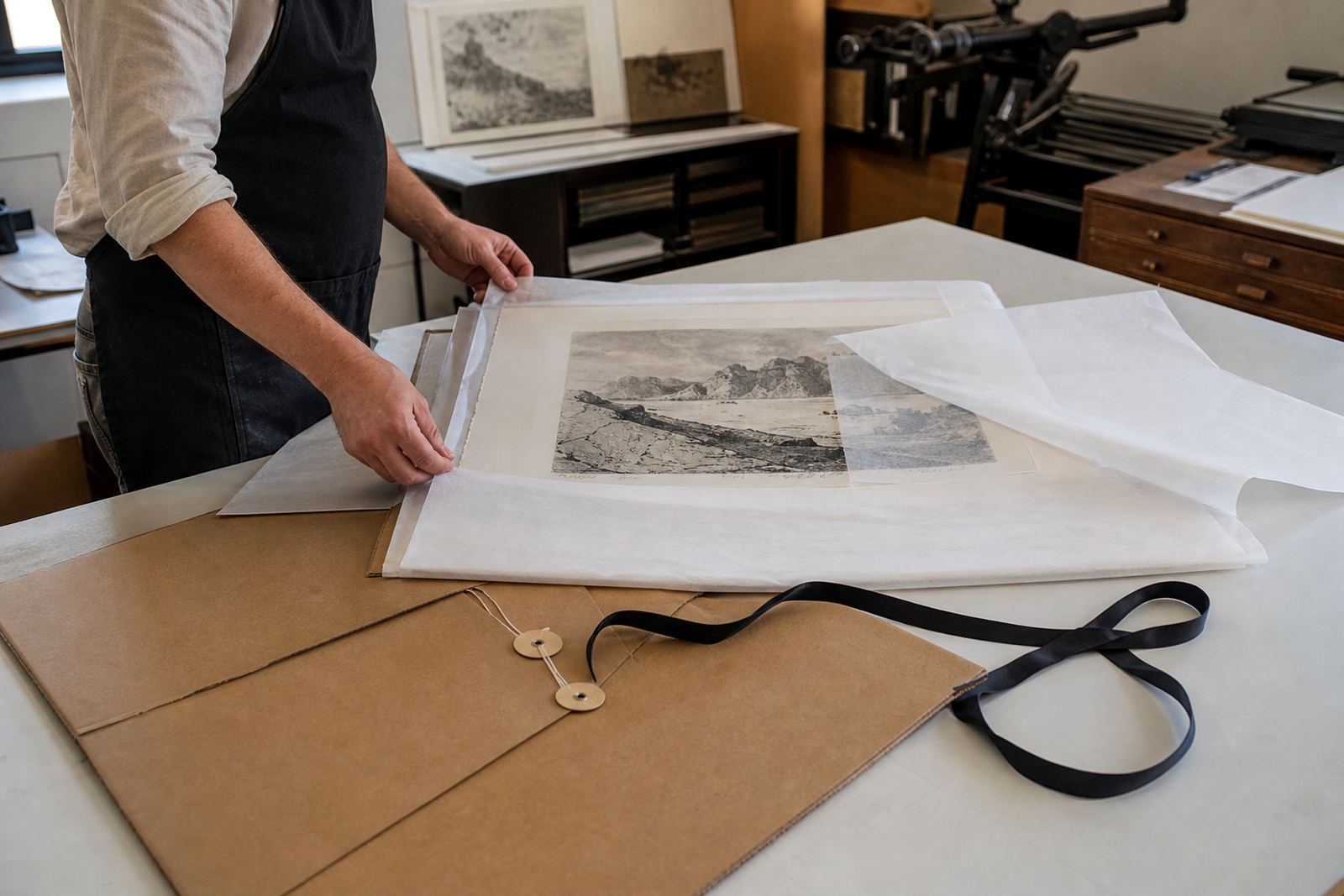
If a client is taking delivery in Johannesburg, Pretoria or Durban, the key point is to keep the work flat and protected until framing. Do not leave a print in a vehicle for long periods, especially in summer heat. If the work is framed by a local framer, ask for acid-free backing materials and spacers where needed so the paper does not touch the glazing. That small detail helps prevent cockling, sticking and discolouration.
- Flat transport and careful unpacking recommended
- Framing should use acid-free materials and secure hanging hardware
For studio visits in Woodstock, we can discuss paper, edition size and framing coordination before the work leaves the press. That is usually the best time to settle practical matters like hanging height, wall colour and whether the print will be shown in a group or on its own.
How to care for a portrait lithograph after framing
Good care starts with sensible framing and continues with simple habits at home. Keep the print away from strong direct sun, kitchen steam, and areas with high humidity. If you live near the coast, check the frame from time to time for any signs of moisture, mould or bowing. A framed lithograph should be handled by the frame, not by the paper, and it should never be leaned against a wall where it can slide or bend.
Dust the frame with a dry cloth and avoid household cleaners near the glazing. If the print is unframed, store it flat in archival conditions with tissue between sheets and a rigid outer cover. Never use tape on the artwork itself. If a work needs reframing after a few years, a professional framer can inspect the backing and replace ageing materials before damage sets in.
- Keep out of direct sunlight where possible
- Avoid damp rooms, bathrooms and unventilated passages
- Use archival framing materials and stable hanging points
- Store spare unframed works flat and dry
If a collector notices waviness, spots or a loose mount, aftercare should happen early. Small issues are easier to sort before they become permanent. That is especially true in places where seasonal humidity changes quickly between summer and winter.
What to check before ordering a portrait edition
Before placing an order, check the image size, final sheet size, paper choice and edition size. It is also worth confirming whether the portrait will be printed in one colour or several, since each colour layer adds proofing time and affects the final look. Ask whether the work will be supplied framed or unframed, and whether the edition will include a certificate or hand notation on the sheet.
For artists and collectors, the most useful questions are often the practical ones. How many proofs are included? Will there be room for a signature and title? Is the paper suited to heavy tonal work or a lighter image? Will the edition be packed flat or rolled if it is travelling to another city? These details can save time and avoid surprises once the print is complete.
- Confirm edition size and proof allowance
- Check image area, margins and final paper dimensions
- Agree on signing, numbering and titling before printing starts
- Decide on framing, packing and delivery method in advance
We work with artists and collectors across South Africa, and clear ordering keeps the process calm and accurate. If the portrait needs paper samples, colour tests or discussion about a specific wall location, that can be handled through the enquiry form on our contact page.
Edition details
| Product type | Limited edition stone lithograph portrait print |
|---|---|
| Process | Hand-drawn and hand-printed on limestone using grease-based materials and press pressure |
| Typical formats | Single portrait, paired portrait, or small series in square, portrait or landscape layout |
| Paper | Archival art paper selected for tone, line and edition consistency |
| Finishing | Signed, numbered and packaged for safe collector delivery |
| Display needs | Framing recommended |