What an artist proof set includes
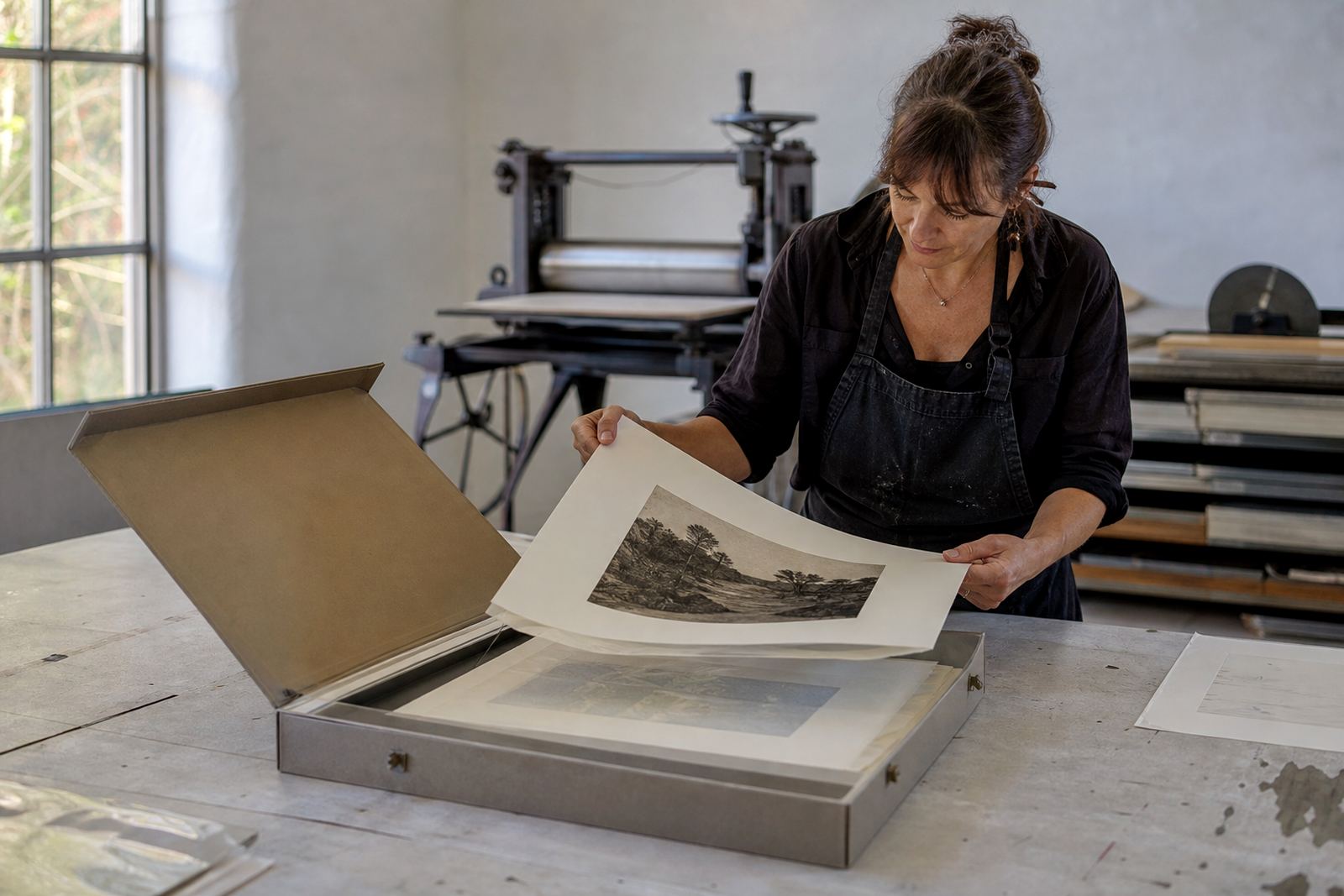
An artist proof set is a small group of prints taken from the same stone lithography process used for the main edition, but kept separate for review, record and collection. In many studios these proofs are marked apart from the numbered edition so the artist can compare colours, make technical decisions and retain examples of the work at different stages. Because each proof is pulled by hand on the press, it carries the same craft process as the edition, with small variations that are part of the appeal.
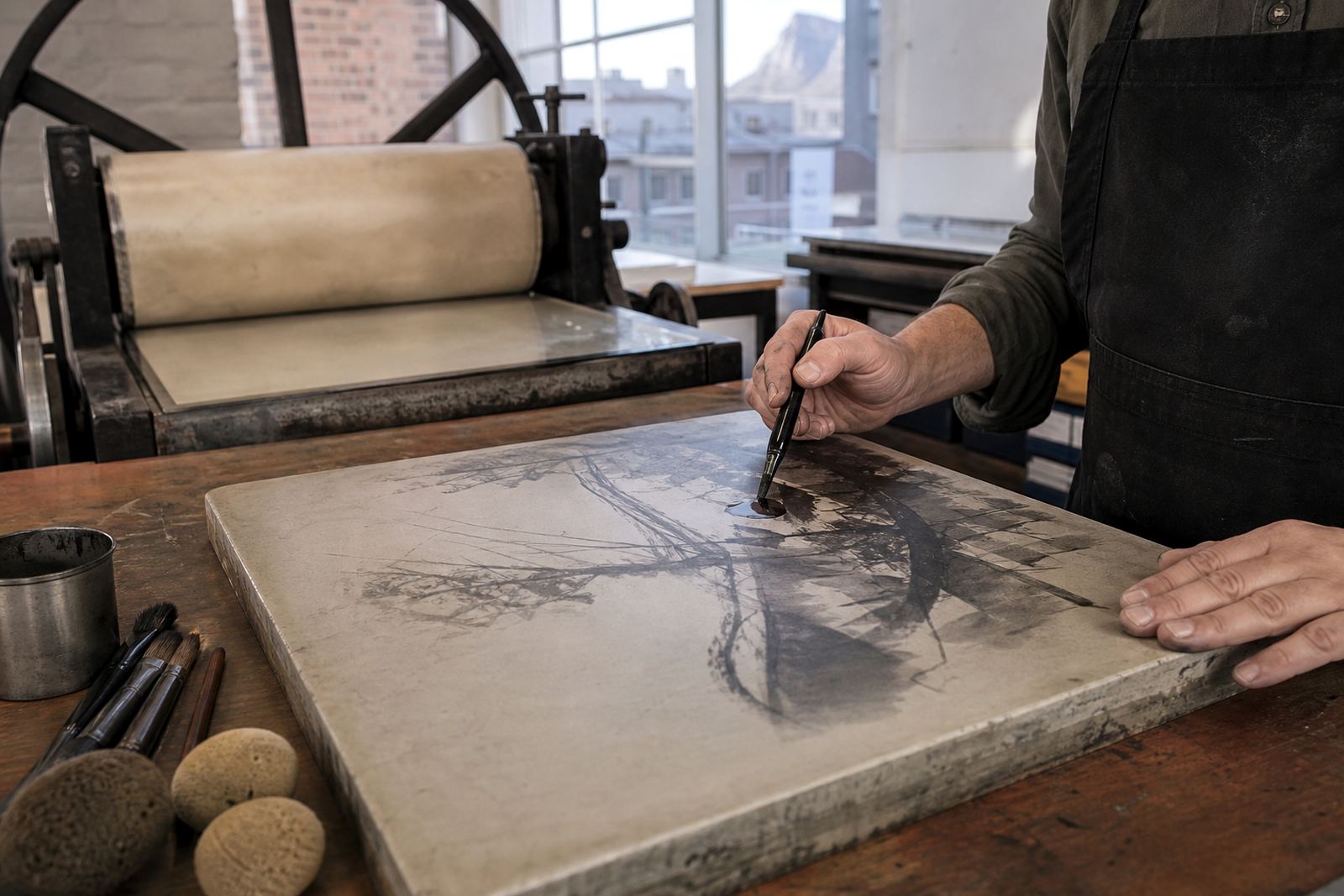
Stone lithography starts on a limestone block prepared with drawing materials that accept grease and repel water. The image is fixed through the chemistry of the stone, then printed layer by layer. For colour work, each proof may show one stage of the image, a corrected version, or the final approved state. That makes proof sets useful not only for the artist, but also for collectors who want to understand how a lithograph was built.
- Prepared from the same stones used for the edition
- May include progressive colour states or final review prints
- Kept separate from the signed and numbered edition
- Suitable for record keeping, archives and collection sales
Edition planning, proof counts and what the labels mean
Every print run needs clear edition planning before the first impression is taken. We help set the edition size, decide how many proofs will be reserved, and agree how those proofs will be described on the sheet or in the paperwork. Common categories include artist proofs, printer proofs and working proofs. The exact count depends on the scale of the project, the number of colours and how many review stages are needed.
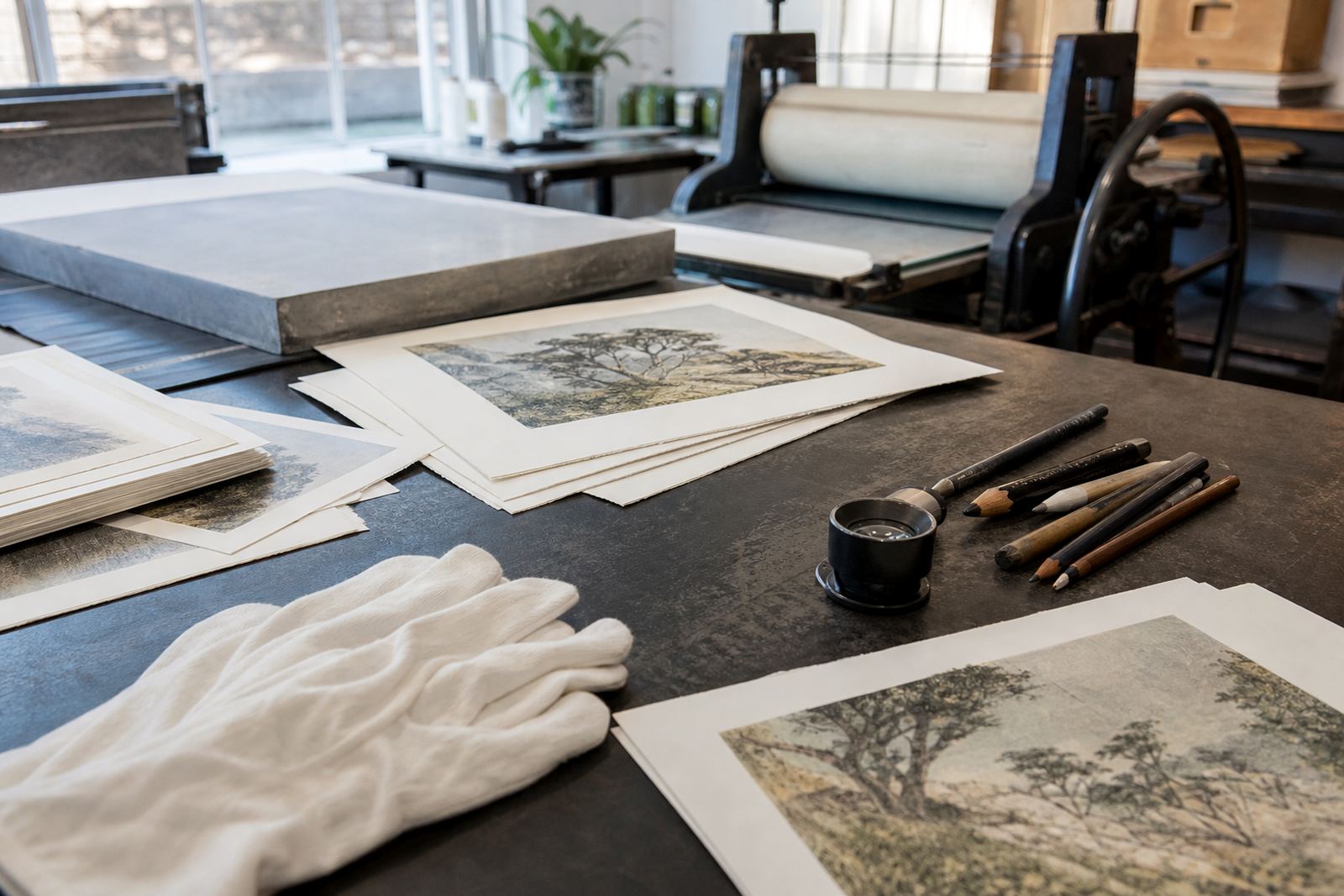
For collectors, the key point is that a proof set is not just extra stock. It forms part of the production record and shows the steps behind the finished edition. If a print has several colour passes, it may take more than one proof to confirm registration and tonal balance. That is normal in a hand printed studio, especially when paper reacts to humidity in Cape Town or shipping across the country changes conditions after packing. We keep notes on paper, stone state and final approval so there is a proper trail for the edition.
- Edition size agreed before printing starts
- Proofs reserved for artist review and studio records
- Labels can show AP, PP or working proof status
- Useful for collectors who want context for the final print
Sizes, paper choices and colour options
Artist proof sets can be supplied in a range of sizes, from small format works for intimate viewing to larger sheets suited to gallery walls. The final size depends on the stone, the image area and the paper margins needed for handling, signing and framing. We usually work with acid free printmaking papers in white, warm white or a soft natural tone, and can advise on sheet size if the work will later be framed with a wide mount or floated in a box frame.
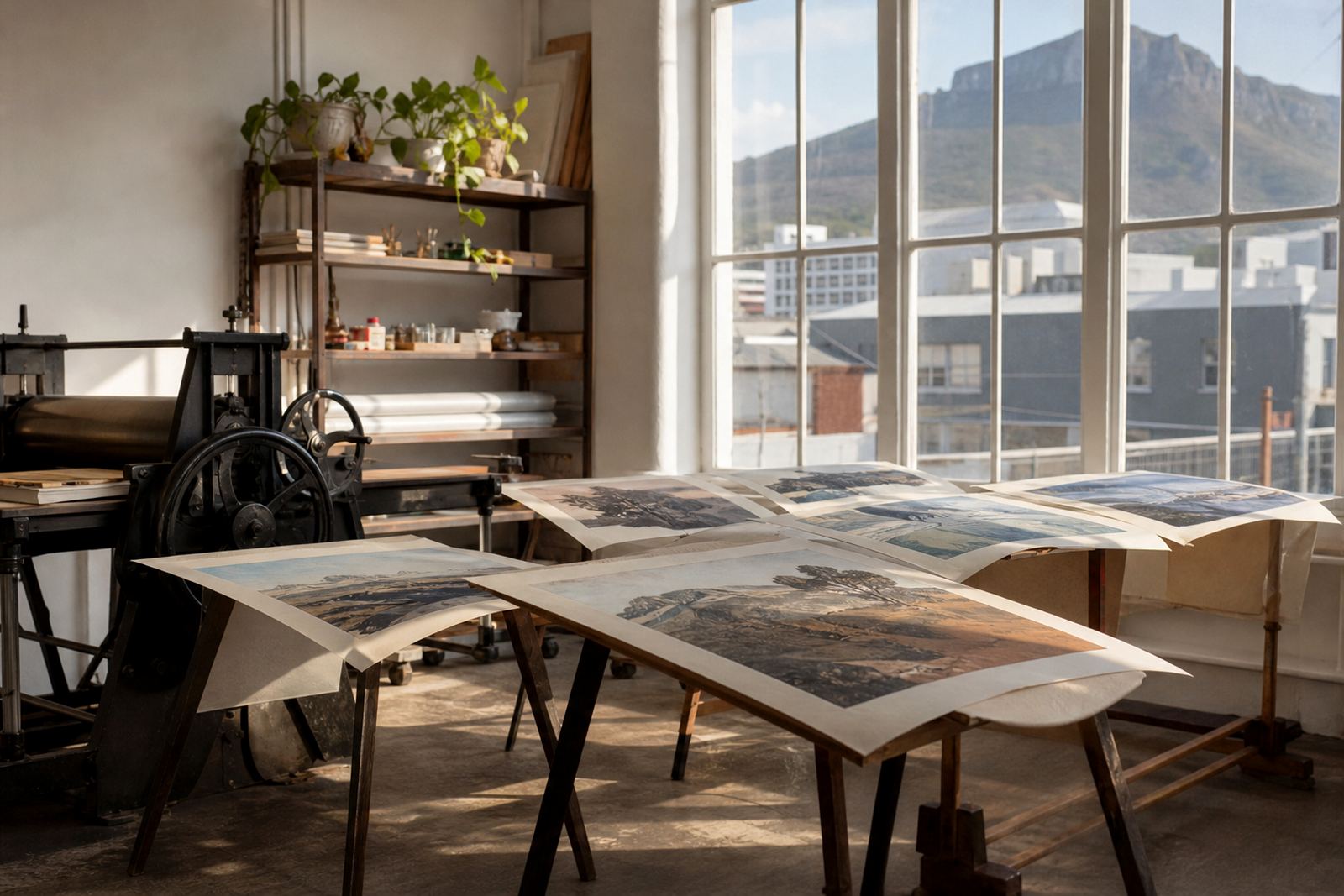
Colour options are discussed during proofing sessions. Stone lithography can produce deep blacks, subtle greys, transparent washes and strong colour layers when each stone is properly prepared. Proof sets are especially useful when an image has several colours because they show how each layer sits on the paper. If the work is for coastal homes in Durban or humid summer conditions in Cape Town, we also consider paper movement and drying time. Careful handling matters, since one small shift can change the final register.
- Small, medium and large format sheets available
- Paper selected for weight, texture and archival quality
- Margins can be planned for signing, titling and framing
- Colour proofs can show single layers or the full final build
Where artist proof sets suit best
Artist proof sets suit artists who want a clear record of the printmaking process, collectors who value limited hand made work and institutions that need examples for documentation. They also work well when a print is being developed for more than one audience, such as a private collection in Stellenbosch and a gallery wall in Johannesburg. In each case, the proof set helps show the decision making behind the final edition.
They are also practical for studio visits in Woodstock. Clients can see how a stone is etched, dampened and inked, then compare the different states before the edition is released. This is especially useful for artists planning a body of work over several months or for collectors who want a set that reflects the process, not only the finished image. It gives a stronger sense of authorship and care, which is important in limited edition printmaking.
- Artists developing new images or colour revisions
- Collectors seeking process based works with edition context
- Galleries and curators documenting a print run
- Private clients who want a rare set linked to the edition
Choosing a wall and frame
Stone lithography uses heavy limestone blocks, press machinery and water based process work, so a level floor and reliable workspace are important.
What matters more is safe handling, clean tables and enough room to move damp paper without creasing it. For collectors taking delivery, the prints should be transported flat and kept out of direct sun until framing. If a work is going to a coastal property or a room with strong afternoon heat, it is worth choosing framing materials that protect the paper over time and keep movement to a minimum.
- Level studio space and access for press work
- Flat transport and safe framing after delivery
Care and what to check before you order
Stone lithography prints last well when they are handled correctly from the start. Keep the sheet clean, dry and supported, and avoid touching the printed surface with bare hands for long periods. If the print is unframed, store it in archival tissue or a print folder away from sunlight and moisture. For framed works, ask for conservation grade materials and avoid hanging them above a stove, bathroom steam or a wall that gets strong direct sun. The paper may look fine for years, but poor storage can still shorten its life.
Before ordering an artist proof set, check the paper size, the number of proofs included, whether the set is signed or annotated, and how the works will be packed for delivery. Ask whether the proof state is final or if there are earlier working states included. If you want the prints framed, tell us the intended room so we can suggest a mount and glazing option that suits the light conditions. A good proof set should arrive with clear notes and no confusion about what each sheet represents.
- Confirm paper size and image size before approval
- Check how many sheets are included in the set
- Ask about signing, numbering and proof annotations
- Request archival packing if the work is travelling long distance
Edition details
| Process | Stone lithography on prepared limestone |
|---|---|
| Product type | Artist proof set for review, record and collection |
| Typical format | Single sheet or small grouped set |
| Paper | Archival printmaking paper, size agreed per edition |
| Edition marking | Artist proof, printer proof or working proof as agreed |
| Care | Lay the prints flat and store them in a dry spot out of direct sun |