What a stone lithograph does with a landscape
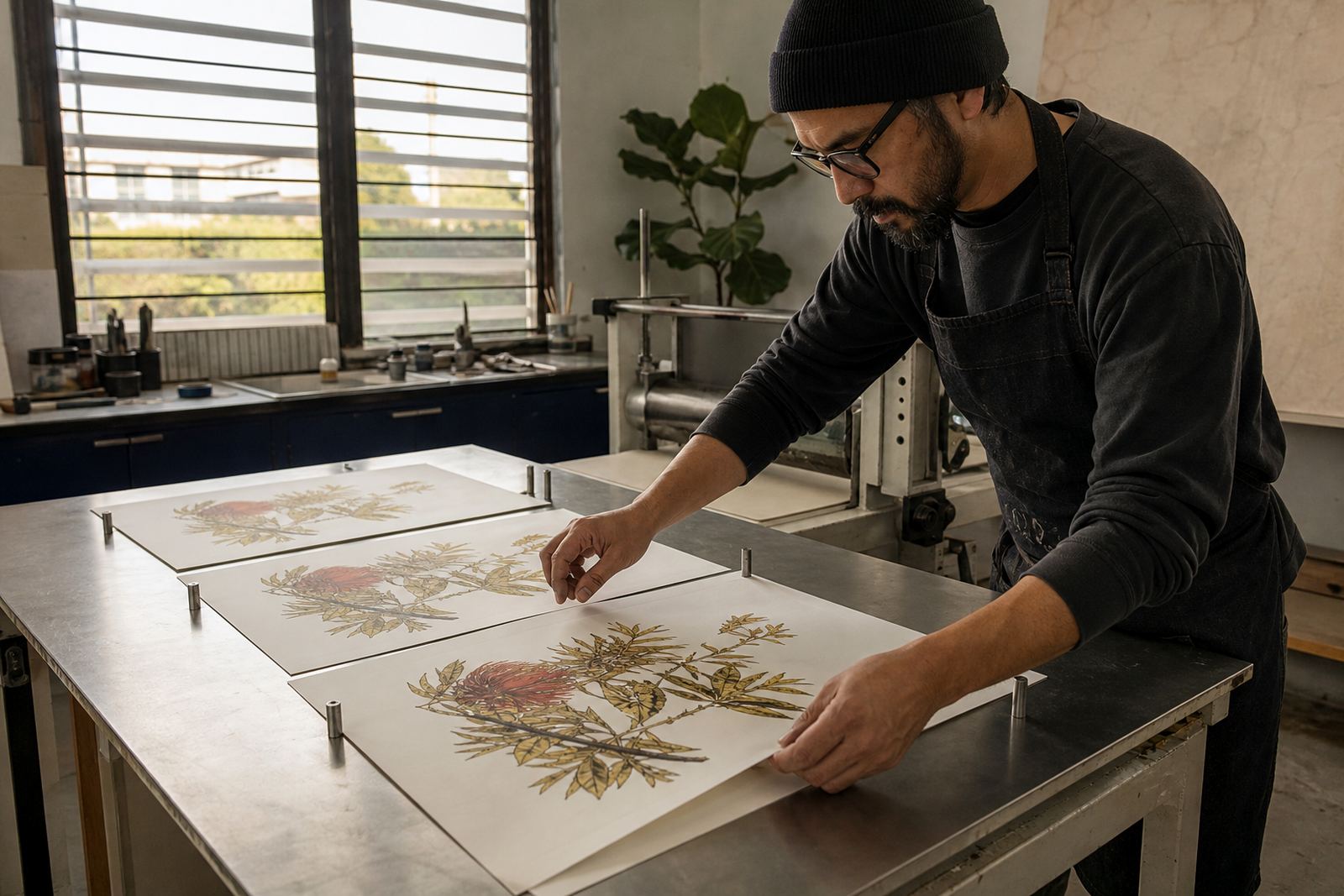
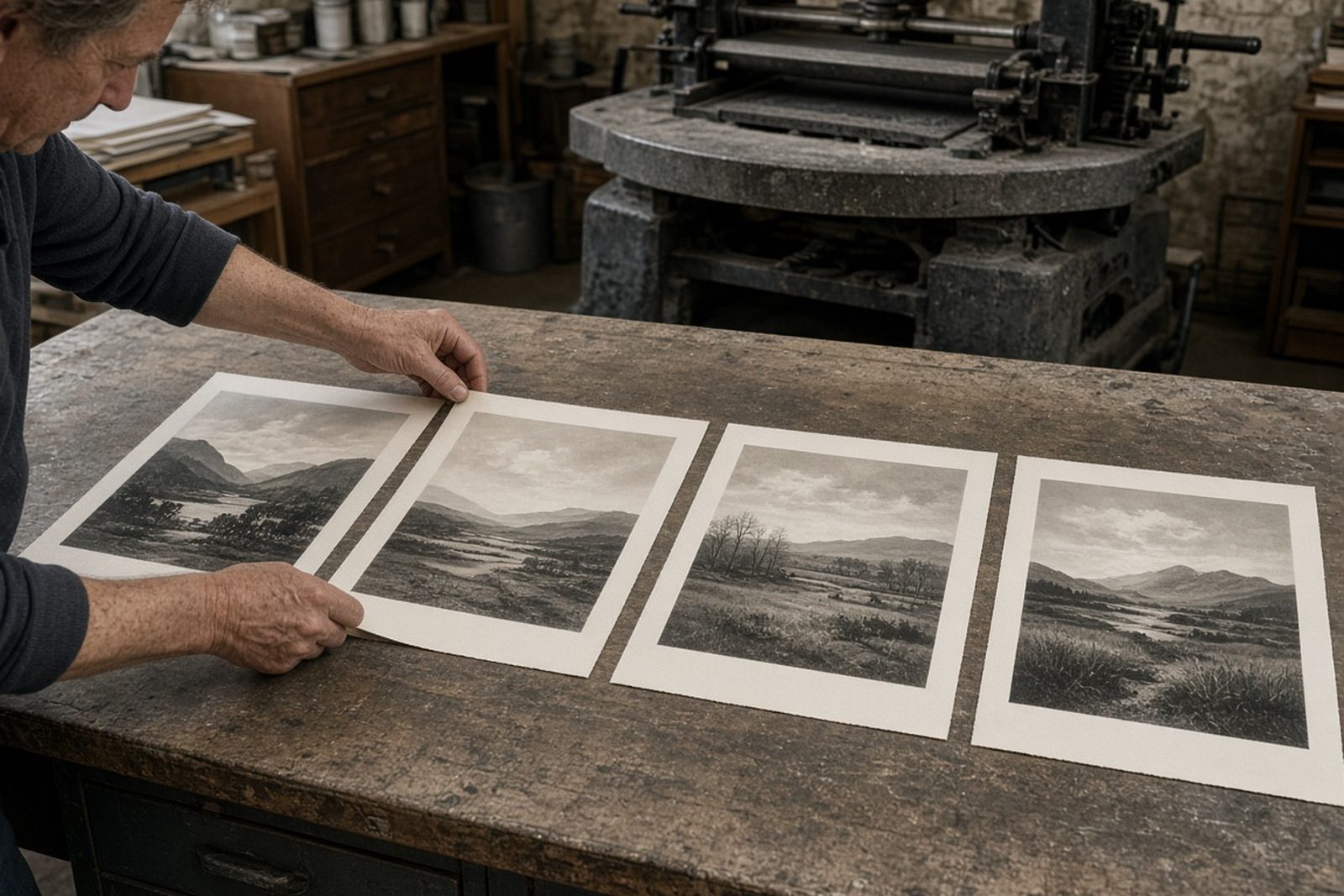
For landscape editions, the image sits on the surface of specially prepared limestone rather than being cut into it, which is what makes stone lithography a planographic process. The artist or printer draws or transfers the image onto the stone with greasy materials, then the stone is chemically treated so the image areas accept ink and the non image areas repel it. Each colour is printed separately, so a landscape can build mist, sky, distance and foreground detail through successive passes rather than one flat layer.
That method suits landscapes well because tone matters. A ridge line can soften into haze, a band of dry grass can hold texture, and changing light over the Cape flats or a Drakensberg horizon can be translated into subtle colour shifts. Because the stone takes fine marks and pressure evenly, the finished print often carries a quiet depth that feels considered, not rushed.
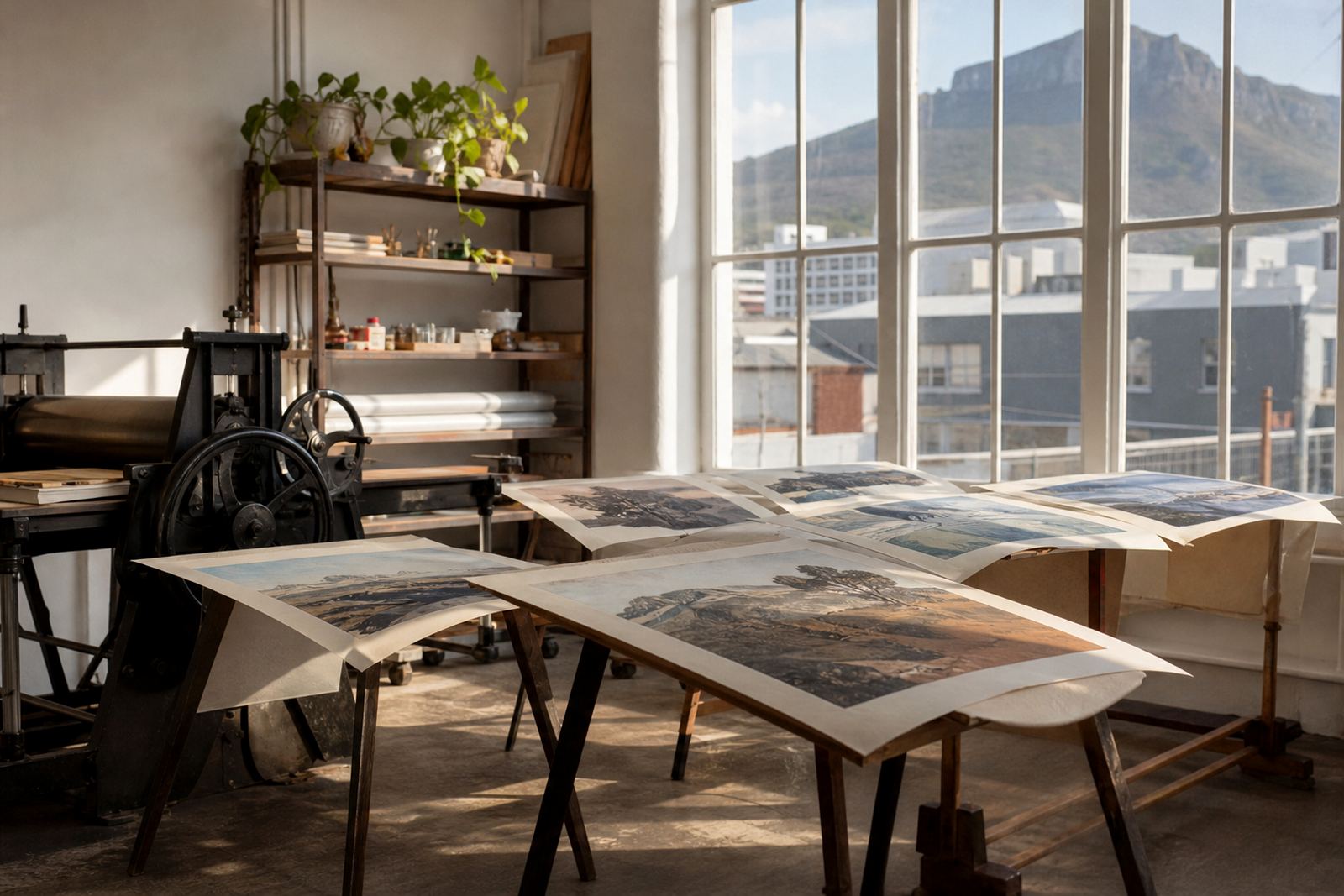
We work from Woodstock, Cape Town with artists and collectors in Stellenbosch, Johannesburg, Pretoria, Durban, Sea Point and Newlands, and many pieces are editioned here for South African homes and private collections.
Edition sizes, proofs and signing
Landscape lithographs are usually issued as limited editions, which means a fixed number of prints are pulled from the stone and no more are made once the edition is complete. Each impression in the edition should match the approved proof standard, with any artist proofs, trial proofs or printer's proofs kept clearly separate. This gives the collector confidence that the image will not be reworked later in a different state.
When ordering, check the following:
- Edition size and whether artist proofs are included
- Paper size versus image size, especially if you need a wider border for framing
- Whether the print is signed and numbered in pencil
- If the colourway is the standard edition or a special proof state
- Whether the work is sold unframed, framed, or with framing arranged separately
For collectors, the edition note matters as much as the image itself. It records the run, the paper used and the state of the print, which helps with future cataloguing and insurance.
Sizes and format options for walls and portfolios
Landscape lithographs can be prepared in a range of sizes, from compact works suited to a narrow passage to larger formats intended for a feature wall. In practical terms, smaller works are easier to rotate in a collection, while larger editions make stronger use of a long wall in a living room, study or entrance hall. If a print includes generous margins, it can be floated in the frame to give the image more air.
Common options include:
- Single sheet works on heavier cotton paper
- Horizontal panoramic formats for wide views and horizon lines
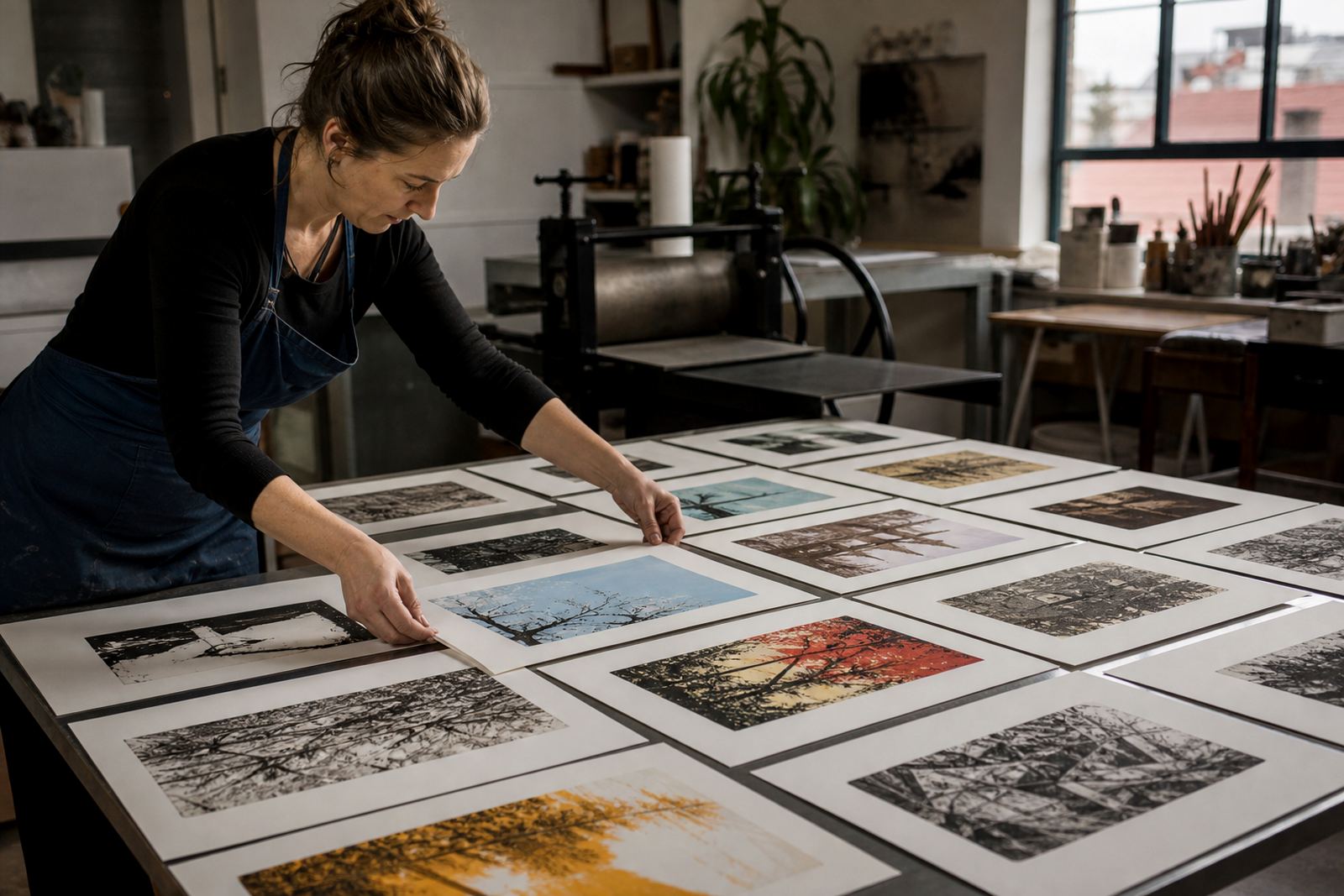
- Multi stone colour editions where the sky, land and shadow are separated into different layers
- Portfolio sheets with larger margins for collectors who prefer archival presentation
We can advise on paper choice too. A smoother sheet often suits crisp line and fine tonal gradations, while a slightly textured sheet can add warmth to skies, reeds and coastal vegetation.
Where landscape lithographs work best at home or in a collection
These prints suit homes where the wall space can carry a calm image without crowding it. They work well above a sideboard in a dining room, along a staircase landing, in a quiet office, or in a room with natural light that changes through the day. A landscape print can also settle a more formal interior by bringing in a view, even if the view is abstracted rather than literal.
Because Cape Town and the coast can bring strong sun and humidity, placement matters. In Durban or other humid areas, good framing with archival materials is especially important. If you are near a loading bay, open veranda or coastal window, keep the work away from salt air and damp wall corners.
For corporate or hospitality settings, the horizontal format often works best in reception areas and meeting rooms where the sightline needs to stay open.
Hanging the print at home
What landscape lithographs do need is proper framing and careful hanging. Use acid free mount board, UV filtering glazing where possible, and a backing that keeps dust and insects out. If the work is unframed, store it flat between clean sheets of archival tissue in a dry room, never rolled too tightly.
For hanging, use hardware suited to the frame weight and the wall type. If you are hanging in a rental or sectional title property, check the body corporate rules or landlord requirements before making permanent changes.
Framing coordination can be arranged through the studio, and we can also advise on spacing, glazing and border width so the finished presentation suits the scale of the print.
Care, storage and long term preservation
A lithograph print is made to last, but it still needs sensible care. Keep it away from direct sunlight, high heat and damp walls. Dust the frame lightly with a dry cloth and avoid household sprays near the glazing. If the print is framed behind glass, do not open the frame unless a conservator or framing specialist is handling it. Fingerprints on the paper can be hard to remove and may leave permanent marks.
If you are storing more than one print, interleave each sheet with archival tissue and keep the stack flat in a cupboard or portfolio box. Do not lean unframed works against a wall for long periods, as the paper can bow. In coastal areas, check the storage room during humid spells and keep the paper off the floor in case of seepage.
- Use clean hands or cotton gloves when handling unframed sheets
- Keep the room dry, shaded and ventilated
- Do not tape directly to the print surface
- Have the frame checked if condensation appears inside the glazing
Before you buy or commission
Before you place an order, confirm the exact image title, paper size, edition number and whether the work is available framed or unframed. If you are buying for a specific wall, send the wall measurements and a photo of the room so the scale can be judged properly. It also helps to know if you want a print with a wide border, a more intimate cropped composition, or a piece that can sit comfortably in a pair or series.
Collectors should also ask about proof state, the type of paper used, and how the edition has been signed and numbered. If the work is being shipped to Johannesburg, Pretoria, Durban or elsewhere in South Africa, ask how it will be packed for transit so the corners and surface arrive in good condition. For studio visits in Woodstock, appointment details can be arranged through the enquiry form on our contact page. That keeps the conversation tidy and lets us prepare the right stones, papers and edition notes in advance.
Landscape lithographs reward careful ordering because the best result depends on the balance between image, paper and finish. Once those details are right, the print sits naturally in a room and can be lived with for many years.
Edition details
| Process | Hand-pulled stone lithography on limestone |
|---|---|
| Edition type | Limited edition with signed and numbered impressions |
| Typical orientation | Horizontal landscape format, with selected verticals available |
| Paper | Archival art paper selected for tone, texture and edition needs |
| Framing | Available unframed or with framing coordination |