What Small Scale Stone Lithography Means
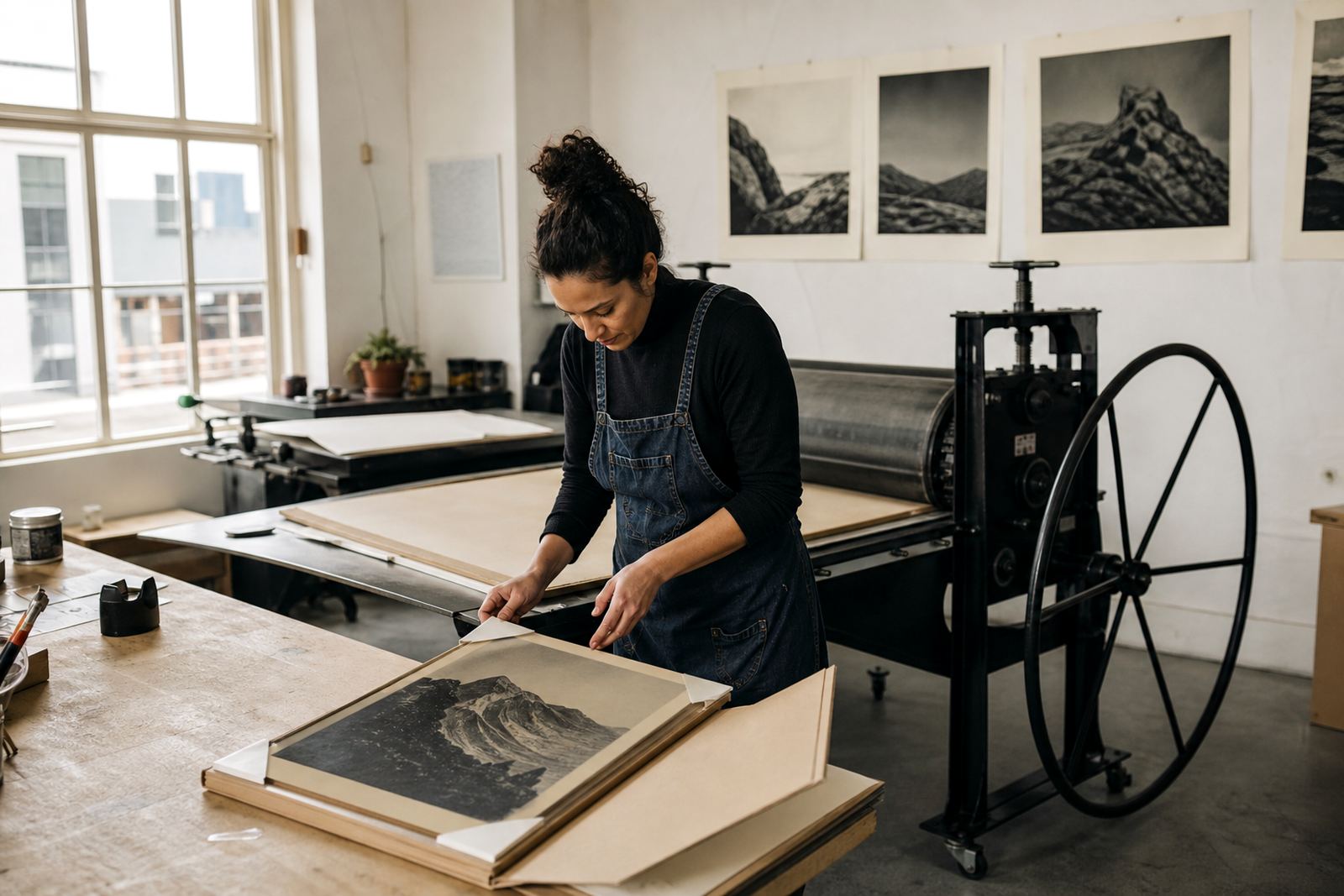
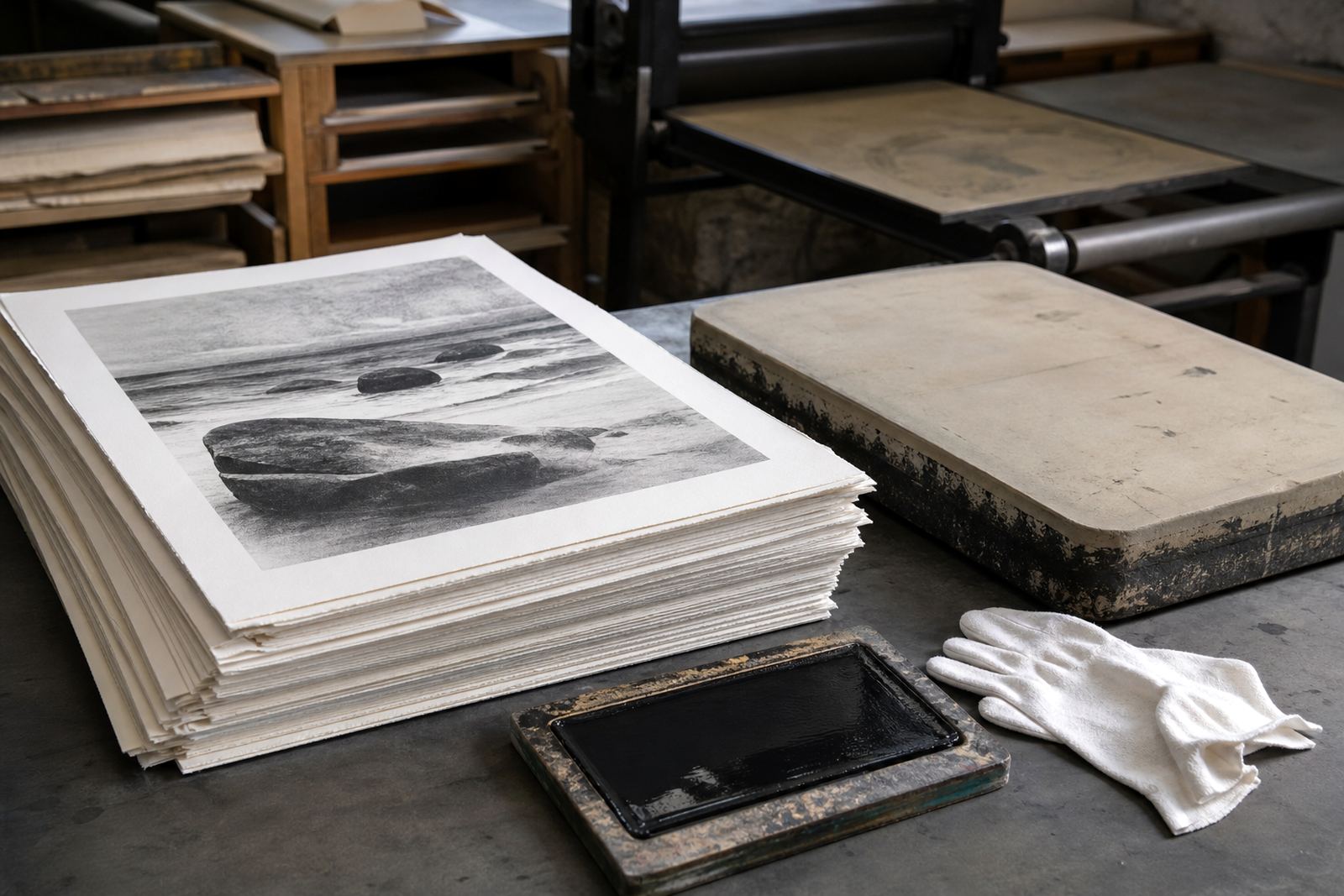
Small scale stone lithography is a hand printing process made on natural lithographic stone, where the image is drawn with grease based materials, chemically prepared, then printed one sheet at a time. Because the mark sits on stone and is transferred directly to paper, the finished print can hold sharp line, soft tonal shifts and subtle layers of colour even at a modest size. That makes it well suited to intimate works where detail matters more than large format drama.
In practical terms, small scale prints are often chosen for wall groupings, reading rooms, narrow passages and gifts that need to feel considered rather than oversized. They can be editioned as single colour works or as layered multi colour prints, depending on the image and the paper. Each stone has its own character, so even a compact edition can carry a strong hand made quality.
Size Options, Edition Sizes and Finish Choices
Small scale does not mean limited in choice. We work with artists on compact editions that may suit one sheet, a small suite, or a paired set for collectors who want a balanced display. The exact image area depends on the stone, the drawing, and how much border is needed for signing and numbering. We also help plan the edition size so the print remains practical to produce with care and consistency.
- Typical image areas: from about 15 x 20 cm up to about 40 x 50 cm
- Paper sheets can be larger than the printed image to allow for margins and framing
- Single colour, two colour, or layered colour editions are all possible
- Hand torn or cut paper edge options can be discussed at proofing stage
- Edition size is agreed with the artist before printing begins
Collectors often ask for small works because they are easier to place in existing homes and offices. A compact lithograph can sit comfortably above a sideboard, in a passage, or in a smaller apartment without overpowering the room. For gifts, the scale is convenient for framing and transport, especially when the print needs to travel from Cape Town to another city.
Where Small Prints Fit Best
These prints suit spaces where people spend time at close range. A small lithograph rewards quiet looking, so it works well in study corners, bedrooms, dining areas, reception walls and private collections. In a commercial setting, smaller prints can create a measured, thoughtful look without taking over the room. They also suit collectors building a series over time, where different works can be hung together as a group.
For homes near the coast, especially in Sea Point or Newlands, the format is also easier to manage because smaller framed works are lighter and simpler to move if damp sea air or maintenance means the room layout changes. In Durban and other humid areas, a well framed small print can be a sensible choice because it is easier to keep away from direct moisture and general wear.
- Good for intimate walls and smaller rooms
- Useful for gifting, anniversaries and first-time collectors
- Suitable for series hanging or paired works
- Easy to frame and transport between cities
Proofing, Colour Separation and Editioning Process
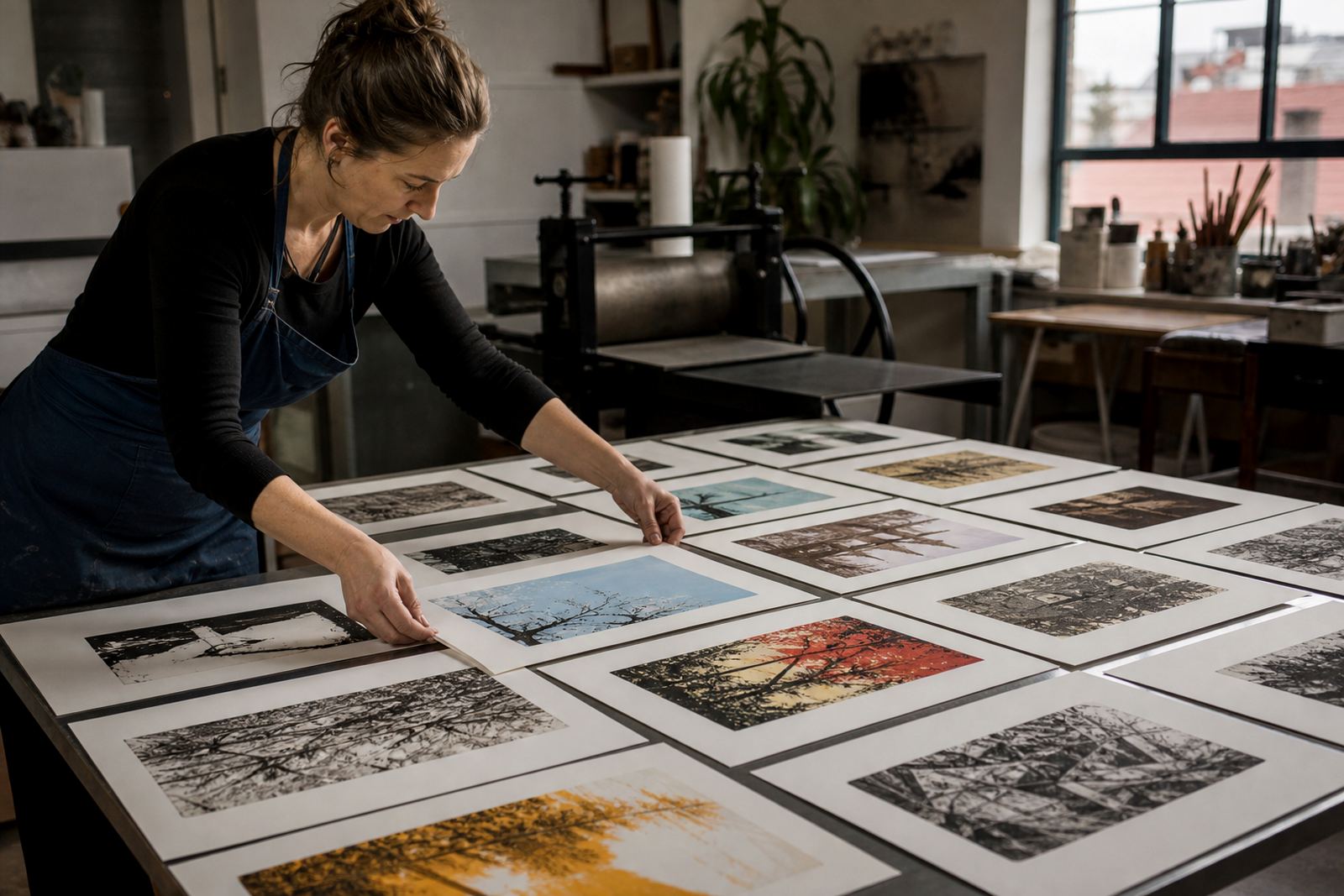
Every small edition goes through proofing so the artist can check line, tone and colour before the full run is printed. If the image uses more than one colour, we plan the separations carefully so each layer sits where it should. On smaller works this needs care, because even a slight shift can change the balance of the image. Our editioning process keeps the run consistent from first print to final print.
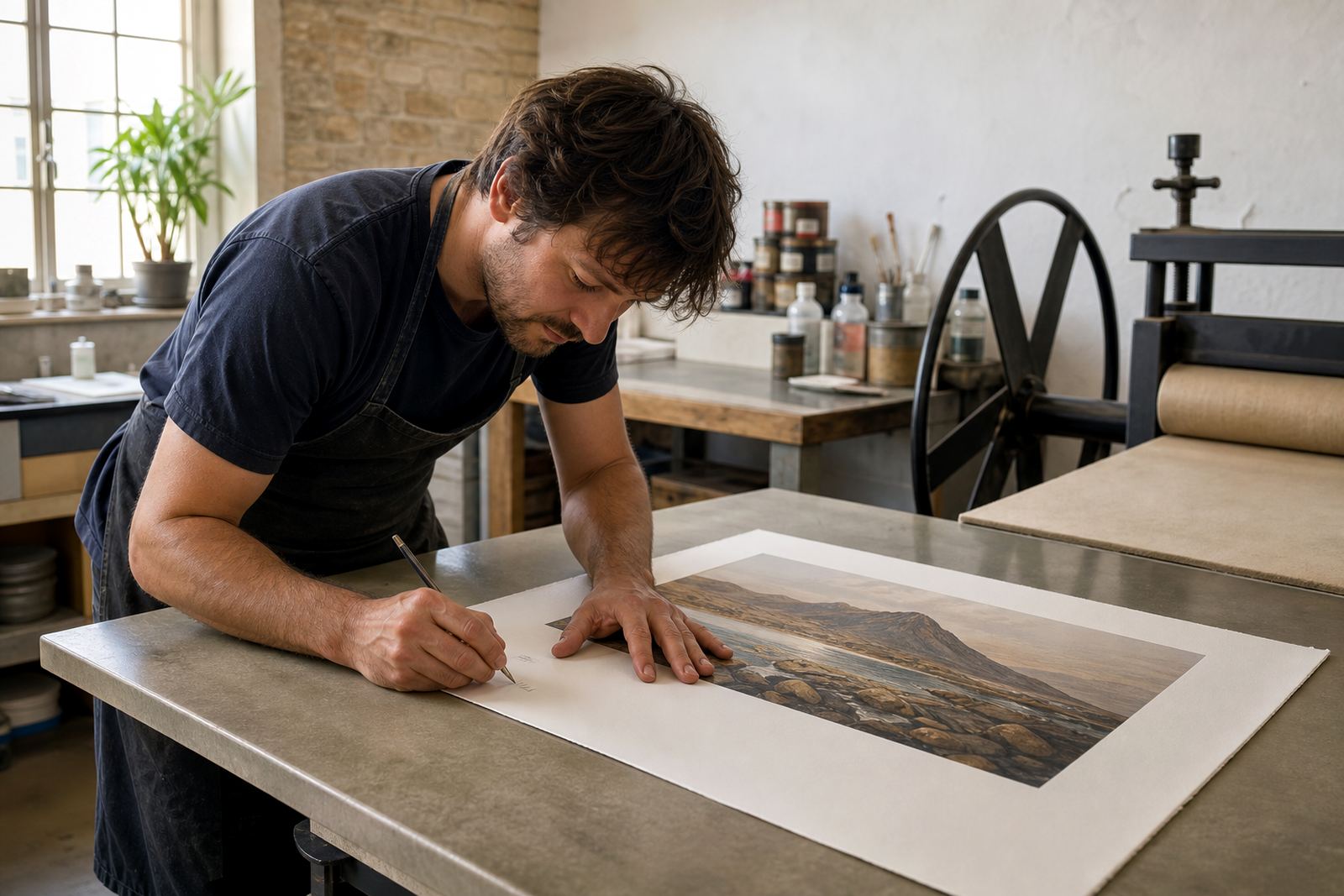
Editioning also covers signing, numbering and any artist notes agreed in advance. The edition size, artist proofs and printing sequence are settled before the final run starts, so there is no uncertainty later. For collectors, this means the print they receive is part of a clearly managed edition, not a loose or unplanned run. For artists, it means the work is handled with the same care across the whole series, not just the first few sheets.
Studio Setup and Handling
Stone lithography printing is a manual process, but a studio still needs stable working conditions. We use secure stone handling, clean drying space and controlled lighting for proof checks. We schedule work to avoid interruptions where possible and keep drying and storage areas organised for safe handling.
Because the stones and presses are heavy, access and moving space matter too. If a collector is arranging studio visits or a framing handover, we keep the work protected in layers and packed for the journey.
- Dry, dust controlled space important for drying and packing
- Heavy stones and presses require careful movement and storage
Care, Framing and Long Term Storage
Print care starts with handling the sheet by the edges and avoiding contact with wet hands, food or cleaning sprays. Once framed, a small lithograph should ideally sit behind UV filtering glass or acrylic, with archival mount board and acid free materials. Keep the work out of direct sun and away from steam, kitchens and bathrooms. Coastal homes need extra care because humidity can affect paper over time, so good framing makes a real difference.
If a print is unframed, store it flat in a clean, dry portfolio with interleaving paper. Do not roll it unless there is no other option, and never tape anything directly onto the sheet. For aftercare, a framer can check the mount, glazing and hanging hardware if the work has been moved, especially after a house move, repainting or a change in room conditions. Proper care helps the paper stay clean and the image remain crisp for many years.
Before you buy or commissioning
Before placing an order, confirm the image size, paper size, edition size and whether the print is signed and numbered. Ask whether the work is a single colour image or a multi colour edition, and whether margins are included in the final sheet size. If you are framing the work locally, make sure the framer has the exact measurements before cutting the mount. For collectors outside Cape Town, it is also worth checking packing requirements so the print travels safely to Johannesburg, Pretoria, Stellenbosch or Durban.
- Final image size and full paper size
- Edition number and total edition size
- Colour count and whether the print is hand finished
- Signing, numbering and any artist proof notes
- Framing plan and transport needs
- Expected handling instructions for storage or display
Small scale lithographs are practical, but they still deserve careful planning. When the measurements, paper choice and edition details are clear from the start, the finished print is easier to frame, hang and enjoy. If you want advice before ordering, the enquiry form on our contact page is the best place to start.
Edition details
| Process | Fine-art stone lithography printed by hand on natural stone |
|---|---|
| Typical image size | About 15 x 20 cm to 40 x 50 cm |
| Edition style | Limited editions, signed and numbered |
| Paper options | Archival printmaking papers, selected for tone and surface |
| Studio base | Woodstock, Cape Town |
| Service areas | Cape Town, Stellenbosch, Johannesburg, Pretoria, Durban, Sea Point, Newlands |