What an abstract lithograph is, and why stone matters
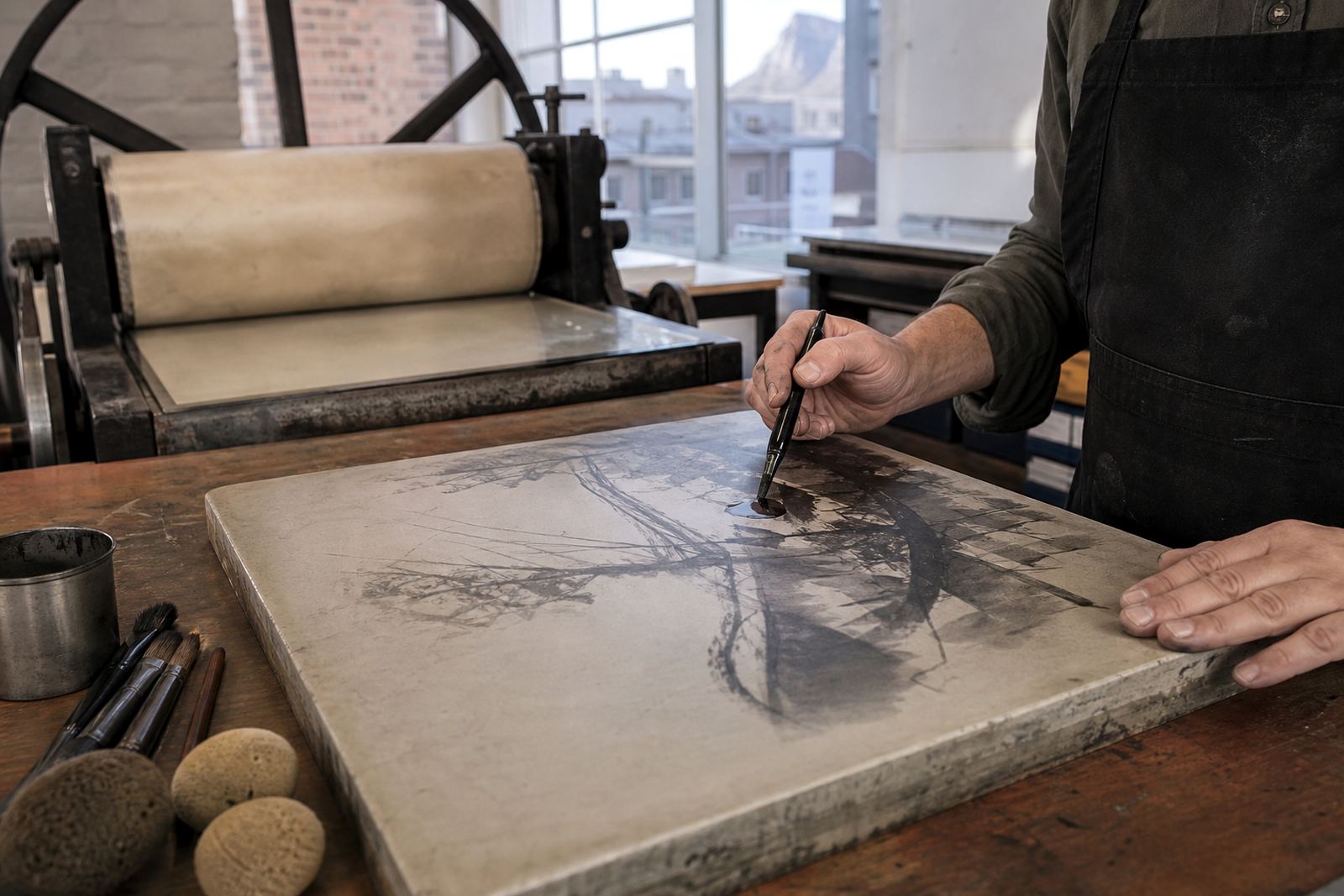
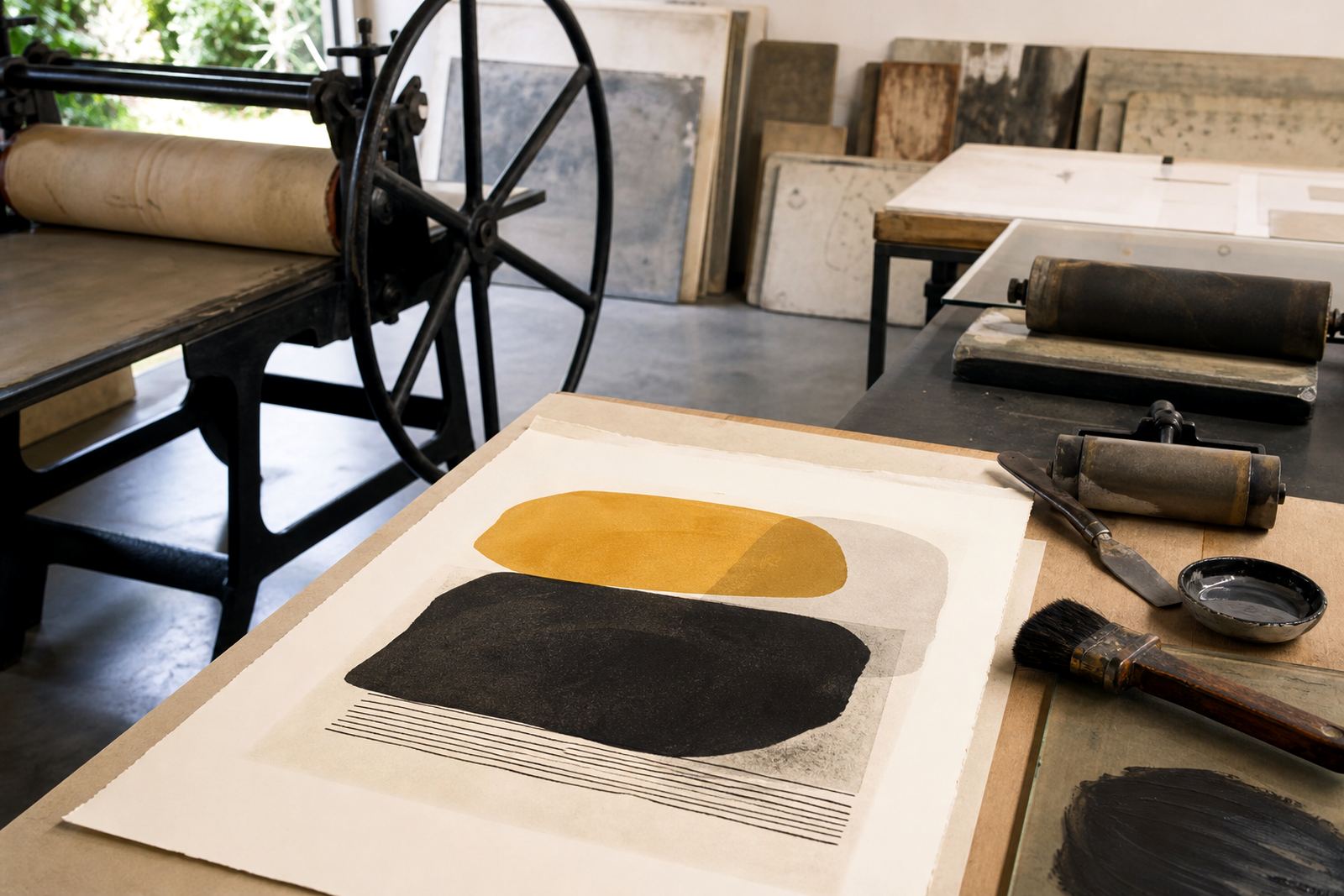
At the heart of stone lithography is the simple fact that oil and water repel each other. The artist draws or marks the image on a prepared limestone surface with greasy drawing materials, then the stone is treated so it will hold ink only where the image sits. Each colour is printed from a separate stone or plate setup, which lets an abstract work build depth through overlapping tones, gestures and textural marks.
For abstract work this process suits movement, repetition and variation. A line can stay soft at one stage, then become sharper or more saturated in the next. That means the print is not just a reproduction, it is a handmade work with small shifts that give each edition character. At our Woodstock studio, we plan each image so the final print has clean registration, balanced colour and proper edition consistency.
Edition planning for collectors and artists
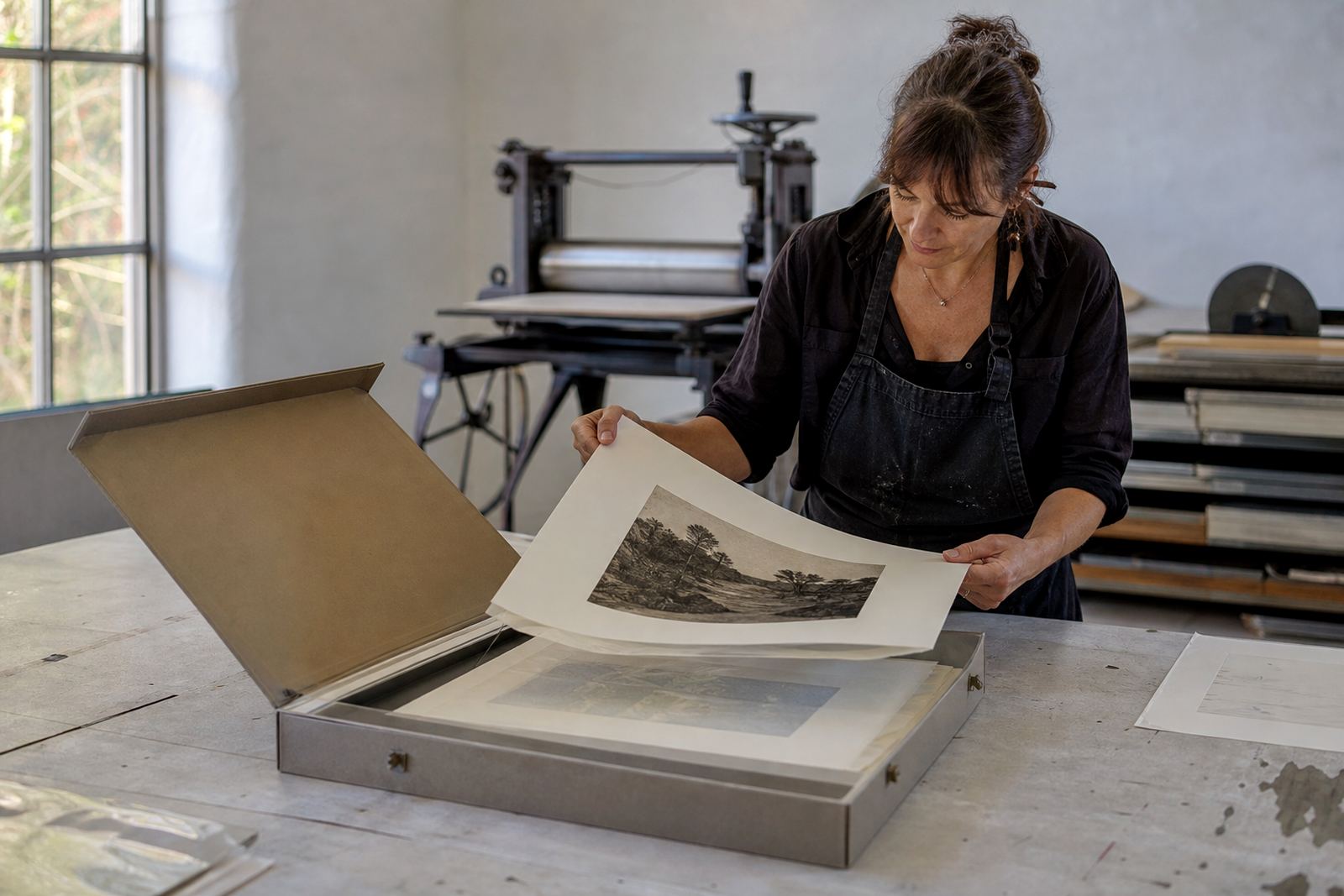
Limited editions are made in a set number, agreed before printing begins. This protects the edition size and gives collectors confidence that the print they buy belongs to a fixed body of work. We handle edition planning with the artist from the first proof, through colour decisions and final signing. For abstract work, that process often includes adjusting tonal balance, deciding how much contrast the paper should carry, and choosing whether an image works best in a smaller or wider format.
Common edition types include numbered editions, artist proofs and presentation proofs. Numbering usually appears as a fraction, such as 5/20, which shows the print number and total edition size. Artist proofs may be kept aside for the artist, and in some cases a few working proofs are retained for records. Good editioning keeps the process clear for everyone, and avoids confusion later on.
- Limited edition size agreed before printing starts
- Proofs checked for colour, registration and surface detail
- Prints signed and numbered once the edition is approved
- Archival storage and packing available for local and national delivery
Sizes, papers and finishing options
Abstract lithographs can be printed in a range of sizes, from smaller works suited to tight wall spaces through to larger statement pieces for open interiors. The right size depends on how much room the image needs to breathe, how much wall space you have, and whether the work will hang alone or as part of a group. We can advise on practical sheet size, image size and border allowances for framing.
Paper choice matters as much as the image itself. A smooth sheet can keep hard edges crisp, while a lightly textured paper will soften transitions and add a quieter surface. For collectors in humid areas like Durban or coastal Cape Town, we also take care with paper storage and packing so the sheet stays flat and stable. If framing is needed, we can coordinate float mounting, spacers and conservation glass where appropriate.
- Small, medium and large format editions available by project
- Deckle edge or clean trim options depending on the image
- White, off-white and warm-toned paper stocks available
- Framing coordination for local collection or shipping
Where abstract lithographs sit best in a home or project
These prints work well in living rooms, entry walls, studies, hospitality interiors and boardrooms where a strong image is needed without heavy visual clutter. Abstract lithographs often suit spaces with neutral finishes, timber furniture, exposed brick or painted plaster, because the colour and mark making can carry the room without competing with it. In Cape Town and Johannesburg we often see them placed in stairwells or long passage walls where the viewer meets the work at close range and from a distance.
They also suit collectors building a quiet group of works over time. A pair or triptych can anchor a wall in a Newlands home, while a single larger edition can carry a reception space in Pretoria or a private apartment in Sea Point. Because each work is made by hand, the surface reward is best where light changes through the day, rather than in a dark corner that never gets seen properly. It helps to plan the wall and the light before choosing the edition.
Hanging the print at home
Use proper hanging hardware, level the frame carefully, and keep the print away from direct sun, damp walls and strong cooking steam. In Cape Town, sea air can affect metal fittings and framing over time, so we recommend sound materials and a little clearance from exterior walls where possible.
If the work is being installed in a hospitality or office setting, standard framed artwork care applies. Keep it away from aircon drip lines, heaters and areas where humidity swings sharply. If you are planning a group hanging, measure the wall, mark centres at eye level and check sight lines from the main seating position before the frame goes up.
- Keep out of direct sunlight and high humidity
- Use archival framing materials where possible
- Allow enough wall space for the print to read properly
Care and what to check before you order
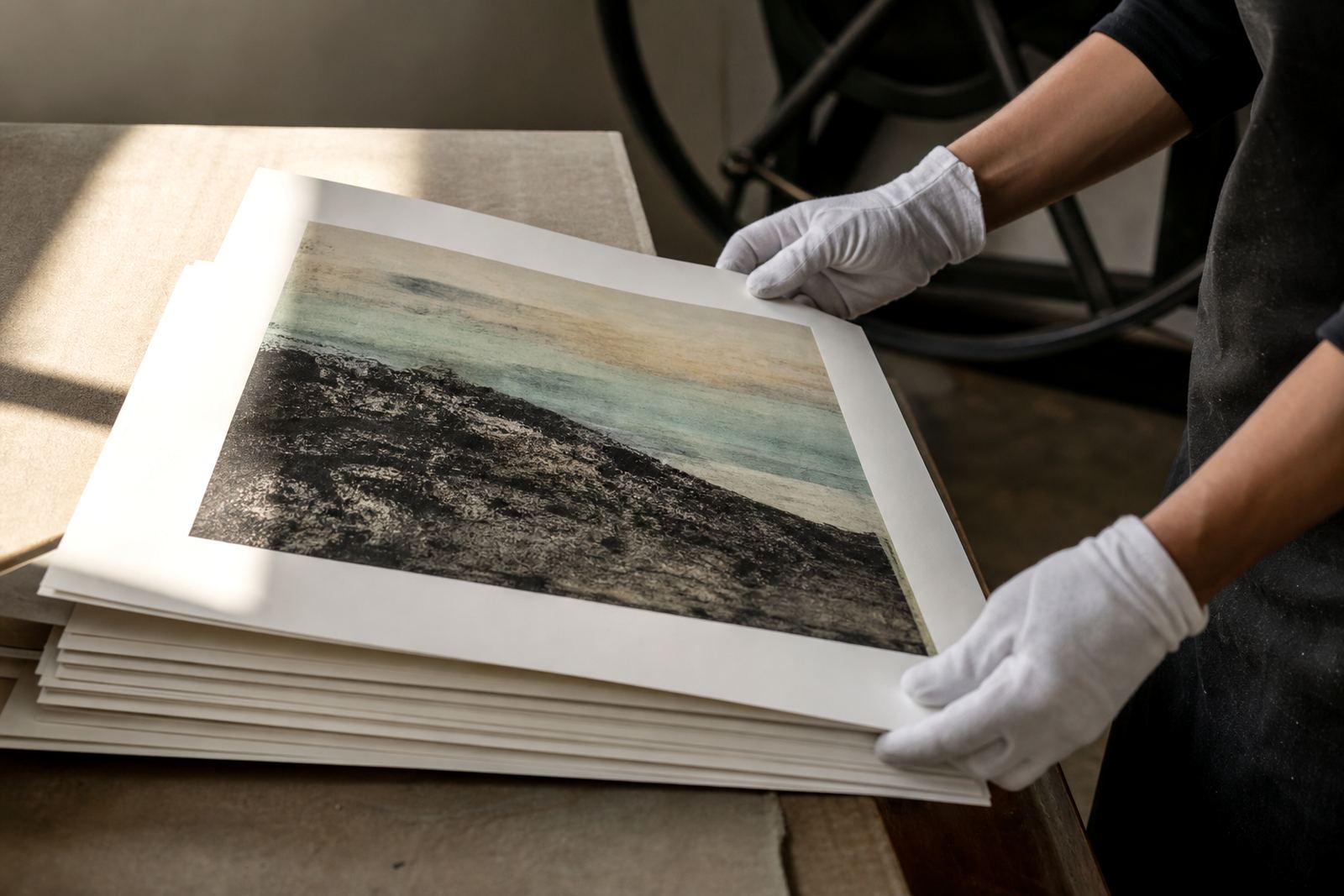
Once a print leaves the studio, care is simple but important. Handle it with clean dry hands or cotton gloves, store it flat if it is unframed, and do not tape anything directly to the sheet. If the work is framed, avoid opening the frame unless a framer is dealing with it. Dust the glass lightly and never spray cleaner near the backing. If a print has travelled to Durban in summer or to a home with stronger humidity, let it settle in the room before hanging it, especially if it was packed tightly for courier transit.
Before ordering, check the final image size, paper size, edition size, paper choice, framing plan and whether the work needs extra border for mounting. If the piece is going overseas later, say so early so we can advise on packing and conservation handling. It also helps to confirm the wall size and whether the print will sit above furniture or stand alone. That keeps the result balanced and avoids last minute changes. A clear brief saves time, and keeps the edition on track.
- Confirm edition size and any artist proof allowance
- Check image size versus sheet size before printing
- Tell us if the work will travel or be stored before framing
- Ask about archival packing for collection or courier delivery
Edition details
| Process | Hand-pulled stone lithography in limited editions |
|---|---|
| Subject | Abstract composition built from gesture, form, texture and layered colour |
| Availability | Made to order with edition planning and proofing |
| Paper | Archival art papers selected for tone, surface and handling |
| Sizes | Small, medium and large formats by project brief |
| Studio base | Woodstock, Cape Town, with collection and delivery across South Africa |