What Crayon Drawn Lithography Means
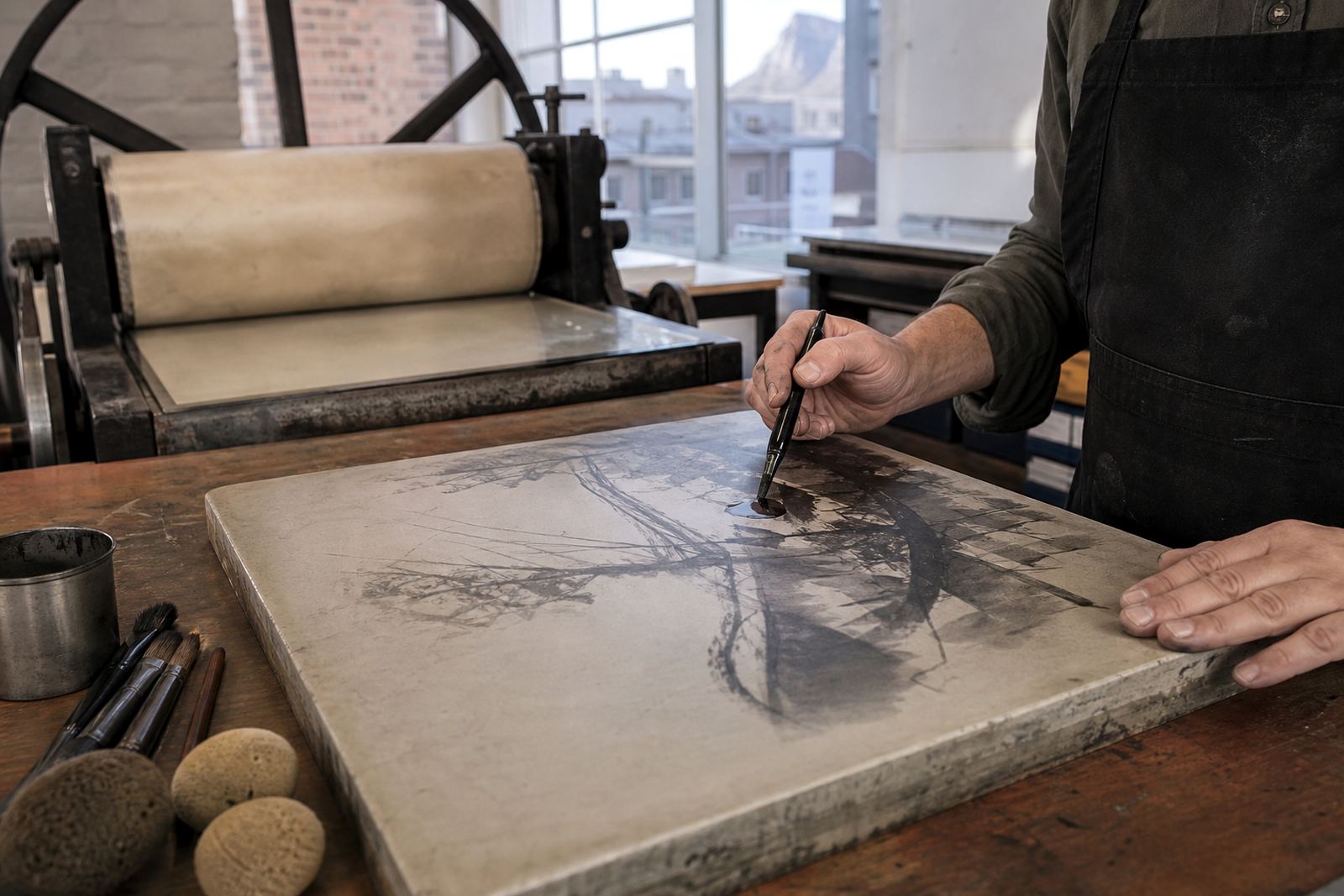
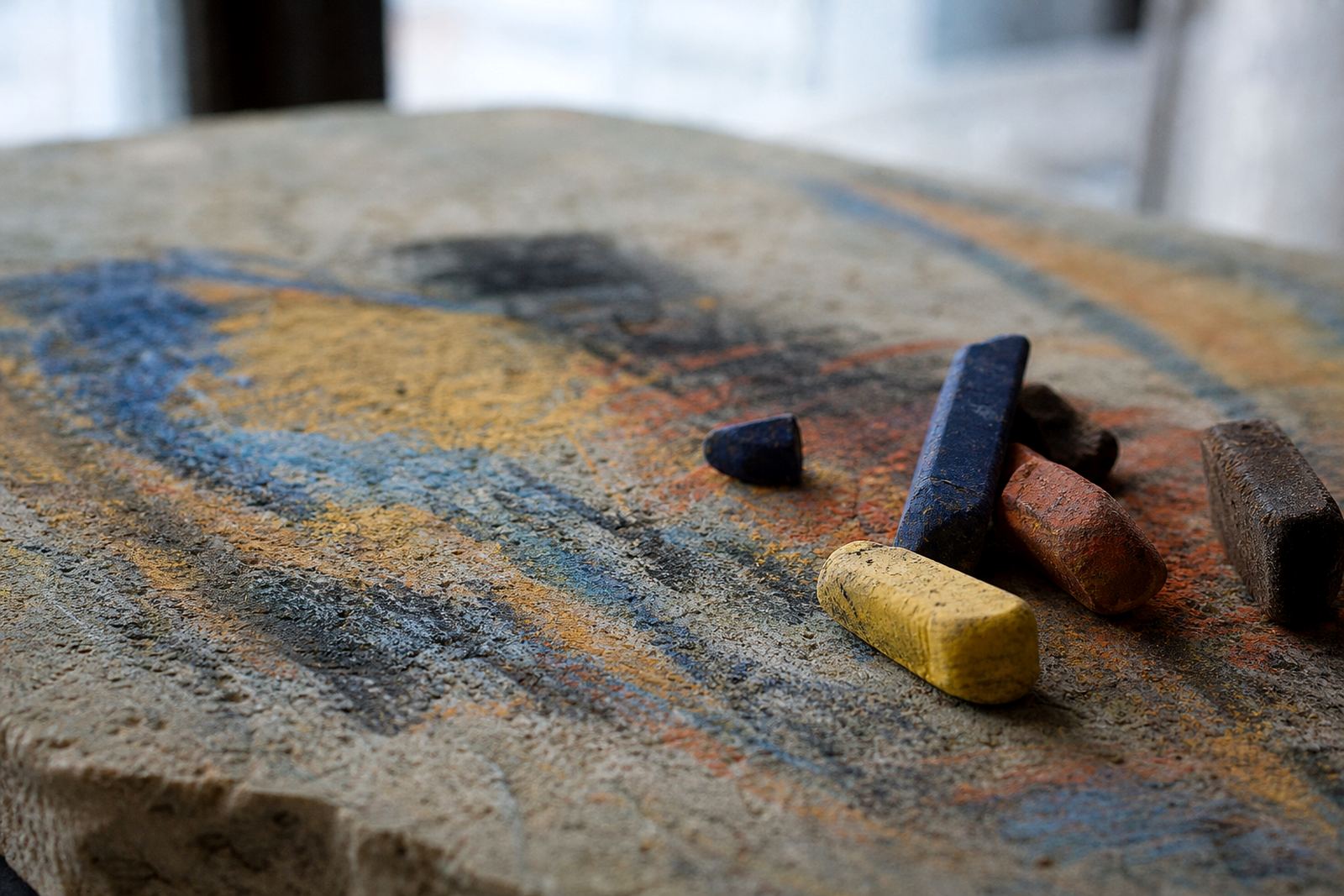
Crayon drawn lithography starts with the artist working directly on a prepared limestone or lithographic stone using greasy crayon and related drawing materials. The image is then processed so that the drawn marks accept ink while the damp stone repels it in the non-image areas. That is what gives the final print its distinctive soft edges, dense blacks and the grainy texture people often look for in stone lithography.
These editions suit work that depends on visible touch. You can see where the crayon caught, where the line broke, and where the stone held a velvety tone. In black and white the marks are direct and bold. In colour, the crayon structure can sit under layered printing and add depth without losing the hand made character of the original drawing.
- Hand-drawn directly on stone
- Strong tonal range from pale grey to deep black
- Good for expressive line, shading and textured surfaces
- Ideal for limited editions where the mark of the artist should remain visible
Edition Sizes, Sheet Options And Format Choices
Crayon drawn prints are normally issued as limited editions, with each impression numbered and signed according to the agreed edition plan. The right format depends on the stone size, the image area, the paper size and how much margin the artist wants around the print. Some collectors prefer a tight image with a clean border, while others want generous paper for framing and archival handling.
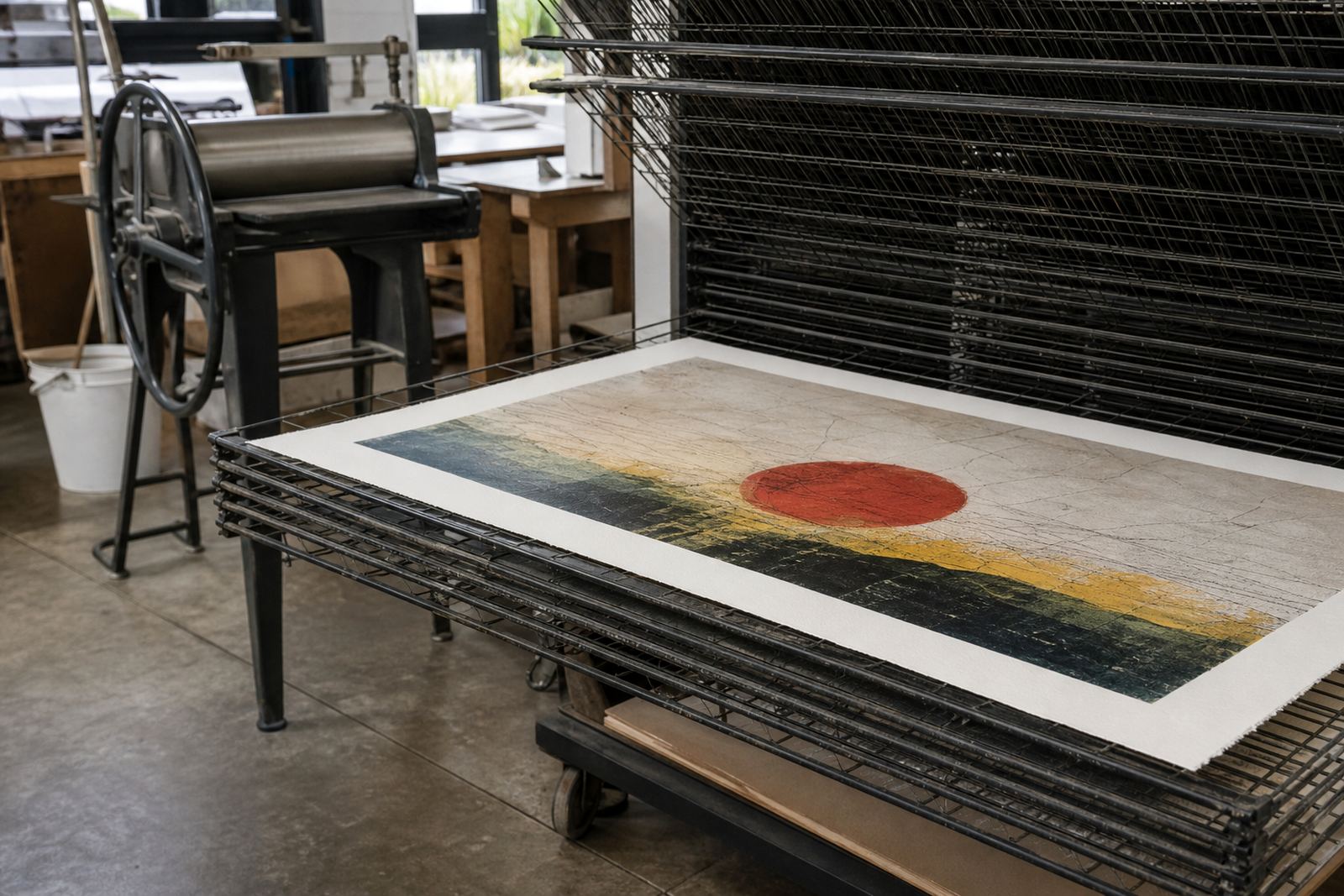
We can produce small editions for collectors who want greater rarity, or larger editions when a project needs broader circulation. Sheets can be trimmed to a standard framing size, or left larger with deckled edges where the paper and image call for it. We also plan artist proofs, printer proofs and any trial impressions needed before the final run is approved.
- Editioned prints, signed and numbered by agreement
- Artist proof and printer proof options available
- Single colour, duotone or layered colour editions
- Sheet sizes planned to suit standard frames or custom framing
Where Crayon Drawn Prints Suit Best
These editions suit homes, studies, galleries, guest houses and corporate spaces that want fine art with a visible making process. The texture of lithographic crayon works especially well in rooms where people stand close to the work, such as entrance walls, passageways, reading rooms and private collections. In Cape Town and along the coast, many buyers choose works on paper because they hang well in controlled interiors and are easy to frame under UV protective glass.
Crayon drawn lithographs are also a good fit where the artist wants something quieter than a heavily coloured edition, but more tactile than a digital reproduction. They work across a range of subjects, from portraiture and figure work to landscape studies, abstract mark making and architectural drawing. If a print is to be seen in a bright room with strong afternoon light, we can suggest paper and framing choices that help protect the image over time.
- Suitable for homes, galleries and collector walls
- Works well in framed presentation under glass
- Good for intimate viewing and close detail
- Useful for both monochrome and colour-led editions
Stone Preparation, Proofing And Studio Process
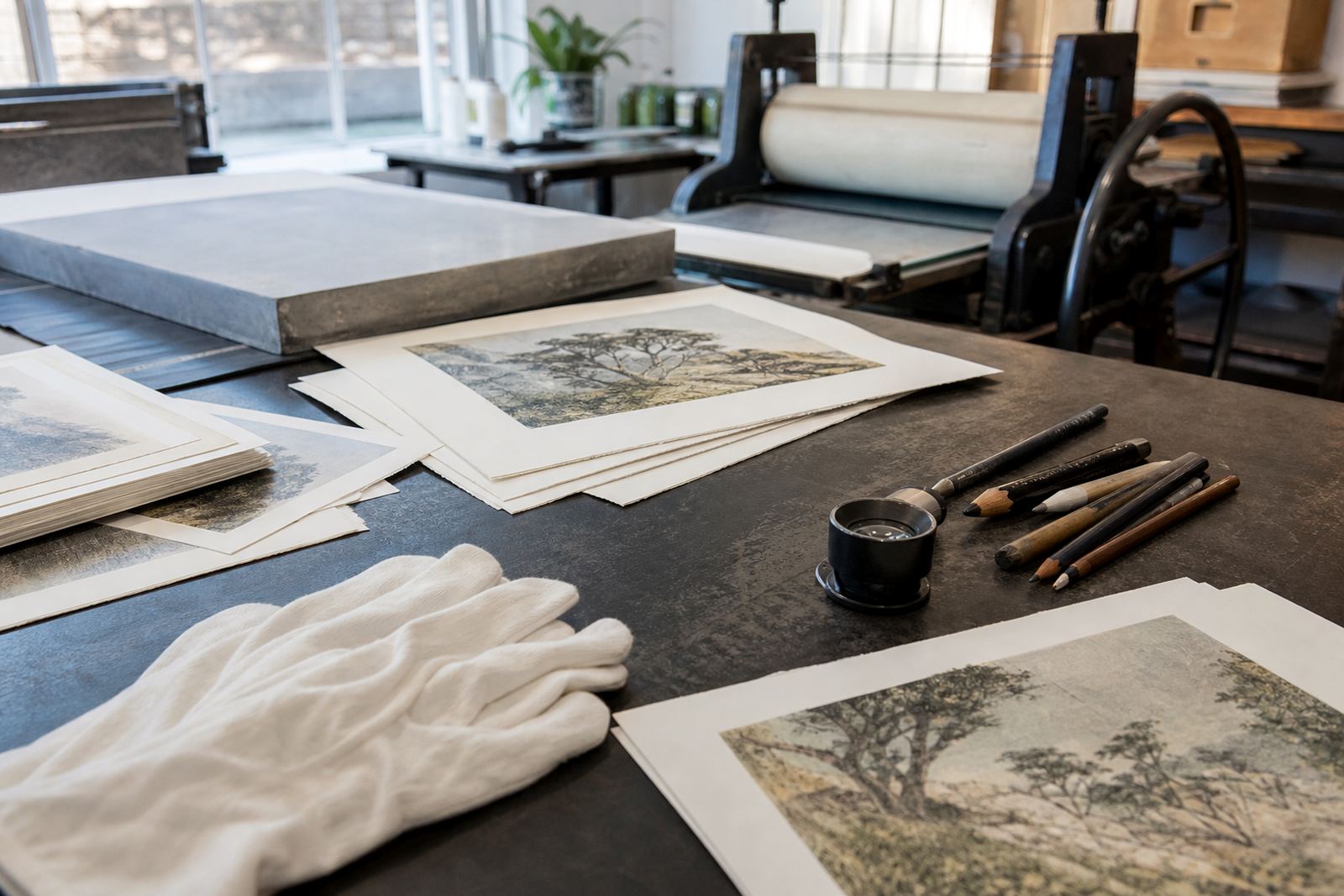
Every edition begins with proper stone preparation. The surface must be level, clean and ready to take the drawing without unwanted marks. After the crayon image is made, the stone is processed, proofed and adjusted until the tonal balance is right. Because lithography depends on the relationship between grease and water, careful handling at each stage matters. Small changes in pressure or damping can alter the character of the line.
Proofing sessions allow the artist to see how the crayon behaves on paper and how the image will read from a few metres away. This is where colour separation, overprinting and registration decisions are made. If an edition has multiple colours, we check each layer for alignment and keep a close eye on the paper stretch, especially in more humid weather. For studios and collectors in coastal areas like Sea Point and Durban, good packing matters too, because paper can react to moisture if it is left unwrapped for too long.
- Stone cleaned and prepared before printing starts
- Proofs checked for tone, line and registration
- Editioning carried out with consistent ink and paper handling
- Archival packing recommended after final drying
Care, Framing And Long-Term Display
Crayon drawn prints need sensible care, not complicated maintenance. Keep the work away from direct sun, damp walls and areas where temperature changes sharply. If you live near the coast, avoid hanging unframed prints in humid rooms for long periods. Once framed, use acid-free mount board and a backing that supports the sheet evenly. For valuable editions, UV protective glazing is worth considering, especially in bright north-facing rooms.
Cleaning should be limited to the frame surface only. Do not wipe the print itself. If the work is stored flat before framing, keep it in an acid-free sleeve or portfolio and place it somewhere dry and level. Framing hardware should be fitted properly so the sheet does not buckle or slip over time. If you need help with mounting or framing coordination, we can guide you on what to ask your framer.
- Keep away from direct sunlight and damp surfaces
- Frame with acid-free materials and proper spacing
- Store flat in a dry place if not framed yet
- Ask about UV glazing for bright rooms and coastal interiors
What To Check When Ordering A Crayon Drawn Edition
Before placing an order, check the image size, sheet size, edition number and whether the print will arrive framed or unframed. Confirm the paper type, because cotton rag papers and mould made papers each have their own look and handling feel. Ask whether the edition includes margins for signing and numbering, and whether any hand colouring or overprinting is part of the final run.
You should also confirm the expected drying and packing time, especially if the print is travelling to Johannesburg, Pretoria, Stellenbosch or Durban. If a collector wall has a specific width or height, share those measurements early so the sheet and frame can be planned correctly. Good lighting helps reveal the crayon grain without glare.
- Confirm image size, paper size and edition details
- Check whether the work is framed or shipped flat
- Ask about paper type and finish
- Share wall measurements before framing is finalised
Woodstock Studio Support For Collectors And Artists
Our Woodstock studio works with artists on limited editions and helps collectors choose the right print, framing approach and handling method. We manage edition planning, proofing sessions, colour separation, paper consultation, signing and numbering, archival packing and collector advice. Studio visits are available by arrangement, so artists and buyers can see the process and discuss the print in person.
Whether a crayon drawn edition is headed for a private collection in Newlands, a townhouse in Sea Point or a gallery wall in Pretoria, the same care applies: accurate printing, clean packing and clear edition records. If you are looking for prints that keep the feel of the original drawing alive, this format is one of the most direct ways to do it.
- Based in Woodstock, Cape Town
- Serving collectors across South Africa
- Studio visits by arrangement
- Enquiries handled through the contact page form
Edition details
| Medium | Stone lithography using lithographic crayon on limestone or lithographic stone |
|---|---|
| Edition type | Limited edition, signed and numbered |
| Typical formats | Small, medium and custom sheet sizes |
| Paper options | Cotton rag and mould made papers, subject to edition plan |
| Display | Framed or unframed, with archival packing |
| Care | Keep dry, out of direct sun and away from damp walls |