What a stone lithograph botanica print actually is
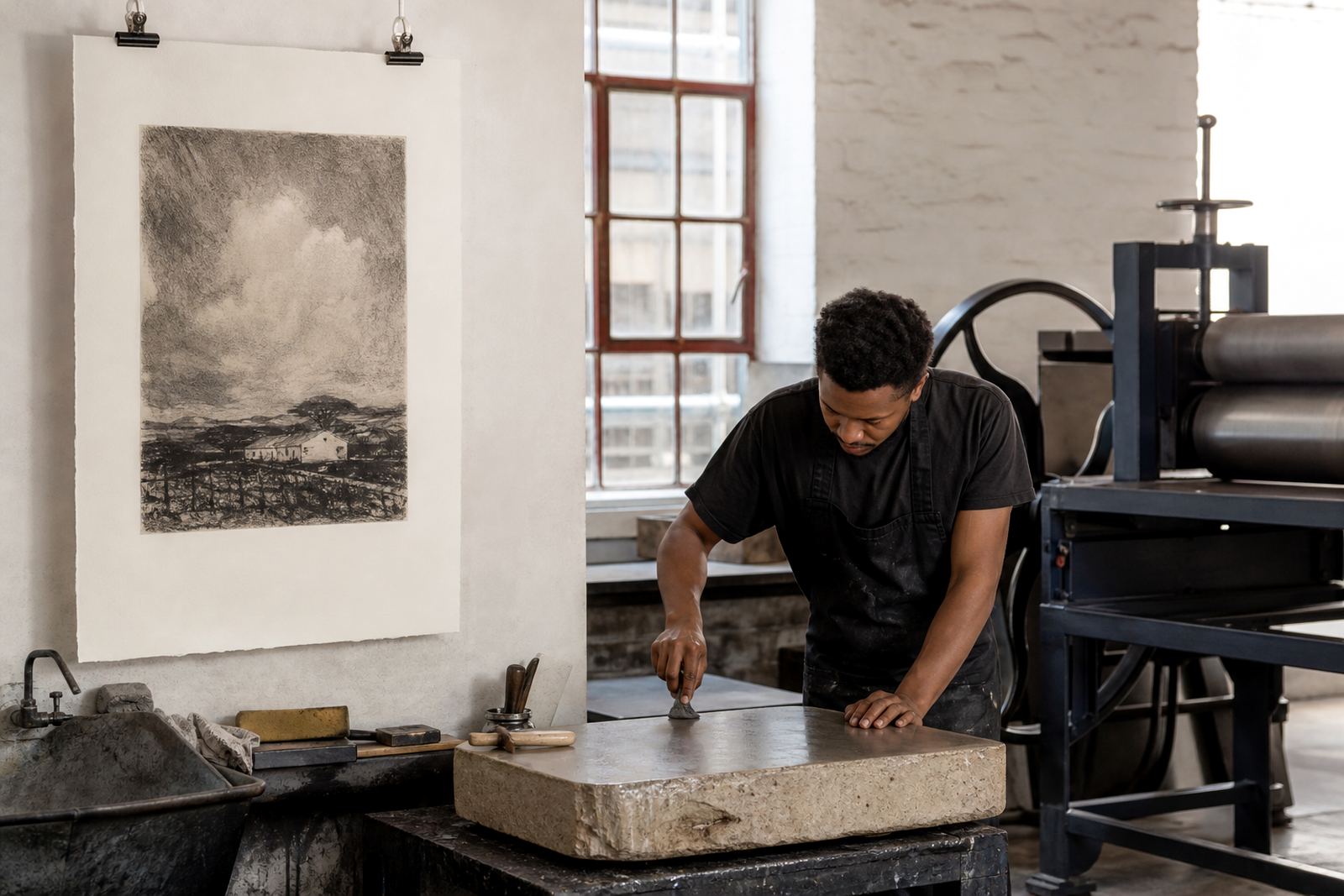
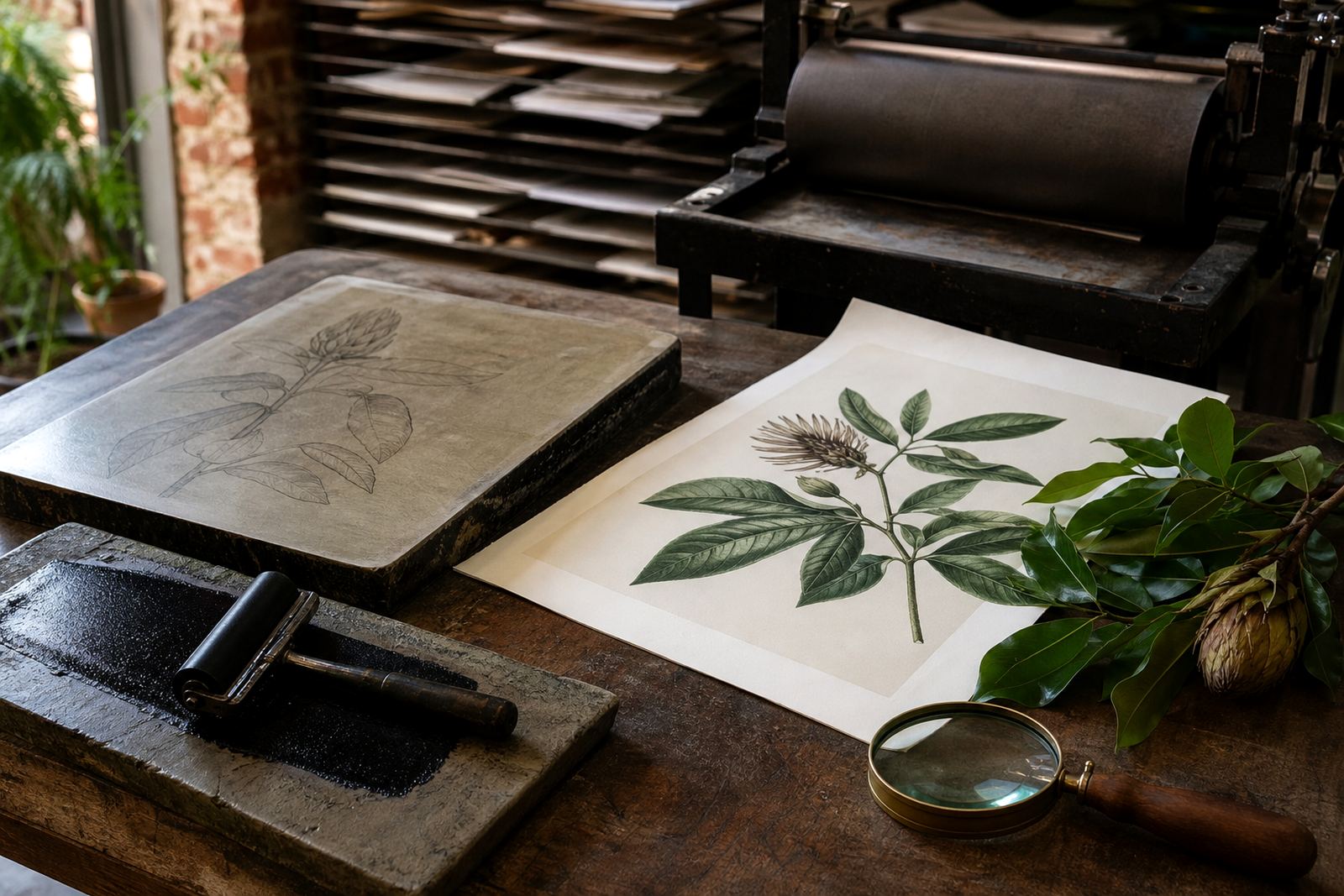
A flat limestone surface carries the drawn image in the traditional stone lithography process. The image is prepared with greasy drawing materials, then treated so that ink takes only to the marked areas and water sits on the rest. Each colour pass is printed by hand, so a botanical image can hold fine veins in a leaf, soft petal edges and the texture of stems without losing character.
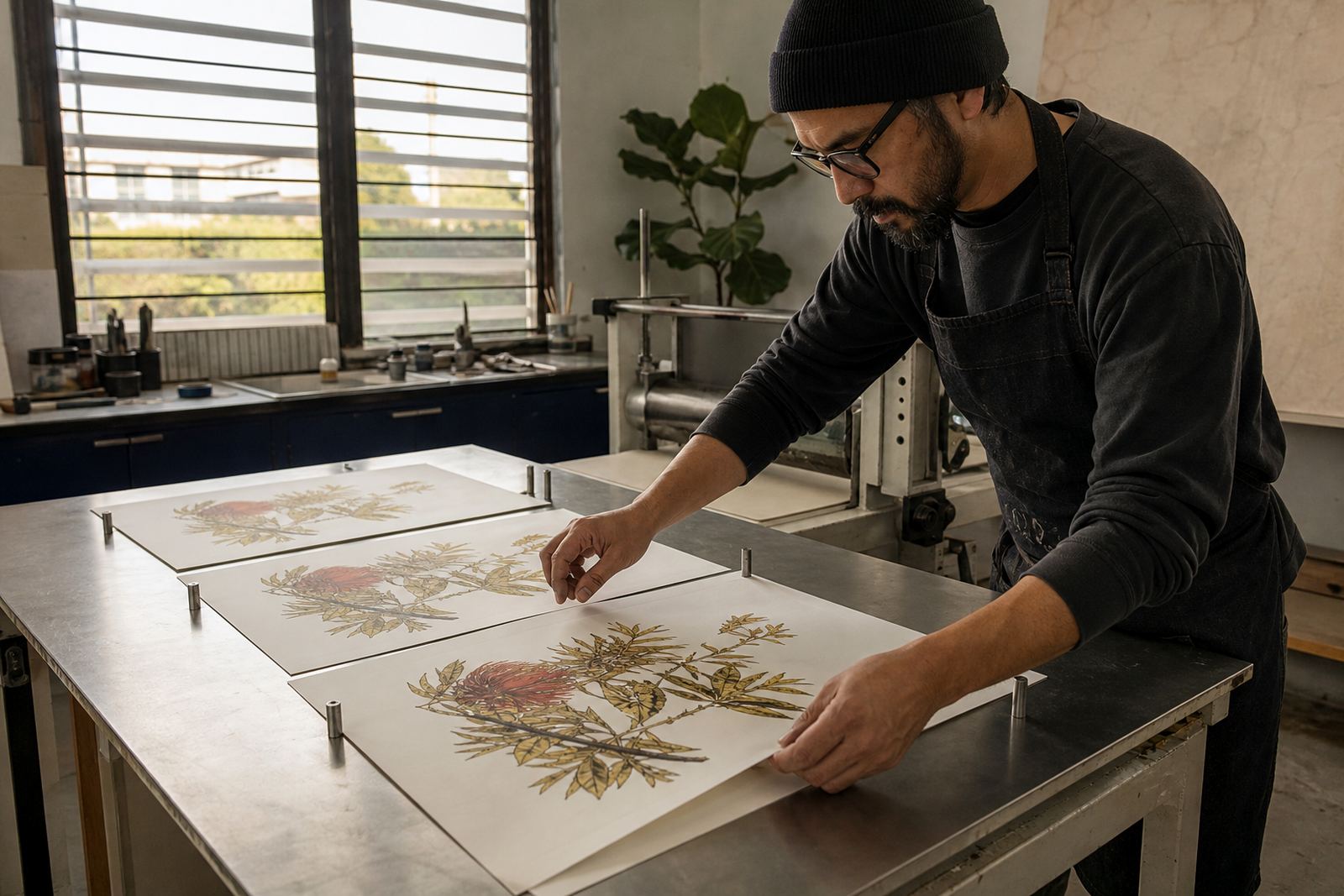
For botanical work, this method suits subjects that need detail and tone rather than flat reproduction. A single leaf study can be printed in a restrained monochrome range, while a flowering branch may be built up through several colour layers for depth. Because every sheet is pulled from the press one by one, the print keeps a handmade quality that collectors value. It is not mass produced and each edition is planned with care from the first proof to the final signed sheet.
Edition sizes, paper choices and common format options
Botanical lithographs are usually made as limited editions, which means a set number of finished prints are approved, signed and numbered. The edition size depends on the image, the number of colours and the artist’s intention. Smaller editions are often preferred for more complex works, while simpler botanical studies may allow a slightly larger run. Once an edition is closed, no more prints are made from that stone for that version.
Paper choice matters because botanical imagery often relies on soft tonal shifts and clean edges. We guide artists and collectors on sheet weight, surface and colour. Smooth papers suit crisp line work and seed pod studies, while a lightly textured sheet can give a warmer feel to broad leaf forms and washes. Works can be produced as unframed sheets for custom framing, or supplied framed through our framing coordination service.
- Available as unframed sheets for custom framing
- Limited editions only, with signing and numbering
- Single-colour or multi-colour printing depending on the image
- Paper can be white, warm white or a tinted stock where appropriate
- Large botanical panels can be split into matching pairs or triptychs
Where botanical lithographs suit best in a home or workspace
Botanical lithographs sit naturally in rooms where calm and detail matter. They work well in living rooms, bedrooms, studies, reception areas, consulting rooms and hospitality spaces that want a grounded South African feel without being loud. In Cape Town homes near the coast, botanical work pairs well with timber, linen and natural light. In Johannesburg or Pretoria, a framed print can soften a sharper interior with a bit of organic rhythm.
These works also suit collectors who want imagery that feels close to the local landscape without being literal. Leaves, flowers and stems can echo indigenous planting, garden spaces and seasonal change. A set of related prints can be hung as a pair above a sofa, in a passage or across a stair landing. If the room gets strong sun, we may recommend positioning away from direct light to help preserve the ink and paper over time.
- Home interiors, guest rooms and passage walls
- Reception areas, boardrooms and private offices
- Hospitality spaces, studios and consulting rooms
- Best kept out of direct afternoon sun where possible
Studio process, proofing and what to expect before printing
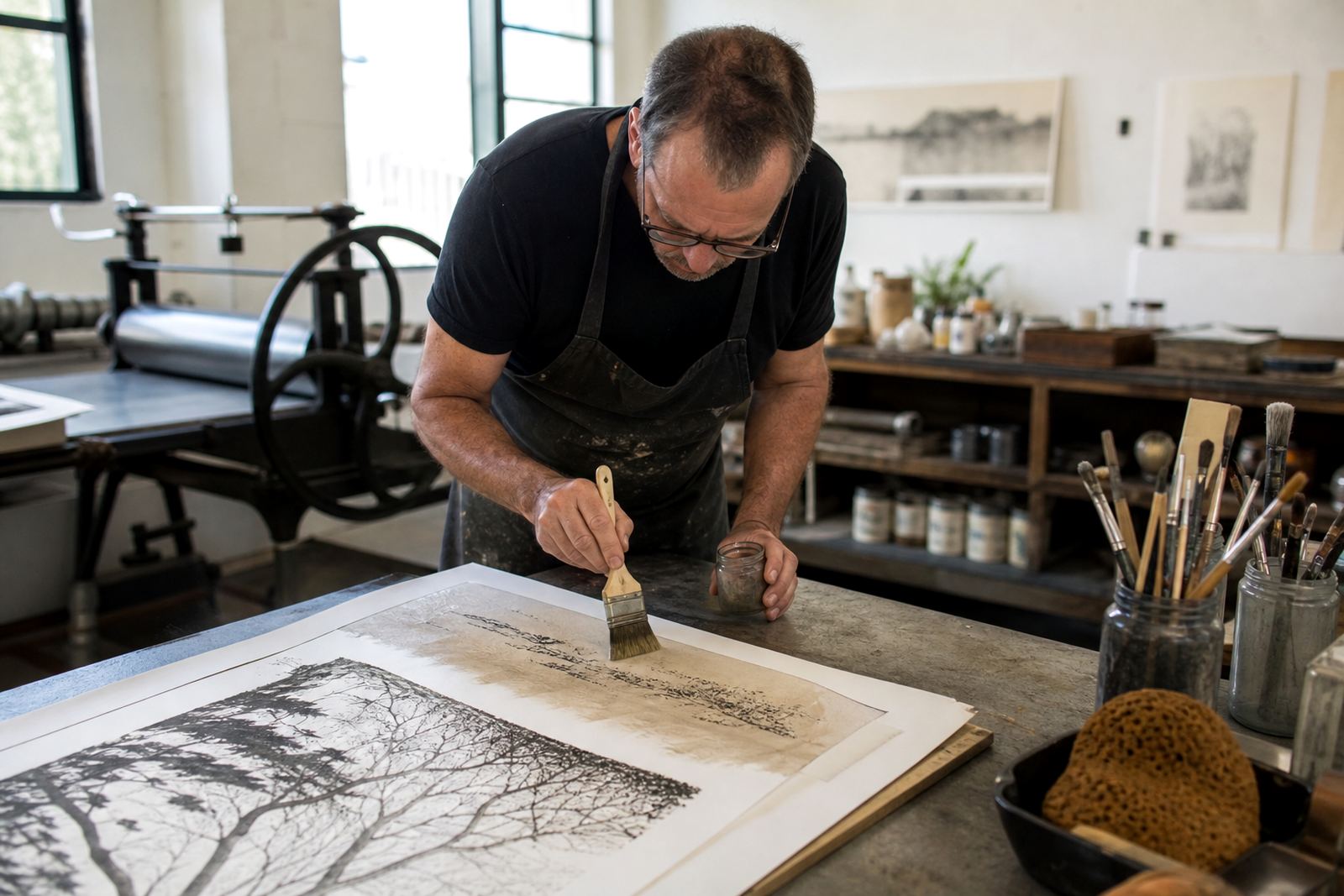
At our Woodstock studio, the process begins with the image and the plan for the edition. We look at the scale of the plant forms, the number of stones needed, the colour build and the paper format. Proofing sessions allow the artist to review how the image is reading on paper, adjust tonal balance and refine the layers before the edition is printed. That early stage matters a lot because botanical subjects can shift quickly from delicate to muddy if the colour separation is not right.
Stone preparation is a careful part of the work. Each stone must be cleaned, grain prepared and handled with attention so the surface supports the image properly. Our studio team works through edition planning, proofing, colour separation and signing and numbering, so the finished print is consistent from first sheet to last. For collectors, this means the edition has a clear origin and a visible hand in the making.
We also offer collector advice and studio visits by arrangement. If you are ordering from Stellenbosch, Sea Point, Newlands, Durban or farther afield, we can talk through the edition and framing before the work is packed. It helps to confirm the final size, border allowance and any special handling needs upfront, especially if the print is travelling between cities.
Framing and hanging
Botanical lithographs are paper artworks, so the main practical concern is framing, hanging and environmental care. Once framed, they can be installed with standard picture hooks, rails or hanging wire depending on the frame and wall type. In older Cape Town homes with plaster walls, it is worth checking the fixing method before hanging, while newer offices may use standard wall anchors.
For large works, we recommend checking the wall space, sightline and room lighting before order confirmation. If you are placing the print in a humid coastal area such as Sea Point or a room near a bathroom, good framing with a sealed backing board can help protect the sheet.
- Standard picture hanging hardware is usually enough
- Best framed with UV-filtering glazing where possible
- Keep away from damp walls, steam and direct sunlight
Care and what to check when ordering
Stone lithographs are made to last, but they still need sensible care. Dust the frame lightly with a dry cloth and avoid spraying cleaner near the glazing. If the work is unframed, keep it flat in archival tissue and a clean sleeve until framing is arranged. Never roll the sheet too tightly for long periods because that can stress the paper and cause curl or edge memory.
If you are ordering a botanical lithograph, check the edition details, final sheet size, image size and whether the margins are part of the composition. Ask whether the work is signed, numbered and accompanied by a title or edition note. It is also worth confirming paper type, framing requirements and whether the print has already been packed for travel across South Africa. If the piece is going into a home with strong coastal humidity or a busy public area, we can advise on framing choices and handling.
For collectors in Cape Town, Johannesburg, Pretoria and Durban, we aim to make the ordering process straightforward. You enquire through the contact page, we confirm the details, and then the print is prepared, packed and sent with the right documentation. Botanical work rewards careful viewing, so getting the details right at the start matters just as much as the final image.
Edition details
| Product type | Limited edition botanical stone lithographs |
|---|---|
| Process | Hand printed on limestone using traditional stone lithography |
| Typical subjects | Leaves, flowers, stems, seed forms and organic pattern |
| Format options | Unframed sheets, custom framing and paired or multi-panel compositions |
| Editioning | Signed and numbered limited editions with proofing available |
| Service area | Woodstock, Cape Town and clients across South Africa including Stellenbosch, Johannesburg, Pretoria and Durban |