What A Themed Lithography Collection Does Well
A themed collection gives a body of work a clear link without forcing every print to look the same. It can be built around a place, a season, coastal colour, botanical forms, figures, abstract marks or a shared printmaking process. For collectors, it makes a wall hang feel deliberate. For artists, it creates a group of works that can be shown, sold and recorded as a proper edition set.
Stone lithography suits this approach because each stone carries rich tonal range and fine drawing marks. One image may be printed in a single colour, while another in several passes with carefully registered colour layers. In a themed set, the whole group can keep a common visual language while still giving each print its own character. That balance is often what makes a collection feel complete.
How We Plan A Series Before The First Proof
Before we start preparing stones, we look at the purpose of the collection. Is it for a private collector, a gallery release, a studio archive, or a retail edition sold in smaller numbers? That answer shapes the paper choice, the number of colours, the edition size and the amount of proofing needed. If the collection is going to homes in Durban or Johannesburg, for example, we may also think about framing, transport and how the final works will hold up in warmer or more humid rooms.
The planning stage usually covers the image sequence, the size of each sheet, and whether all works should share one border or a common title block. We also discuss how the edition will be numbered and signed, and whether there will be artist proofs. If the set uses multiple stones, every colour needs to be mapped carefully so the final prints stay consistent from first proof to final edition.
- Decide if the collection is one image repeated in variants or several related images.
- Choose a standard sheet size early so framing and storage are simpler.
- Keep titles, edition numbers and proof marks consistent across the set.
- Allow time for drying, inspection and any reworking between colour passes.
Typical Studio Setup For A Themed Edition
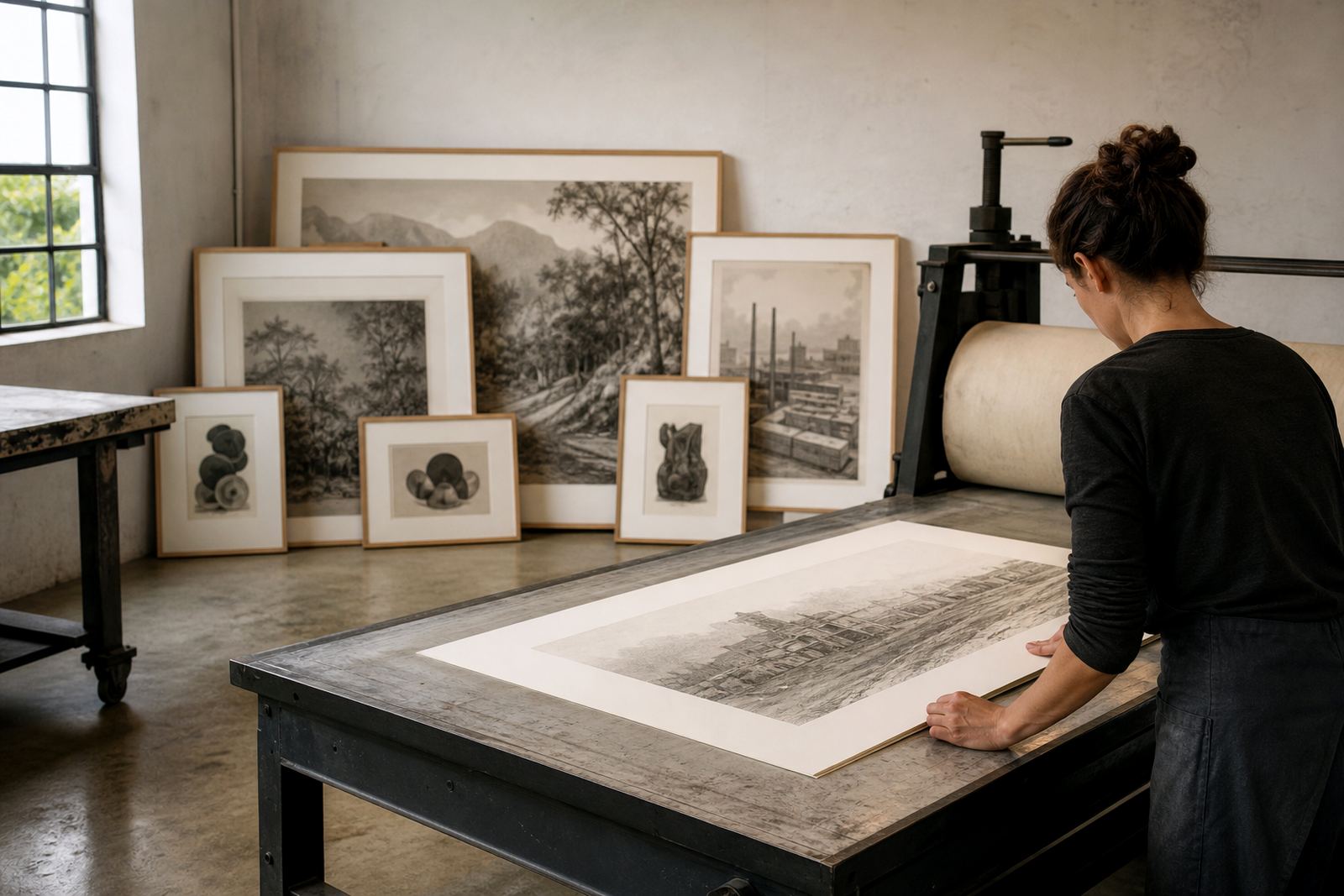
A stone lithography collection usually needs a workable studio set-up rather than a large industrial floor. We prepare the lithography stones, drawing materials, presses, inks, rollers, registration guides, drying racks and clean storage for paper and finished sheets. For colour work, we also need enough bench space to separate layers and check alignment. In Woodstock, a practical layout matters because stone handling, drying and packing all happen in sequence and there is no room for shortcuts.
When a series includes several prints, studio organisation becomes part of the edition quality. Stones must be labelled clearly, proofs kept in order, and paper batches managed so sheets come from the same stock. That matters when clients want a consistent look across the set.
- One or more prepared lithography stones for each image or colour pass.
- A printing press suited to the stone size and paper format.
- Registration marks and proof folders for tracking colour layers.
- Drying space, archival sleeves and packing materials for finished prints.
Layout Advice For Walls, Portfolios And Gift Sets
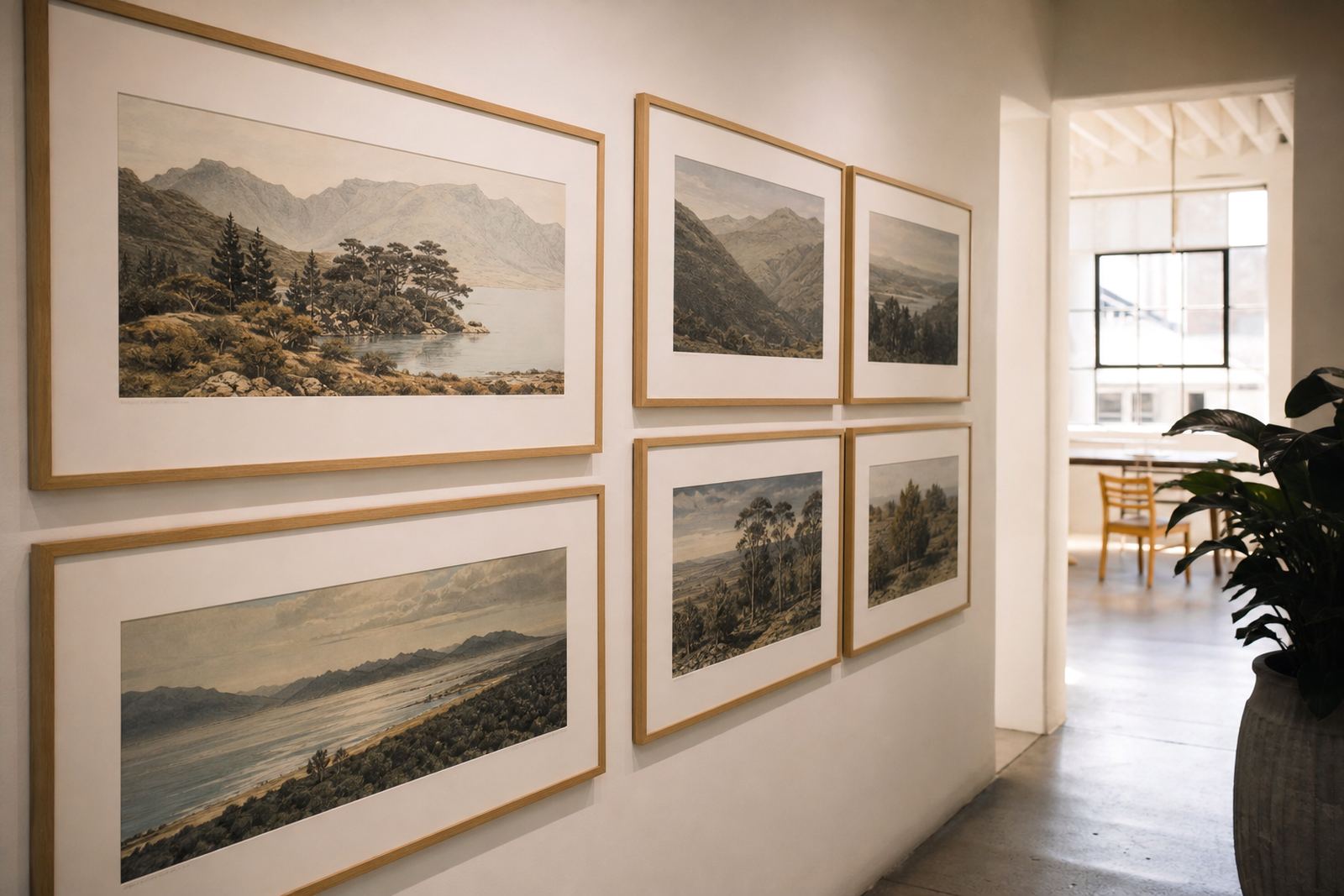
The way a themed collection is presented changes how it is read. A narrow hallway in Sea Point may suit a vertical sequence, while a lounge wall in Newlands may need a wider rhythm with spacing between works. In a portfolio case, the collection can be arranged by image order or by colour intensity. For gift sets, smaller formats and matching paper widths often work better than mixing too many sizes. We usually advise clients to think about the final home for the prints before the first edition is pulled.
Common planning mistakes include choosing too many sizes, changing the paper half way through the edition, or trying to make every print carry the same amount of visual weight. Another one is underestimating framing costs, which can be a shock if the works are destined for multiple homes or offices. A clean plan from the start saves time and money later, and it keeps the collection looking intentional rather than patchy.
- Use one dominant format if the collection will hang together on one wall.
- Leave breathing room between images when hanging a group set.
- Match frame profiles and mount widths to keep the series visually linked.
- Store unframed prints flat, away from damp and direct sun.
Edition Size, Proofs And Signing
In themed lithography, editioning needs discipline. A small edition can feel more exclusive and may suit a closely held collector group, while a larger edition can work when the artist wants wider access. Either way, the edition size should be agreed before printing starts. Proofs are useful for checking colour balance, paper response and the final surface of the ink. They also help if a collection has subtle shifts from one image to the next, because it gives everyone a clear record of what was approved.
Signing and numbering should happen only after the edition is complete and checked. That includes artist proofs, printer proofs and any reserved copies if they are part of the plan. When the set is complete, archival packing becomes part of the work, not an afterthought. Good packing protects prints from corner damage, moisture and dust, which is especially important for collectors in coastal areas like Durban or Sea Point where humidity can be a factor.
Budget Ranges For A Themed Lithography Project
Budgets for themed collections depend on stone count, size, number of colours, paper choice and how many proofs are needed. A simple one-colour series with a small edition may be kept relatively controlled, while a multi-colour collection with several stones per image will need more labour and more studio time. Paper consultation, editioning and packing all add to the total, so it helps to think in stages rather than as one fixed number.
As a general working range, smaller themed editions can start from about R8 000 to R18 000 for a tightly planned project with limited colour passes and a modest print run. Mid-range collections with multiple stones, several proofing rounds and more elaborate paper or packing requirements may sit around R18 000 to R45 000. Larger or more complex sets can run above that, especially where framing coordination and extended studio time are needed. We always recommend building in a buffer for proof changes, because that is where most budgets shift a bit, sometimes unexpectedly.
For clients in Johannesburg, Pretoria, Stellenbosch and Cape Town, we can plan the work so the edition is produced in a practical sequence and packed for safe collection or delivery. That keeps the project manageable and helps the final prints arrive in good order.