When a print needs to go straight on the wall
Framed display is for collectors who want the work presented properly from the start, not left waiting in a tube or stacked in a cupboard. It suits new acquisitions, gifts, corporate spaces, and home collections where the print needs to sit well with furniture, light and wall colour. In Cape Town apartments, Stellenbosch homes and Johannesburg offices, the frame often needs to do more than look good. It has to protect the paper from dust, handling and damp air too.
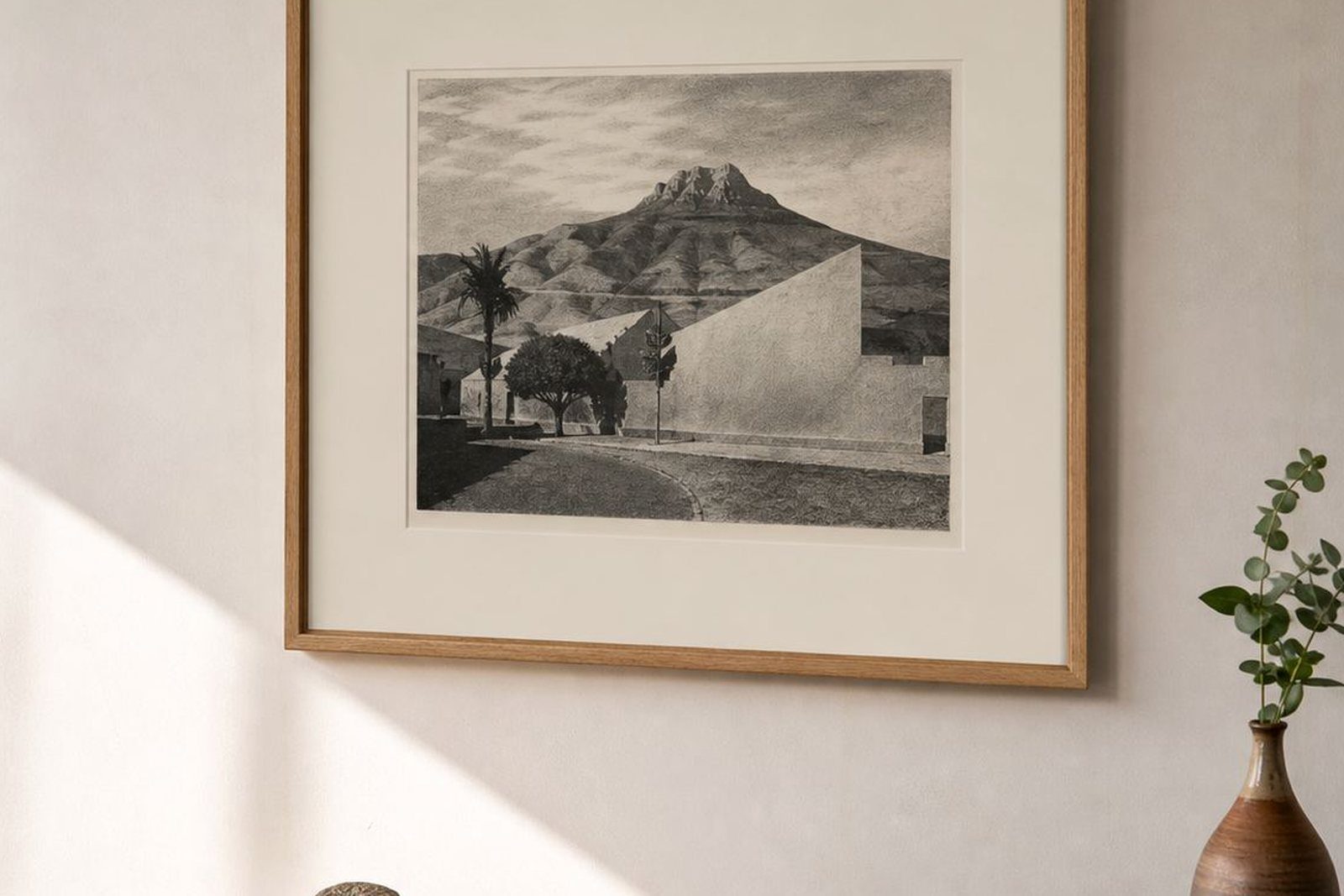
Stone lithographs are printed on fine paper and many collectors prefer an archival frame package that keeps the sheet flat and stable. That usually means a mount board, a UV filtering glazing option, a backing board, hanging wire or fixings, and a frame profile that suits the artwork without crowding it. For prints that have hand colouring, a wide enough mount can help the image breathe, while also keeping the paper from touching the glass.
How stone lithography affects framing choices
Stone lithography has its own character. The image is drawn on a limestone surface with greasy materials, then printed in layers from the stone. That process gives a very specific mark, from soft tonal areas to strong line work and delicate colour shifts. The paper may carry a slight plate edge or deckle edge, and that is often worth preserving rather than hiding under a tight mount.
Because these prints are editioned by hand, the framing should support the work rather than overpower it. A collector in Durban may need better protection against humidity, while a Sea Point apartment may need glazing that helps control glare from strong coastal light. Across both settings, the aim is to protect the paper and show the print clearly. Keep the paper safe and present the print clearly.
- Use acid free mount board and backing materials
- Choose glazing that reduces dust and UV exposure
- Allow enough space so the paper does not touch the glass
- Keep framing proportions balanced with the image size
Planning the frame around the room and the edition
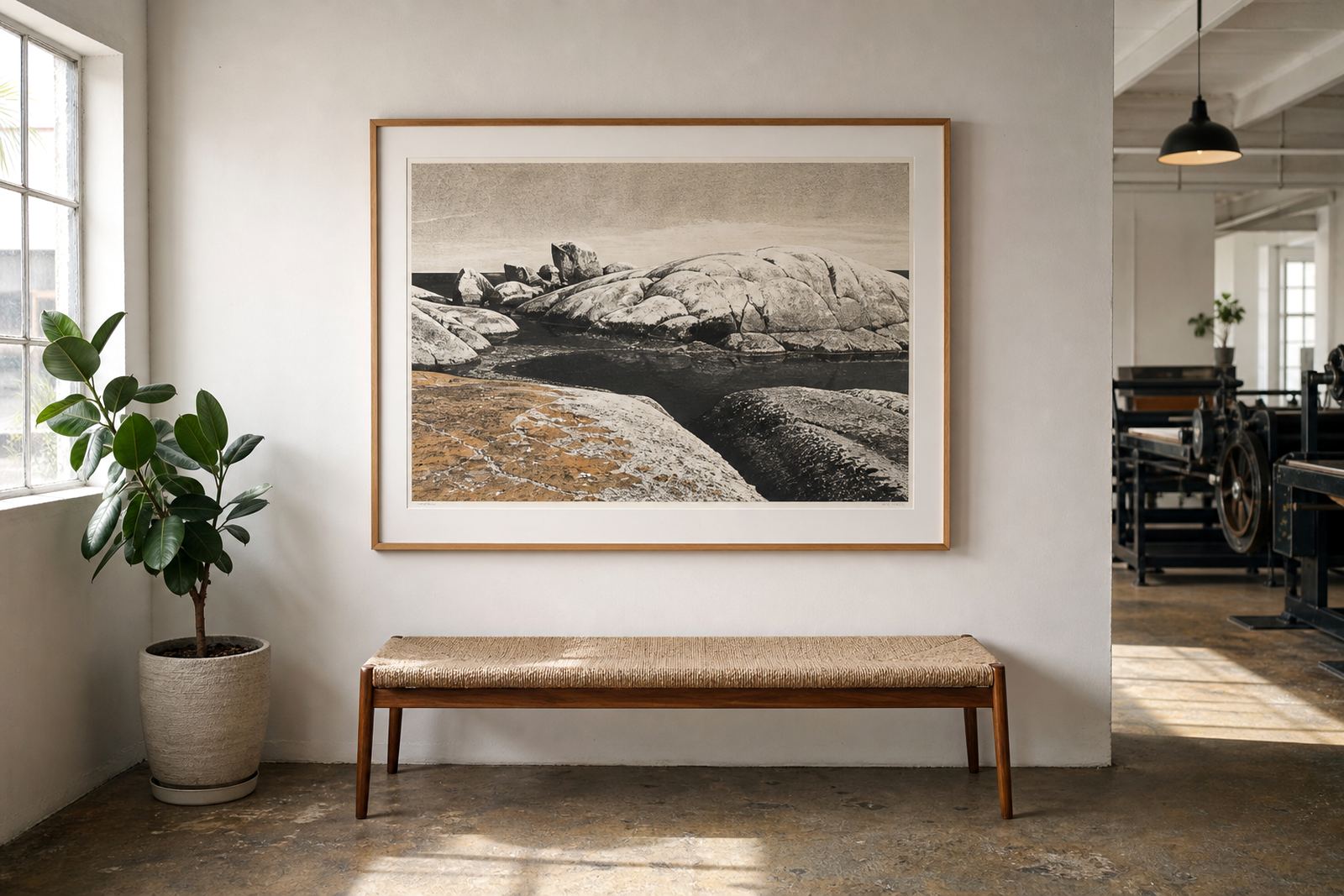
Good framing starts with the work itself, then the room where it will hang. A small monochrome print in a narrow passage needs a different treatment from a large colour edition in a living room or boardroom. We look at the paper size, the image size, the mount width and the final outer size so the work does not feel cramped or too spread out. That planning also helps if a collector is framing more than one print from the same edition.
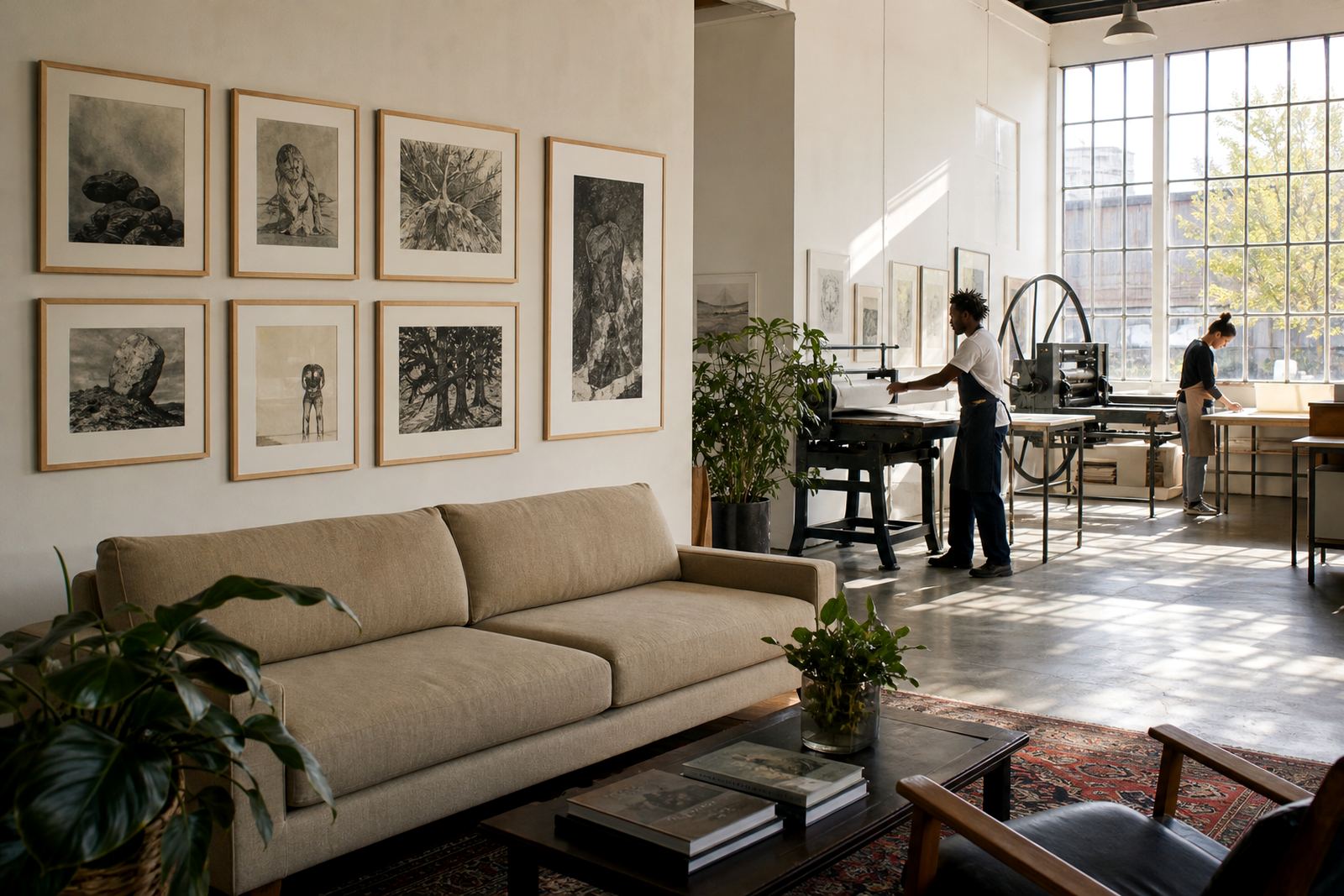
For grouped works, consistency matters. Similar frame profiles and mount widths can make a set feel properly considered, even when the images vary in colour. If the collector is building a wall of related prints, spacing between frames and sightlines should be sorted before the glass goes in. It saves trouble later and keeps the wall from looking crowded.
- Measure the wall space before choosing the outer frame size
- Decide whether the work will hang alone or as part of a group
- Match frame colour to the room, not just the artwork
- Check if the print will sit in bright sun, a hallway or a cooler interior
Common mistakes collectors make
One of the most common mistakes is framing too quickly, before the collector has settled on the right mount or frame finish. Another is using materials that are not suitable for long term paper storage. Cheap board can yellow, and basic glazing can leave the print exposed to too much light. In coastal areas, poor sealing can also allow moisture to creep in and mark the sheet or frame corners.
Another issue is handling. Fingerprints on the paper or inside the frame are hard to remove once the work is assembled. We also see prints framed too close to the glass, which can cause contact marks if the paper shifts with temperature changes. A good frame package leaves enough breathing room and keeps the work steady.
- Do not use ordinary cardboard behind the print
- Do not press the paper flat against the glass
- Do not hang a valuable edition in direct sun
- Do not forget to check the hanging height for the room
Budget ranges for framed display in Rand
Framing costs depend on the size of the print, the frame material, the glazing choice and whether conservation materials are used throughout. Smaller framed lithographs can be kept within a moderate budget, while larger works with wide mounts and better glazing will cost more. A collector should also think about transport, since a framed work needs careful packing and handling to avoid corner knocks.
As a general guide, framing for smaller edition prints may start in the lower hundreds of Rand and move upward as the materials get better and the size increases. Medium sized framed works usually sit in the mid hundreds to low thousands of Rand. Large works, conservation grade materials and custom presentation can move beyond that. If the piece is going to Johannesburg or Pretoria, extra packing may be needed so the frame arrives without rub marks or chips.
Care after framing, from wall to storage
Once a print is framed, aftercare is simple but important. Keep it away from steam, direct midday sun and walls that pull in damp. In Cape Town winters, a room with poor ventilation can affect paper over time, especially if the frame sits against an outside wall. Wipe the frame edge with a dry cloth and avoid household sprays near the glazing. If the print is moved, lift it by the frame rather than the hanging wire.
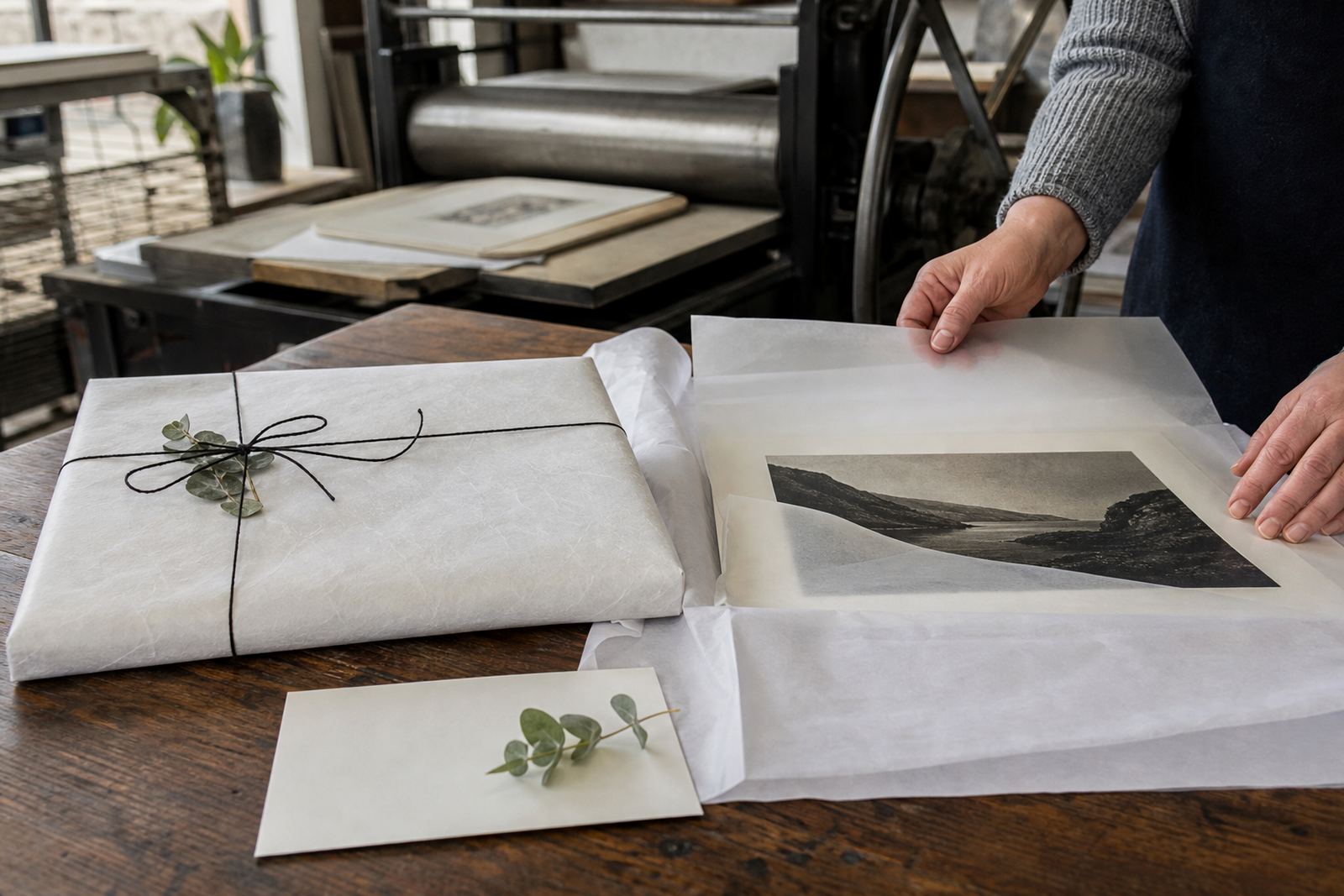
If a collector changes homes or offices, the framed work should be wrapped with soft corner protection and packed so the glass cannot flex. For archival storage, keep the print flat in a clean dry place and away from heat. A framed edition can last well if it is handled properly, but a little care goes a long way. That is true whether the work hangs in Newlands, Woodstock or Durban.