When a room needs one strong work
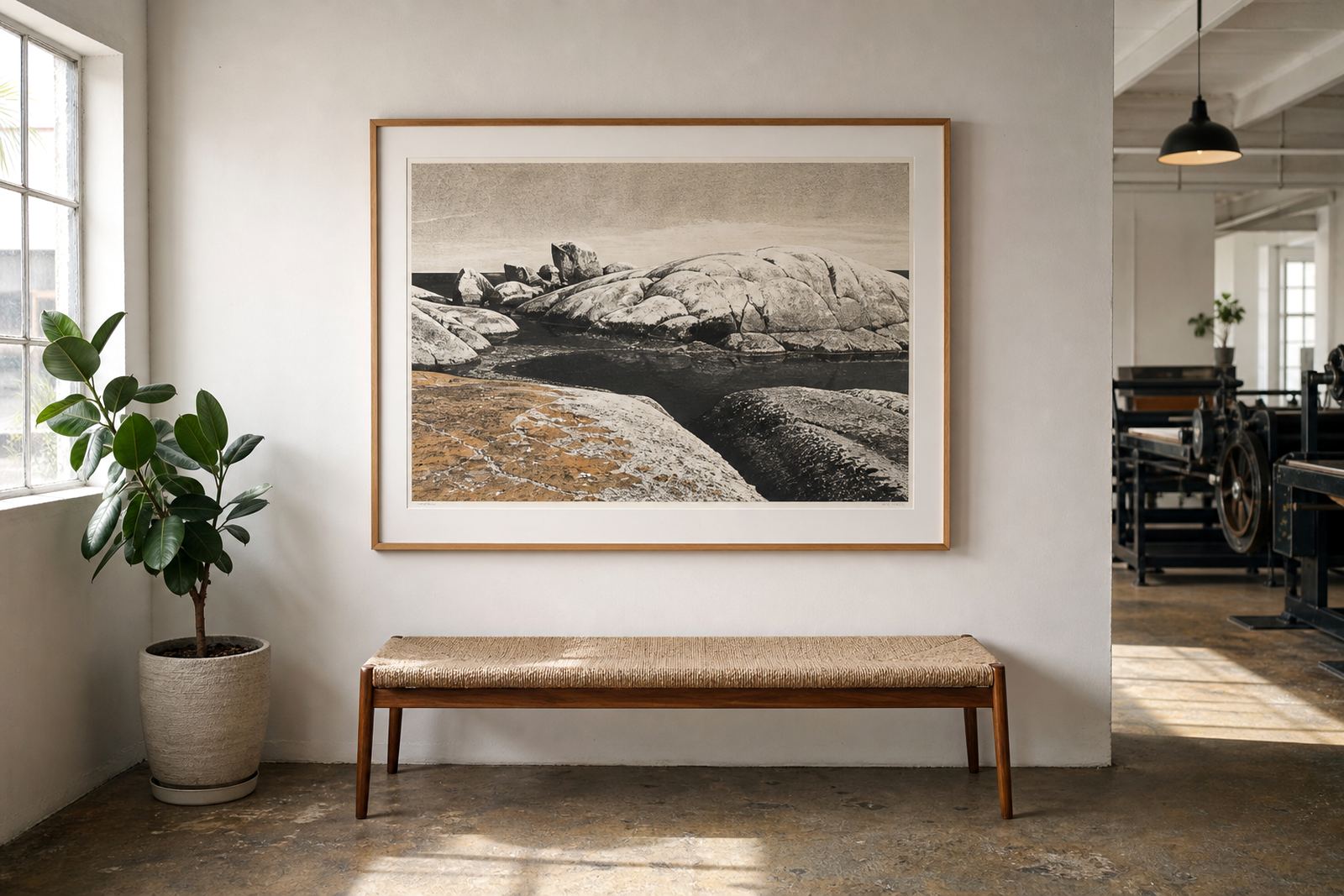
A statement wall print is usually the piece people see first when they walk into a home. It may sit above a sofa in Sea Point, along a staircase in Newlands, or in an entrance hall in Stellenbosch where the wall is generous and the furniture is kept low. The aim is not just to fill space, but to set the tone for the whole room.
Stone lithography suits this use well because it carries fine marks, tonal depth and a character that feels handmade rather than printed flat. A larger lithograph can hold detail from close up and still read clearly from across the room. That makes it useful for collectors who want a work that anchors the space without needing a busy surrounding layout.
For this kind of placement, we usually begin with the wall size, the viewing distance and the light in the room. A north-facing wall in Cape Town can handle stronger colour, while a dimmer passage or north east facing room may need clearer contrast. Coastal humidity can also affect framing and paper handling, so the final decision should suit both the image and the house.
How stone lithography supports large-format presence
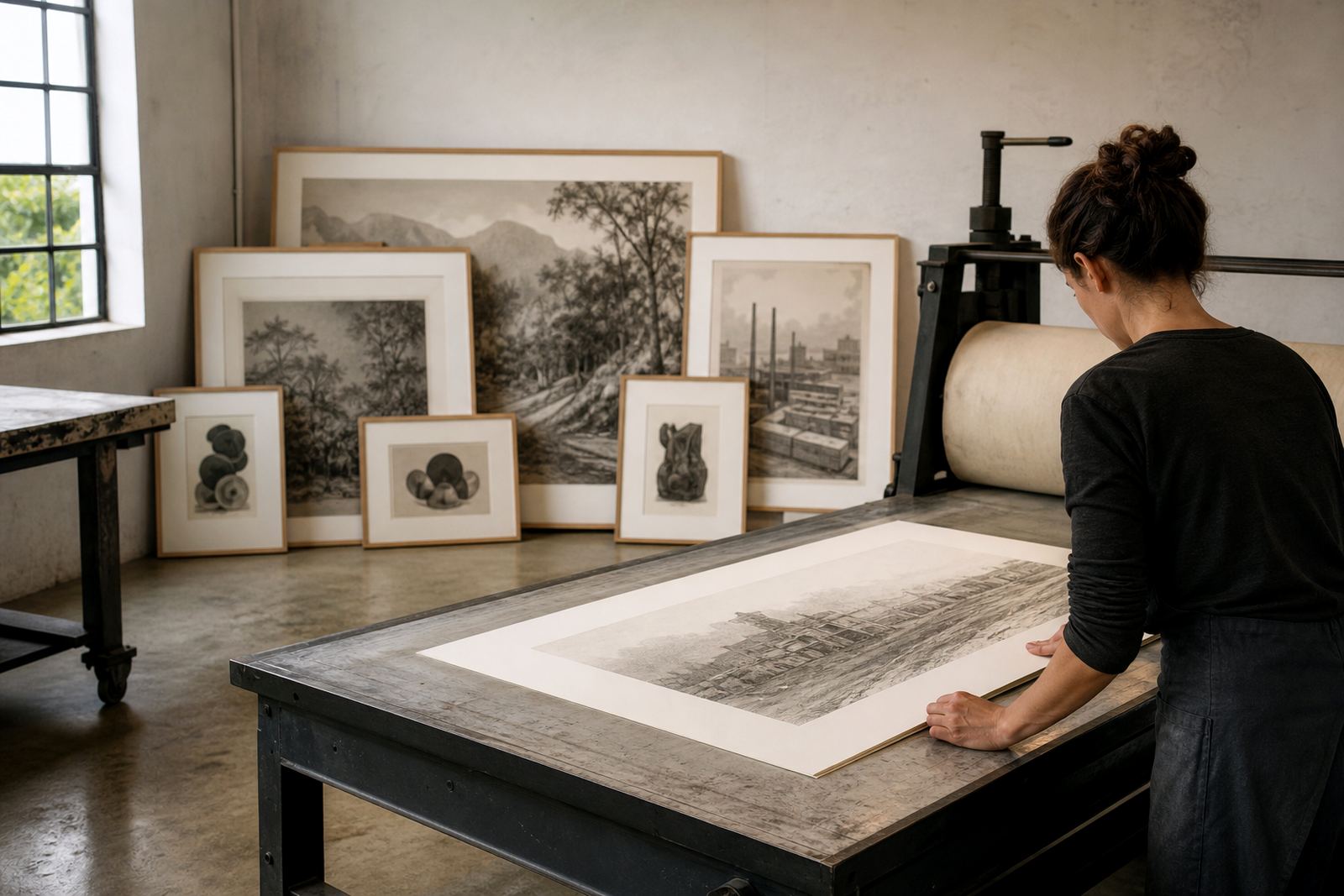
A smooth limestone surface forms the basis of the stone lithography process. The artist draws or works directly on the stone with greasy materials, then the surface is treated so ink accepts only the drawn areas. Each colour normally needs its own stone or plate, and that is where the craft becomes exacting. Registration, pressure and paper handling all have to line up properly, especially on larger sheets.
For statement pieces, the typical equipment set is straightforward but specialised:
- Prepared lithography stones or plates
- Drawing materials for the image and colour separations
- Hand press suitable for large sheets
- Archival paper selected for the edition
- Measuring tools for registration and trimming
- Drying racks and packing materials
Because these works are editioned by hand, each pull has small variations that collectors often value. The aim is consistency across the edition, not mechanical sameness. If a print has multiple colours, the studio must plan the sequence carefully so the image stays clean and the inks do not muddy one another.
Choosing the right size for a wall that matters
A common mistake is to choose a print that is too small for the wall, then try to fix the scale with a heavy frame or a cluster of smaller pieces. For an entrance or living room statement work, the image should usually have enough size to breathe. A single lithograph can be powerful when it leaves space around it and is hung at the correct eye level, rather than pushed too high.
We normally look at three things before planning the edition size: the wall width, the furniture below it and the amount of natural light. In an open-plan apartment in Durban, for example, the print may need to be read from several angles. In a more formal home in Pretoria, the work may sit on a clear wall and need stronger centre balance. Framing width also matters, because a broad frame can change the feel of the work quite a bit.
- Leave enough blank wall around the work so the image can settle
- Match the print size to the furniture line below it
- Consider glare from windows, sliders and indoor lighting
- Keep moisture and direct sun in mind near coastal or west-facing rooms
We often advise clients to think less about covering a wall and more about creating a focal point. That one shift makes the room feel calmer and the work looks more intentional.
Edition planning for collectors and interiors
Statement wall prints are often ordered as limited editions, which means the artist and printer agree on the number of impressions to be made. That number should be fixed before the edition is pulled, and every sheet needs to be signed and numbered in a clear sequence. For collectors, this gives the work structure and traceability. For interiors, it means the size and colourway can be planned properly from the start.
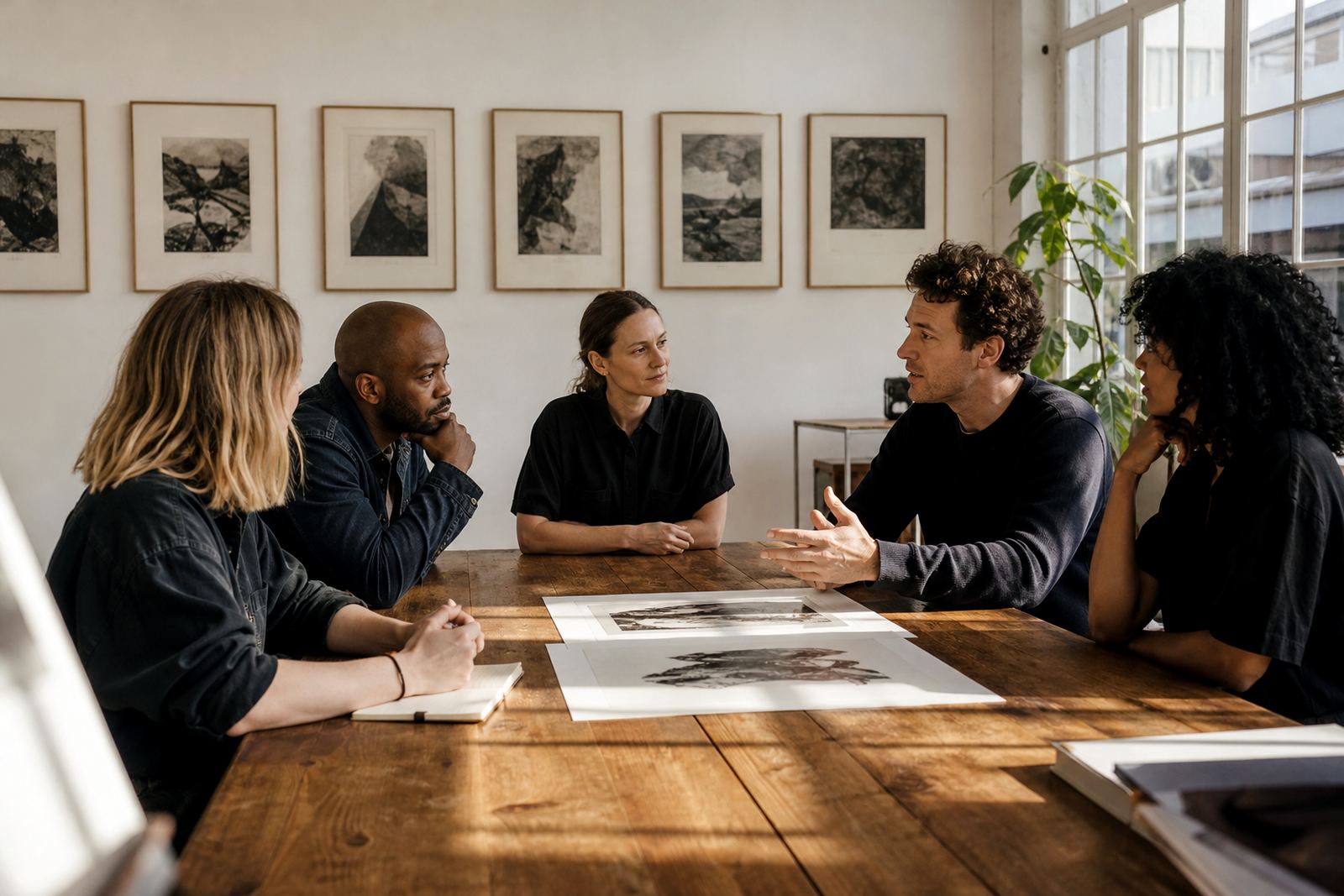
If a print is intended for a specific room, we may discuss paper tone, border size and whether the edition should stay monochrome or include colour layers. Paper consultation is useful here because a warm paper can soften a bold image, while a brighter stock can sharpen the overall effect. The finish also matters. A deckled edge may suit a more relaxed interior, while a trimmed sheet can feel more formal.
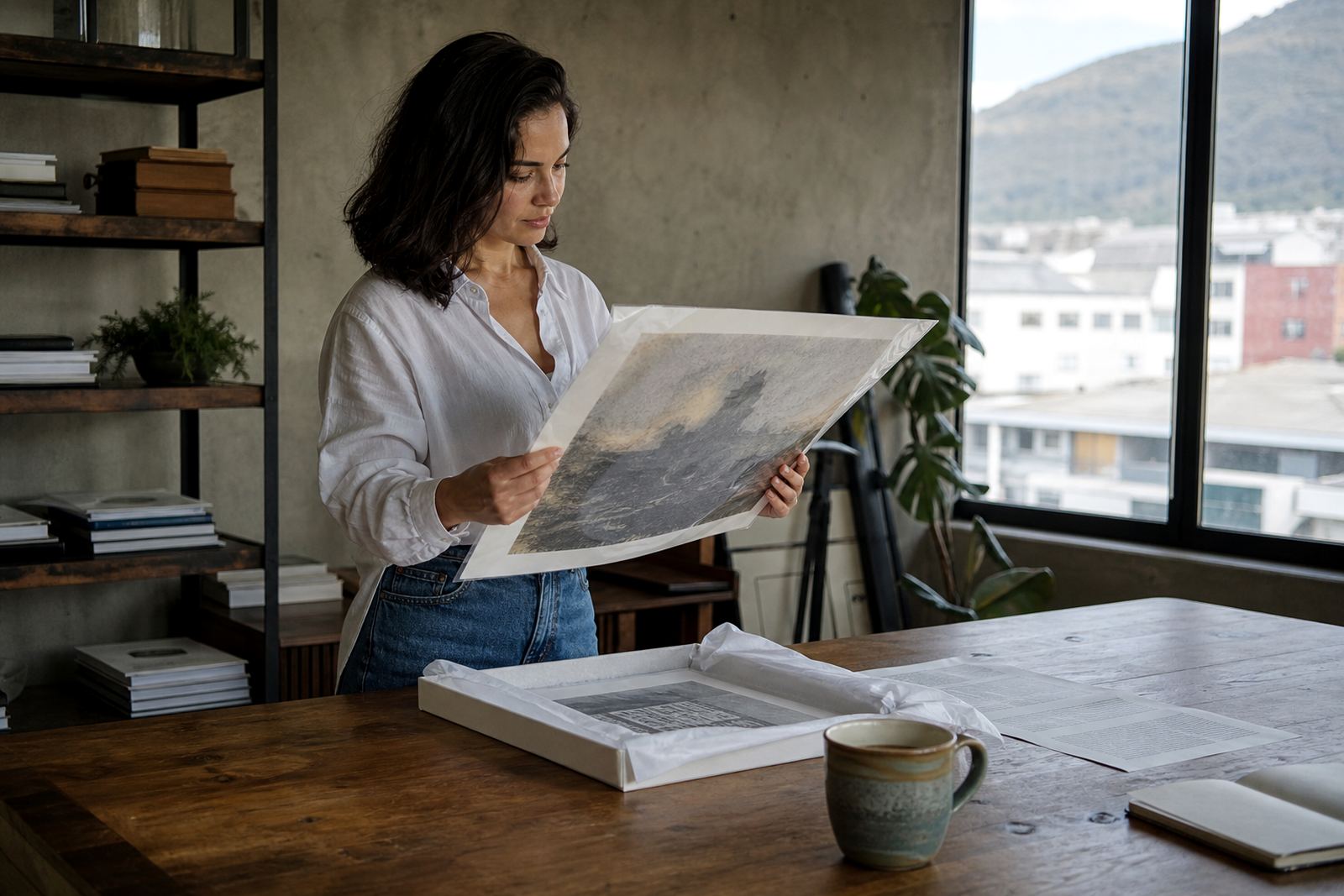
Edition planning also affects framing. If the work is meant for a wall in a humid area, archival packing and the right mount board matter almost as much as the print itself. A good edition should still look fresh years later, provided it is kept out of harsh sun and handled with clean hands.
Proofing sessions, colour and common mistakes
Proofing sessions are where the real decisions happen. For larger wall pieces, a change in colour balance or stone pressure can alter the mood of the whole work. A proof allows the artist and printer to compare tone, line and registration before the edition is finalised. In many cases, the best looking print is not the first one, it comes after a few adjustments.
Common mistakes are easy to avoid when the print is made with the room in mind:
- Choosing too many colours for a small or busy wall
- Using a frame that competes with the image
- Hanging the work too high above the furniture
- Ignoring sunlight, especially in west-facing rooms
- Skipping archival packing before moving or storage
For clients in Johannesburg or Pretoria, dry air and strong sun can be a concern. In Cape Town and Durban, humidity needs more attention. Either way, the print should be framed with conservation materials and hung away from damp walls, kitchen steam and direct heat. A little planning saves a lot of trouble later on.
Budget ranges in Rand and what changes the cost
Budgets for statement wall prints vary depending on sheet size, number of colours, edition length, paper choice and whether framing is included. A single-colour stone lithograph in a modest large format will sit at a very different level from a multi-stone edition with proofing rounds and custom framing coordination. The same applies if the work needs special packing for travel to another city.
As a practical guide, collectors often look at three budget bands:
- R8,000 to R18,000 for smaller statement-scale lithographs or simpler editions
- R18,000 to R45,000 for larger, multi-colour editions with more studio time
- R45,000 and upward for highly involved work, larger sheets and extensive proofing
These ranges are a starting point only. The final budget depends on the artist's process, the paper selected and how the piece will be finished for the wall. If the print is intended for a coastal home, archival framing and packing may be worth including from the start. It is usually better to plan properly than to spend twice later.
Studio visits and practical help from Woodstock
We work from Woodstock, Cape Town and support collectors and artists across South Africa, including Sea Point, Newlands, Stellenbosch, Johannesburg, Pretoria and Durban. If you are planning a statement wall print for a living room, entrance or passage, a studio visit can help with scale, paper choice and edition planning. It also helps to see how stone lithography behaves in person, because the surface, ink and pressure are hard to judge from a photograph alone.
Our team handles stone preparation, proofing sessions, editioning, signing and numbering, archival packing, framing coordination and collector advice. That makes it easier to move from an idea to a finished print that suits the room and holds up over time. If the work is destined for a home with changing light, children, pets or coastal air, those details should be considered early.
For many collectors, the best statement print is the one that feels calm from across the room and still rewards a close look. That balance is what stone lithography does well, and it is why larger editions continue to suit South African interiors so closely.