What Stone Lithography Means for a First Purchase
With this traditional printmaking process, the image is drawn directly onto a prepared limestone surface with greasy materials. The stone is then treated so that ink adheres only to the drawn areas, and each print is pulled by hand through the press. That gives the work a particular depth, tonal range and a character that is hard to mimic by other methods.
For a first-time collector, that matters because you are not just buying an image, you are buying a work made through a considered studio process. You may see slight variations from print to print, especially in colour layer work, and that is part of the appeal. It means the edition carries the marks of the press, the paper and the hand of the printer.
If you are new to collecting, begin with the image itself and the edition information. Look for clear signing and numbering, paper details and whether the print was made in a smaller edition or as a proof. Those details help you understand how the work sits within the edition and what you are taking home.
How Editions Work and Why They Matter
Editioning is the system used to keep a print run consistent and traceable. A limited edition means only a set number of prints will be produced from the stone or stones. Once the edition is complete, the image is no longer printed in that form. This gives the work a clear limit and helps collectors understand its rarity in practical terms.
For first-time buyers, smaller editions can feel more reassuring because the print run is tighter and the work often takes more time in the studio. There are also artist proofs and printer proofs in some cases, but those are not automatically better purchases. What matters is whether the print suits your taste, your wall space and your budget. A good edition is one that has been planned properly from the start, not a rushed run with too many compromises.
- Ask how many prints are in the edition.
- Check whether the image is part of a single stone or several colour stones.
- Confirm that the print is signed and numbered clearly.
- Enquire about paper type, because cotton rag papers often age well when stored correctly.
Choosing a Print That Fits Your Home
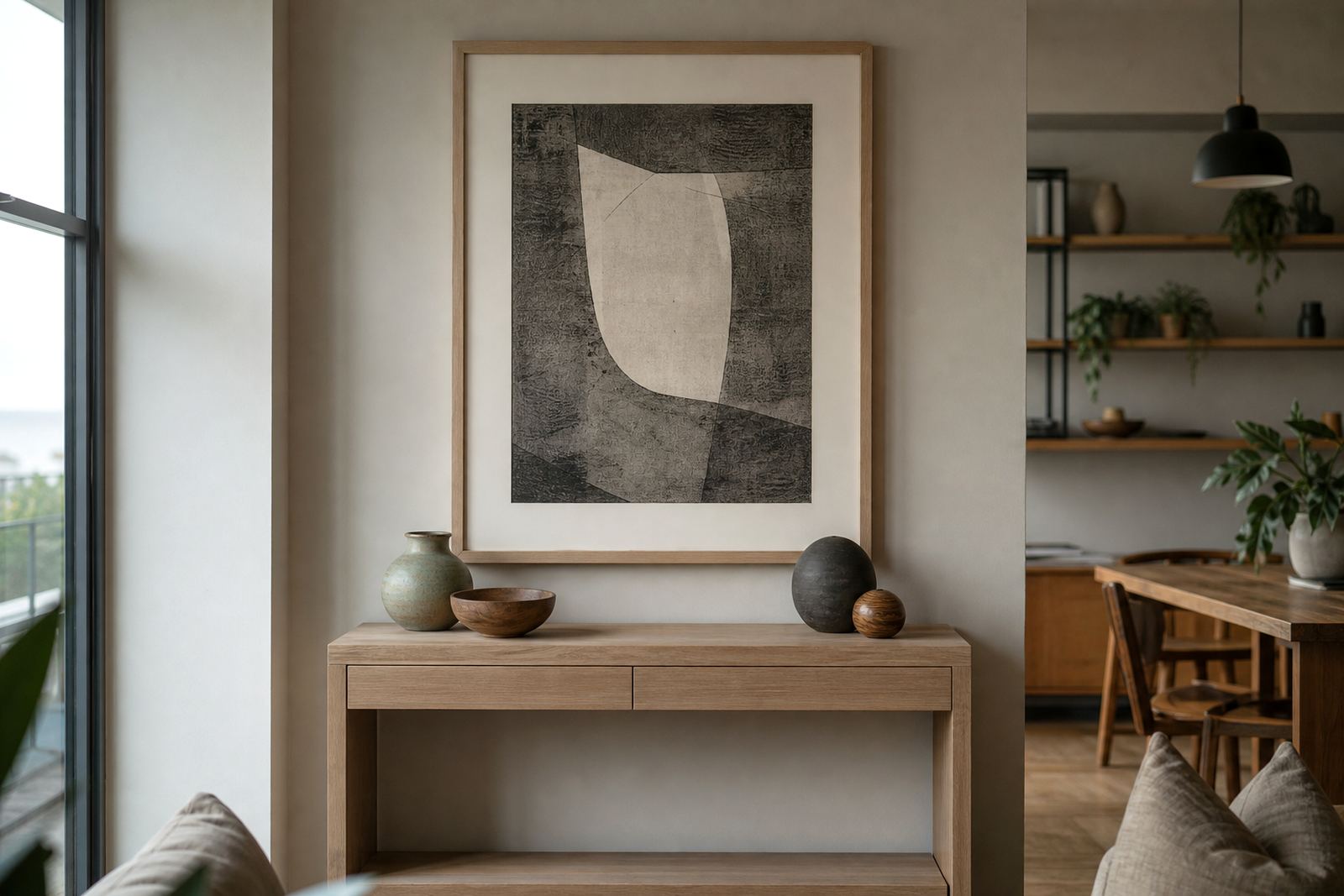
Many first-time collectors begin with one strong work rather than trying to fill a wall at once. Start by thinking about the room where the print will live. A narrow hallway in Sea Point asks for different proportions than a high-ceilinged lounge in Newlands or a study in Stellenbosch. Measure the wall and leave breathing room around the frame, because a print needs space to be read properly.
For layout planning, keep the surrounding furniture simple and let the artwork do the talking. In coastal homes, avoid hanging works where salt air, direct sun or damp windows can affect the paper over time. In hotter inland areas like Pretoria or Johannesburg, keep prints away from radiators, strong afternoon sun and humid kitchens. A framed lithograph is best placed on an internal wall with stable temperature and not too much direct light.
- Choose one focal wall, not every wall at once.
- Measure both the image size and the frame size before you buy.
- Leave at least 10 to 15 cm of visual space around smaller works where possible.
- Use proper hanging hardware suitable for the wall type, especially on older plaster or masonry walls.
Typical Studio Steps You May Be Invited Into
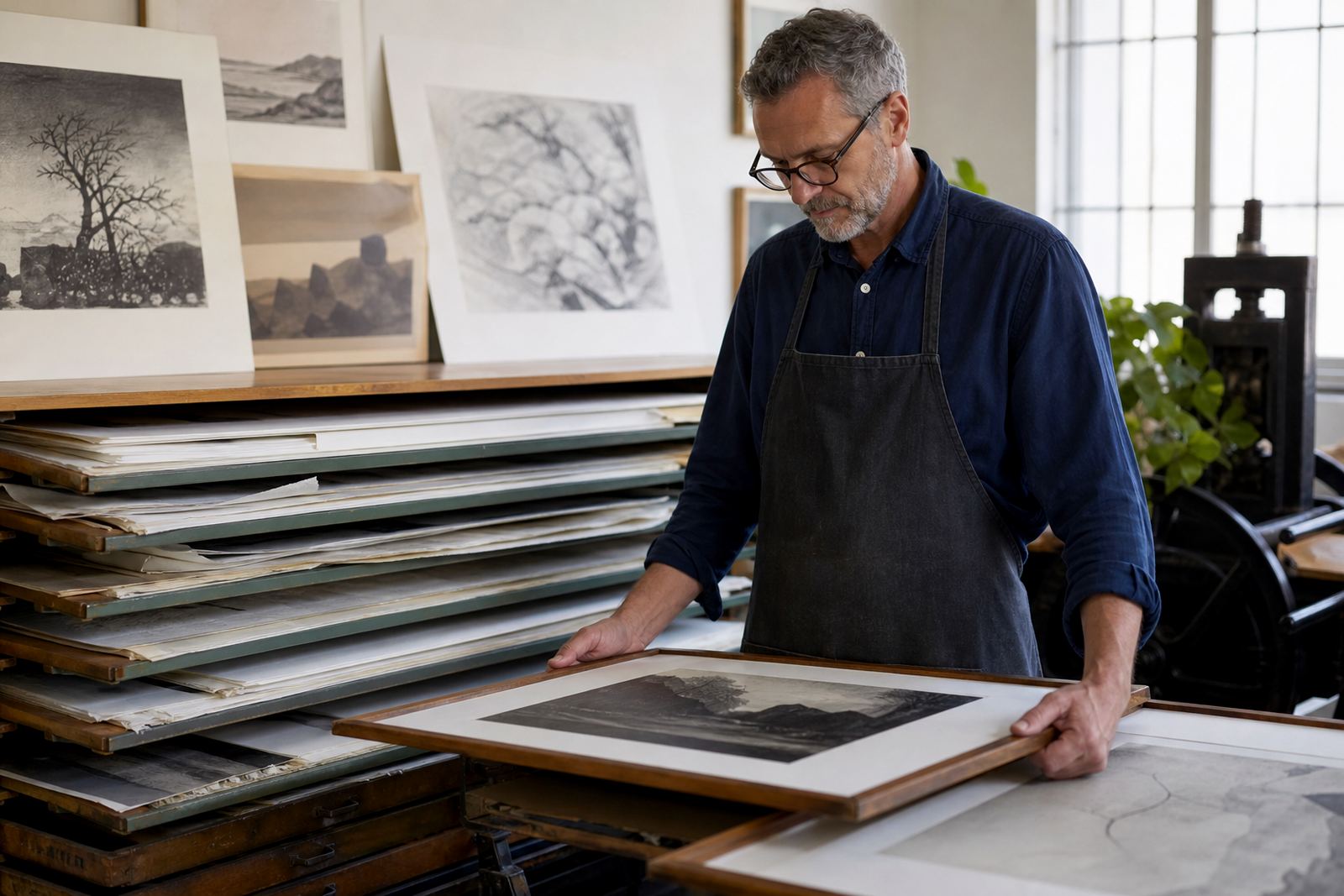
When collectors are invited into the studio, they often get a clearer sense of how a stone lithograph comes together. A typical set-up includes limestone or prepared plates, drawing materials, presses, inks, registration tools, paper storage and drying racks. You may also see proof sheets, colour notes and the separate stones used for layered colour work. It is a hands-on environment, and a very practical one too.
At our Woodstock studio, proofing sessions help the artist and printer check tone, registration and colour before the final edition is pulled. That stage is useful for collectors because it shows how much care sits behind the finished print. If you are visiting, wear practical shoes and expect some paper handling and a little studio dust, because stone work is labour intensive and not a polished showroom experience. That's normal, and often the best way to learn.
Studio visits are especially useful if you want to understand why certain prints cost more than others. A multi-colour stone lithograph may involve separate stones, several proofing rounds and careful hand finishing. The more complex the edition, the more time is usually built into the process.
Budget Ranges for a First Collection in Rand
First-time collectors often want a sensible starting point, and that is entirely reasonable. In South Africa, a hand-pulled limited edition print can sit in a wide range depending on image size, number of colours, paper choice and the amount of studio time required. As a practical guide, smaller editions and simpler single-colour works may start in the lower thousands of Rand, while larger or more complex colour editions can sit much higher. Framing is normally additional.
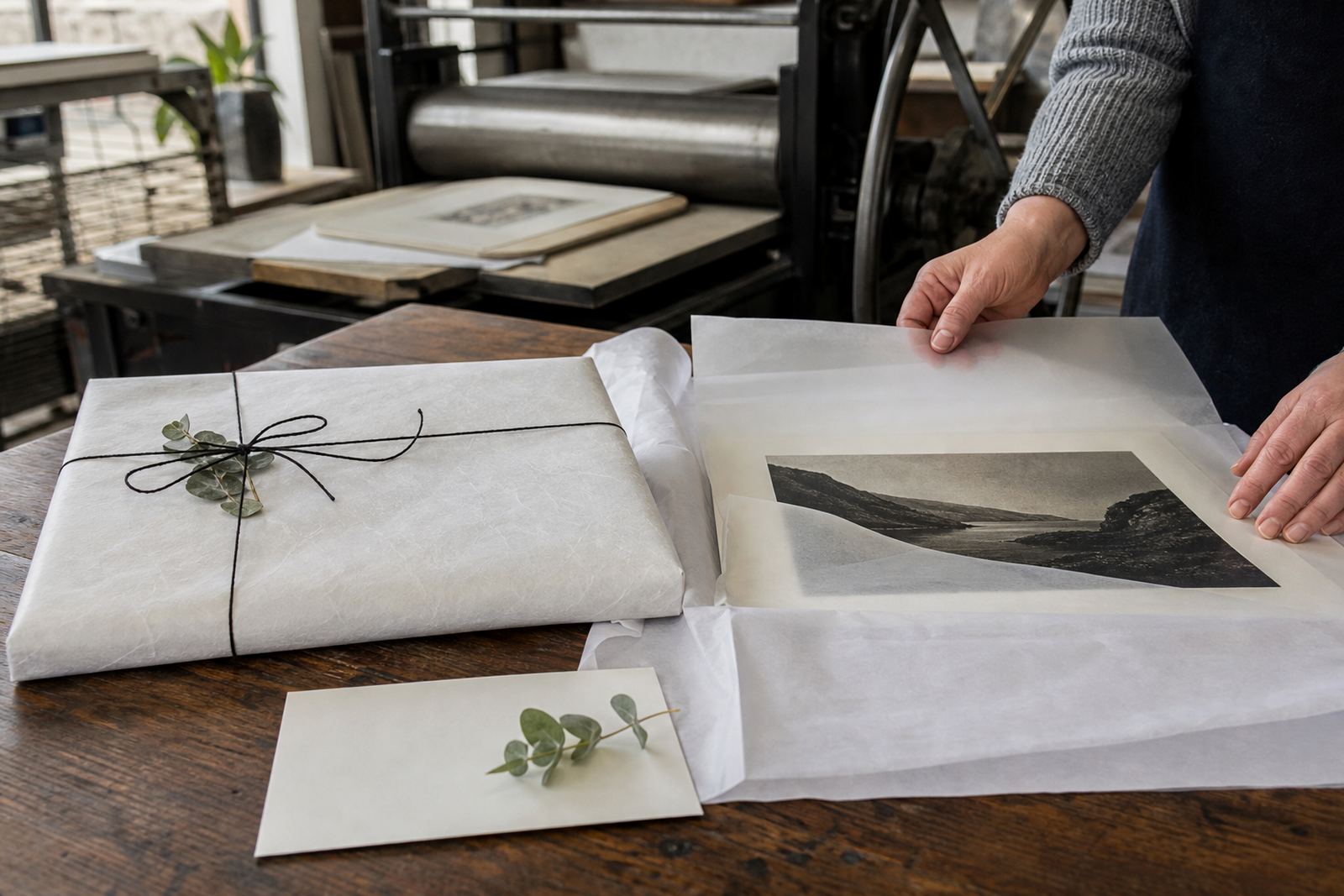
When you budget, think in layers. There is the print itself, then framing, then shipping or collection, and sometimes archival packing if the work is travelling between cities like Cape Town, Durban or Pretoria. A sensible first purchase is often a print plus proper framing, rather than spending every rand on the artwork and leaving the piece unprotected.
- Lower entry works: budget for the print and a simple archival frame.
- Mid-range works: allow more for larger sizes, edition complexity and custom framing.
- Collector level purchases: factor in studio visits, archival packing and secure transport.
Common Mistakes First-Time Buyers Can Avoid
The most common mistake is buying only to fill a space. A print should be chosen for image quality, edition integrity and long-term enjoyment, not because there is a blank wall. Another mistake is ignoring framing until the last minute. Good print care starts the moment the work leaves the press, and poor framing can undo all the care that went into the edition.
Collectors also sometimes assume all prints are the same. They are not. Stone lithography carries its own look, feel and handling requirements. A print on suitable paper may age well when stored away from moisture, sunlight and rough handling, but a badly handled sheet can crease or mark easily. If you are unsure, ask for collector advice before you buy. That small step saves money later.
- Do not rush a purchase because a wall feels empty.
- Do not frame with ordinary materials that can damage the sheet.
- Do not hang prints in strong direct sun or near damp areas.
- Do not store unframed work flat under heavy objects.
Caring for Your Lithograph After Purchase
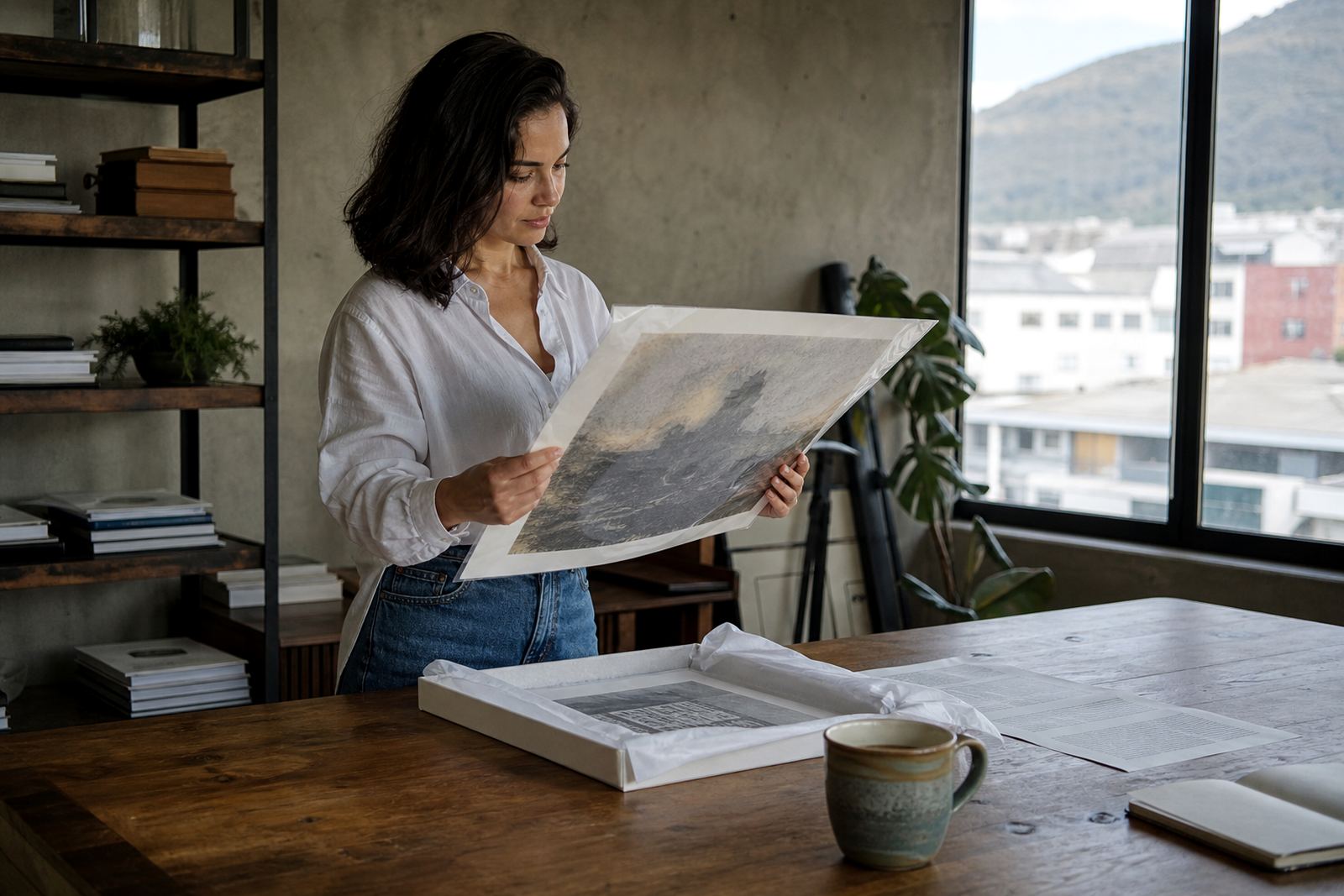
Once a print is yours, keep the handling simple. Use clean hands or cotton gloves if the paper is unframed, and support the sheet from beneath rather than lifting from one corner. If the work is framed, avoid opening the frame unless a professional has advised it. The paper, ink and mounting materials should all be kept in a stable environment with limited light exposure.
For South African homes, the main risks are sun, humidity and poor storage. Coastal moisture in places like Woodstock, Sea Point and Durban can affect paper if it is kept in a damp room, while dust and heat can be a problem inland. If the work is travelling, archival packing is worth it. It protects the corners, the surface and the edition notes, and it is the kind of detail collectors tend to appreciate later.
If you are ever unsure about care, ask before trying a quick fix. A little care goes a long way, and the aim is simple: keep the print looking as close as possible to the day it left the press.