Stone lithography for considered corporate spaces
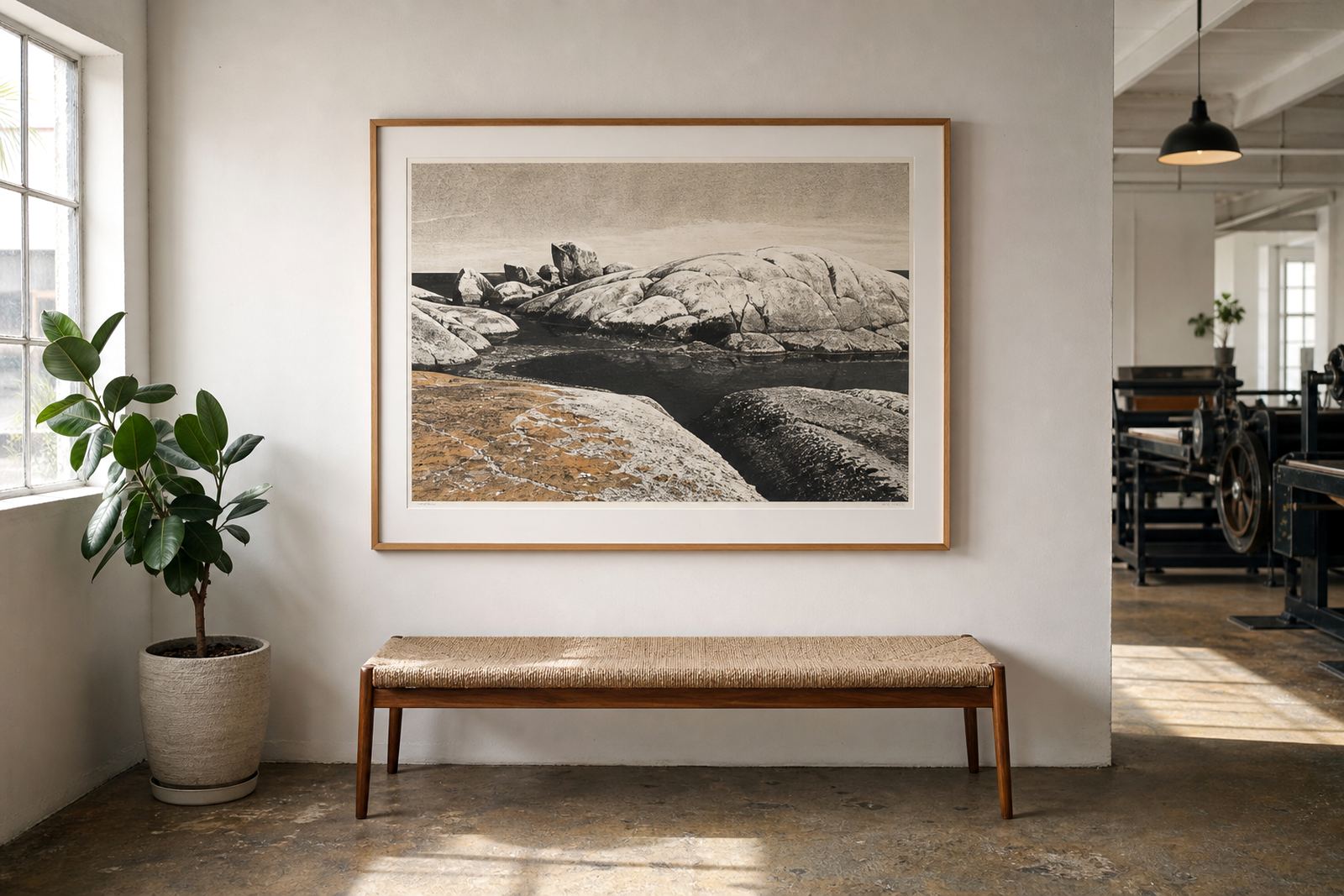
For corporate collections, stone lithography offers a planographic print process made from a prepared limestone surface. The artist draws or works on the stone, the image is chemically fixed, and each sheet is pulled by hand through a press. The result is a print with real tonal depth and a surface feel that sits comfortably in formal interiors.
For companies in Cape Town, Stellenbosch, Johannesburg, Pretoria and Durban, this matters because a work in a boardroom often needs to support the room rather than dominate it. Limited editions also give a collection structure. You can place related works in different offices, or keep one edition consistent across a suite of rooms.
- Suitable for boardrooms, waiting areas, private offices and client meeting rooms
- Works well in smaller runs where quality and consistency matter
- Allows repeat placements across multiple sites without losing the hand printed character
Selecting the right edition for a professional setting
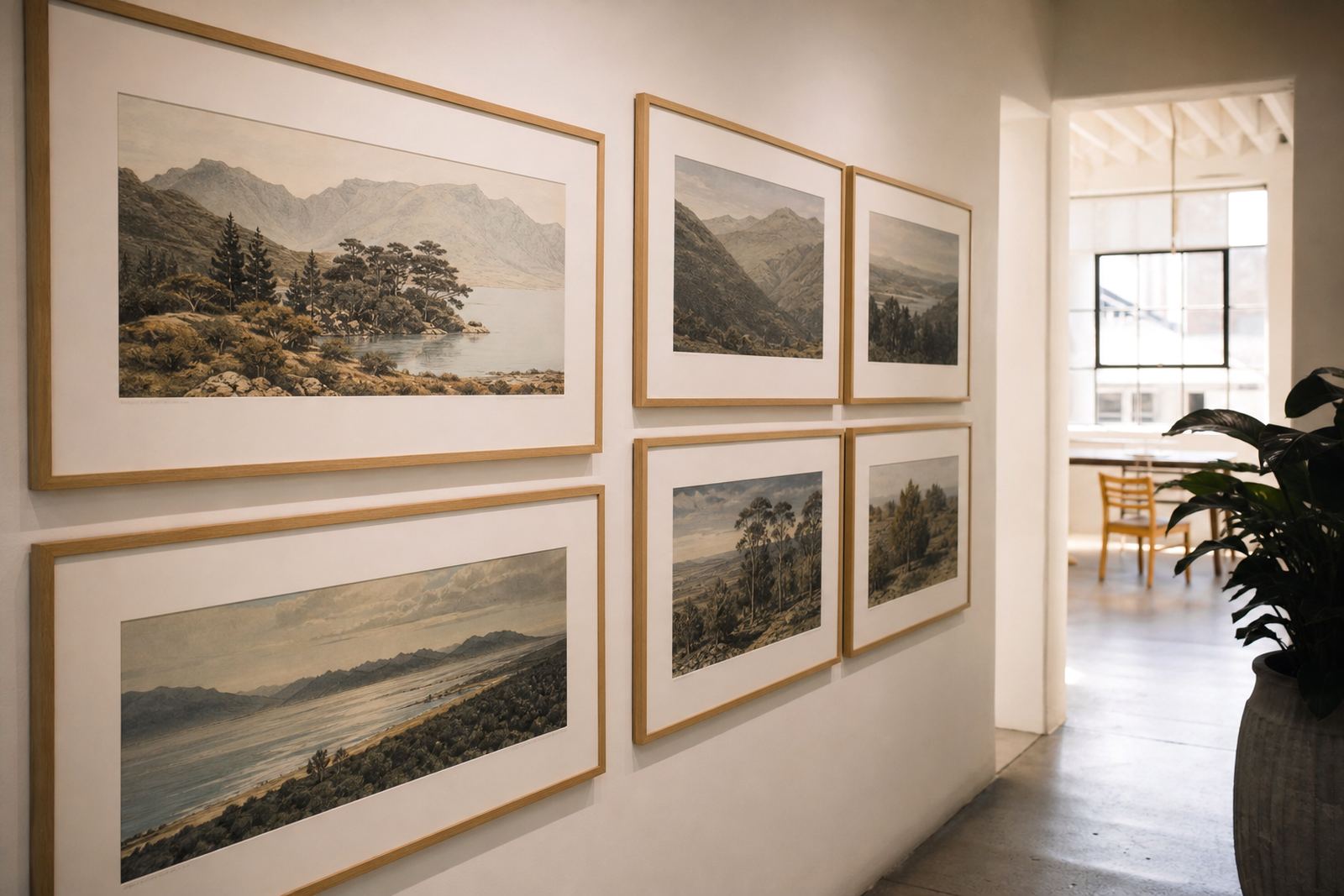
Corporate buyers usually look for clarity, restraint and a strong edition plan. That starts with paper size, image area and the number of sheets needed for the intended rooms. A single statement print may suit a reception wall, while a matched pair or three part hanging can work better in executive offices or along a corridor.
When we plan an edition, we consider how the work will be viewed at 2 metres or at arm's length, how the framing line will sit, and whether the colour palette should feel warm, cool or neutral. We also think about the building itself. A north facing room in Durban may need different paper and glazing decisions from a darker boardroom in Cape Town, especially where humidity and air conditioning change the way a frame performs over time.
- Match scale to wall width and ceiling height
- Keep sightlines clear around conference tables and credenzas
- Use a consistent framing profile if the works will travel between branches
Our studio workflow for company commissions
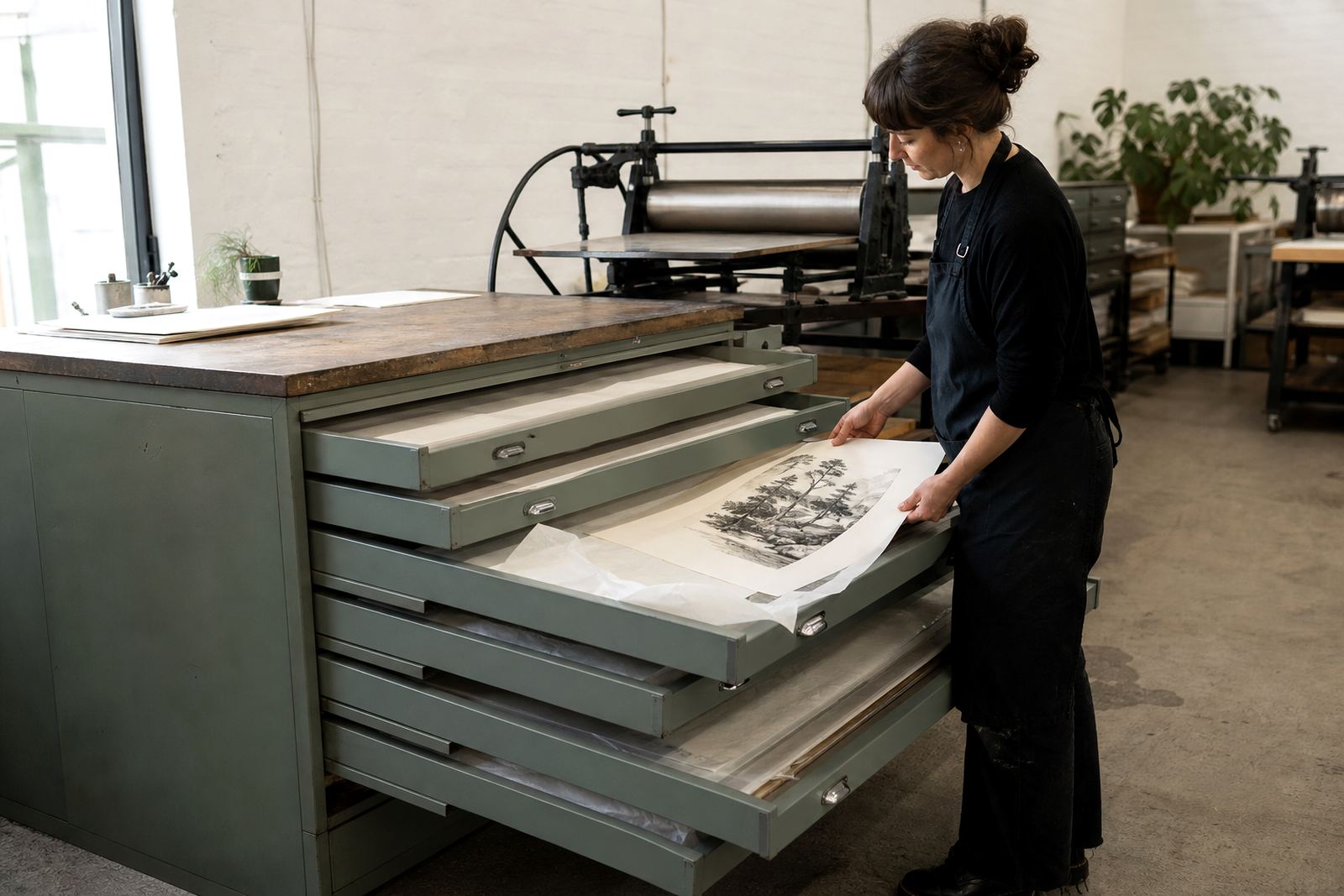
Stone lithography printing for corporate collecting is usually done in stages: edition planning, proofing, colour separation, stone preparation, printing, signing and numbering, then archival packing. That process gives you control over the final appearance before the full run is completed. It also helps when a company wants a set of works for different branches but needs them to remain visually linked.
Our studio in Woodstock handles artist collaboration, proof discussion and editioning with care. A collector from Pretoria may want the work shipped framed and ready to hang, while a Cape Town office may prefer loose sheets for in house framing. Either way, the handling needs to be clean, dry and well documented so the set arrives in good order.
- Proofing sessions to confirm colour and balance before the edition is printed
- Editioning support for signing, numbering and presentation order
- Archival packing for safe transport to offices, homes or storage
Display, light and framing
Good placement is as important as the print itself. In boardrooms, hang works where they can be seen without competing with screens, whiteboards or presentation equipment. In waiting areas, a lower reading height often works better because people view the print while seated. Executive offices usually benefit from a single work or a controlled pair, rather than a crowded wall.
For larger corporate sites, we often suggest a simple hanging plan with measurements noted before framing. In coastal areas like Sea Point and Durban, it is also wise to factor in salt air and choose framing materials that cope better with moisture and shifting temperatures.
- Allow at least 150 mm to 200 mm around the frame for breathing room where possible
- Keep prints away from direct sun, strong air flow and coffee splash zones
- Use proper wall fixings for heavy frames, especially on plasterboard or older masonry
Common mistakes we see in corporate collecting
The most common mistake is buying for a blank wall rather than for the room. A work that looks strong in a gallery can feel too small in a long passage, or too large in a compact meeting room. Another issue is choosing a frame finish before deciding on the full set. When the frame and mount are not planned properly, the collection can look piecemeal.
We also see organisations underestimating care needs. Prints should not be pressed flat against cold exterior walls, and they should not be stored in a humid storeroom next to cleaning supplies. If a company is moving between offices in Gauteng and the Western Cape, the packing has to cope with different climates and handling conditions. A little planning saves damage and re framing costs later.
- Buying before measuring the wall properly
- Mixing too many frame colours in one suite
- Hanging where glare from glass or lighting makes the image hard to view
Budget ranges for limited editions in Rand
Corporate collecting budgets vary depending on edition size, paper choice, framing, and whether the work is commissioned specifically for the space. As a practical guide, a small framed print for a private office may sit in the lower end of the market, while a larger hand pulled edition with custom framing and delivery to multiple branches will sit higher.
For planning purposes, many clients work with a per work budget and then add framing, packing and delivery separately. That makes it easier to compare options across a set of offices in Cape Town, Johannesburg or Pretoria. If the collection is being built over time, we can also help phase purchases so the first pieces establish the tone and later works complete the sequence.
- Entry level single works for one office or small waiting area
- Mid range framed editions for boardrooms and executive suites
- Higher budget sets for multi room placement, custom framing and coordinated delivery
How to care for prints in active workspaces
Print care in a corporate setting is straightforward if it is consistent. Dust the frame lightly, avoid harsh cleaners on the glass, and keep the print out of direct heat from air conditioners or sunlight through large windows. If a work is glazed with glass, avoid spraying cleaner near the frame edge. If it is framed with conservation materials, do not open the package unnecessarily.
Limited editions also benefit from a clear record. Keep the edition number, size, and framing notes on file so future replacements or additional works can be matched properly. That is especially useful when a business grows, relocates, or refreshes its interiors after a lease change. A small amount of order now saves a lot of admin later.
- Store spare works flat in dry conditions, not standing against a wall
- Use gloves or clean hands when handling unframed sheets
- Check frames after winter and summer for movement or moisture marks