Why stone lithography suits compact rooms
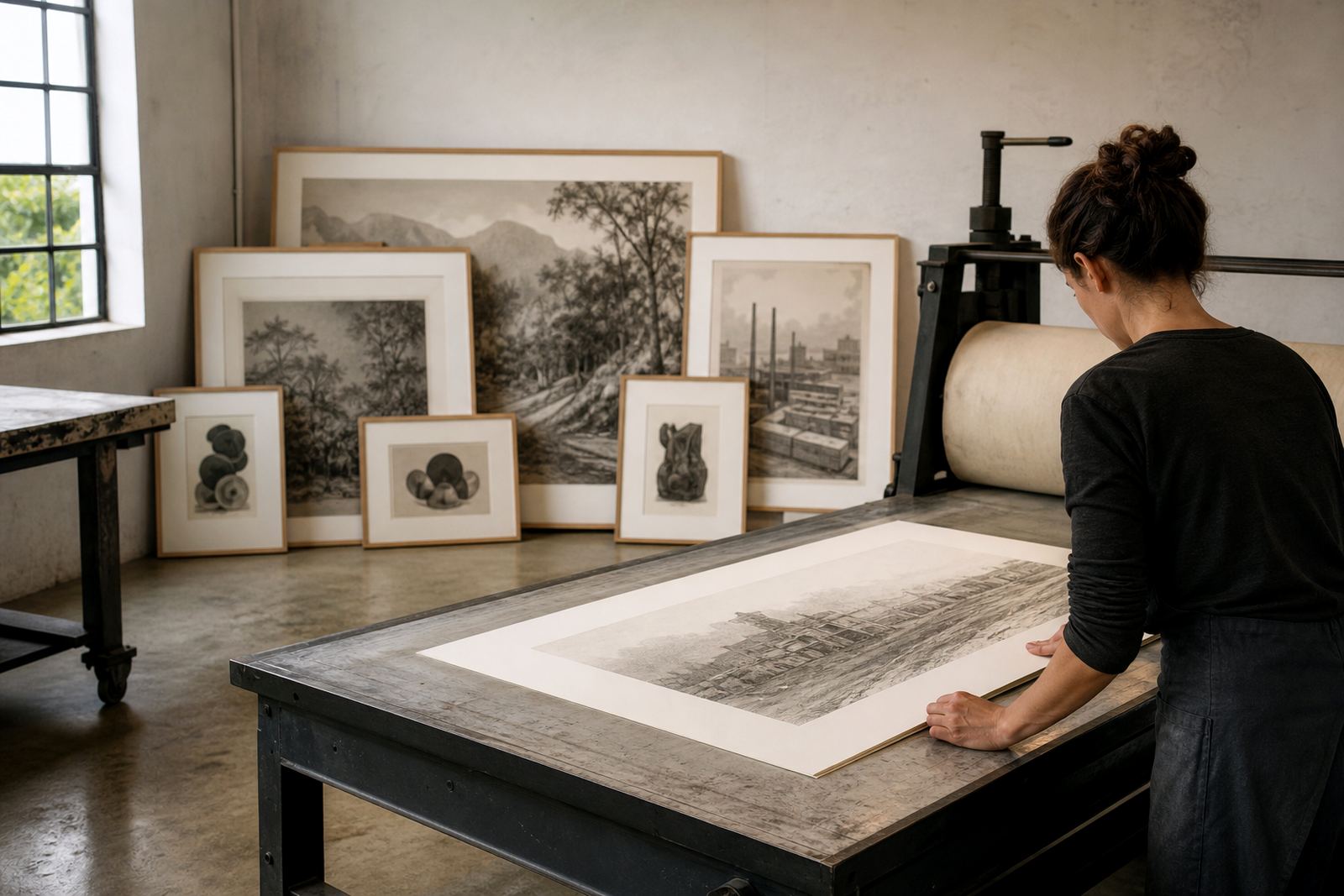
In this hand-printing method, a prepared limestone stone is drawn on with grease-based materials, then processed so the image takes ink and the non-image areas reject it. That direct process gives the print a distinctive softness, fine line and depth of tone that works well in apartments, passage walls and smaller living areas where one piece needs to carry the room without taking over.
For small space art, the appeal is not only the size of the print but the way the image sits on the paper. Stone lithography can give gentle colour transitions, crisp drawing and a quiet surface quality that looks good in natural light. In Cape Town flats, Newlands homes and Sea Point apartments, that matters because rooms often have strong sunlight, limited wall width and mixed finishes from plaster to concrete to painted brick.
We work with artists on limited editions, so each print is part of a planned group rather than a loose one off. That helps collectors choose work that feels considered, and it gives a small room a stronger sense of order.
Choosing the right scale for apartments and narrow walls
In small interiors, the most common mistake is buying art that is too small for the wall or too busy for the room. A single print should have enough presence to anchor a sofa, sideboard or entrance hall, but it should still leave breathing space around it. For compact rooms, a vertical format often works better than a very wide one because it uses height instead of eating into the width of the wall.
We usually help clients think about sightlines first. If the artwork is going above a couch, bed or narrow console, the print should relate to the furniture below it rather than fighting with it. In older Woodstock cottages and newer apartment blocks alike, there is often one main wall that carries the room. The aim is to keep the room calm, not cluttered.
- Leave clear margin around the artwork so the wall can frame it.
- Choose one strong print rather than several small pieces that feel scattered.
- Use a mat or mount to give the image more room on the paper.
- Keep colour choices simple if the room already has patterned fabric, timber or tile.
Common print formats that work well in limited spaces
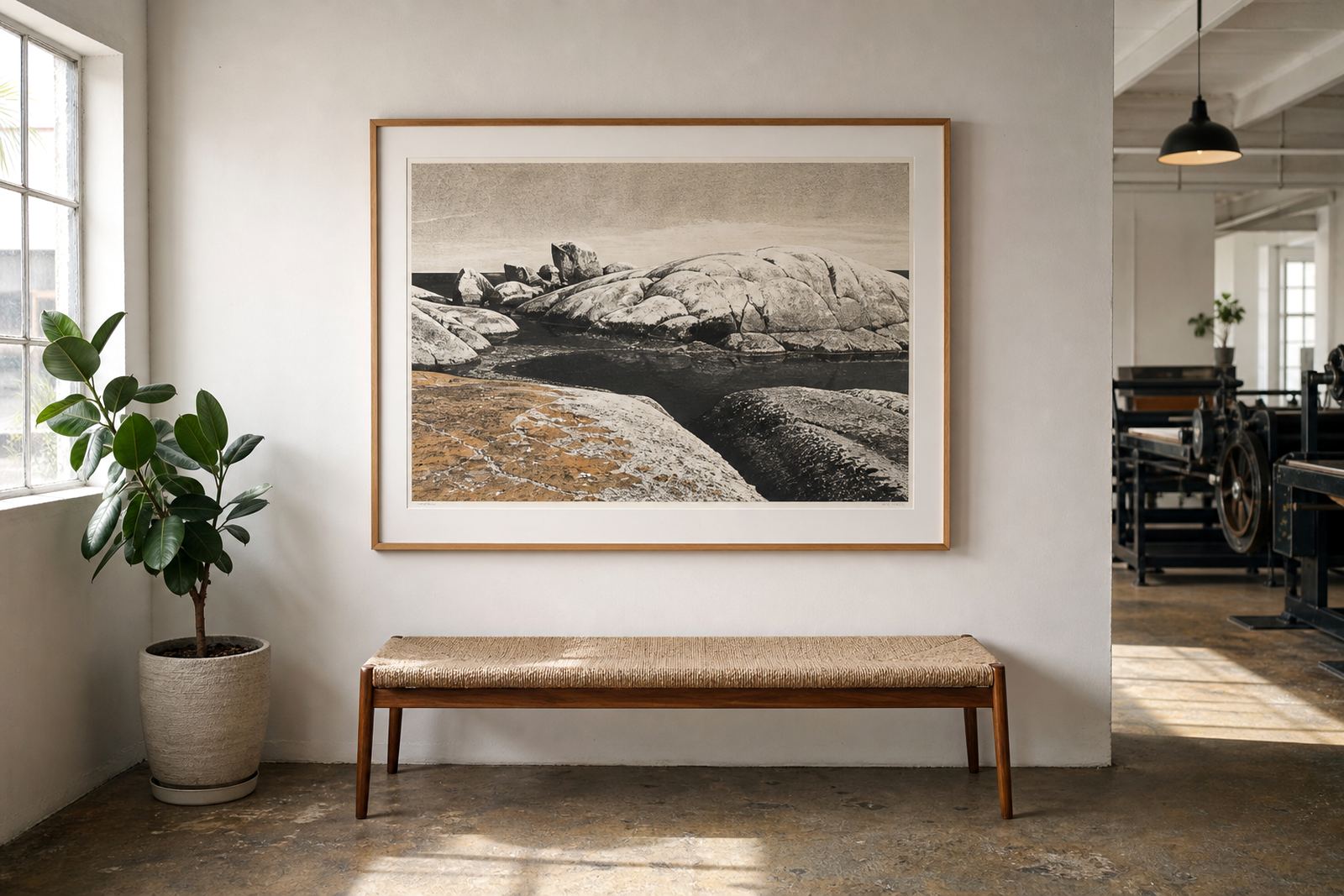
Stone lithography allows for a useful range of editions, from small intimate works to moderate sizes that still fit modest walls. For small space art, the most practical format is often a single sheet with generous borders, because the paper itself becomes part of the composition. That extra white space can make the piece feel more open and less heavy.
Typical choices include framed single prints for a hallway, a pair of related images for a bedroom, or a small grouping for a reading corner. Collectors in Johannesburg and Pretoria often prefer works that can move with them into different homes, so flexibility matters. A good limited edition should feel at home in a compact flat now and still work later in a larger room.
- Single framed print for an entrance, passage or bedside wall.
- Two related prints for symmetry in a bedroom or lounge.
- One medium print with a wide mount for a cleaner, more open look.
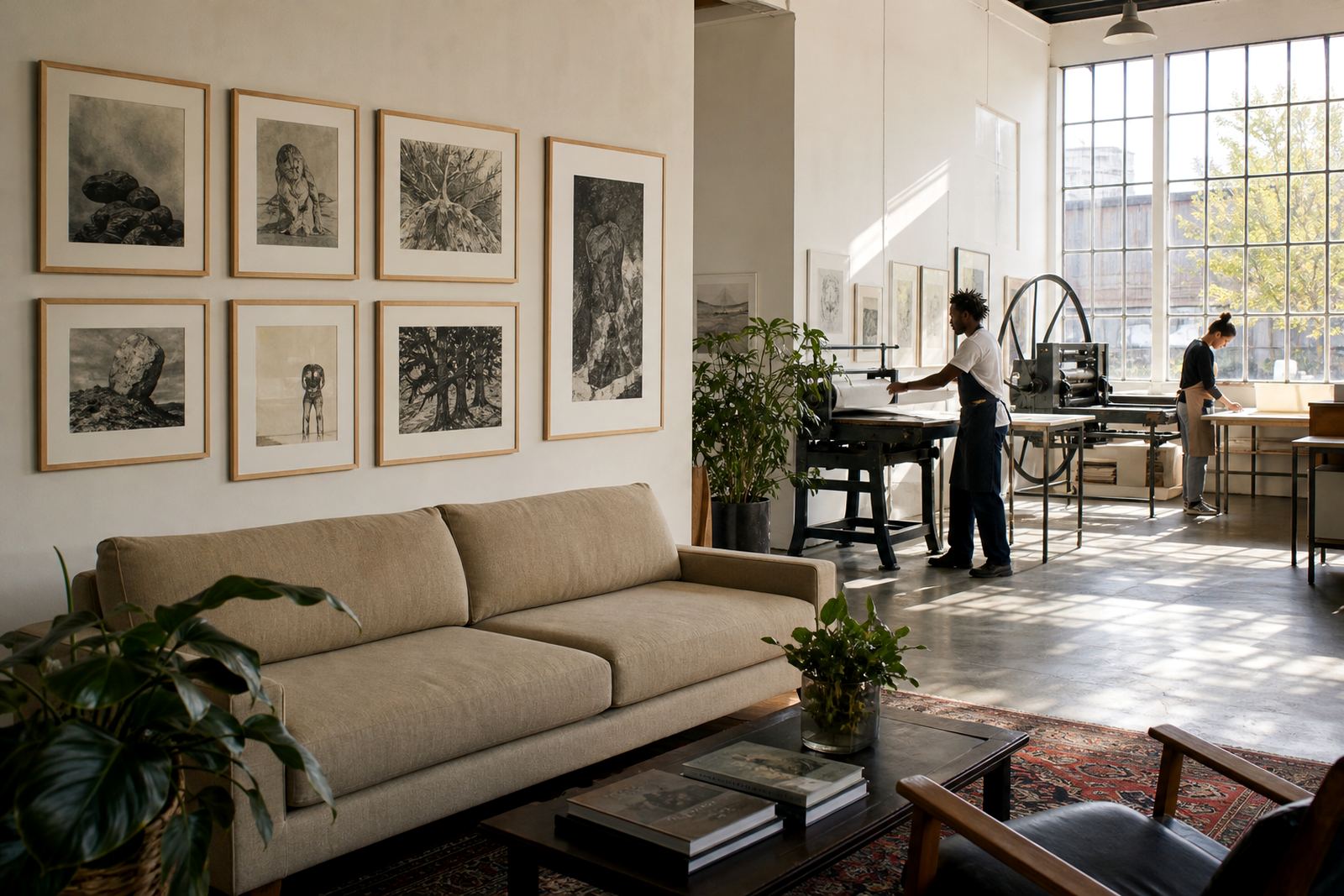
- Small series grouped with even spacing for collectors who want variety without crowding.
Edition planning for collectors who buy carefully
Edition planning is important when a client has limited wall space and wants to buy with certainty. We look at paper size, image size, number of colours, drying time and the intended framing so the edition feels consistent from the first proof to the final signed and numbered prints. That planning matters especially when artists want strong colour separation, because each colour layer needs careful registration on the stone and accurate timing between pulls.
For small homes, the best editions are often those with restrained colour fields, strong drawing and enough paper margin to give the eye a rest. Too many competing elements can make a room feel busy. If the home has low light, north facing windows or coastal humidity in places like Durban or Sea Point, we can also discuss paper handling and archival packing so the print stays stable during transport and framing.
- Proofing sessions help refine the image before the full edition is printed.
- Colour separation can be planned to keep the final image clean and balanced.
- Paper consultation matters if the room is bright, humid or prone to fading.
- Archival packing is useful for collectors moving work between cities.
Framing and placement advice for small South African homes
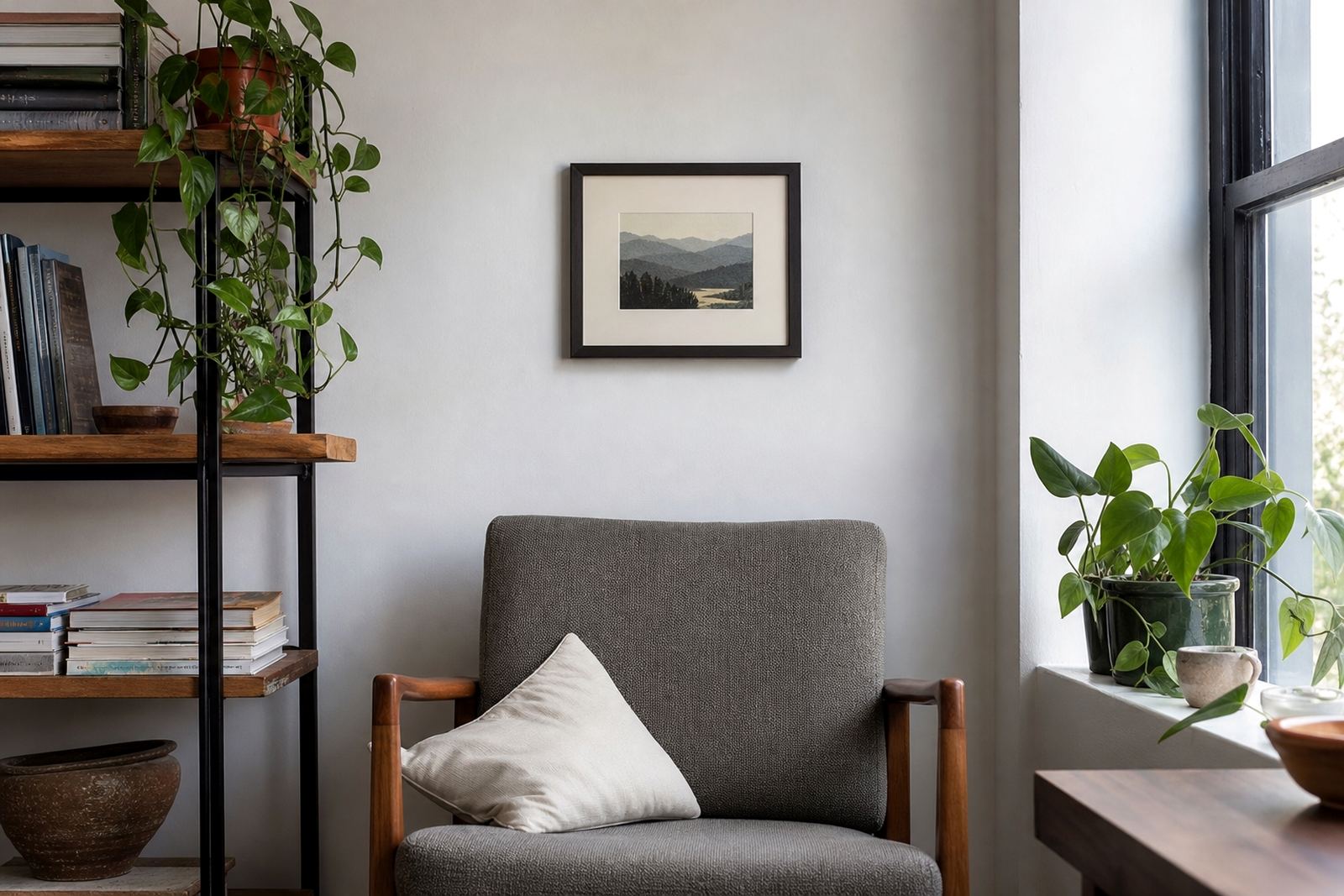
Framing is often what makes a small artwork succeed. A slim frame and a correctly sized mount can make a print feel settled rather than cramped. In a flat with limited wall depth, lighter framing choices are easier to hang and less likely to overwhelm the room.
For coastal homes, avoid hanging prints where salty air and strong afternoon sun strike the same wall every day. In inland cities, dust and dry air can still affect surfaces over time, so it is worth keeping the glass clean and the print away from damp spots near kitchens or bathrooms. A simple rule is to place the work where it can be seen in natural light without direct sun on the paper.
If you are unsure where to hang a new piece, studio visits and collector advice can help you plan the final position before framing is ordered. That saves time and avoids buying the wrong size mount.
Budget ranges and the mistakes to avoid
Collectors often start with a clear budget and then choose between one stronger print or several smaller works. In South Africa, the cost can vary with edition size, paper, number of colours, proofing, framing and whether the work needs delivery to cities such as Cape Town, Stellenbosch, Johannesburg, Pretoria or Durban. A practical budget for an unframed limited edition print may begin around R2 500 and can move into the mid range when more colour, more paper or more specialised editioning is involved. Framing and archival packing are additional costs and should be planned early.
The most common mistakes are buying only on size, choosing art that is too dark for a low light room, and framing with materials that are not suitable for long term care. Another frequent error is hanging a print too high. In a small room, the eye should meet the centre of the work at a natural level so the space feels balanced, not stretched.
- Do not crowd a wall with too many small frames.
- Do not choose a print that fights with the room colours.
- Do not skip proper framing materials if you want long term value.
- Do not place paper work in direct sun or near damp corners.
When chosen carefully, stone lithography gives compact spaces a calm, human scale that suits apartments and smaller rooms very well.