Stone lithography for seasoned collections
Using a finely grained limestone surface, greasy drawing materials and a controlled balance of water and ink, stone lithography works as a planographic printmaking process. The image is drawn directly on the stone, then processed so that ink sticks only to the drawn areas. The result is a print with rich tonal shifts, soft marks and a very human quality that many collectors value for its depth and nuance.
For a collector, the attraction is not only the image. It is also the structure of the edition. Limited editions let you know exactly how many impressions exist, while proofs, trial states and printer's notes can add useful context. When handled well, an edition can sit comfortably beside other works on paper, photography or painting, while still standing on its own.
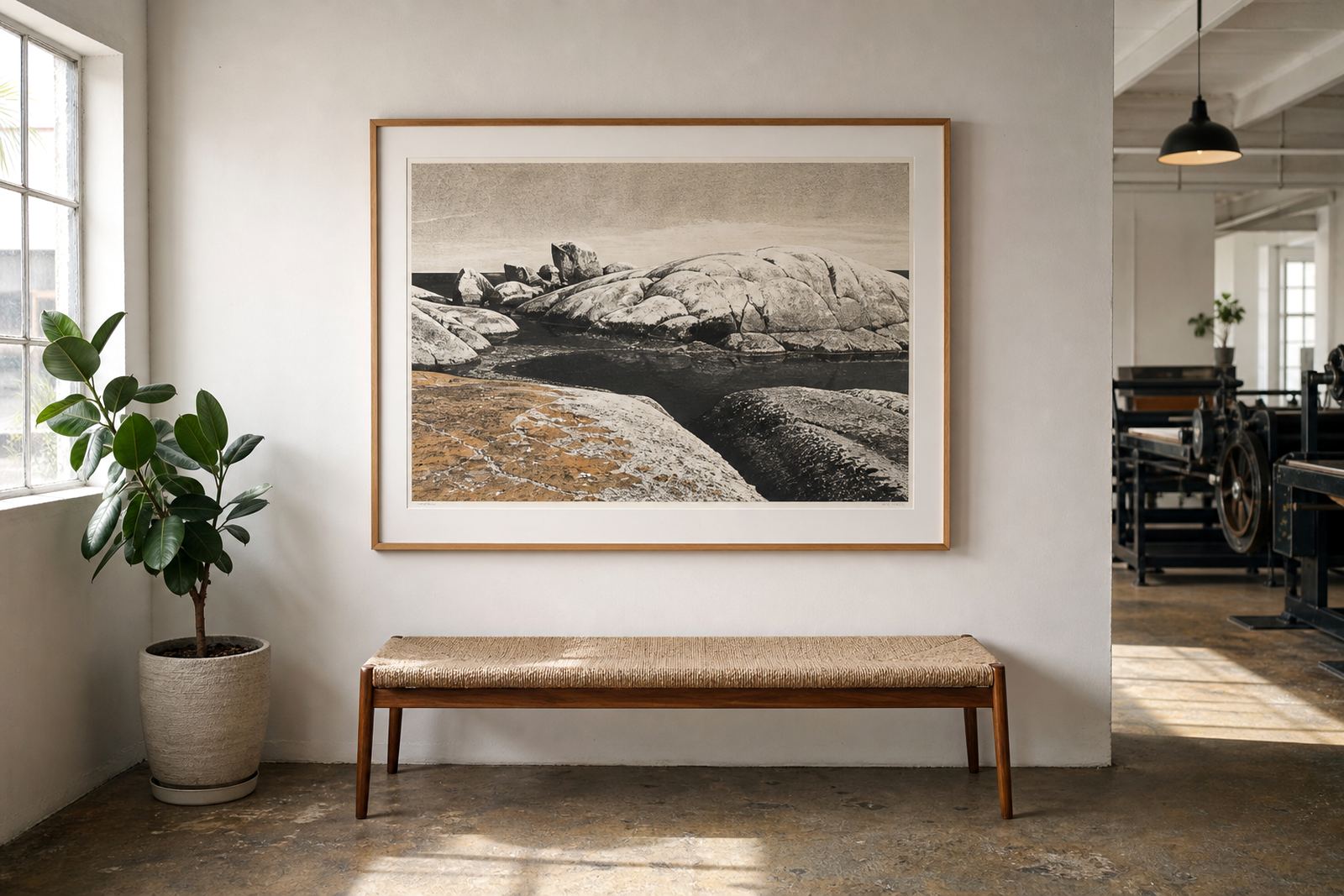
In Cape Town, and especially with the humidity shifts that come with coastal air, collectors often ask about stability. Stone lithographs printed on good archival paper and packed properly tend to age well, but they still need sensible care. Keep them away from direct sun, damp walls and hot enclosed spaces. If you live in a flat in Sea Point or a townhouse in Newlands, that matters just as much as it does in a private collection in Johannesburg or Pretoria.
What is in the typical studio set-up
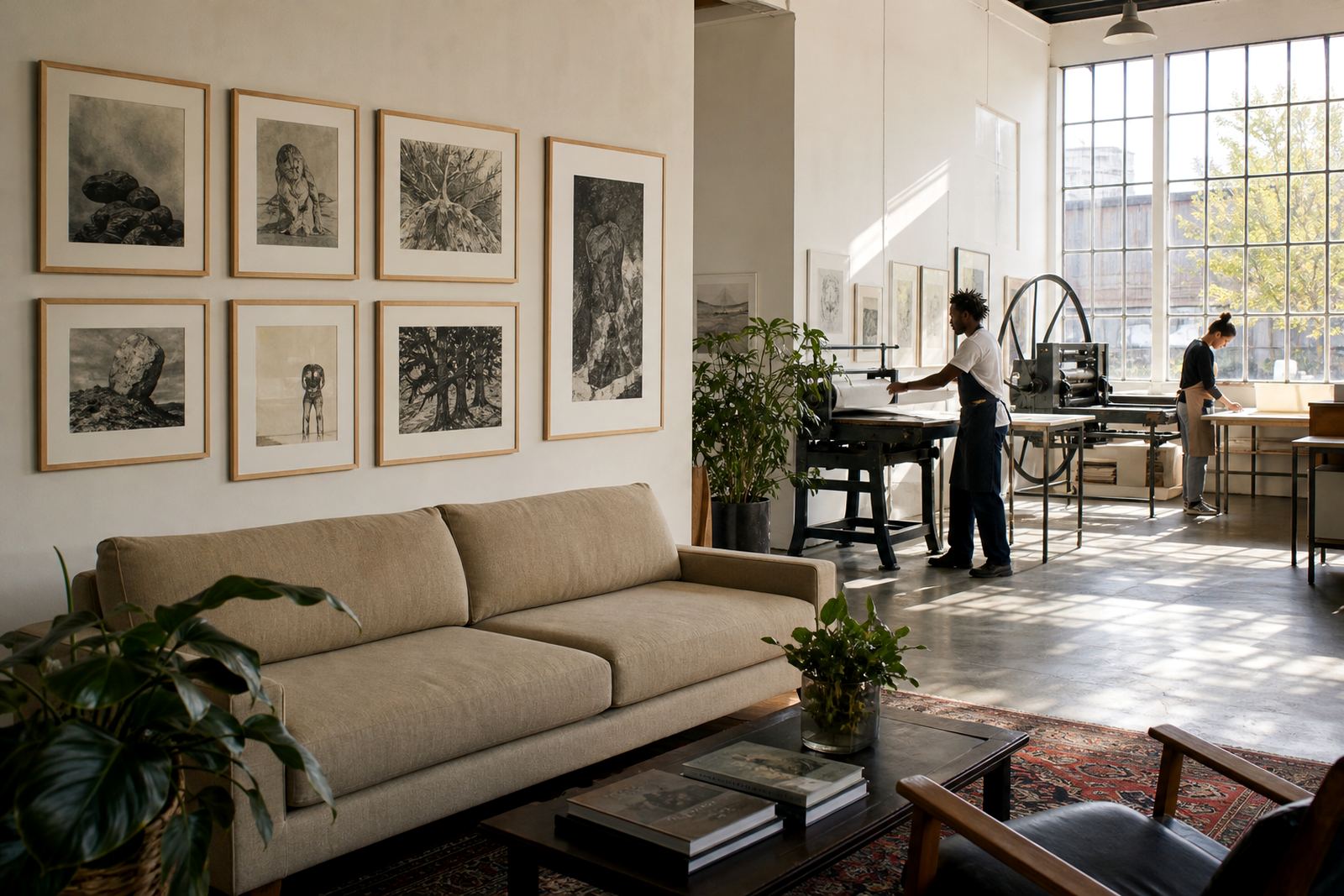
A serious stone lithography session is not a quick press-and-go process. The studio set-up usually includes prepared limestone stones, a drawing area, gum and etch materials, inks, rollers, registration equipment, proofing paper, drying racks and a press sized for the edition. Depending on the image, there may also be separate stones or plates for different colours. That is where colour separation becomes important.
For collectors, the value lies in knowing that each stage is deliberate. Stone preparation affects how the drawing sits on the surface. Proofing sessions test the balance of tone, line and colour before the final edition is run. Signing and numbering happen only after the printer and artist are satisfied, because once the edition is complete there should be no confusion about what belongs to it.
- Prepared stone for each image or colour layer
- Press and registration tools for accurate alignment
- Archival paper matched to the edition intent
- Drying, checking and packing area for finished sheets
Edition planning for depth and coherence
Collectors building a portfolio usually benefit from a clear edition plan. The strongest collections often have a thread running through them, whether that is subject matter, size, palette or paper. If every acquisition is unrelated, the collection can feel scattered. If every work is too similar, it may lose energy. Edition planning is where that balance gets sorted.
We discuss how many prints should be made, whether there will be artist's proofs, and whether the edition should include colour variants or a single standard state. We also consider where the work will live. A compact apartment in Sea Point needs a different approach from a larger interior in Stellenbosch or a corporate collection in Johannesburg. Framing depth, hanging height and light exposure all come into play.
- Choose one strong thread for the edition, such as line, colour or subject
- Decide early on paper size and image size
- Keep margins consistent for framing and cataloguing
- Confirm how proofs and final impressions will be identified
Proofing, signatures and what collectors should check
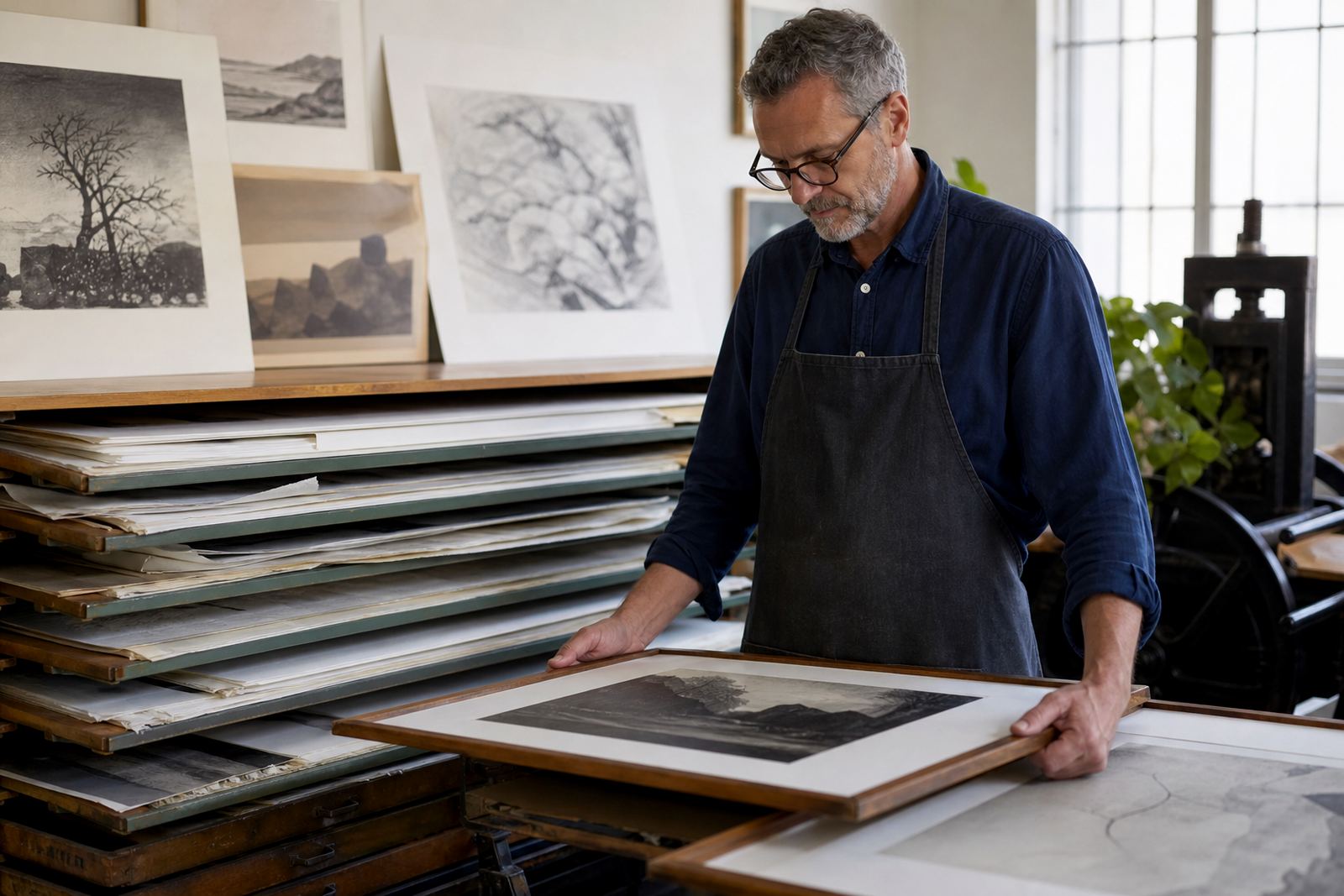
Proofing is where the edition is refined. A proof lets artist and printer check colour balance, tonal range, paper response and registration before the final run begins. Some collectors like to see proofs because they show how the image developed. Others prefer the finished signed edition only. Either way, the proofing stage is where quality control is most visible.
When you buy a lithograph, it helps to check the basics: edition size, signature, numbering, paper type, and whether the print is part of a final edition or a proof state. If the work includes multiple colours, ask how the layers were built and whether each colour was printed from a separate stone. This tells you more about the complexity of the image and the labour behind it.
Common mistakes at this stage include unclear edition notes, poor pencil marks, weak paper handling and rushed packing. A collector should be able to see that the sheet has been handled properly from the studio to the wall. That is especially important when works are travelling between cities like Cape Town and Durban, or when they are being stored before framing.
Budget ranges for collector commissions and acquisitions
Budget depends on edition size, paper, number of colours, proofing rounds and whether the work is a single stone image or a layered colour print. For seasoned collectors, the real question is often not just the price of one sheet, but the full cost of acquiring, framing and preserving the work properly.
As a general guide, collector projects in stone lithography can start from around R8 500 for a smaller, simpler editioned print and move to R35 000 or more for larger or more complex works with several colour layers and extended proofing. Framing, archival packing and shipping are usually separate costs. If a collection is being built across multiple works, it is often smarter to plan the whole run at once rather than buying piecemeal and fixing problems later.
- Smaller single-colour or modest edition: from about R8 500
- Mid-range collector print with proofing and colour work: from about R15 000
- Large or multi-stone editioned work: from about R35 000+
Care and storage for long-term collecting
Collectors who want their prints to stay in good condition should treat them as works on paper first. That means clean hands or cotton gloves, flat storage, stable room temperatures and no direct sunlight. In coastal areas, especially near the Atlantic seaboard, humidity can creep into cupboards and framing spaces, so it is worth checking storage regularly. In drier inland homes, the concern may be heat from windows or air-conditioning vents.
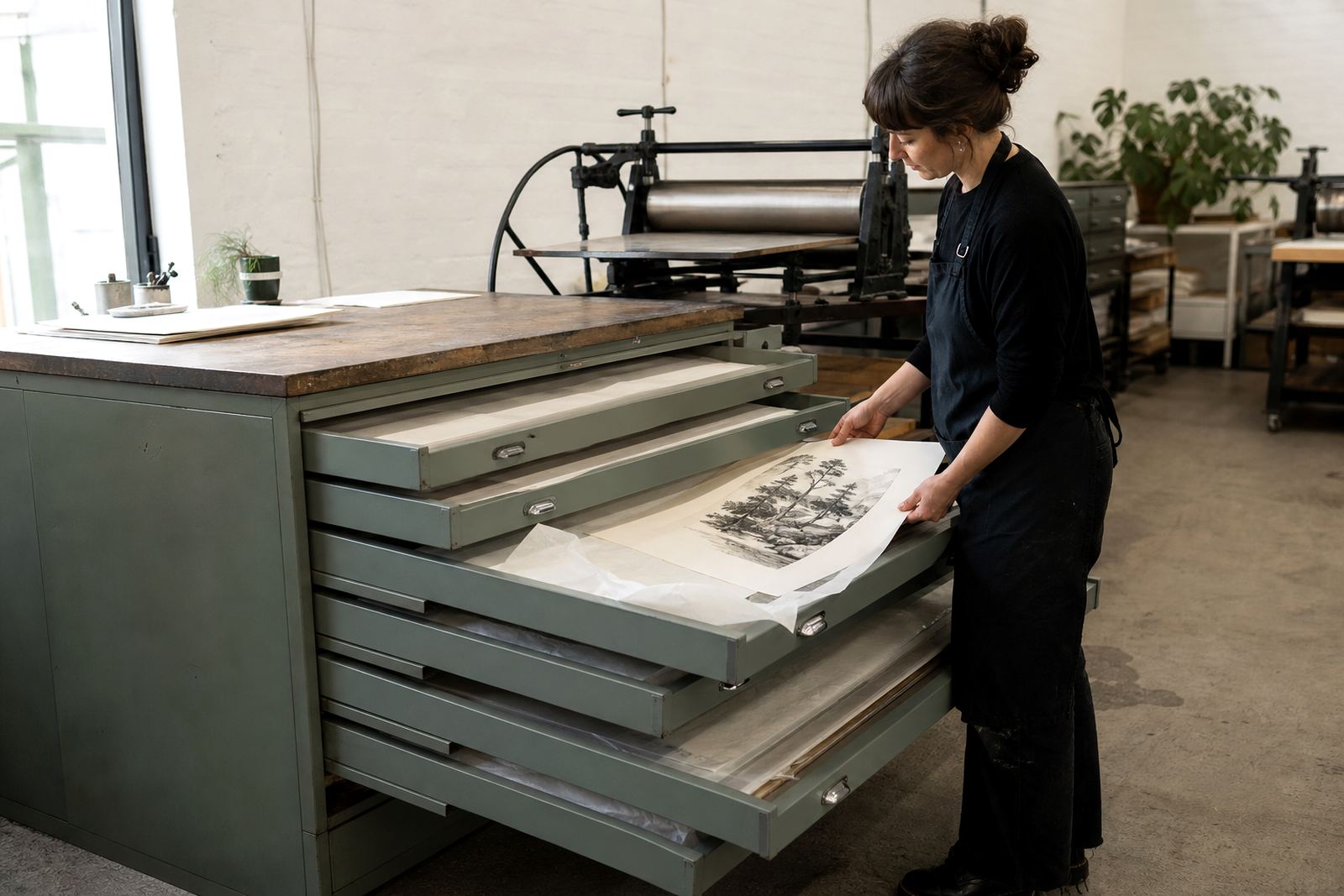
If a print is not framed yet, store it in archival tissue and a flat portfolio, not rolled unless a specialist advises it. When framing, ask for UV-filtering glass or acrylic, archival mounts and spacing so the sheet does not touch the glazing. Avoid hanging in bathrooms, above heaters or in kitchen areas where steam and grease can build up.
- Store flat in archival materials
- Keep away from sun, steam and damp walls
- Use proper framing with space and stable backing
- Check the work once or twice a year for condition changes