When flat file storage makes sense for a lithograph edition
Collectors often buy lithographs before they decide on framing, wall placement or rotation. In that period, flat file storage is the practical choice because it avoids curl, corner damage and pressure marks from stacking prints upright or rolling them into tubes. For stone lithographs, this is especially useful when the paper has a strong hand-made feel and the surface needs to stay untouched until the final framing decision is made.
It also works well for people in Cape Town, Johannesburg and Durban who may be moving homes, waiting for renovation work to finish, or keeping an edition safe while they choose a framing style. In coastal areas like Sea Point and Durban, humidity can be a factor, so storage should be planned with enough air flow, dry packing materials and a stable room away from damp walls.
- Good for unframed editions, artist proofs and collector sets
- Useful when you want to rotate works through the year
- Helps protect prints while framing costs are spread out
- Makes it easier to inspect signed and numbered sheets without repeated handling
What a proper flat file set-up should include
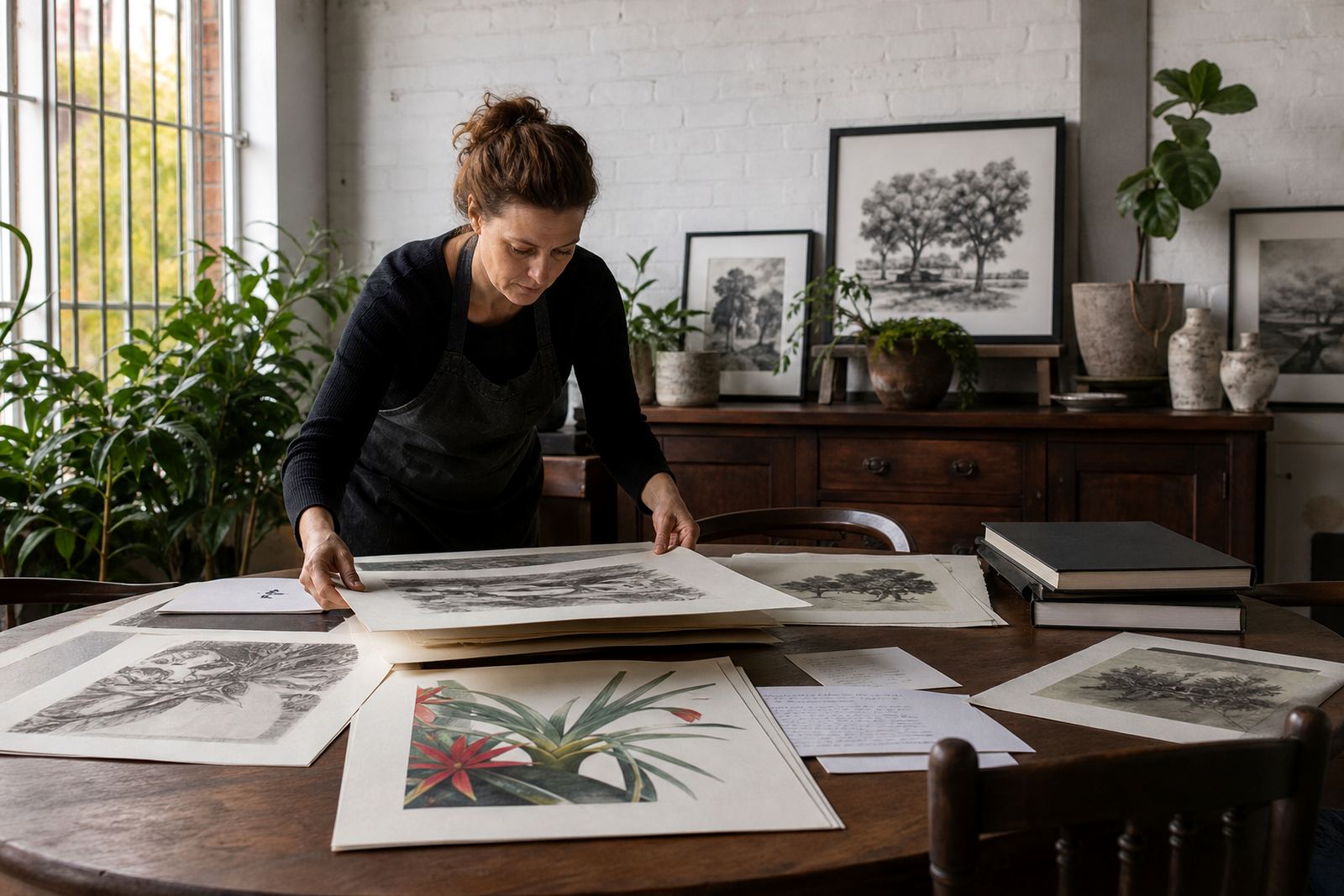
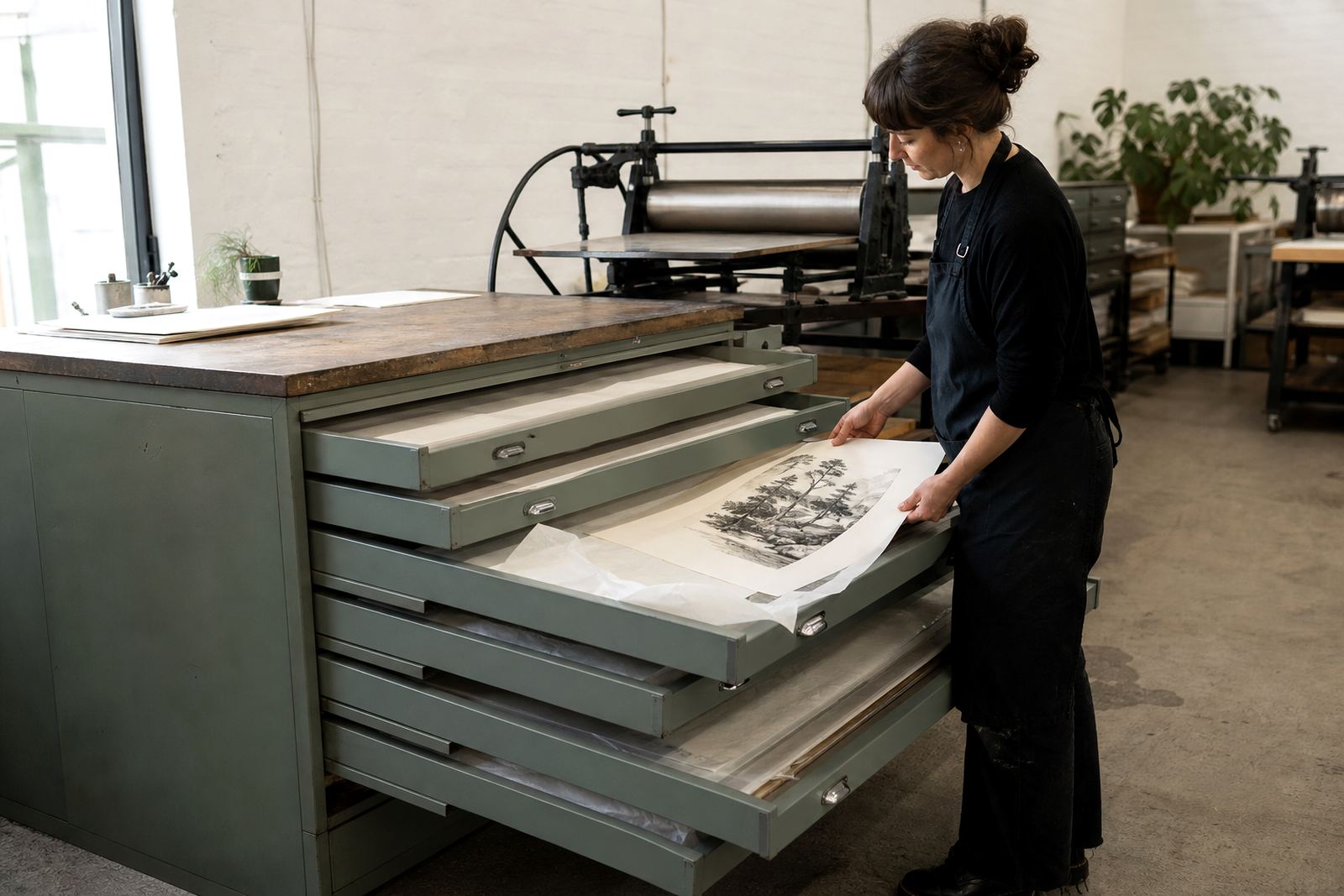
A flat file does not need to be complicated, but it should be built for paper, not general household storage. The main goal is to keep each sheet supported, separated and easy to retrieve without rubbing on adjacent prints. In a studio or collector setting, that means large drawers or archival boxes sized to the print format, acid-free interleaving, and a clean surface for handling with two hands.
A typical storage set-up for lithographs includes:
- Flat drawers or archival boxes sized slightly larger than the print
- Acid-free tissue or glassine between sheets
- Support boards for moving larger prints
- Labels for edition title, paper size and edition number
- Cotton gloves or clean dry hands for handling
- A dry room with no direct sunlight and no leaking pipes above
We usually advise keeping prints off concrete floors, especially in older Woodstock buildings where moisture can travel through walls. Paper reacts to heat and damp quicker than many people expect, and a print that looked fine one month can start to cockle the next.
How to plan storage around future framing or rotation
If you are buying with future framing in mind, plan the storage around the next step, not only the current one. Measure the exact paper size, note the image area, and keep the original edition details with the print so that nothing gets separated later. For collectors who like to rotate works, it helps to group editions by room or season so you can swap them out without shuffling the entire collection.
Good planning also makes framing much simpler. A print stored flat in a clean protective folder can go straight to a framer when the time comes, with less risk of edge wear or fingerprints. If the edition has deckled edges or a wider border for signing, make sure the storage sleeves are generous enough that the paper is not forced into a tight fit. That tight fit is one of the most common causes of bent corners and marks on fresh prints.
- Keep the certificate or edition note with the print, not loose in another room
- Store each print in a folder or sleeve that allows easy removal
- Leave room for mats and framing allowances if you plan to frame later
- Separate framed and unframed works so nothing gets scratched during handling
Common mistakes that damage stored lithographs
The biggest storage problems are usually simple ones. People stack prints under heavy books, tuck them behind furniture, or use plastic sleeves that trap moisture. Others store works in a garage or outside storeroom where dust, heat and insects can do damage over time. Even one damp winter in Cape Town can leave a print with waviness or spotting if it is packed badly.
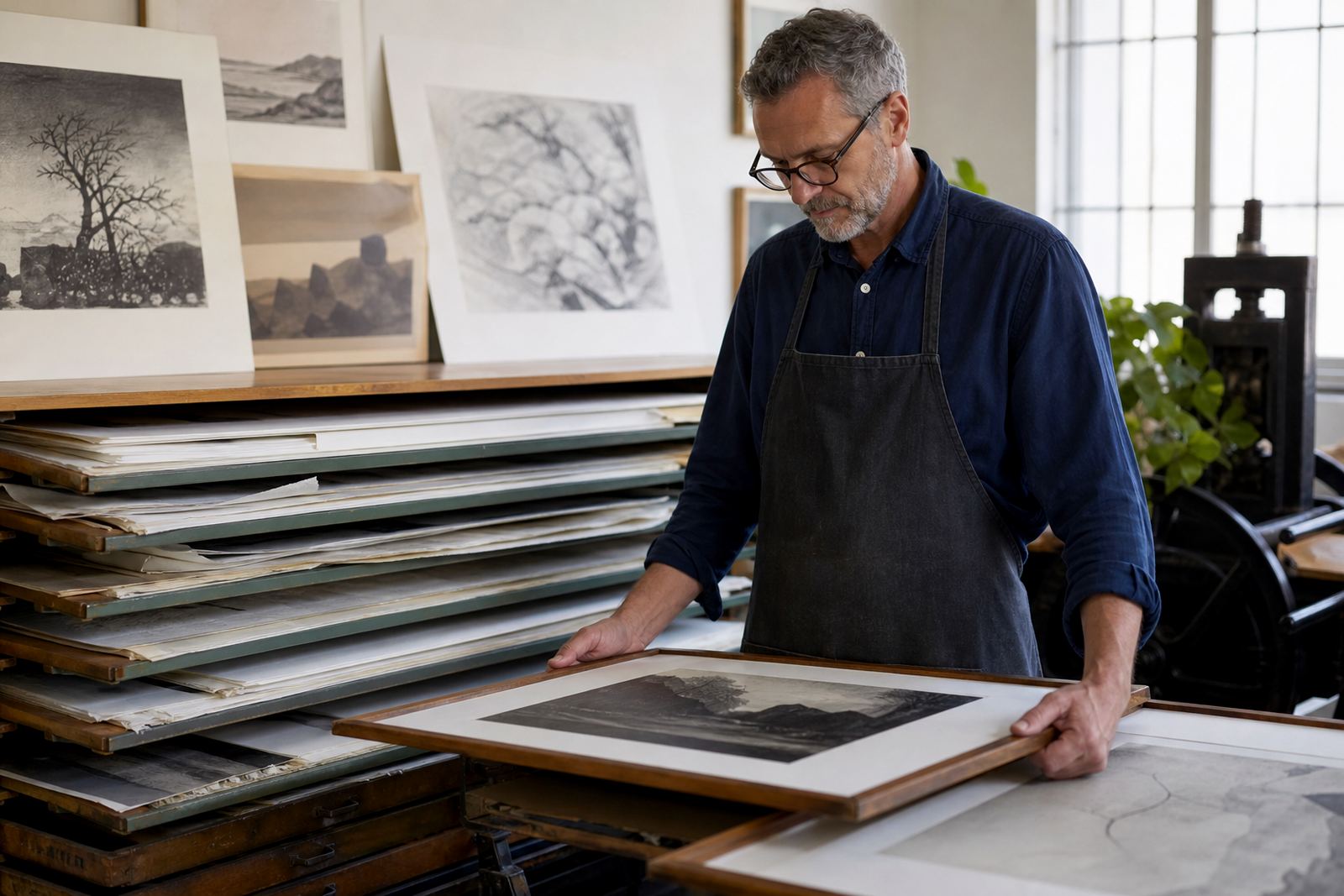
Another common mistake is handling the print too often. Lithographs are made for collecting and looking, but every time a sheet is lifted the edges take strain. If you need to check an edition, lift it with both hands and keep the sheet supported. Avoid using tape directly on paper and never fold a print to make it fit a smaller box. That kind of shortcut is hard to reverse.
- Do not use ordinary plastic bags that can hold humidity
- Do not lean prints against walls where they can bow
- Do not place heavy objects on top of stored editions
- Do not mix works of different sizes without separators
- Do not store near kitchens, bathrooms or damp exterior walls
Storage budgets for collectors and small editions
Budgets for flat file storage depend on how many works you own, the size of each edition and whether you want a simple home set-up or a studio-grade solution. A collector with a few unframed prints may only need archival folders, sleeves and a dedicated drawer. A larger collection may need custom-made flat filing with better humidity control and clearer indexing.
As a general guide, a modest home storage set-up can start around R800 to R2 500 for folders, sleeves and handling materials. A more organised collector system with dedicated drawers, boards and proper labelling often sits between R3 500 and R12 000 depending on size and finish. For larger collections, studio storage or custom joinery can go higher, especially if you want a fit for oversized lithographs or separate sections for works in different editions. Framing later is a separate cost, so it is worth keeping some budget aside for that next step.
If you are collecting in Johannesburg, Pretoria or Durban and moving works between home, office and framer, it can be worth investing in better packing from the start. That usually costs less than replacing a damaged sheet later.
When to ask the studio for packing and collector advice
Not every collector needs a full storage system from day one, but it helps to ask before the print leaves the studio. We can advise on edition handling, paper direction, folding risks, packing sizes and how to prepare a work for storage before future framing. For buyers who collect across South Africa, this is especially helpful when works are travelling between Cape Town, Stellenbosch, Johannesburg, Pretoria and Durban.
Our team can also guide you on what to keep with the print, how to separate multiple works from the same edition, and how to prepare a set for a later framing appointment. If you are collecting stone lithographs and want them stored well for months or years, the best approach is usually a clean flat file system, a dry room and a simple plan for review every so often.
When in doubt, bring the details through the enquiry form and we will talk through the paper size, edition type and the safest storage method for that specific work. A little planning now saves a lot of repairs later, and in print care small habits matter.