When a gift needs more than a bottle of wine
Gift collecting works best when the giver wants something with a bit of permanence. A stone lithograph carries the hand of the artist, the judgement of the printer, and the character of the paper and ink. For a birthday, engagement, new home or farewell, it feels considered without being overdone.
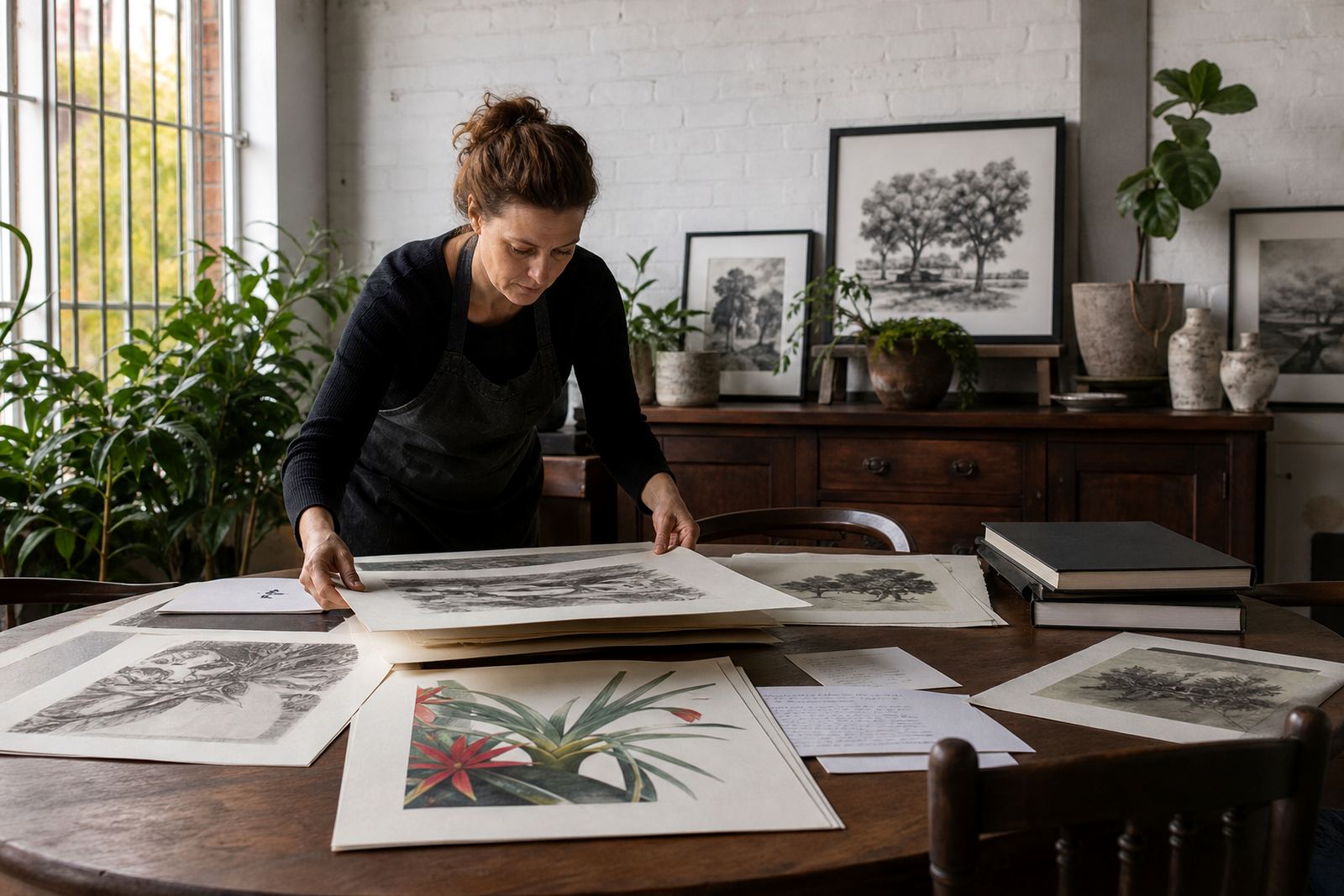
In our Woodstock studio, we often help clients choose prints for people who already collect, as well as those receiving their first framed artwork. The practical question is usually not just what looks good, but what will suit the room, the wall space and the way the person lives with art. A print that arrives well packed and properly editioned is easier to gift, and it also gives the recipient confidence that they are receiving a genuine limited work.
Stone lithography is well suited to this kind of giving because it holds detail, texture and colour in a way that feels immediate. The image is drawn or worked onto stone, then printed in an edition. Each impression is made by hand, so slight variations are part of the appeal, not a fault.
How stone lithography turns into a giftable edition
A stone lithograph begins with a limestone block, usually selected for its fine grain and flat surface. The image is built on the stone with greasy drawing materials, then chemically processed so the printing areas accept ink and the non-image areas repel it. Each colour needs careful registration, and each stone must be cleaned, prepared and checked before printing. It is a slow process, but that is what gives the final sheet its depth.
For gift buying, the edition matters as much as the image. A limited edition means the work has a set number of prints, and once that number is complete no more are made in that form. The sheet is then signed and numbered, which helps the recipient understand exactly what they own. If the gift is for a special occasion, we can also advise on whether a smaller edition or a larger one is better suited to the budget and the level of rarity wanted.
- Small editions tend to feel more exclusive, which suits a milestone gift.
- Open-ended editions are less common in fine-art stone lithography, and generally less suitable for collecting gifts.
- Proofs can be important for artists, but for gifting the numbered edition is usually the better choice.
Choosing the right scale, paper and framing
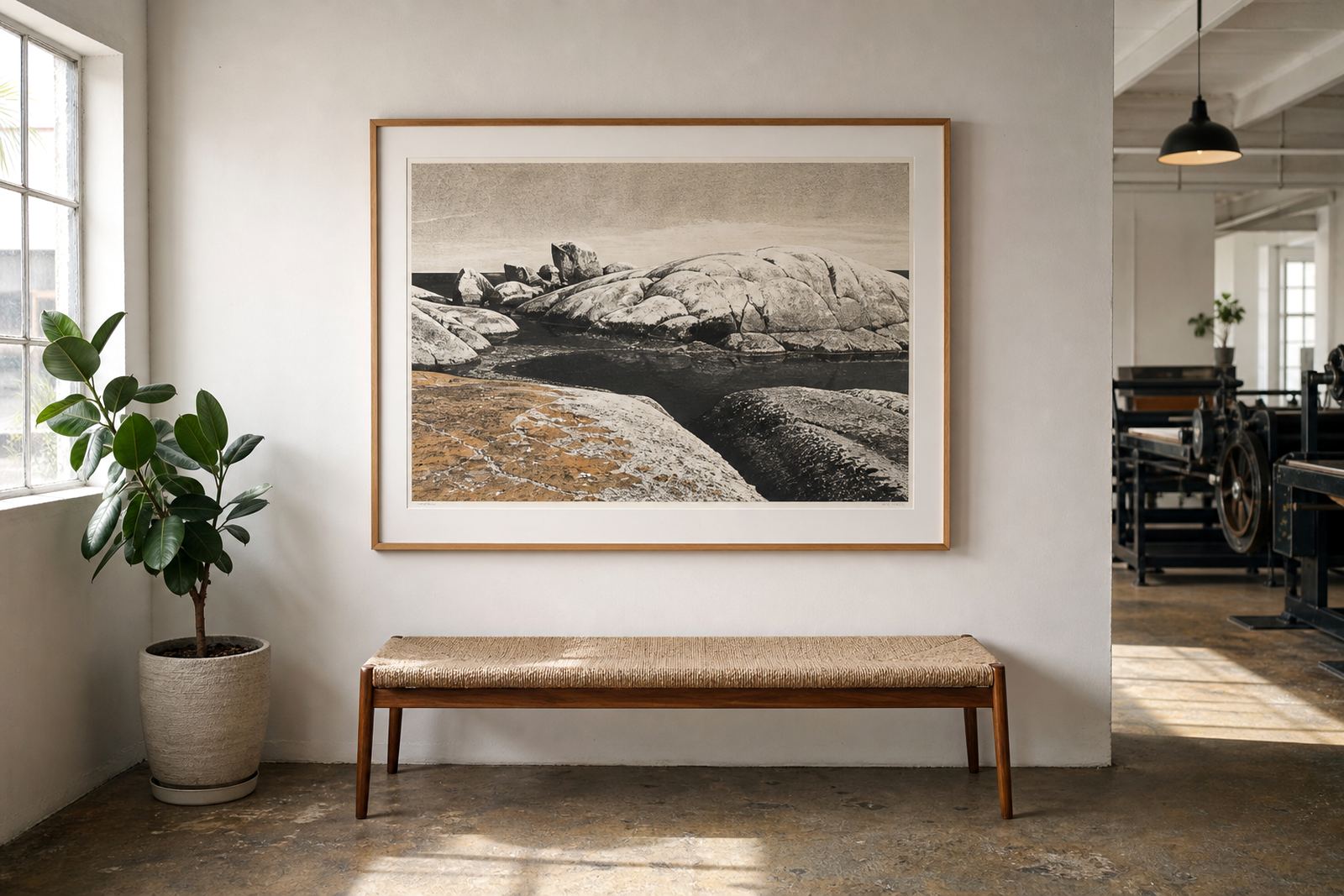
Most gift decisions start with the wall. A print for a compact apartment in Sea Point will call for different proportions than a larger family home in Stellenbosch or a study in Johannesburg. Before choosing a sheet size, think about where it will hang, how much light the room gets, and whether the recipient likes a simple or more formal finish.
Paper choice is also worth discussing. Cotton rag papers are popular because they handle ink well and age nicely when cared for properly. Heavier paper feels substantial, while a lighter sheet may suit a more delicate image. In humid coastal areas such as Durban and parts of Cape Town, framing with proper spacers and conservation glass is worth the extra cost, especially if the print will hang near a window or in a room that gets summer moisture.
- Allow a border around the image so the sheet has breathing room in the frame.
- Choose neutral mount colours when the art itself is strong in colour or contrast.
Typical studio equipment behind a gift edition
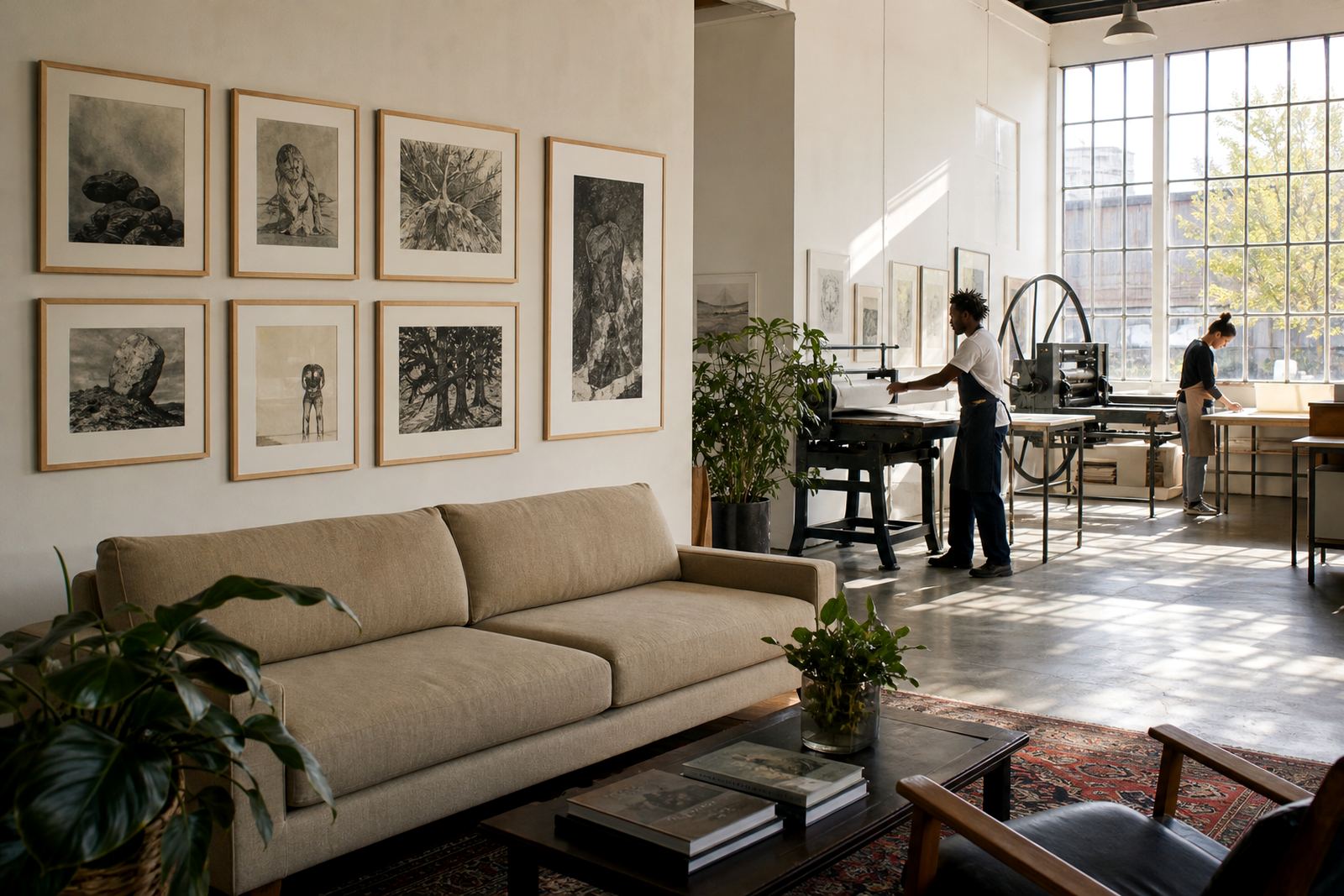
People often see only the finished print, but a gift edition depends on a lot of studio kit working together properly. In a lithography studio, the main equipment is practical rather than flashy, and each item has a clear job. For a client, it helps to know what is involved before committing to a particular edition size or turnaround.
- Limestone or lithographic stones prepared for drawing and printing.
- Grease-based drawing materials, rollers, sponges and dampening tools.
- A printing press sized for the sheet format and stone thickness.
- Archival inks, cleaning materials and pH-safe papers.
- Drying racks, packing materials and gloves for handling finished sheets.
When multiple colours are involved, registration becomes important. Each colour pass has to align accurately, and proofing sessions help check that before the full edition is printed. For a gift edition, this step matters because no one wants a present that looks hurried or poorly aligned. A clean proof, a careful final pull, and proper drying time all add to the finish. It takes patience, but the result is worth it.
Common mistakes gift buyers make
One of the most common mistakes is buying the image before checking the space. A print that is too small can disappear on a large wall, while an oversized sheet can overwhelm a narrow passage or bedroom. Another frequent issue is leaving framing to the last minute, which often means settling for unsuitable materials or rushed work. That can spoil an otherwise excellent gift.
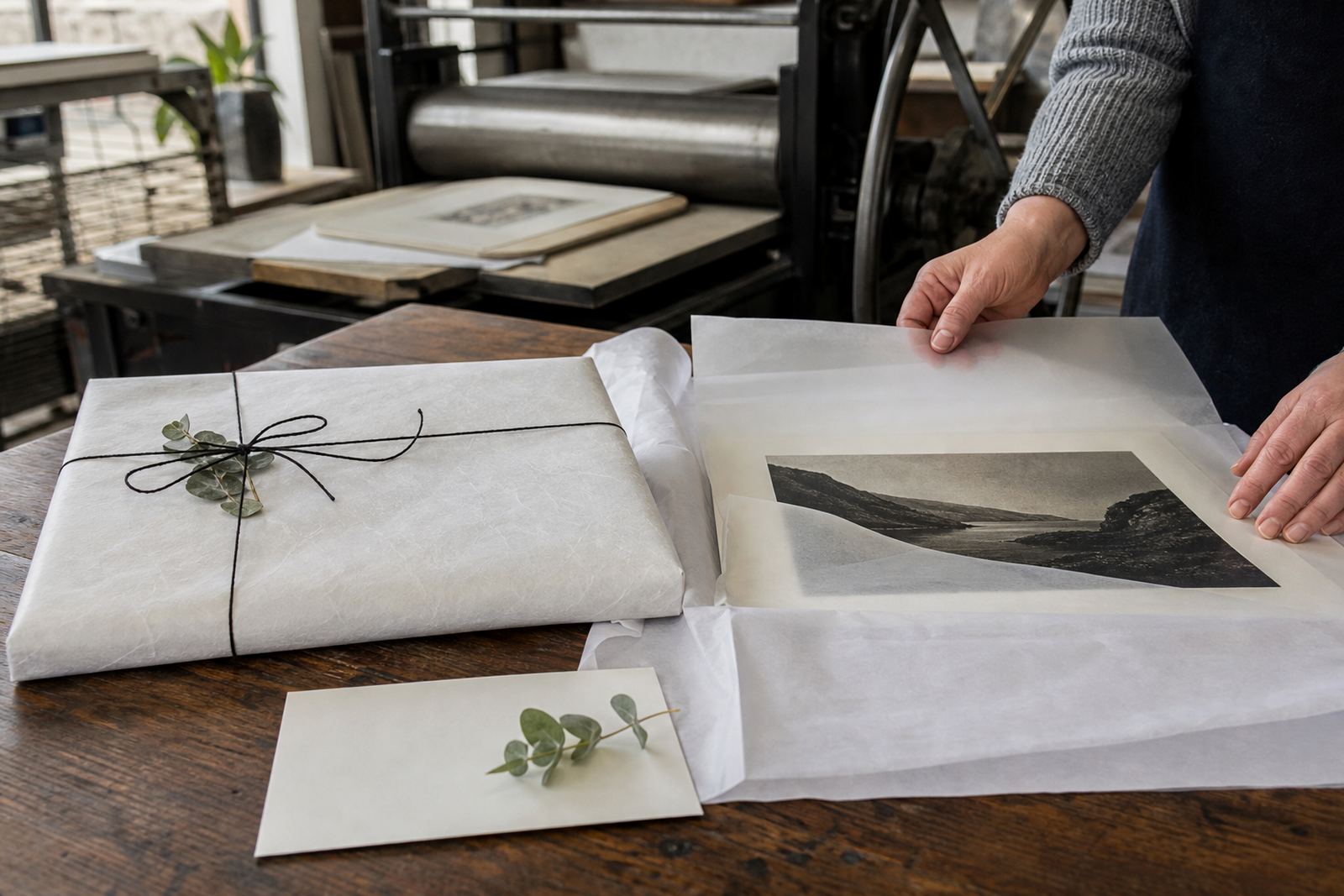
People also sometimes forget that a lithograph is still paper, so care matters. If the recipient is likely to move often, has young children, or lives close to the coast, mention that during the selection process so the packing and framing advice can suit the setting. If a sheet arrives flat and well protected, it is far less likely to crease or pick up marks before framing.
- Do not choose by image alone. Check size, framing depth and wall colour too.
- Do not assume every edition number carries the same value. Lower numbers are not automatically better.
- Do not store a print in plastic that traps moisture for long periods.
- Do not hang a newly framed work in direct sun if you want the colour to hold.
What to budget in Rand for a meaningful gift
Budget depends on the artist, the size of the edition, the number of colours and whether framing is included. For a straightforward gift print, a sensible starting point is often in the low thousands of Rand, with framing adding a further amount depending on the finish. More complex editions, large sheets, or works requiring several proofing rounds will sit higher. A collector looking for a gift with more presence may choose a larger or more complex edition and plan a total budget that includes packing, framing coordination and delivery.
As a practical guide, many buyers set aside one amount for the print itself and another for presentation. That keeps the decision clear and prevents the frame from feeling like an afterthought. If the print is going to Pretoria, Durban or further afield from Cape Town, add for secure packing and courier handling. It is better to plan for this upfront than to cut corners later and end up with a damaged sheet.
For milestone gifts, the best value usually comes from a print that is well editioned, properly signed and carefully framed. Those details hold up over time. They also make the gift feel thoughtful in a way that ordinary present buying rarely does.
How we help clients give with confidence
Clients reach us through the enquiry form on our contact page, and from there we can help with edition planning, proofing sessions, paper consultation and framing coordination. We work from Woodstock and assist collectors and gift buyers across Cape Town, Stellenbosch, Johannesburg, Pretoria and Durban. If the gift is for a housewarming in Newlands, a retirement in Sea Point, or a wedding in another province, we can advise on the most suitable format and packing method.
Shailen Naicker leads the studio, with Nomvula Phalatse handling master printing and the team managing the details from stone preparation through to archival packing. For a gift, that means the process is handled with enough structure to avoid surprises, but still with room for the human side of the work. The print should arrive ready to be given, not requiring a lot of explaining. That is usually the mark of a good gift anyway.