What an unframed collector print is
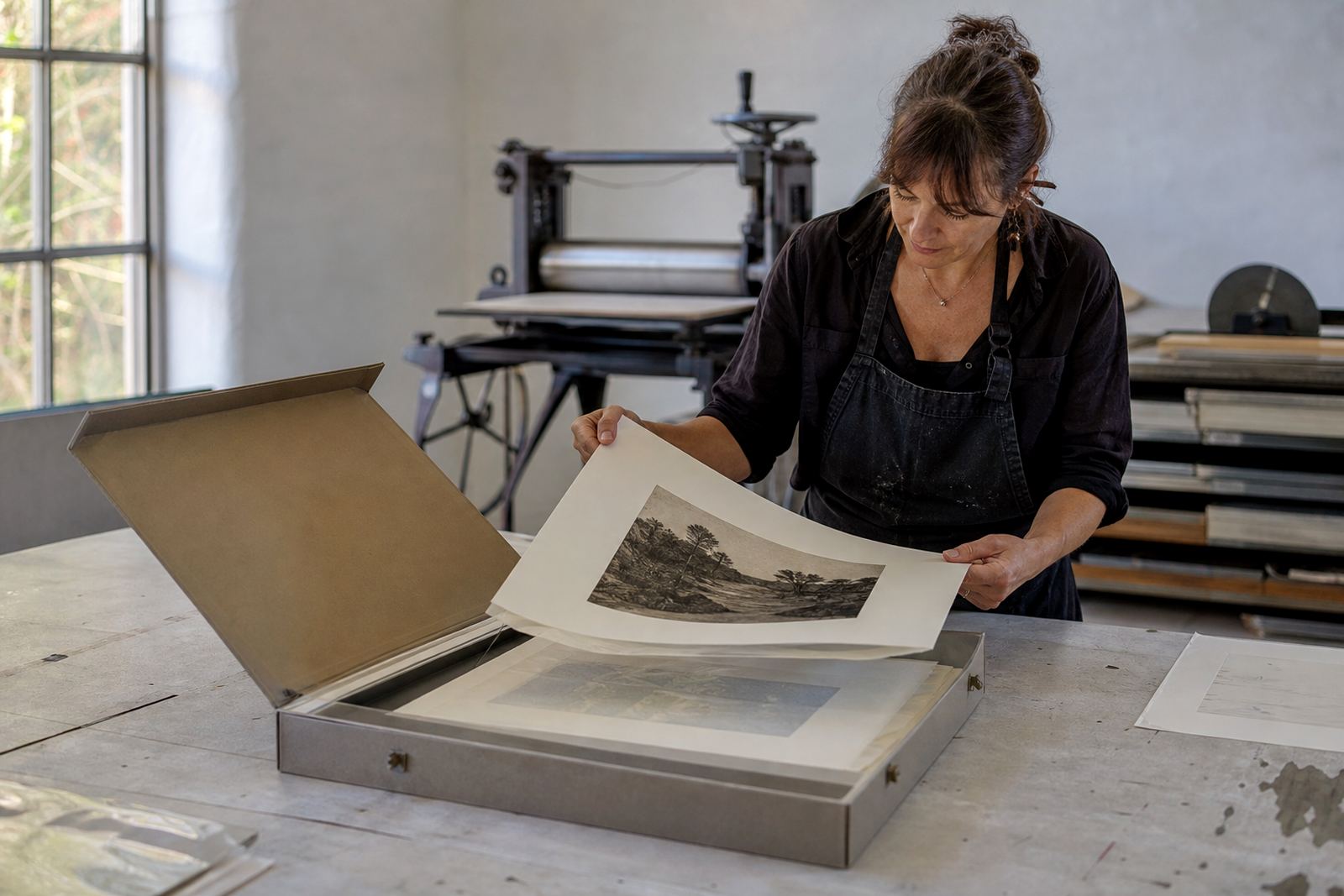
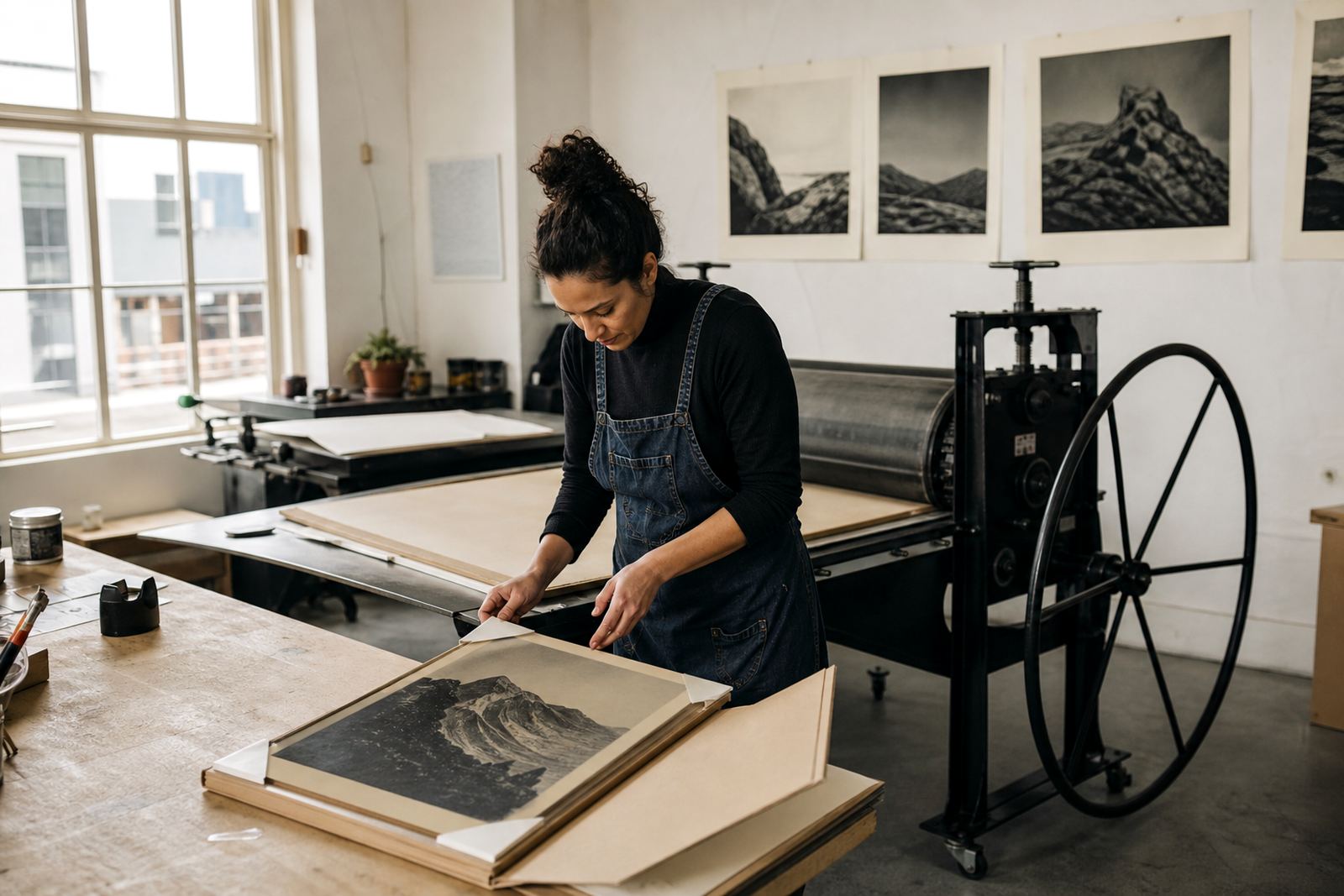
An unframed collector print is a finished edition print supplied without a frame, mount or glazing. That gives you room to choose a framing method that suits the artwork, the room and the light conditions in your home or collection space. For many collectors, this is the best option because it keeps the print flexible for custom mounting, archival materials and the right frame profile.
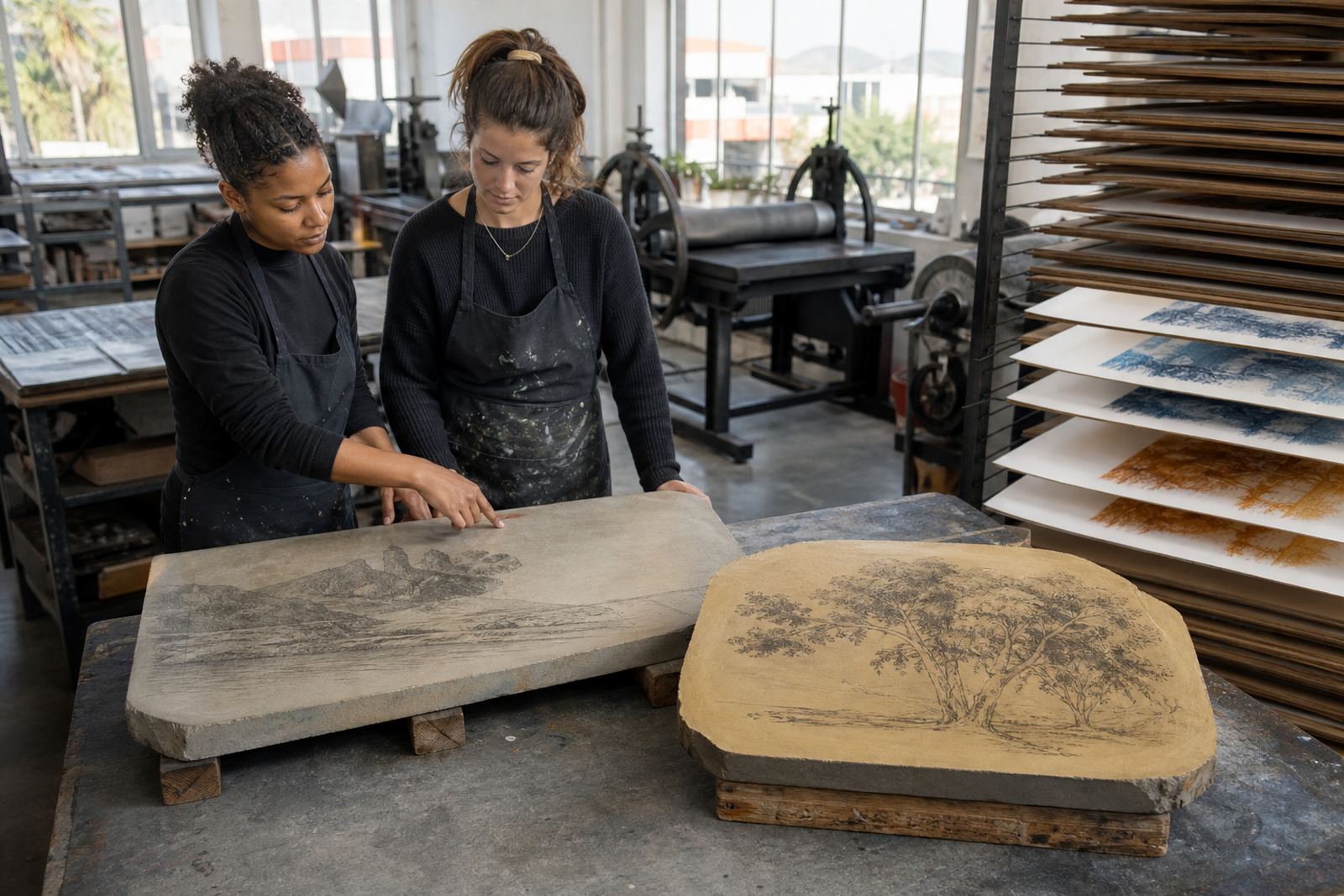
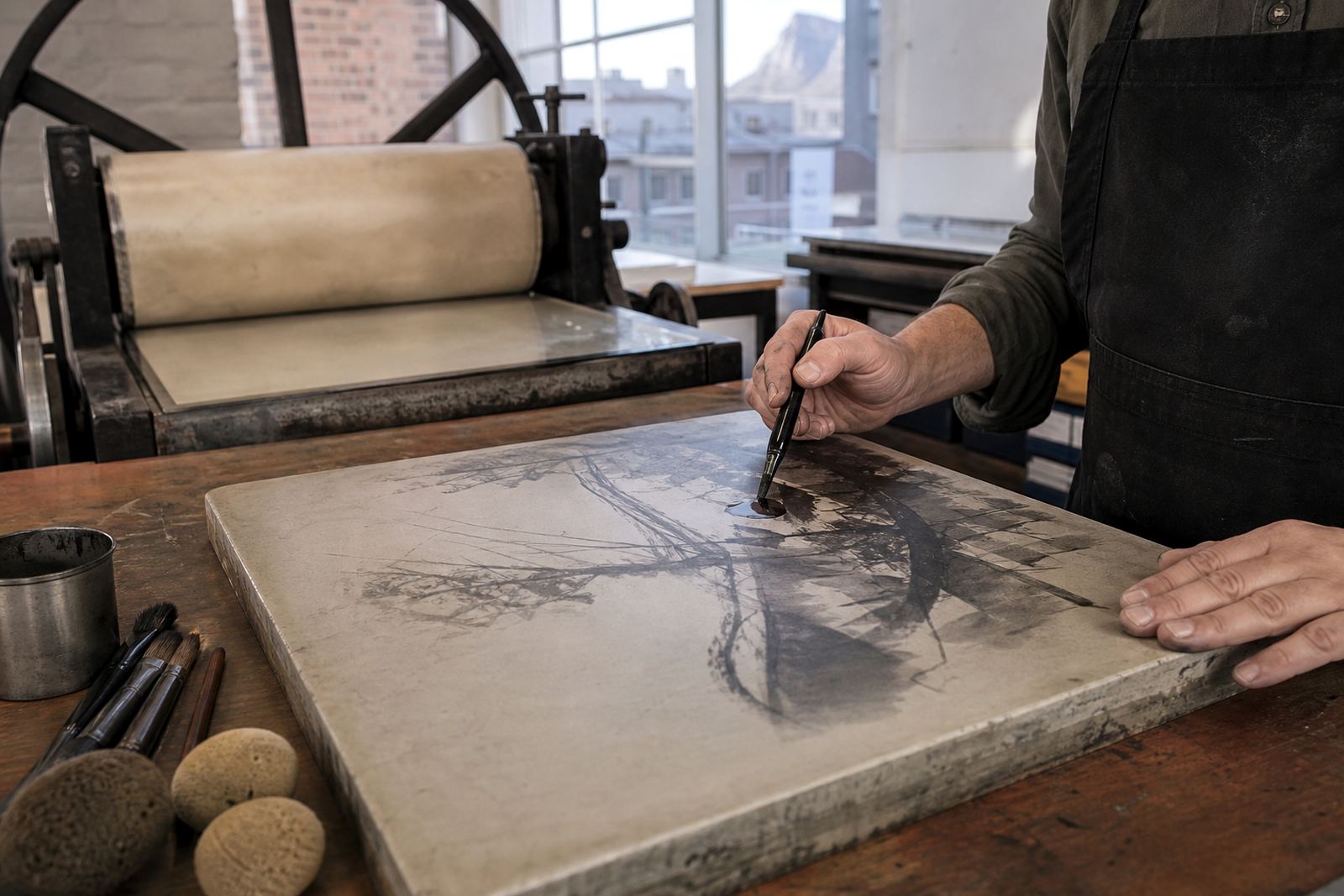
In stone lithography, the image is drawn or worked onto a prepared limestone surface using greasy materials, then processed so the image area accepts ink and the non-image area repels it. Each colour usually requires its own stone or plate stage, so the finished print has real hand-made variation and strong tonal depth. Our editioned prints are made in limited numbers and each sheet is checked before it leaves the studio.
Editioning, paper choices and sheet sizes
We supply unframed prints from planned editions, which means every sheet belongs to a defined run. That helps collectors know exactly what they are buying, and it keeps the edition consistent from proof to final print. Signing and numbering are usually done in pencil in the margin, with the edition size agreed during the studio process.
Paper choice matters. Heavier cotton papers are often preferred for stone lithography because they hold ink well and age cleanly when handled and stored correctly. We can advise on sheet size, image size and border allowance if you are planning a frame with a mount or float display.
- Editioned sheets for collecting and long term display
- Common formats include small, medium and large collector sheets
- Allow extra margin if you want a float mount or generous border
- Paper selection can affect tone, texture and framing options
Where these prints suit best
Unframed collector prints suit buyers who want more control over the final presentation. They work well for private homes, curators, interior projects, gallery walls and collectors who prefer archival mounting done by a specialist. In Cape Town and the coastal areas, many clients also choose unframed delivery so the print can be framed soon after collection and kept out of damp storage.
These prints are a good fit if you are comparing frame styles, planning a series wall or matching existing artwork in a room. They are also practical when a collector wants to place several works together with matching frames rather than committing to a single off-the-shelf size.
- Home collections and study walls
- Interior projects and hospitality spaces
- Gift purchases where the recipient will choose the frame
- Series displays using matching mounts and frames
Handling, storage and care before framing
Unframed prints need clean handling from the moment they are opened. Wash and dry hands first, or use clean cotton gloves if the paper is delicate. Keep the sheet flat, away from direct sun, moisture and food or drink. If you are not framing right away, store the print in acid-free tissue or archival sleeves in a dry room with steady temperature.
South African conditions matter. In humid coastal areas such as Durban and Sea Point, prints should not be left in damp storerooms or against cold walls where condensation can form. In hotter inland rooms, avoid placing the print near windows that get strong afternoon sun, aircon drip lines or kitchens where steam and grease can settle on the paper.
- Do not roll the sheet unless a conservator advises it
- Keep away from direct sunlight and damp walls
- Store flat in acid-free materials if framing is delayed
- Do not tape directly to the print surface or margin
Framing and hanging
What matters is the environment where it will live after framing. A good frame shop can advise on UV-filtering glazing, spacers, mounts and back boards that support the paper without trapping moisture.
Keep framed lithographs away from fireplaces, cooking areas and aircons that blow directly onto the work. If the print is going into a public-facing space, consider security fixings and a hanging method suited to the weight of the finished frame. For heavier works, get the wall checked first so the fixings suit the surface and the load.
- Use archival mount board and suitable glazing if possible
- Check wall anchors for heavy frames or plasterboard surfaces
- Avoid bathrooms, direct sun and high steam areas
Before you buy or commission
Before ordering, confirm the edition number, image size, paper size and whether the print is signed, numbered or reserved. Ask whether the sheet includes a full border for mounting, and whether the artwork is intended to be trimmed or left as printed. If you are ordering for a client or a project, measure the available wall space and check the final frame size, not just the image size.
It also helps to ask about proofing status, packing method and lead time. If you want a series matched across several rooms, we can discuss consistent margins and paper choice so the group hangs well together. For collectors across Cape Town, Stellenbosch, Johannesburg, Pretoria and Durban, clear ordering details reduce mistakes and keep the sheet in good condition from studio to wall.
- Confirm image size and full sheet size
- Check whether the print is signed and numbered
- Ask about border width for framing
- Confirm packing and collection or delivery details
Edition details
| Format | Editioned stone lithography print, supplied unframed |
|---|---|
| Paper | Archival art paper, selected for hand-printing and framing |
| Sizes | Small, medium and large collector formats by edition |
| Finish | Signed and numbered where agreed for the edition |
| Use | Collector display, specialist mounting and custom framing |
| Care | Store flat, dry and out of direct sun until framed |