Stone Lithography With A Cool Colour Focus
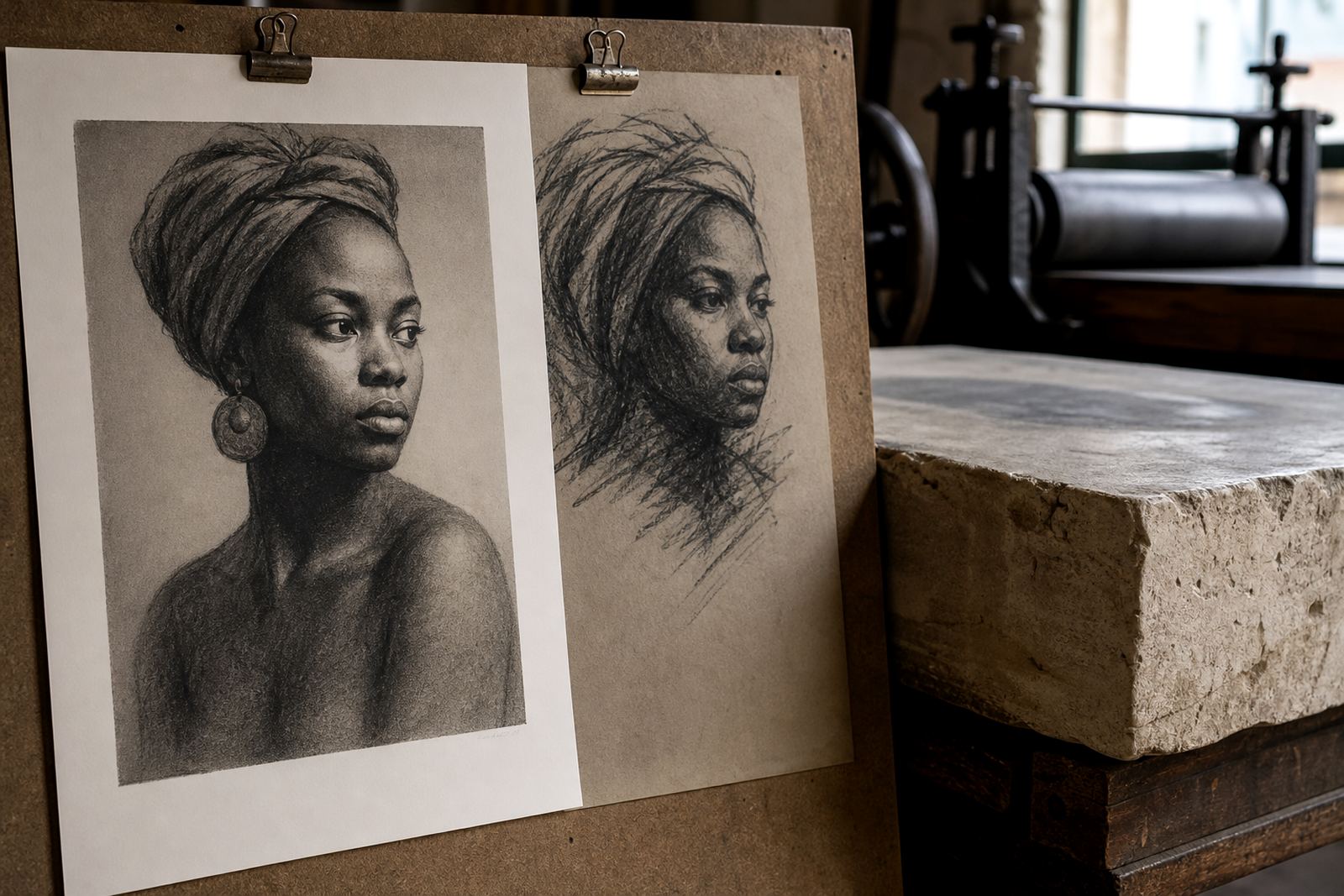
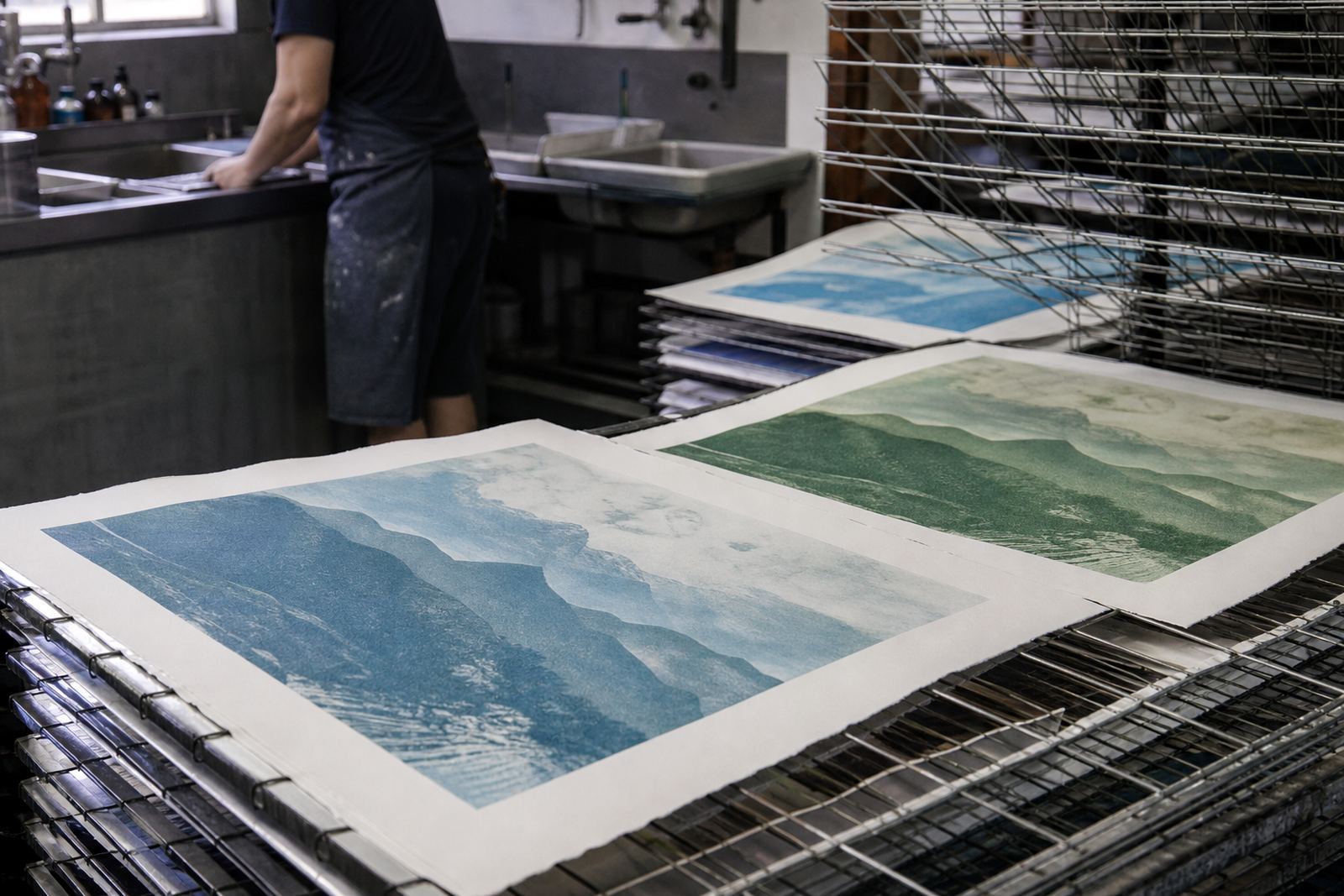
Natural grease and the grain of lithographic limestone are what hold the image in this traditional planographic print process. The artist draws or paints directly on the stone with greasy materials, then the stone is chemically treated so the image areas accept ink and the non image areas repel it. For Cool Palette Editions, that process is used to build depth in blues, sea greens, slate greys and softer transitional tones, often with overprinting that gives the print a calm, layered feel.
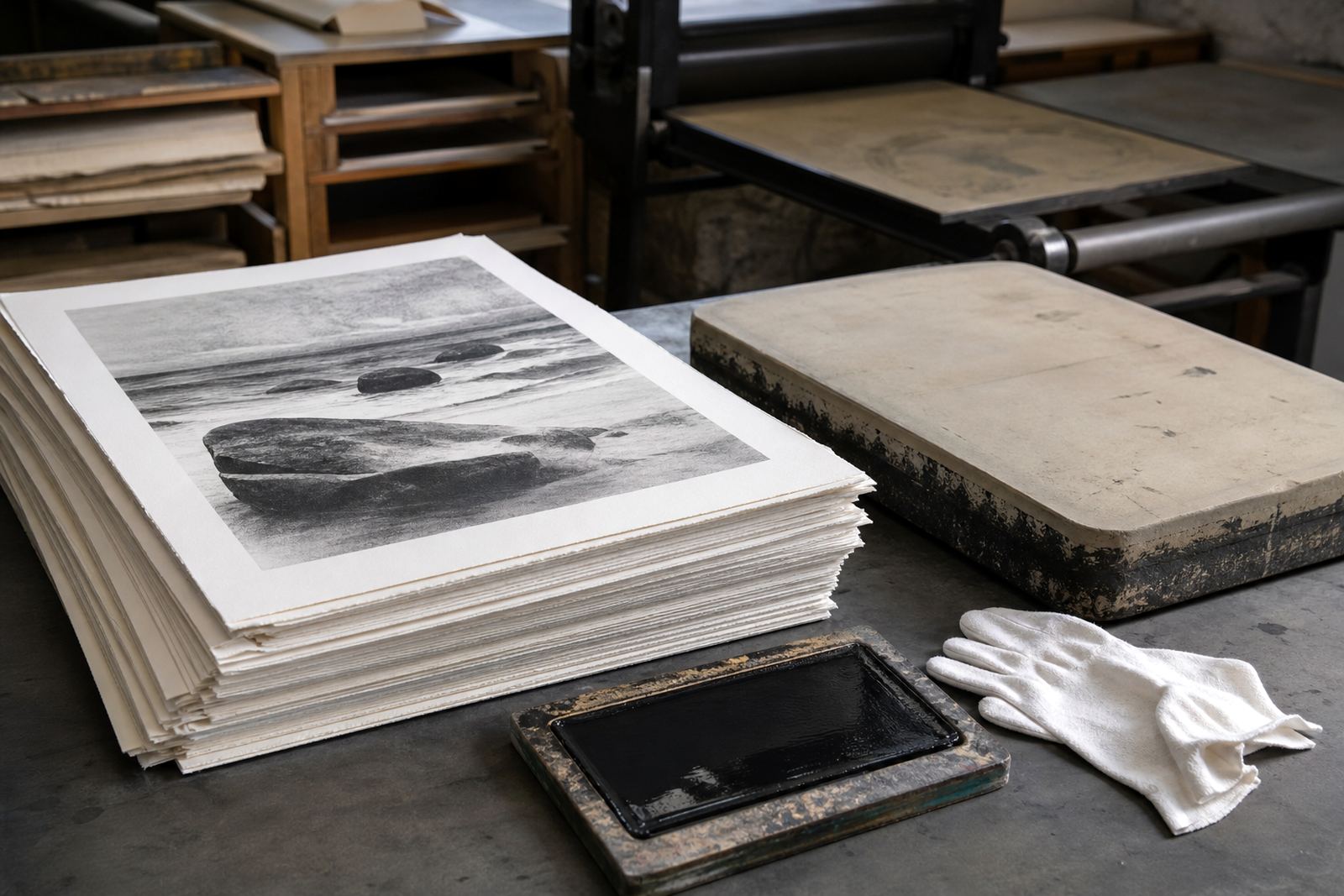
Because each colour may need its own stone, the work is planned carefully from the first proof. This is where registration, pressure, paper choice and drying time all matter. The result is not a flat digital reproduction, but a hand printed edition with subtle variation from layer to layer, which is part of the appeal for collectors.
- Hand printed from stone, not mechanically reproduced
- Suitable for solid colour fields, tonal washes and fine line work
- Each colour layer is aligned by hand during editioning
- Printed in limited quantities with consistent quality checks
Edition Sizes, Paper Choices And Format Options
Cool Palette Editions are normally produced as limited editions, with each print numbered and signed once the edition is approved. The exact edition size depends on the image, the number of stones required, and how the artist wants the work to exist in the market. Smaller editions tend to suit collectors who want a tighter scarcity profile, while slightly larger editions can support wider placement across homes, studies and hospitality spaces.
Format options typically include loose prints for framing, with paper sizes selected to suit the image area and the intended margin. Many collectors prefer generous borders for a more gallery-style presentation, while others choose a tighter crop to suit a particular wall size. Paper is chosen for its weight, surface and archival stability, with smooth or lightly textured sheets depending on the look the artist wants.
- Editioned, signed and numbered prints
- Loose sheet format for custom framing
- Small, medium and larger print sizes available depending on the image
- Paper options selected for print surface, colour response and archival handling
Where Cool Palette Editions Work Best
These prints suit interiors that need a quieter colour story. Blues and greens work well in rooms with natural light, coastal finishes, pale timber, concrete or painted plaster, and they can also settle comfortably into more formal settings with darker furniture or mixed art walls. In Cape Town, that often means living rooms that take the afternoon light, apartments in Sea Point, Newlands homes with deep wall colours, or studio spaces where the artwork needs to hold its own without shouting.
They also work well for collectors who want a print that can bridge seasons. Cooler tones can read crisp in summer and restful in winter, and they pair easily with black, white, brass, oak and brushed steel. For offices or reception areas, the controlled colour palette keeps the work calm while still giving enough depth to reward closer viewing.
- Living rooms, passage walls, studies and entrance areas
- Coastal homes where cooler colours echo sea and sky
- Corporate spaces needing a restrained art presence
- Collections that mix drawing, painting and printmaking
Studio Process, Proofing And Signing
Before an edition is printed, the image is developed through proofing sessions so colour balance and stone behaviour can be checked. This matters in cooler palettes because small shifts in cyan, blue black, green or grey can change the whole feel of the work. We also look closely at overprint order, registration marks, and how the paper takes each layer, especially if a print has soft transitions or fine tonal edges.
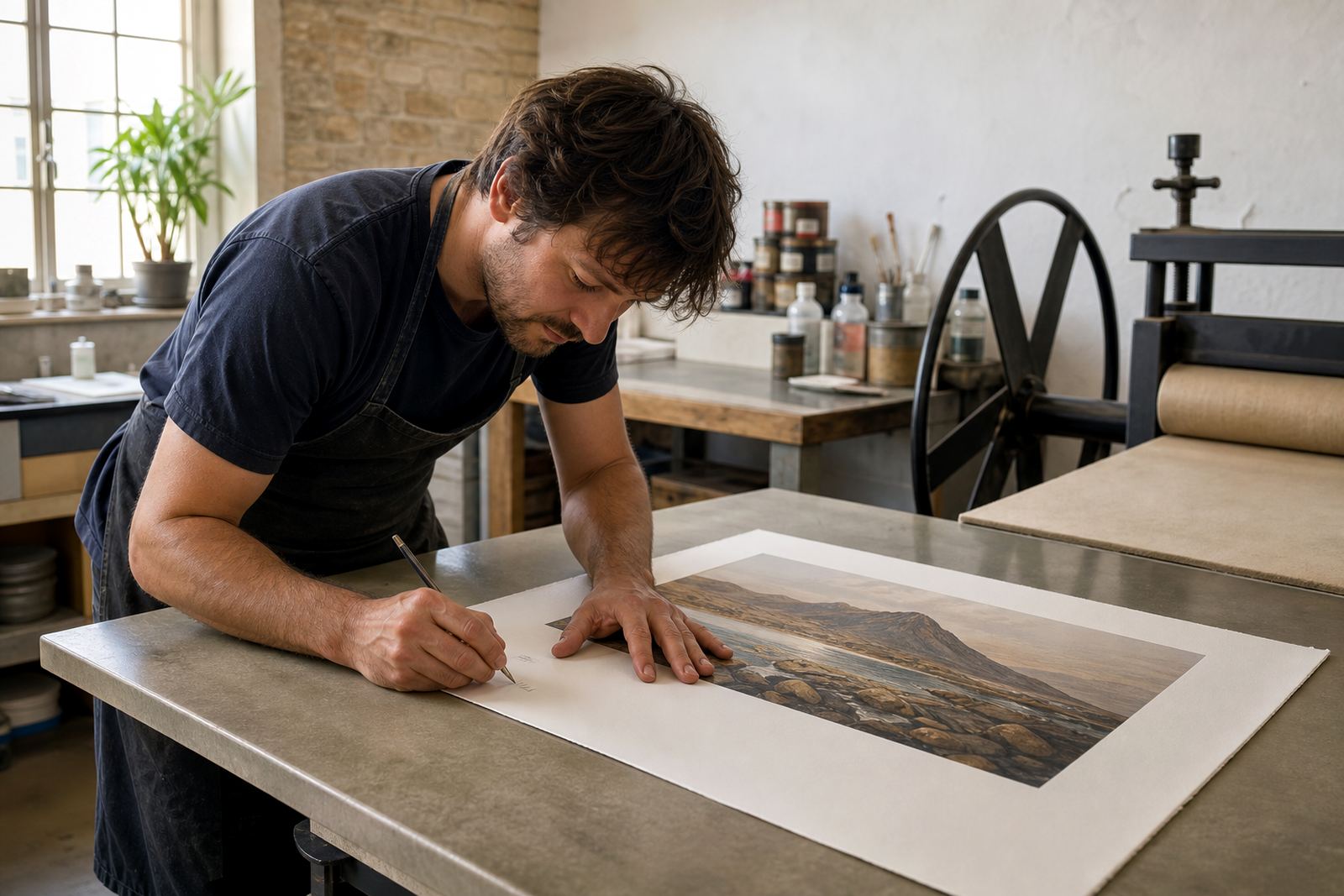
Once the edition is approved, the final prints are printed, dried, signed and numbered. If the work includes a title page or colophon, that is prepared alongside the editioning records. Collectors often like to know how many stones were used, which paper was selected and whether the edition includes variants or artist proofs. Those details should be clear before ordering so there are no surprises later on.
- Proofing sessions to refine tone and colour balance
- Colour separation planned stone by stone
- Signing and numbering after the edition is approved
- Edition records kept for clarity and collector confidence
Hanging the print at home
Stone lithographs are ready for normal framing and hanging conditions. The print itself should not be exposed to direct sun, damp walls or heavy kitchen steam, and in coastal areas the frame should be sealed properly to help protect the paper from humidity.
Framing is usually done with archival materials, especially for prints intended to remain in a collection for many years. A good mount board, UV-filtering glazing where appropriate, and a clean backing board all help protect the sheet. For larger works, it is worth checking that your hanging wall can take the frame weight properly, and that the final position clears air vents, heaters or places where the wall may shift with moisture.
- Keep away from direct sun and persistent damp
- Use archival framing materials for long term care
Care and What To Check Before Ordering
Stone lithographs are straightforward to care for, but they do need sensible handling. Hold the sheet by the edges with clean hands, avoid rolling the print tightly unless it has been packed that way by the studio, and never place weight directly on the image surface. If the print is framed, dust the glazing gently and keep the back board sealed.
Before ordering, check the edition size, image size, paper type, whether the work is a single colour or multi stone print, and whether it includes artist proofs. Ask if the sheet will be trimmed or left with full margins, and confirm the best framing size before the print leaves the studio. If you are buying for a specific wall, send the measurements through the enquiry form so the final proportion and hang position can be planned properly.
- Check edition size and whether artist proofs are included
- Confirm paper type, margins and final sheet size
- Ask about framing advice before collection or delivery
- Store flat in a dry room if the print is unframed
Edition details
| Process | Hand printed stone lithography with layered colour passes |
|---|---|
| Palette | Blues, greens, slate, blue black and cooler tonal blends |
| Edition | Limited edition, signed and numbered |
| Format | Loose sheet for custom framing |
| Paper | Archival printmaking paper selected for the image |
| Studio base | Woodstock, Cape Town |