
What a Deckle Edge Print Is in Stone Lithography
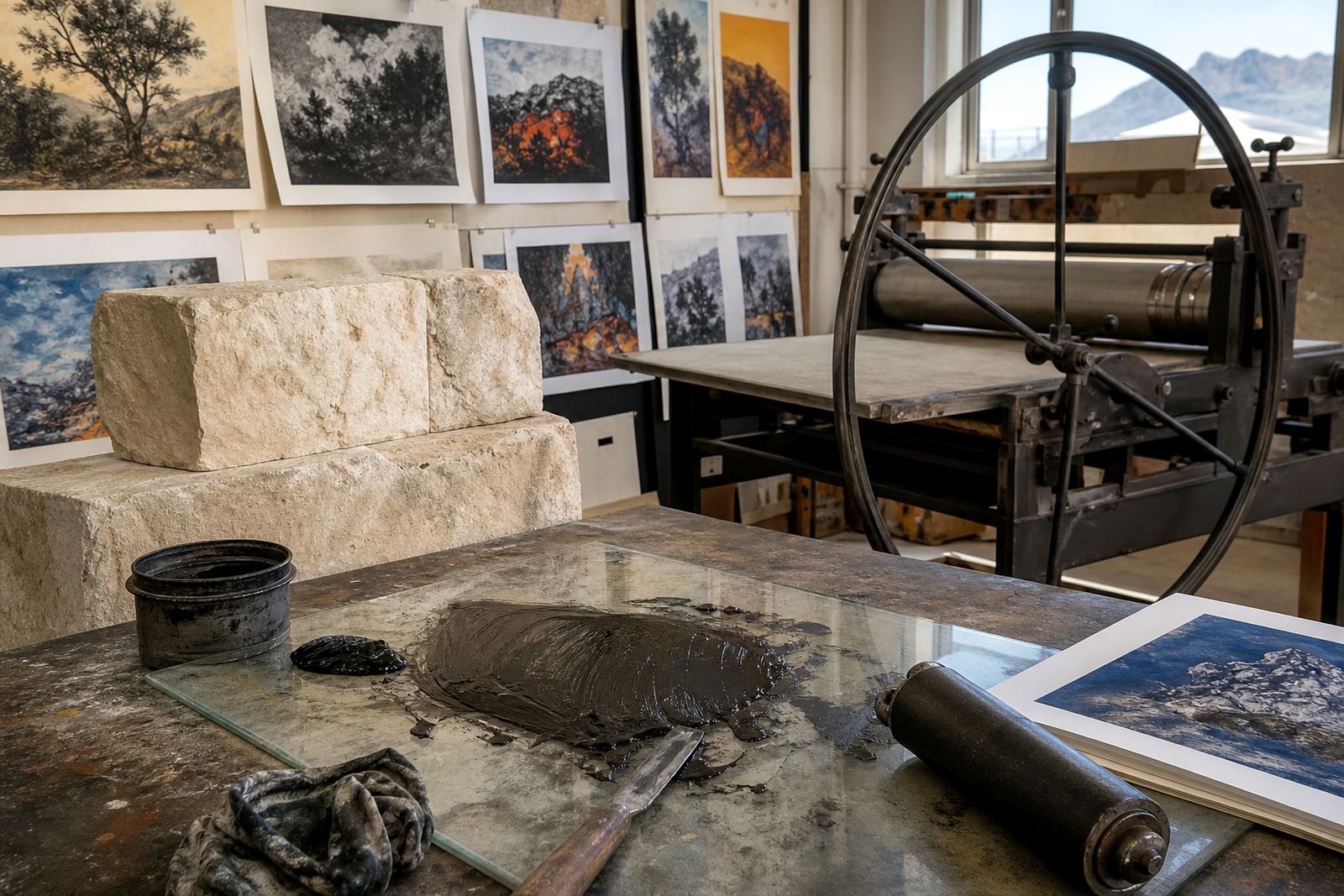
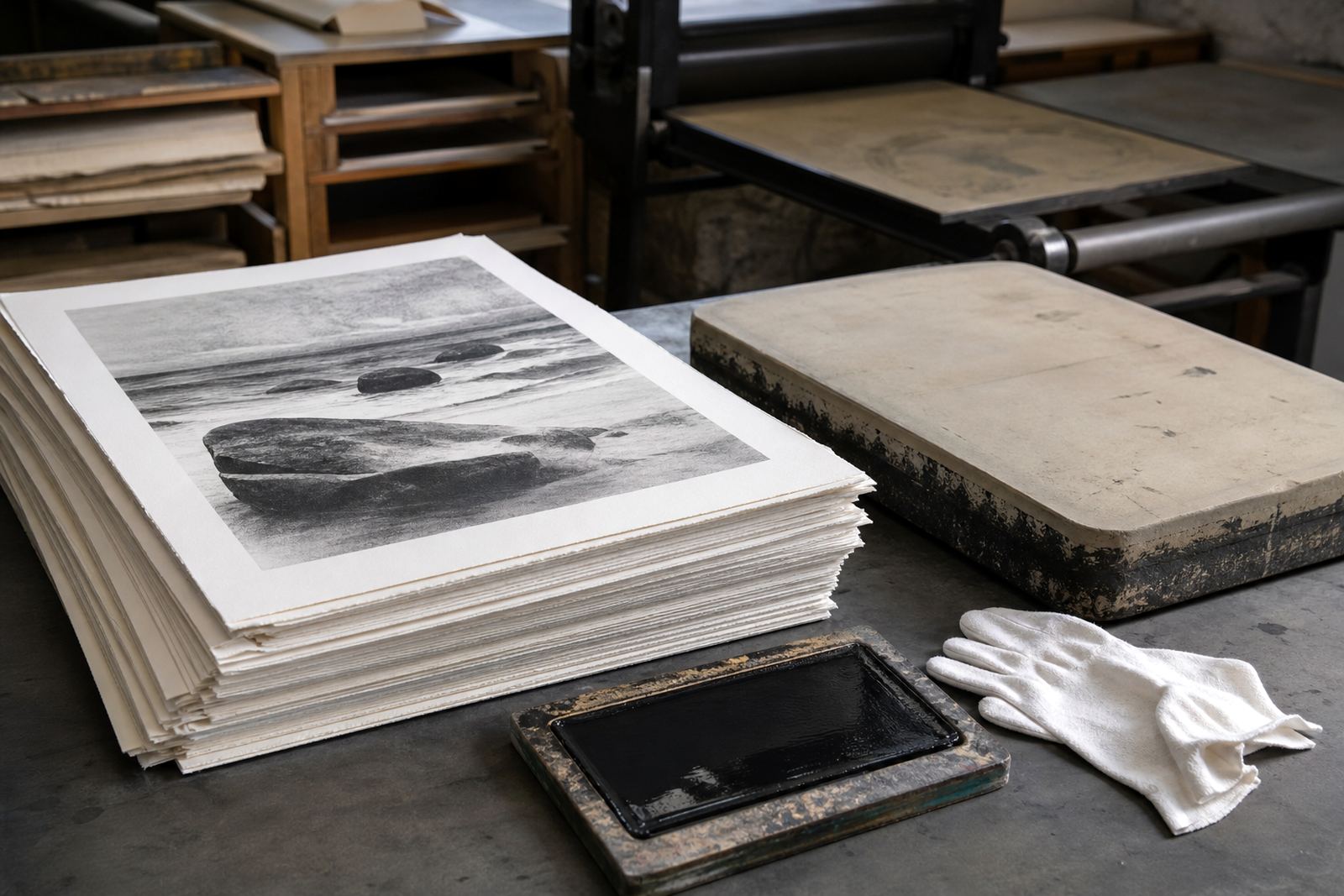
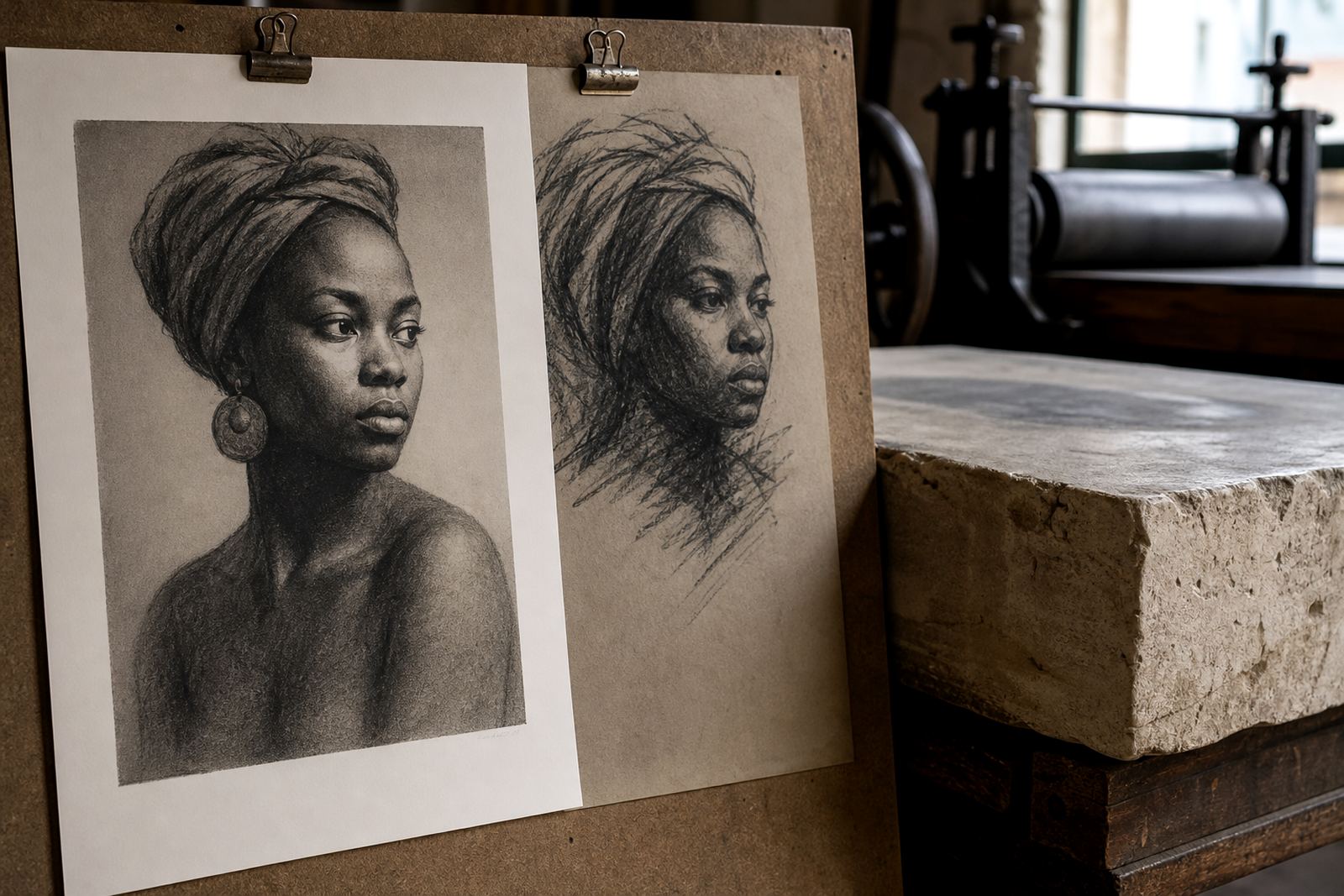
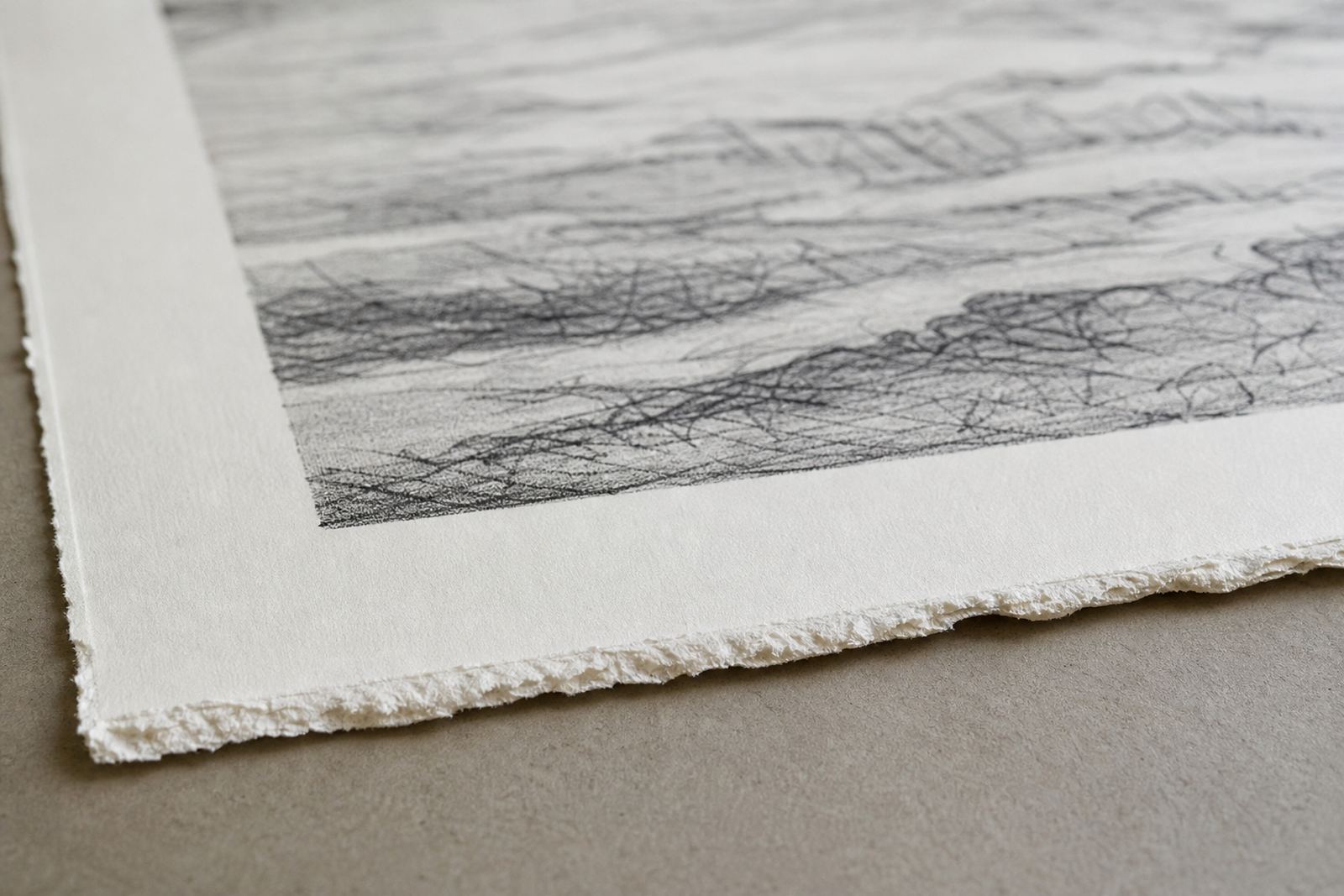
A deckle edge print is a fine-art print where at least one edge of the paper is left with its natural feathered edge instead of being cut straight after printing. In stone lithography, the image is drawn on a prepared limestone surface with greasy materials, then processed so the image area accepts ink and the non-image areas repel it. The paper is then printed by hand through the press, which gives the edition its character, texture and tonal depth.
The deckled edge is not a decorative add-on. It is part of the paper itself, and it is often chosen for limited editions where the artist wants the paper to remain visible around the image. It works especially well with generous margins, hand-signing and numbering, and with papers that can hold a crisp edge without fraying during drying and handling.
- Best for limited editions on cotton rag or similar archival papers
- Can be printed with full margins or image close to the edge, depending on the artwork
- Suitable for monochrome work and colour editions alike
Sizes, Paper Choices and Edition Options
Deckle edge prints are usually planned around the sheet size first, then the printed image is placed with enough space for handling, signing and framing. Common options include smaller collector sheets for intimate works, mid-size editions for domestic interiors, and larger sheets where the deckle edge becomes part of the presentation. In our Woodstock studio, we plan each edition with the artist so the paper, image area and margin balance properly.
Paper choice matters. A heavy mould-made or cotton rag paper will normally carry a stronger deckled edge and handles printing well, while lighter sheets may need more careful handling during drying, trimming and packing. The final look also depends on whether the edition is intended to be framed float-mounted, backed flush, or kept as loose sheets in archival storage. For collectors in humid coastal areas like Sea Point or Durban, paper selection should also consider how the sheet responds to moisture in the home.
- Sheet sizes can be planned to suit the image and framing style
- Margins can be kept wide for a traditional art-paper look
- Edition sets may include artist proofs, printers proofs and standard numbered prints where agreed
Where Deckle Edge Prints Work Best
Deckle edge prints are well suited to homes, offices, galleries and private collections where the paper itself forms part of the presentation. They sit comfortably in contemporary interiors as well as more traditional rooms, and they are often chosen for works that will be framed with a visible border rather than cropped tight to the image. The soft edge gives a quieter finish than a trimmed sheet, which makes it popular for collectors who value the handmade feel of lithography.
For South African collectors, this format is practical too. A properly handled edition can travel from Cape Town to Stellenbosch, Pretoria or Durban without losing its character if it is packed flat, protected from moisture and kept away from direct pressure. In commercial spaces, a deckle edge can soften a strong wall treatment and give the print more breathing room.
- Ideal for framed works with a visible paper border
- Suited to private collections, studios, study walls and reception spaces
- Good choice for collectors who prefer an artisanal finish over a hard cut edge
Hanging the print at home
If the print will be framed, allow for acid-free mounting, glazing where needed and spacing that prevents the paper from touching the glass. Float mounting is often preferred because it keeps the deckled edge visible.
In South African homes, a few basic points help protect the work. Avoid hanging directly above heaters, fireplaces or in strong afternoon sun. Coastal humidity can cause paper to cockle over time, while very dry inland conditions can make untreated paper more brittle. If the edition is shipped, it should be packed in archival tissue, a rigid sleeve or conservation board, then kept flat until framing. Climate control is helpful in very warm or damp rooms.
- Use acid-free framing materials and spacer bars where appropriate
- Avoid bathrooms, kitchens and unshaded walls with direct sun
Care, Cleaning and Long-Term Preservation
Deckle edge prints should be handled by the margins, preferably with clean dry hands or cotton gloves if the sheet is being moved frequently. Never rub the surface or try to flatten the deckled edge with tape or glue. If dust settles on the frame, clean the glass or acrylic only, not the paper surface itself. For unframed editions, store the sheet flat in a portfolio, between acid-free interleaving sheets, and keep it away from moisture, pests and bends.
Archival care starts at the studio and continues at home. That means stable temperature, low humidity where possible, and no direct contact with household cleaners or sprays. If a collector in Johannesburg or Pretoria keeps work in a home with air-conditioning, it helps to avoid rapid temperature swings. If the print is framed in a coastal city, ask for materials that resist moisture migration. A simple check every few months is enough for most editions, but any visible tide marks, cockling or foxing should be looked at early.
- Store flat and keep the print out of sunlight
- Use archival folders, boards and mounting materials
- Check framing seals regularly in humid or dusty conditions
Before you buy or commission
When ordering a deckle edge print, confirm whether the deckled edge is on all sides or only selected edges, since that changes the framing plan. Check the exact sheet size, printed image size, paper type and whether the edition includes hand-signing and numbering. If the work is part of a limited edition, ask how many prints are in the edition and whether any artist proofs are being held separately. It is also worth confirming if the sheet is to be delivered loose or framed, especially for collectors outside Cape Town.
Ask how the paper will be packed for transport, because a deckle edge needs protection from scuffing and bending. If you are planning a group hanging, the margin widths should be discussed in advance so the final presentation feels even. At Lithography Art, our team in Woodstock can guide edition planning, proofing sessions, paper consultation and archival packing so the finished print arrives ready for the next stage.
- Confirm edge placement, sheet size and image size
- Check edition details, signing and numbering
- Ask about packing, framing coordination and handling for delivery
Edition details
| Process | Stone lithography hand printed on a lithographic press |
|---|---|
| Paper | Archival fine art paper with natural deckled edges |
| Edition type | Limited edition, with signing and numbering where agreed |
| Typical format | Loose sheet or framed, depending on collector preference |
| Use | Fine art display, collecting, gifting and gallery presentation |
| Care | Keep flat, dry and out of direct sun; frame with acid-free materials |