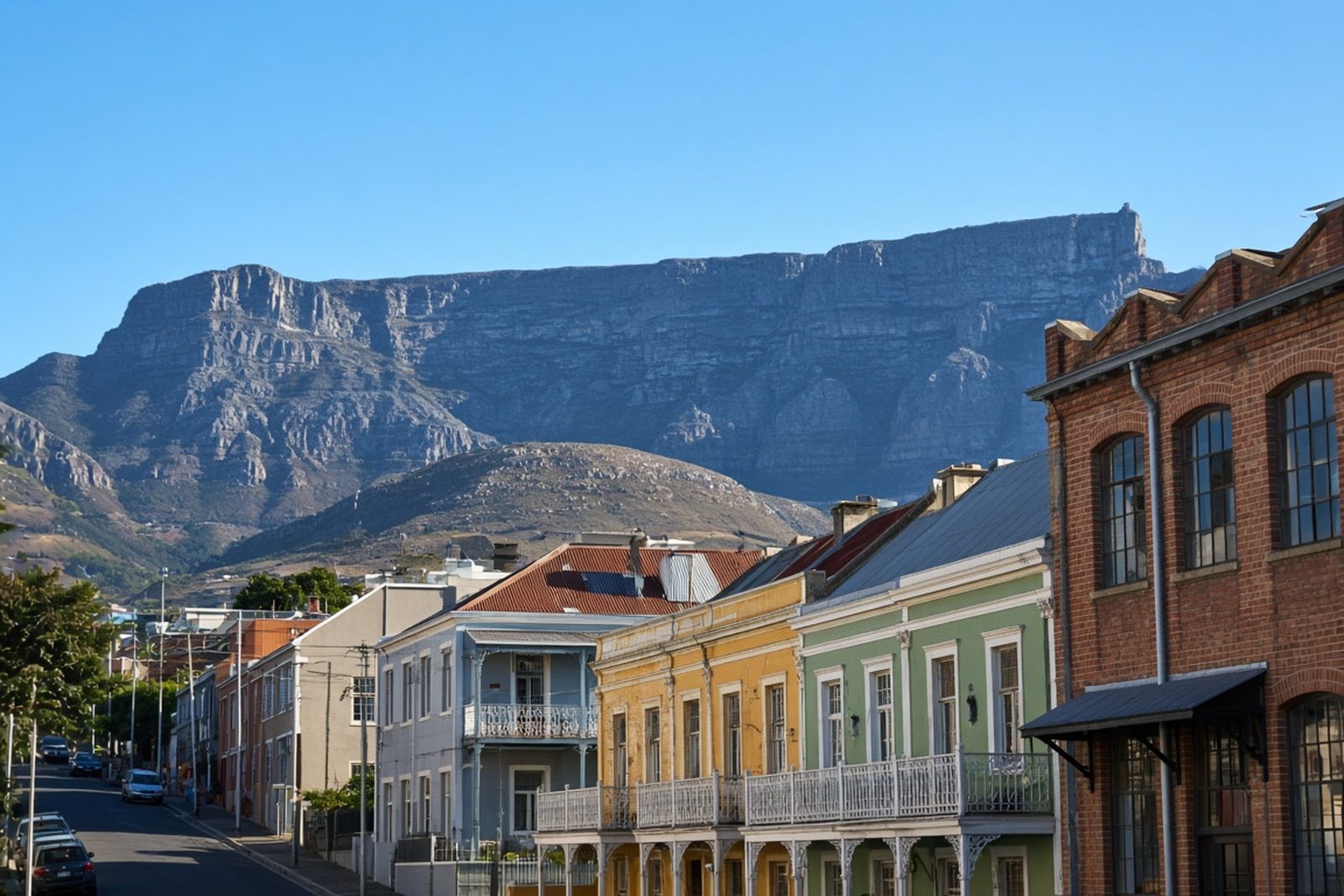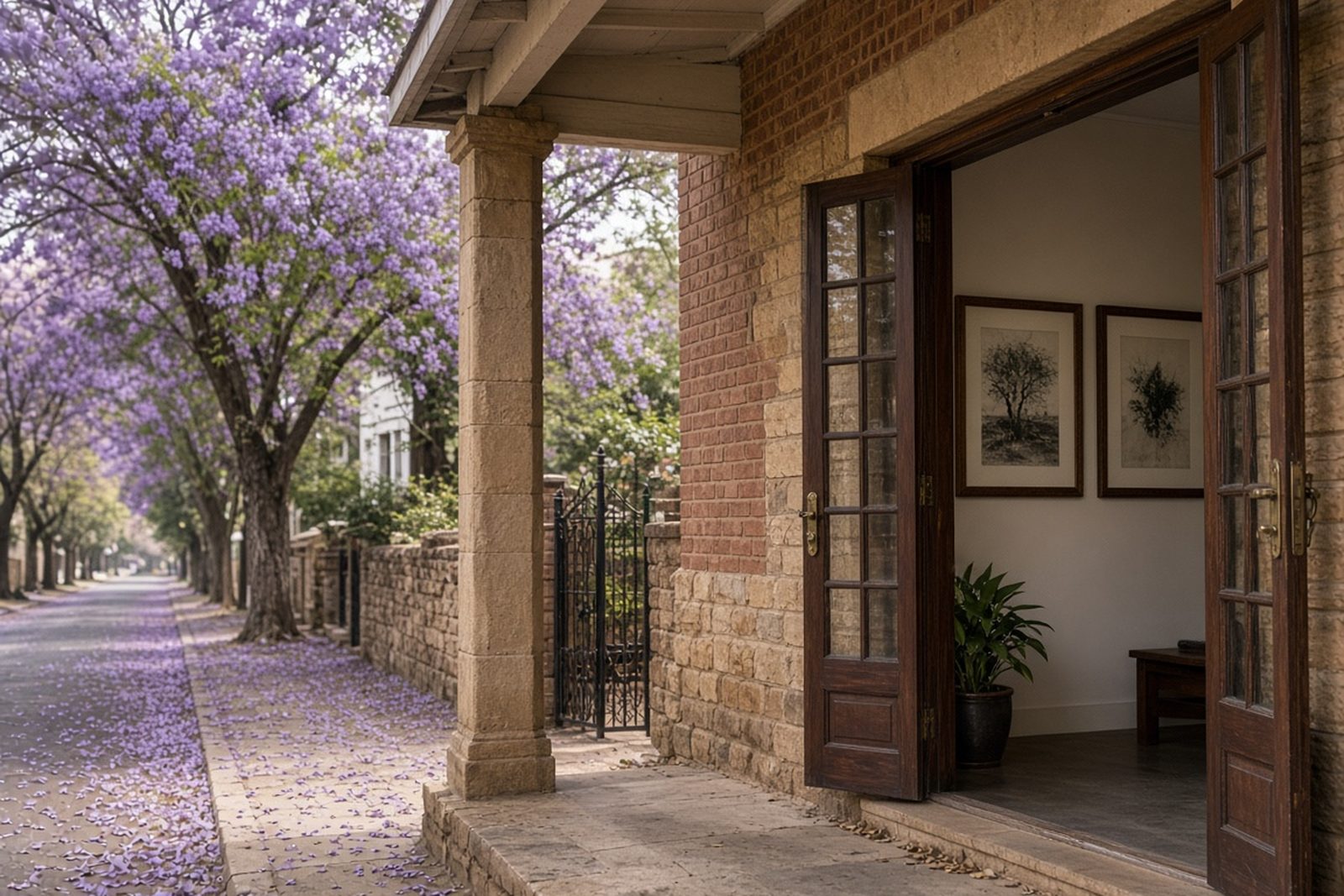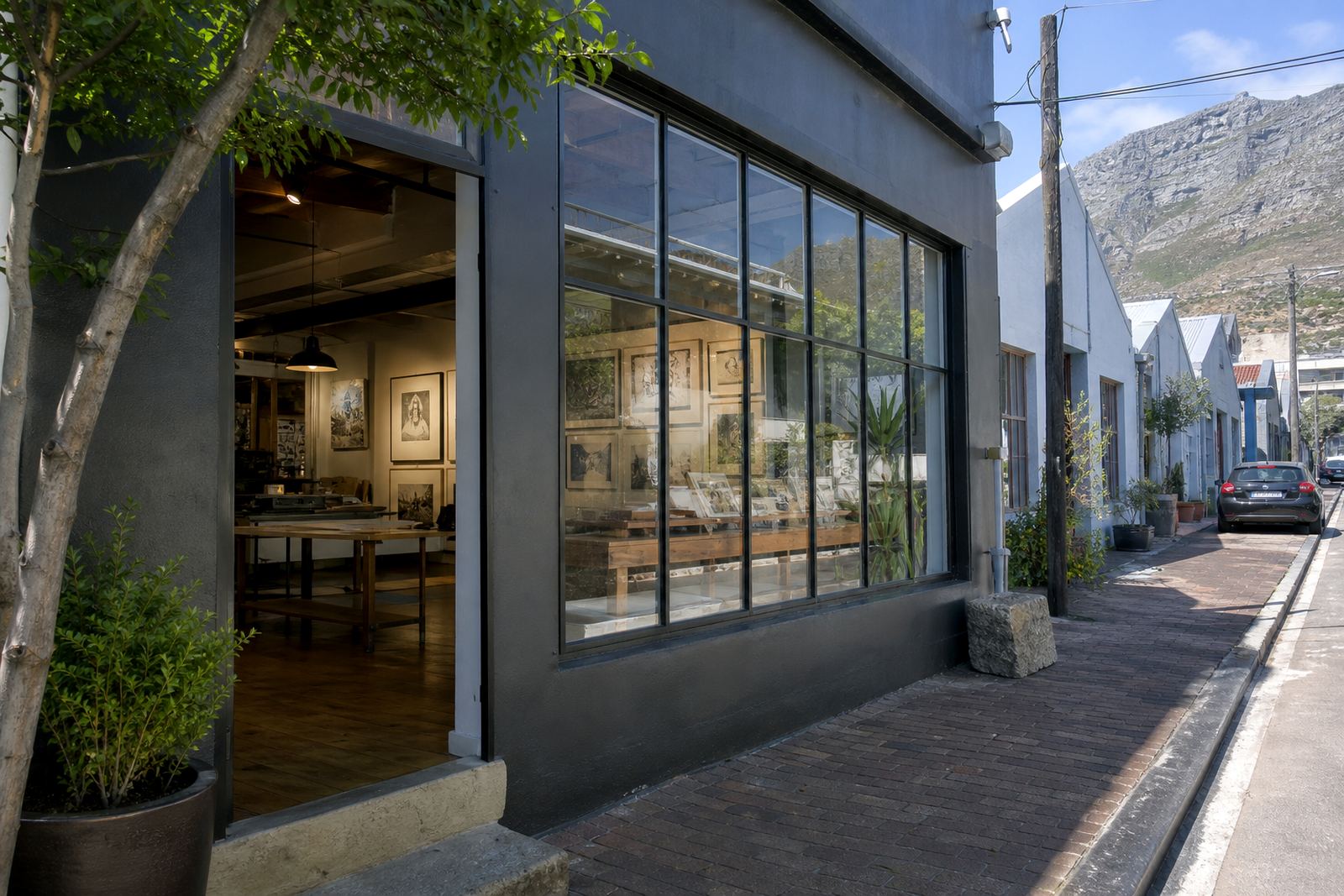
Our Woodstock Studio, Close to the City and the Old Industrial Quarter
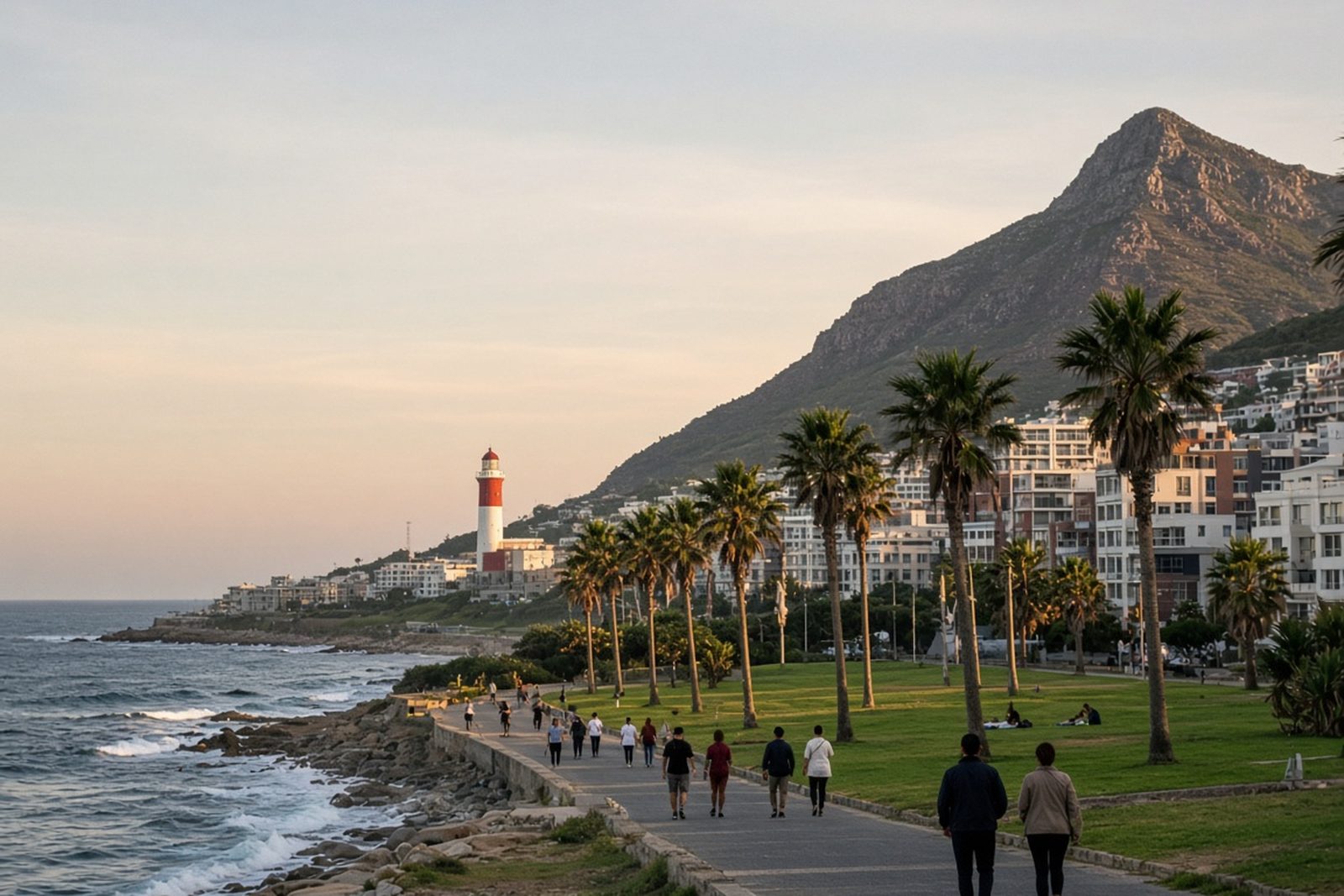
Our studio sits in Woodstock, Cape Town, where artists, collectors and printmakers can arrange visits for edition planning, proofs and direct discussions about a project. The area is easy to reach from central Cape Town, Sea Point and Newlands, and it also suits clients travelling in from Stellenbosch or further afield for a booked session.
Woodstock is a practical base for fine-art printing. The neighbourhood has easy access for loading paper, stones and framed work, and it keeps us close to galleries, framers and couriers when an edition needs careful handling. For collectors in Cape Town, a visit here is often the simplest way to view proofs, discuss paper choices and see how a stone lithograph develops from first mark to final print.
How Stone Lithography Works in the Studio
Printed on fine-grained lithographic stone, this planographic process begins with the artist drawing directly onto the prepared surface. The artist draws directly onto the stone with greasy materials, then the surface is treated so the drawing accepts ink and the non-image areas hold water. After that, each sheet of paper is printed by hand through the press, one colour at a time where required.
This method is valued because it keeps the touch of the original mark. It can hold soft tonal work, bold line and subtle colour layering, depending on the image and the paper used. In our Woodstock studio, we prepare stones, test proofs and make colour separation decisions carefully, because a small shift in pressure or moisture can change the result. That is part of the craft and also why each edition needs time and close attention.
- Stone preparation and drawing support
- Proofing sessions before final printing
- Colour work for single-colour and multi-colour editions
- Editioning with signing and numbering once the print run is approved
Limited Editions, Signing and Numbering
Limited editions are central to our work. A print edition means a fixed number of impressions is agreed in advance, then each final print is made from the approved stone or stones. Once the edition is complete, the image is not extended beyond the agreed run. This gives collectors confidence and helps keep the work clear for the artist and the buyer.
During editioning, we keep records of the approved proof, the paper used and the number of finished prints. Signatures and numbering usually happen after printing, once the artist has reviewed the final result. For clients in Johannesburg, Pretoria and Durban, we can coordinate remotely through clear image updates and written notes, then pack the finished work for safe dispatch.
- Edition planning before the first proof
- Numbering and signing after approval
- Archival packing for local or national delivery
- Framing coordination where needed for collectors
Working With Artists Across Cape Town and Beyond
Our Woodstock base suits artists from Cape Town, Stellenbosch, Sea Point and Newlands who want to work closely through the printing stages. Studio visits are useful when an artist wants to compare paper surfaces, approve a colour proof or discuss a new edition with the printer at the press. Some artists prefer a single working session, while others return for several proofing stages. Both approaches are common.
Clients from Johannesburg, Pretoria and Durban often begin with a clear enquiry through our contact form, then we set the schedule around travel, drying time and the demands of the edition. If a print includes several colour layers, the turnaround may include a longer proofing stage. That is normal in lithography and worth it when the final work needs a careful hand. We keep communication straightforward so there is less back and forth, and no confusion about what is approved.
Paper, Packing and Print Care in South African Conditions
South African weather matters when you are handling fine art paper and finished prints. In Cape Town, coastal humidity can affect paper if it is not stored properly, while inland heat in places like Pretoria and Johannesburg can dry sheets too quickly. We use archival packing methods and advise collectors to keep prints away from direct sun, damp walls and areas with strong temperature changes.
When prints leave the studio, they should remain flat and protected. If a work is framed, acid-free materials and proper backing help preserve the sheet over time. For unframed prints, keep them in their protective wrap until they are ready for framing. If you are collecting in Woodstock or arranging delivery elsewhere, we can discuss the best storage and transit approach for the paper and the image.
- Keep prints flat and out of direct sunlight
- Store in a dry room with stable temperature
- Use acid-free framing materials
- Handle sheets with clean, dry hands only
Enquiries, Visits and Local Support from Woodstock
Woodstock is our main point for studio visits, collector advice and artist collaboration sessions. If you would like to discuss a lithograph, arrange a proofing appointment or ask about a new edition, please use the enquiry form on our contact page. That is the channel we use for all initial requests, whether the work is for a Cape Town collector or for delivery to another city.
We support clients across Woodstock and nearby areas including Sea Point and Newlands, as well as across South Africa in Stellenbosch, Johannesburg, Pretoria and Durban. If you are planning a visit, it helps to mention the size of the work, the number of colours if known, and whether you need archiving, packing or framing coordination. That gives us a clear starting point and helps us prepare the right materials before you arrive.